Factors controlling exercise-induced communication from muscle to brain
CV: cardiovascular
BBB: blood–brain barrier
ROS: reactive oxygen species
MyomiRs: microRNAs released from muscle
#muscle#brain#exercise
https://t.co/96lmrxD5hl
Effects of Exercise Training on Mitochondrial & Capillary Growth in Skeletal Muscle
Larger Training Volumes (⬆️training frequency/week +⬆️training weeks) & Higher Training Intensities👉greater increases in mitochondrial content & VO2max
#muscle#exercise
https://t.co/Emj9VwjupF
New Research: Meta-analysis on intervention effects of exercise on Chinese children and adolescents with mobile phone dependence https://t.co/MxFSJXbHVI #FrontiersIn#Psychology
New Research: Direct and indirect associations between mental health and motivational indicators with physical activity among Lithuanian adolescents https://t.co/4YB4Y1ANoI #FrontiersIn#Psychology
On World Day of Physical Activity, join ACSM in sharing the recommendations for physical activity and exercise based on the latest science and insights from health professionals.
Find numerous free resources on physical activity and its many benefits: https://t.co/lIzoTlKejJ
New Research: Exercise prescriptions for young people’s emotional wellbeing: a systematic review of physical activity intensity, duration, and modality https://t.co/c1K6yblNOC #FrontiersIn#Psychology
Behavior and #dopamine responses track prospective, but not retrospective, contingency, which is explained by temporal difference (TD) learning models
@LechenQ@markhburrell @naoshigeuchida @MCB_Harvard
https://t.co/srTMSkvVfg
🚨 MYTH: Scoliosis = back pain.
✅ FACT: The connection isn’t as clear as you think! Some people with scoliosis have pain, but many don’t—and treatments? Well, the research is... underwhelming.
🤓 Get the real story in this blog by @PainSci
https://t.co/mWfgCvONxU
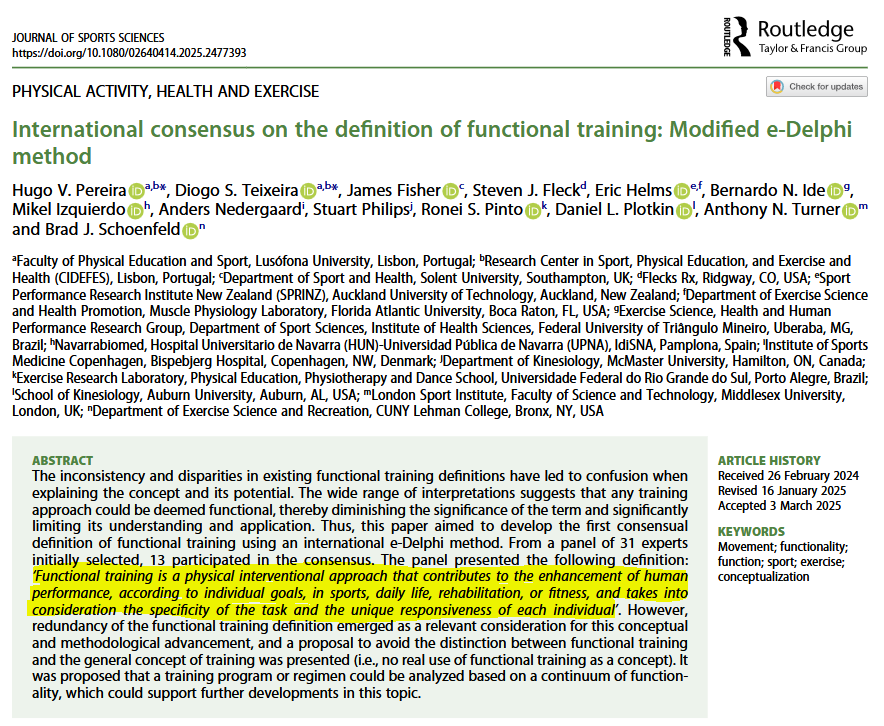
"Functional training" is one of the most misused terms in the fitness field. Honored to have been a collaborator on this consensus paper that sought to provide clarity on the concept 💪
https://t.co/QP0iH5ZL4d
Maternal Diet Influences ADHD and Autism Risk
A large study analyzing over 60,000 mother-child pairs found that a Western diet during pregnancy—high in fat, sugar, and processed foods—is linked to an increased risk of ADHD and autism in children.
Even small shifts toward a Western diet were associated with a 66% higher risk of ADHD and a 122% higher risk of autism.
The strongest associations were observed in the first and second trimesters, suggesting that early fetal brain development is particularly sensitive to maternal nutrition.
Researchers identified 43 specific blood metabolites that may explain the link between diet and neurodevelopmental disorders.
While genetics play a significant role, these findings highlight the potential for dietary improvements to reduce neurodevelopmental risks.
Addressing maternal nutrition could be a key factor in improving long-term child health outcomes.
Resistance training: the most potent tool for muscle growth.
But do men and women benefit equally?
Our new meta-analysis led by @MartinRefalo found:
➡️ Men saw slightly greater absolute muscle growth
➡️ Relative gains were nearly identical between sexes
➡️ Type I muscle fibre growth slightly favored men, but Type II growth was the same
Women can build muscle just as effectively as men.
New Research: Self-selected vs. prescribed aerobic exercise intensity: impacts on pleasure in women with obesity https://t.co/xBwPV4LVAA #FrontiersIn#Psychology