Do you need to understand the world to survive in it?
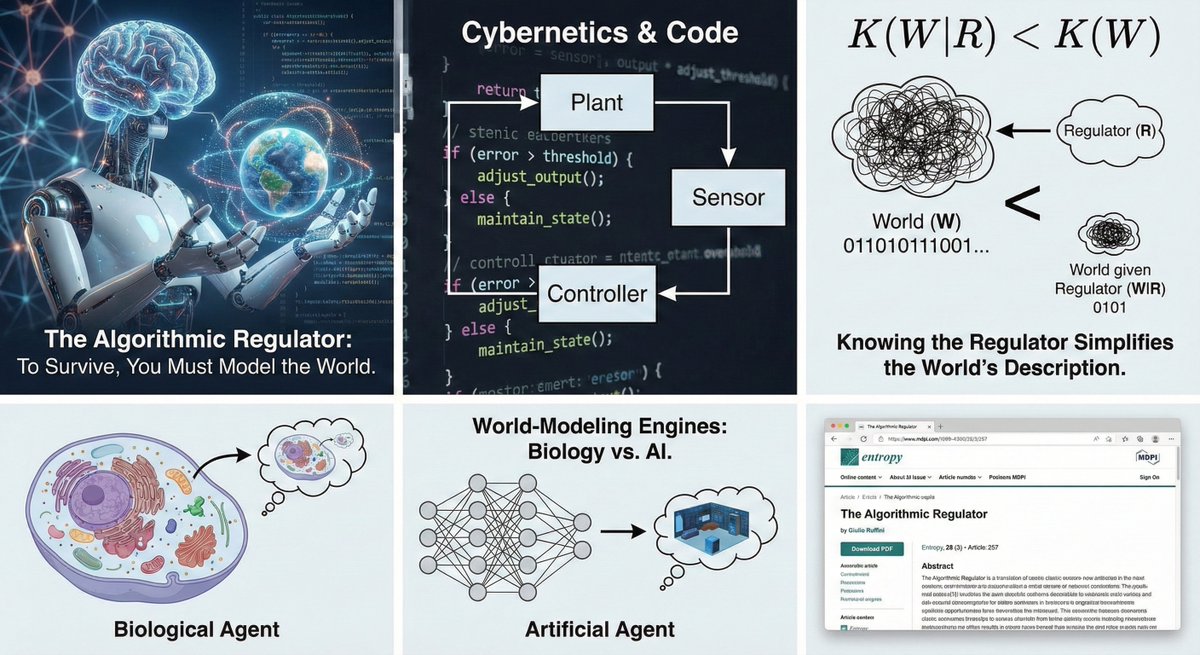
A classic 1970 cybernetics theorem says yes: "Every good regulator of a system must be a model of that system." But proving this mathematically for complex, unpredictable real-world scenarios has always been notoriously difficult.
2/5 In a new paper, "The Algorithmic Regulator" (published in Entropy), I tackle this using Algorithmic Information Theory and Kolmogorov Complexity. 🧠💻
It takes the classic Good Regulator Theorem and the Internal Model Principle and complements and extends them for non-linear, deterministic systems.
3/5 The paper looks at regulation as data compression.
The proof shows that if a regulator successfully keeps a system (embedded in the world) stable (reducing the algorithmic complexity of its output), it mathematically must share "mutual algorithmic information" with the world with high probability.
The key result: K(W∣R)<K(W) (Knowing the regulator makes the shortest description of the world strictly shorter!).
4/5 Why does this matter? It provides a rigorous, distribution-free mathematical backbone for neuroscience frameworks like the Free-Energy Principle and Active Inference.
Whether you are a single cell, a human brain, or an AI, to maintain homeostasis, you must run a generative model of your environment. You can't just react; you must predict! 🌍🤖
Check out the full Open Access paper here: 🔗 https://t.co/MZB3khRYLQ
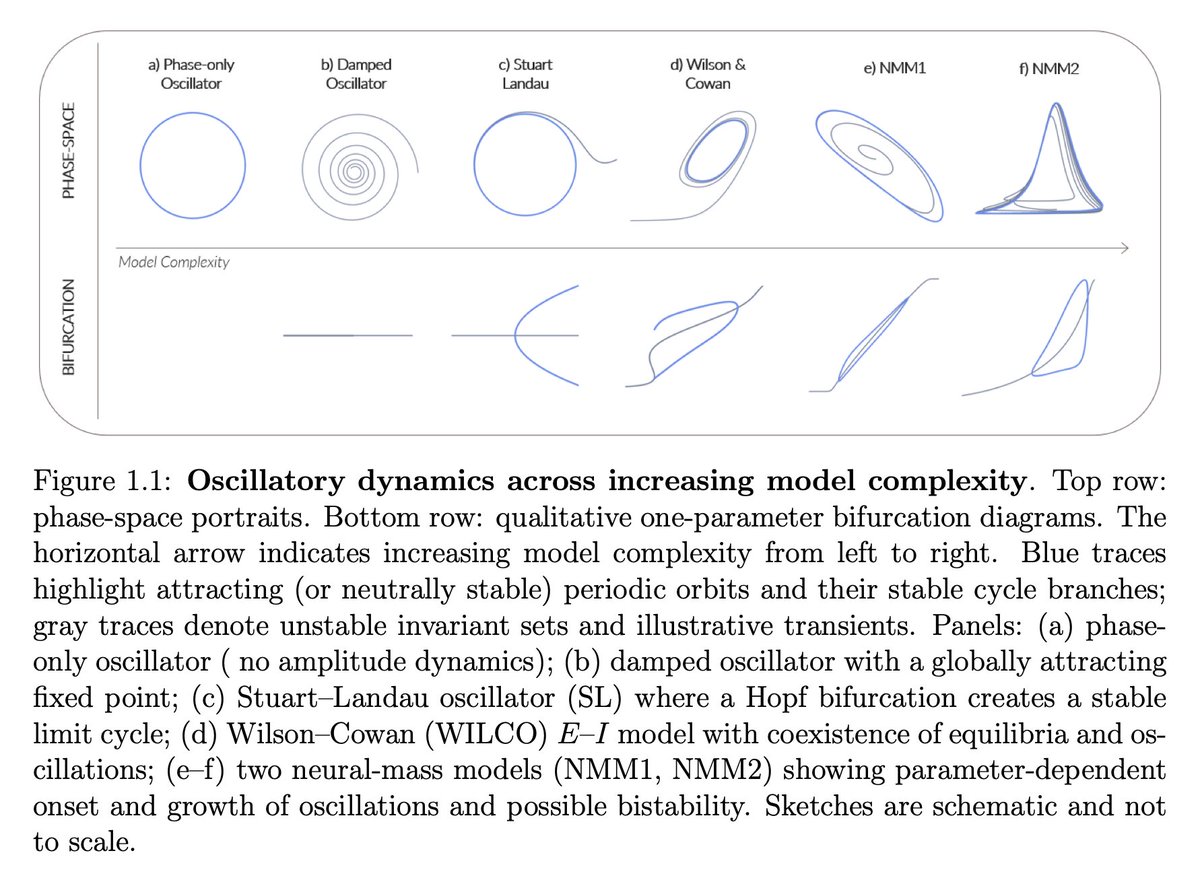
1/ 🧠 New in Computational Neuroscience: "Rosetta Stone of Neural Mass Models." We pr,ovide a unifying framework for translating between them, connecting the harmonic oscillator with Stuart-Landau, Wilson-Cowan, NMM1, and NMM2 (next generation). With @Castaldo_Fr, Raul de Palma Aristides, Pau Clusella, and Jordi Garcia-Ojalvo - https://t.co/MUvWbZSzE2
🧵 Thread: The Laminar Neural Mass Model (LaNMM) — A Unified Framework for Oscillatory Dynamics in Health and Disease
1. Intro
Let me introduce a modeling framework that my team has developed for computational neuroscience: the Laminar Neural Mass Model (LaNMM). This approach links circuit-level mechanisms to EEG/MEG biomarkers across brain states — from healthy function to disease and altered consciousness.
2. The Laminar Neural Mass Model (2022)
https://t.co/P3EoJdkxd8
https://t.co/ObUKs44JQh
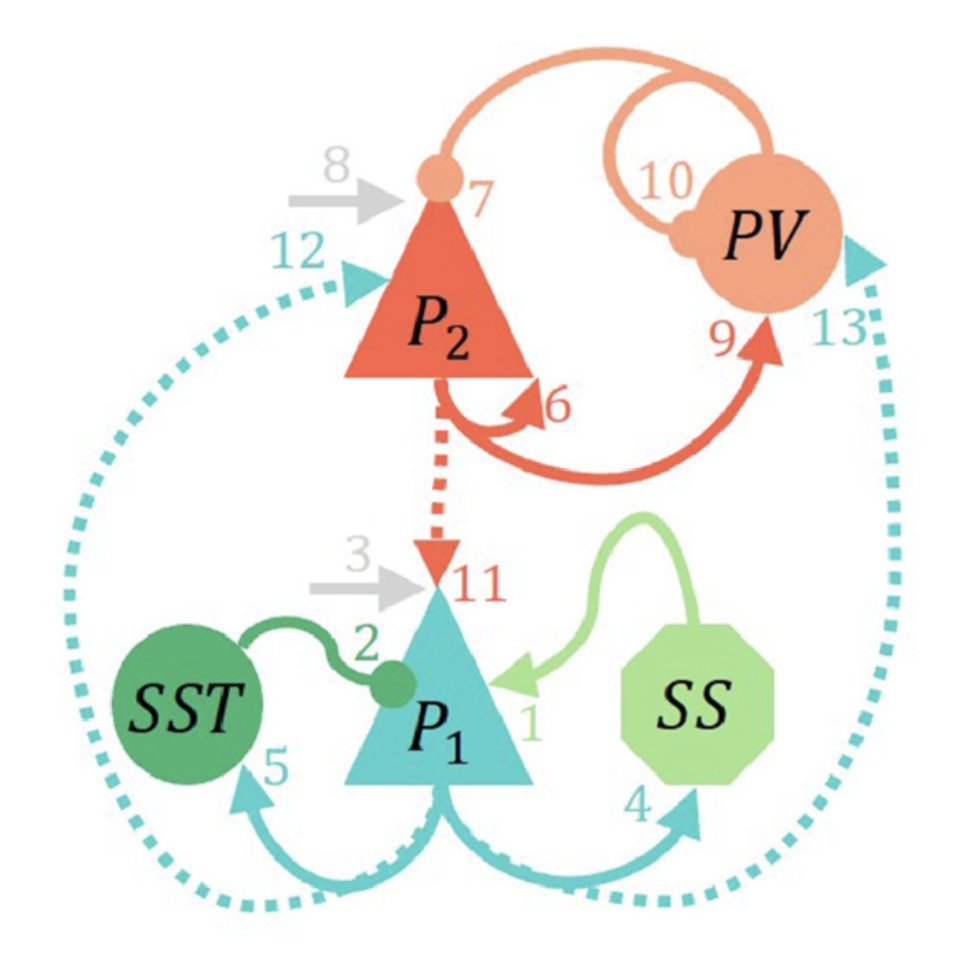
Our original LaNMM papers (2019, 2022) introduced a physics-grounded neural mass model capable of generating both alpha/beta and gamma oscillations across cortical layers. It embeds synaptic sources into a spatially layered medium, enabling simulation of laminar LFPs and their spectral features.
3. Key Insight
Alpha/beta (slow/fast) rhythms are generated in deep layers, gamma in superficial ones. The model’s structure allows us to simulate realistic depth-resolved LFP, bipolar LFP, and CSD — crucial for aligning with experimental macaque data and uncovering oscillatory origins.
Now comes the trilogy of applied studies using LaNMM:
4. AD Study (2025)
https://t.co/8IZ5dHBsp7
In this AD-focused work, the model simulates fast interneuron (PV+) dysfunction and later-stage pyramidal cell loss. This reproduces AD’s biphasic M/EEG trajectory: early hyperexcitability (↑gamma, ↑alpha), followed by slowing and hypoactivity.
5. Mechanistic Findings
Aβ oligomers impair PV+ interneurons → disinhibition → hyperactivity. Later, tau pathology hits pyramidal neurons → hypoactivity. The LaNMM shows that PV+ dysfunction alone explains the early phase EEG biomarkers, but tau-induced hypoactivity is required to match reduced firing/metabolism in advanced stages.
6. Clinical Relevance
This model suggests PV+ cells are a therapeutic target — and that EEG spectral changes can serve as early-stage biomarkers. It bridges molecular pathology and mesoscopic dynamics.
7. Psychedelics + AD (2024)
https://t.co/Pw5TwfaGs0
In this follow-up study, the LaNMM is embedded in whole-brain models personalized to AD patients. Activation of 5-HT2A receptors (mimicking psychedelics) increases excitability in L5 pyramidal cells — counteracting AD-related oscillatory deficits.
8. Restoration of Dynamics
Under 5-HT2A modulation:
→ ↓ Alpha power (reduces hypersynchrony)
→ ↑ Gamma power (restores PV-related processing)
→ ↑ Entropy/complexity (a proxy for cognitive flexibility)
9. Spatial Specificity
Spectral changes correlate with PET-derived 5-HT2A receptor distributions — suggesting that psychedelics could restore oscillatory dynamics in AD via targeted circuit modulation.
10. Prediction Error & CFC (2025)
https://t.co/fpTn2nCOET
Our latest paper goes deeper into theory. It proposes that LaNMM supports biologically plausible Comparator functions via cross-frequency coupling (CFC), enabling local prediction error evaluation in predictive coding.
11. Key Mechanisms
• Signal-Envelope Coupling (SEC): Low-freq rhythms modulate the amplitude of fast oscillations (PAC-like).
• Envelope-Envelope Coupling (EEC): Slow envelopes modulate fast envelopes — allowing gating and precision weighting (think Kalman gain).
12. Comparator Disruption Across Conditions
→ In AD: Interneuron loss disrupts CFC, leading to inflated early prediction errors and their later suppression.
→ In psychedelics: Increased gain weakens prediction precision → “relaxed beliefs” and increased error signaling.
13. Comparator Hypothesis
CFC in LaNMM instantiates the analog version of the hierarchical XOR-like error computation central to predictive coding and KT/AIF. This formalization bridges algorithmic models with real electrophysiology.
14. Why This Matters
Together, these papers show how LaNMM provides a unified, mechanistic scaffold for studying:
• Neurodegeneration (AD)
• Psychedelic states
• Predictive inference
• Oscillatory biomarkers
• Interneuron dynamics
15. Conclusion
LaNMM is not just another NMM — it’s a physically grounded, biophysically realistic platform that integrates structure, dynamics, and function. Expect to see more work where biology meets theory, with LaNMM at the core!
@neurotwin@Neuroelectrics@KarlFristonNews@GustavoDeco@Castaldo_Fr@ne_sanchez_todo@galvani_lab@ERC_Research@alvaropleone@VohryzekJakub
🧵/end
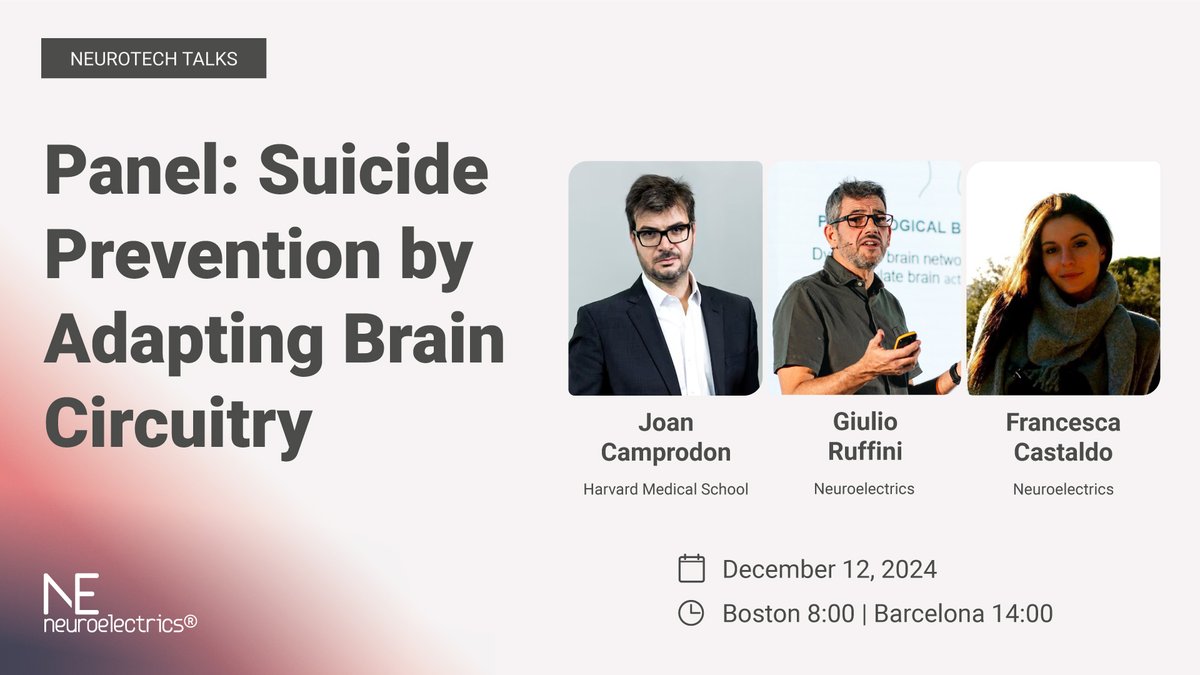
🚨 Don’t miss this week’s #NeurotechTalk with three incredible experts: @jacamprodon, @ruffini & @Castaldo_Fr!
Register now and discover how neuroscience & brain stimulation are transforming #SuicidePrevention.
Save your spot for Dec 12 here: https://t.co/UUlysw1X8I
Check this out! Our latest work on Major Depressive Disorder uses the algorithmic agent framework to bridge first-person and third-person perspectives, advancing computational neuropsychiatry.
Happy birthday, Karl!
#Neuropsychiatry#Depression
Our KT-MDD paper has been published!
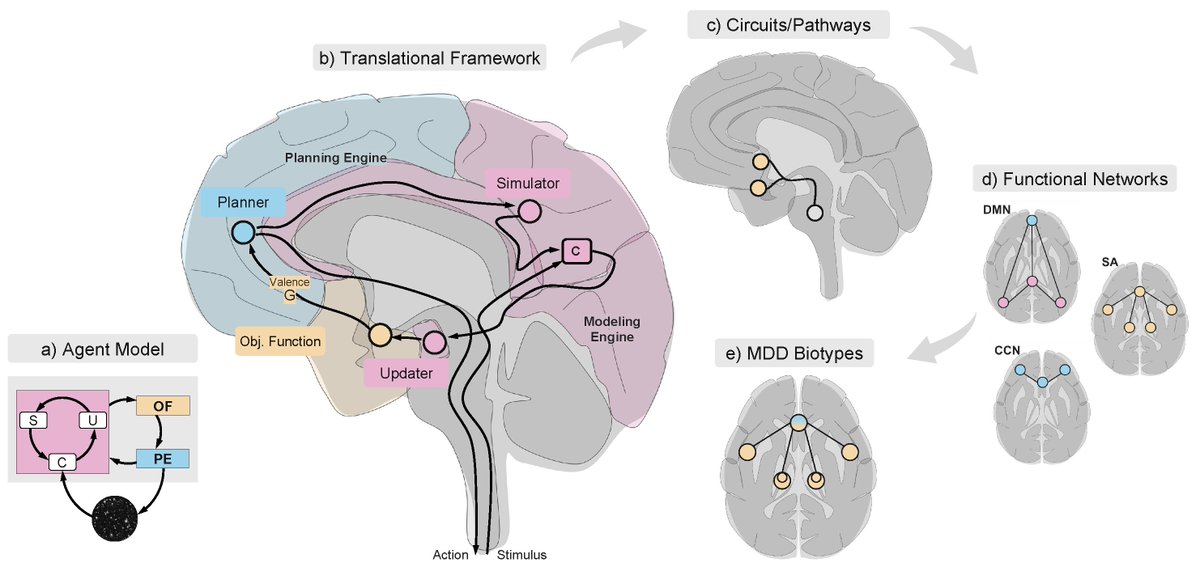
"The Algorithmic Agent Perspective and Computational Neuropsychiatry: From Etiology to Advanced Therapy in Major Depressive Disorder (MDD)," with @Castaldo_Fr, Ed Lopez-Sola, @ne_sanchez_todo, and @VohryzekJakub, is now part of the Special Entropy issue to honor Karl Friston's 65th birthday. https://t.co/2ZuKqkjChD
Here is a summary:
By using the algorithmic agent framework drawn from Kolmogorov theory of consciousness (KT), we link first-person and third-person phenomena to analyze MDD.
Some important concepts we use:
Def 1 (agent): An algorithmic agent is an information-processing system with an Objective Function that interacts bidirectionally with the external world, creating and running compressive Models (Model=Program in AIT language), Planning, and acting to maximize its Objective Function.
Def 2 (Emotion): The emotional state of the Agent is the tuple E = (Model, Valence). In first-person language, emotion is structured experience with valence, and can be described along dimensions characterizing world/self model structure plus valence (positive/negative).
Def 3: (Depressed Agent). Depression is a pathological state in which the output value of the Objective Function (valence) of an agent is persistently low.
A cornerstone in KT is this hypothesis:
Hypothesis (Structured Experience). An agent has structured experience (𝒮) to the extent it has access to encompassing, accurate, and compressive models to interact with the world.
The key question is this: what drives an agent to a state of persistent low valence?
Depression is characterized as a "disorder of the agent" arising from issues in how the brain evaluates valence (positive or negative feelings). We suggest that the complexity and multi-etiology of depression stem from the many systems involved in valence evaluation, including the structure of world models.
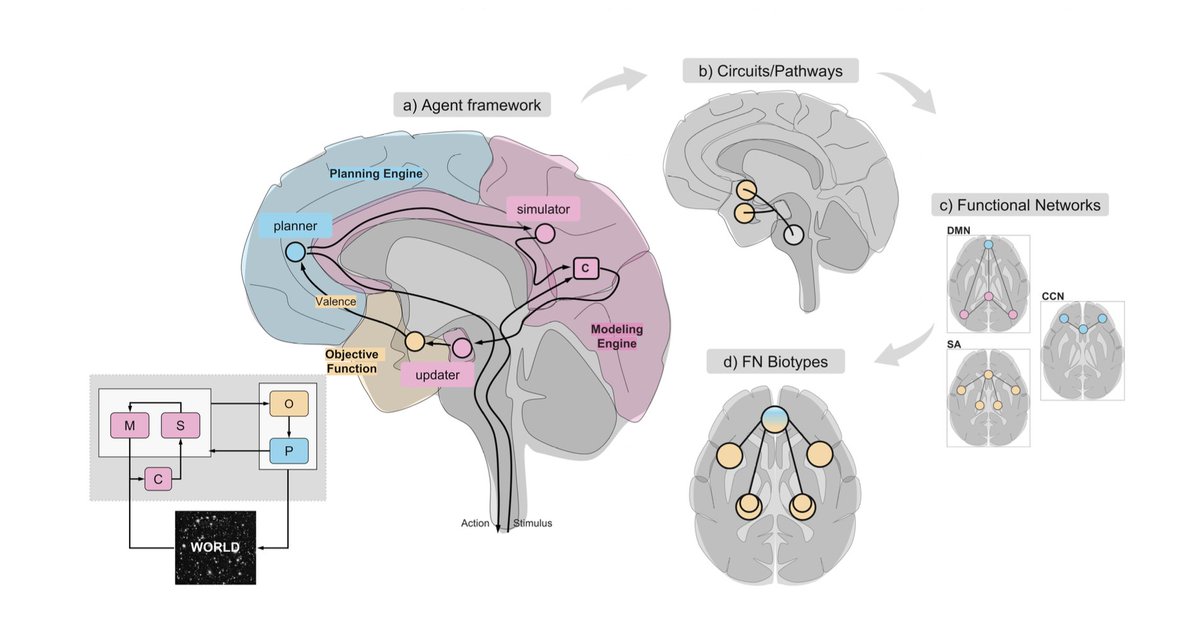
The framework divides complex neural processes into three agent components: the Modeling Engine, Objective Function, and Planning Engine.
Each element connects to specific brain regions and circuits. For example, the Modeling Engine is linked to areas like the posterior cingulate cortex and hippocampus, which are involved in learning (compression) and prediction. In contrast, the Objective Function is connected with the amygdala and ventral striatum.
We also propose a path toward personalized depression treatments and the importance of using "neurotwins" of a patient's brain to simulate and optimize treatments like brain stimulation and medication. For example, we highlight the potential of combining brain stimulation with neuroplastogens (substances that promote changes in the brain).
We acknowledge that mapping the abstract agent framework onto the intricate biological reality of the brain is complex. However, this approach is crucial for moving toward personalized, model- and data-driven treatments in neuropsychiatry.
Related talk at #techspiritbarcelona: https://t.co/xjl9WPF2oC
See also this related call for papers in Entropy on The Mathematics of Structured Experience: Exploring Dynamics, Topology, and Complexity in the Brain https://t.co/QkrQe8kIwR
This paper is part of the KT research program. You can learn more here:
https://t.co/9MVtnY33xr (2007)
https://t.co/sQGee6KHbl (2009)
https://t.co/nRfBxsOK72 (2017) https://t.co/Om4g7vB573 (2017)
https://t.co/W2pPjLbI5C (2023)
https://t.co/vdMpCApACg (2024)
https://t.co/wW0albSYnV (2024)
@Neuroelectrics@neurotwin@galvani_lab
We have released an updated version of our AIT/KT MDD paper, "The algorithmic agent perspective and computational neuropsychiatry: from etiology to advanced therapy in major depressive disorder." https://t.co/Ub18JAQa83. 1/n
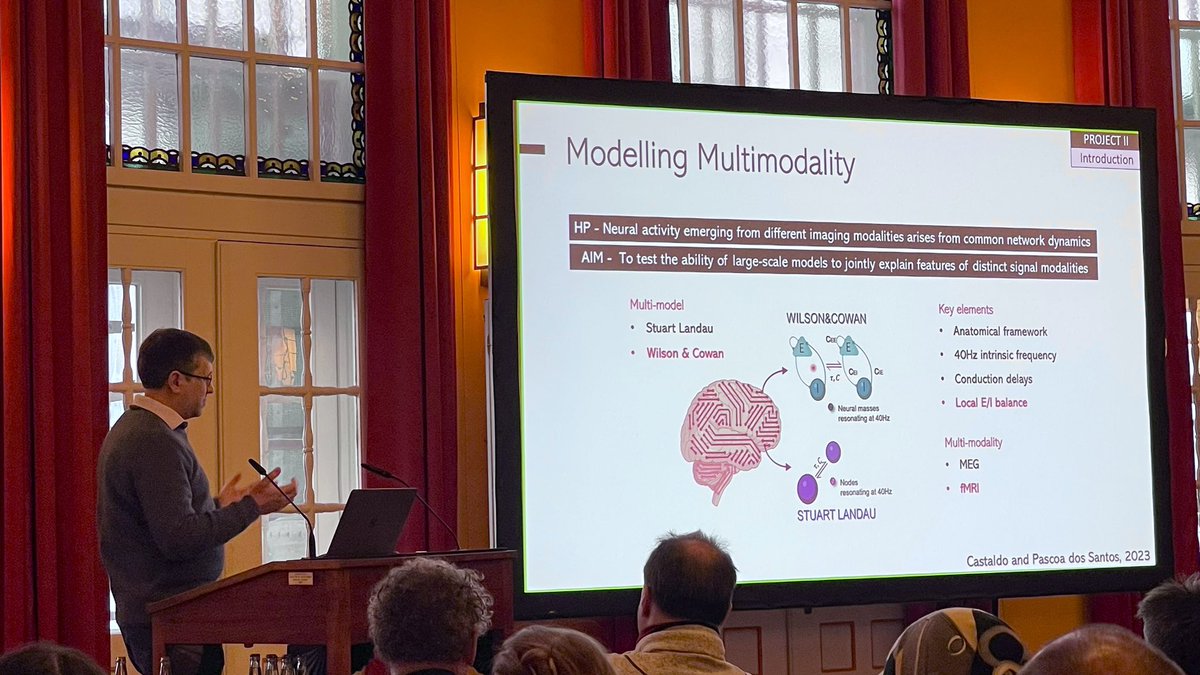
Despite feeling a bit awkward giving a talk about 🧠 modelling to some of the world’s top experts at #BrainModes2023 without being in the field myself, I enjoyed the experience. It helped that I presented the great work of @Castaldo_Fr with the beautiful slides she made.
Our modelling paper led by @Castaldo_Fr and @francpsantos has just come out in Neuroimage (handled by the 'classic' editorial board). Thanks to all the co-authors again and the reviewers for their helpful guidance.
https://t.co/OfrhKfaxob
Great to start the new year with a new preprint. Check out the second paper from @Castaldo_Fr's PhD. In collaboration with @francpsantos, @blobsonthebrain, @Joana_Cabral__, @VohryzekJakub, @markwoolrich, Gustavo Deco, Paul Verschure and Karl Friston. https://t.co/lllkeT7wHt 🧵1/6
A new preprint! Ever used pwelch, or signal.welch?
1960s stats for spectra are widely used today though statistical methods have greatly advanced. We modernise this with the GLM-spectrum...
@OHBA_Oxford @OxfordWIN @OxPsychiatry@TheCHBH@UoB_SoP
https://t.co/jQchrIjuYC
Richard Feynman's Lectures on Physics are timeless: their main strength is in demonstrating how to reason about physics. You may not know all the lectures are completely online:
Volume 1: https://t.co/yDpyRVjdVz
Volume 2: https://t.co/oEctaDi5Sv
Volume 3: https://t.co/eXS03nuH5c
I'm really proud of @Castaldo_Fr who still has almost a year to the end of her Ph.D. but has already been signed by @Neuroelectrics to start her dream neurotech job in Barcelona on the day she graduates. There she will continue her work on modelling brain oscillations.