Do you have ideas for specific, measurable incentives that reflect the collaborative rigors and mission-driven nature of today’s biomedical science?
… then NIH wants to hear from you.
Learn more and give your feedback on this Request for Information on Measuring and Rewarding Scientific Impact by August 19. ➡️ https://t.co/6ycQglbrJ4
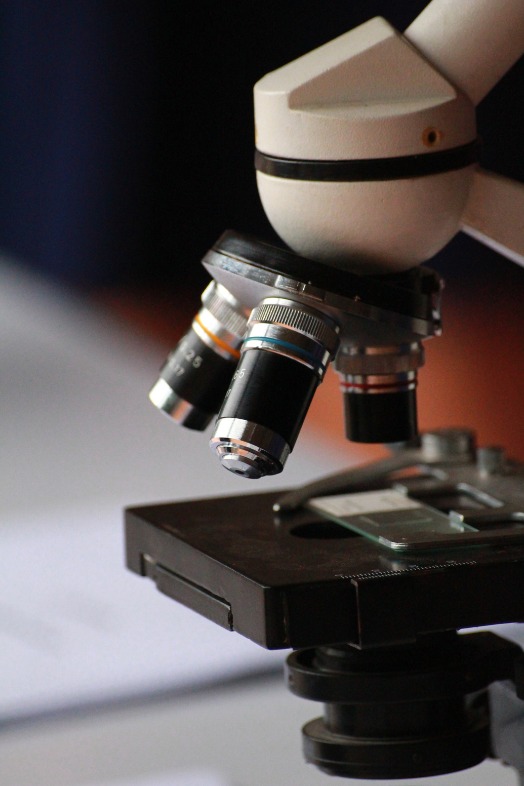
The 100-year-old scientific breakthrough that made it possible to observe small particles still plays an important role in modern science.
In 1902, Richard Zsigmondy began working on an idea that led to the ultramicroscope. By observing an intensely-lit solution at an angle perpendicular to the illuminating beam of light he found it was possible to differentiate between particles that were too small to be observed under an ordinary microscope. We can compare this to how dust particles suspended in the air sometimes become visible if we happen to be standing to the side of a window on a sunny day.
Using this tool he was able to observe small colloidal particles not visible in a conventional microscope. His observations inspired scientists such as Albert Einstein (Nobel Prize in Physics 1921), Jean Baptiste Perrin (Nobel Prize in Physics 1926) and The Svedberg (Nobel Prize in Chemistry 1926), whose studies lead to the general acceptance of the atomic nature of matter. By monitoring at right angles relative to the incoming light the microscope registered the scattering from the colloidal particles. Common manifestations of this effect can be seen as smoke (particles dispersed in air), milk (fat droplets in liquid) or fog (water dispersed in air).
His work earned him the Nobel Prize in Chemistry in 1925 and his discovery underpins modern colloid science.
Read more here: https://t.co/uBPOrxlga6
At Stanford's third annual RAISE Health Symposium, leaders across science, medicine, technology, industry, government and nonprofits explored what it will take to develop and deploy AI responsibly. https://t.co/3meheieNiT
@StanfordHAI
As AI makes generating polished work easier, the scarce skill is becoming judgment: knowing what to trust, question, and refine.
Yet most organizations train employees to use AI tools, not to think critically with them.
This four-step process can help professionals collaborate with AI more effectively while strengthening their own capabilities through reflection, evaluation, and deliberate learning: https://t.co/n0oiY8fdKc
MSK scientists have uncovered a hidden role for RNA.
Researchers led by MSK molecular and cell biologist @Mayr_Christine found that #RNA can act as a protein chaperone, helping critical regulatory proteins fold into the correct shape as they are being made.
The findings reveal a previously unknown function of RNA and suggest this mechanism may be used by more than 2,700 human genes. Learn more: https://t.co/cAQybc7Dck
"We think of failure as being just as productive as success."
Economist Peter Howitt on what we can learn from failing and being persistent.
What have you learnt when things went wrong?
Watch the full interview with Howitt: https://t.co/sttWkgaUif
“This is why I value that little phrase “I don’t know” so highly. It’s small, but it flies on mighty wings.”
- Literature laureate Wislawa Szymborska on the importance of telling oneself “I don't know.”
Totally over the moon 🤩 , our paper on charting human cellular senescence in aging and disease is on the cover!! It highlights the collective efforts and the first wave of publications from NIH @sennetresearch consortium to map senescent cell states, heterogeneity and niches!!
Spinal motor neurons in dazzling detail. ✨
Each green dot is a spinal motor neuron - crucial but rare cells making up just 1% of neurons in the spinal cord. In diseases like ALS, they are selectively damaged, making them of special interest to neuroscientists. #SciShots
Cardiovascular disease remains the leading cause of death in the United States, accounting for more deaths than cancer and chronic respiratory diseases combined. Most deaths from CVD are related to coronary heart disease, but heart failure, hypertension, vascular disease and arrhythmias contribute to the high burden. See the latest in the 2026 Statistics Update.
New Science Blog: Why has AI advanced faster in coding than in biology?
To agents, bio databases are like cities built before cars—maddening to drive in because they're designed for different traffic.
How do we build infrastructure agents can use?
https://t.co/PQaNQ4GRJZ