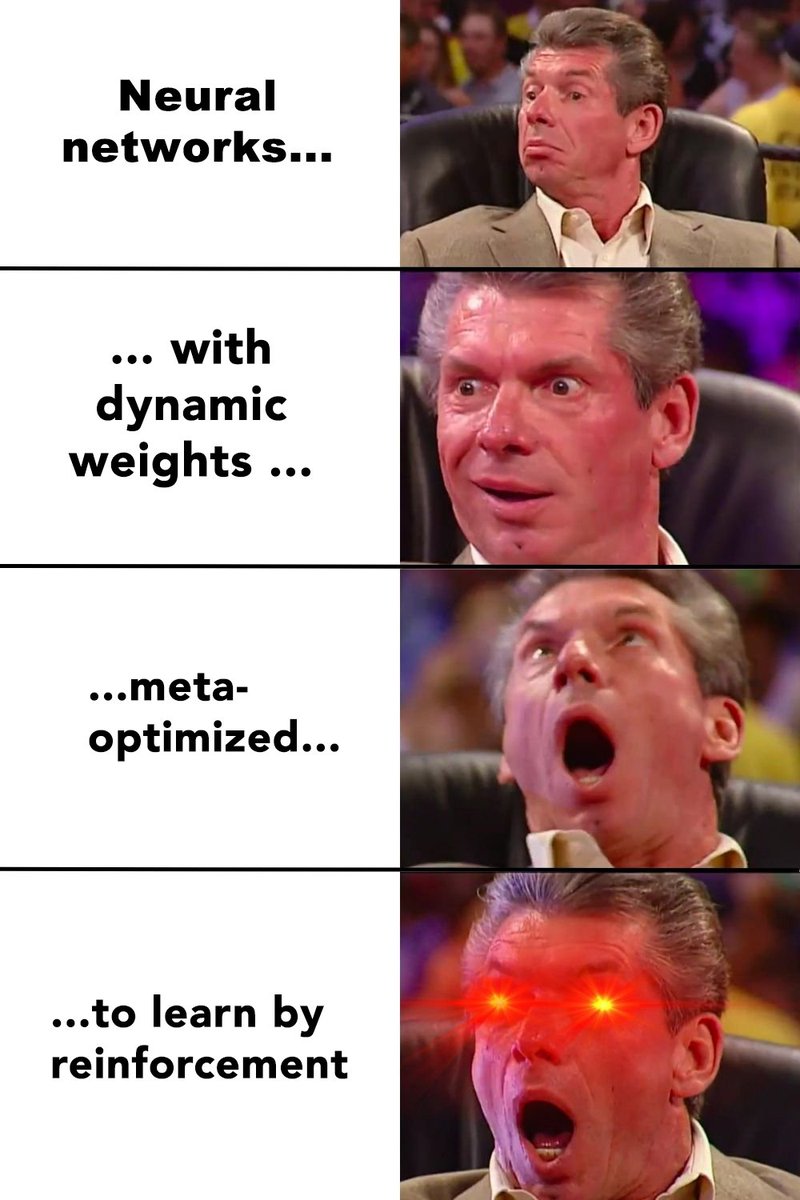
Sure, sgd is good, but have you tried learning your own learning rule? In a new #NeurIPS2022 paper (https://t.co/Xe58QRj8ZI), @Tserre, R. Vanrullen and I explore whether meta-learnt synaptic dynamics could encode an efficient reinforcement learning program. Spoiler, they can...
@PreetumNakkiran (A bit of self-promotion of recent work here 😇) The connection might not seem direct, but it's an attempt at generalizing the notion of attentional IC learning from the perspective of reproducing kernel theory
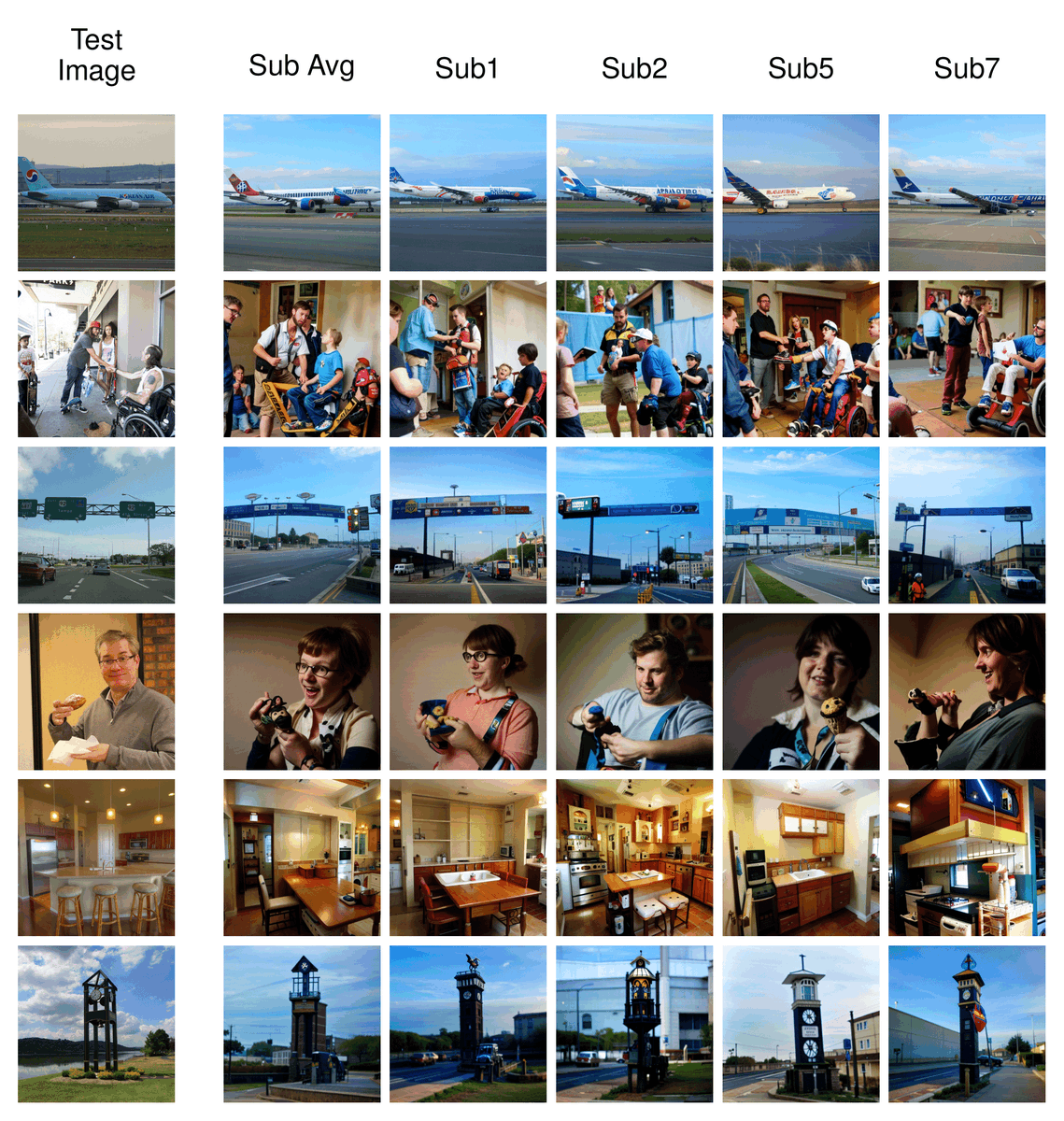
Let's do TLDR for our new preprint! Brain-Diffuser
https://t.co/EvO30CMgpC
We reconstructed perceived scene images from brain signals. These reconstructions capture both layout and semantic information of images... But how?
New optimization paper! 〽️🎢 Convergence guarantees and acceleration ratios for the Block Delayed Majorize-Minimize Memory Subspace Gradient descent algorithm, which solves centralized federated learning problems with asynchronous distributed updates!
https://t.co/qJ9ASyU28u
GANs aren't very creative; VAE lack quality; but diffusion models strike a goldilocks zone, being both creative and generating high-quality sketches. Still a bit of a gap compared to humans, but it's closing in. Intriguing work from @VictorBoutin@tserre https://t.co/6CwEudM5ge
@zacharynado@typedfemale@deepcohen For some reason this makes me think about https://t.co/eYJJIQPRC1 Another perspective showing that the transition kernel induced by the Markovian SGD process (and its learning rate) characterises the model generalization.
If you are interested to chat about this work and meta-learning in general, I'll be in NOLA this week. Poster session is Thu. at 2 p.m. PST. Looking forward to it!
Sure, sgd is good, but have you tried learning your own learning rule? In a new #NeurIPS2022 paper (https://t.co/Xe58QRj8ZI), @Tserre, R. Vanrullen and I explore whether meta-learnt synaptic dynamics could encode an efficient reinforcement learning program. Spoiler, they can...
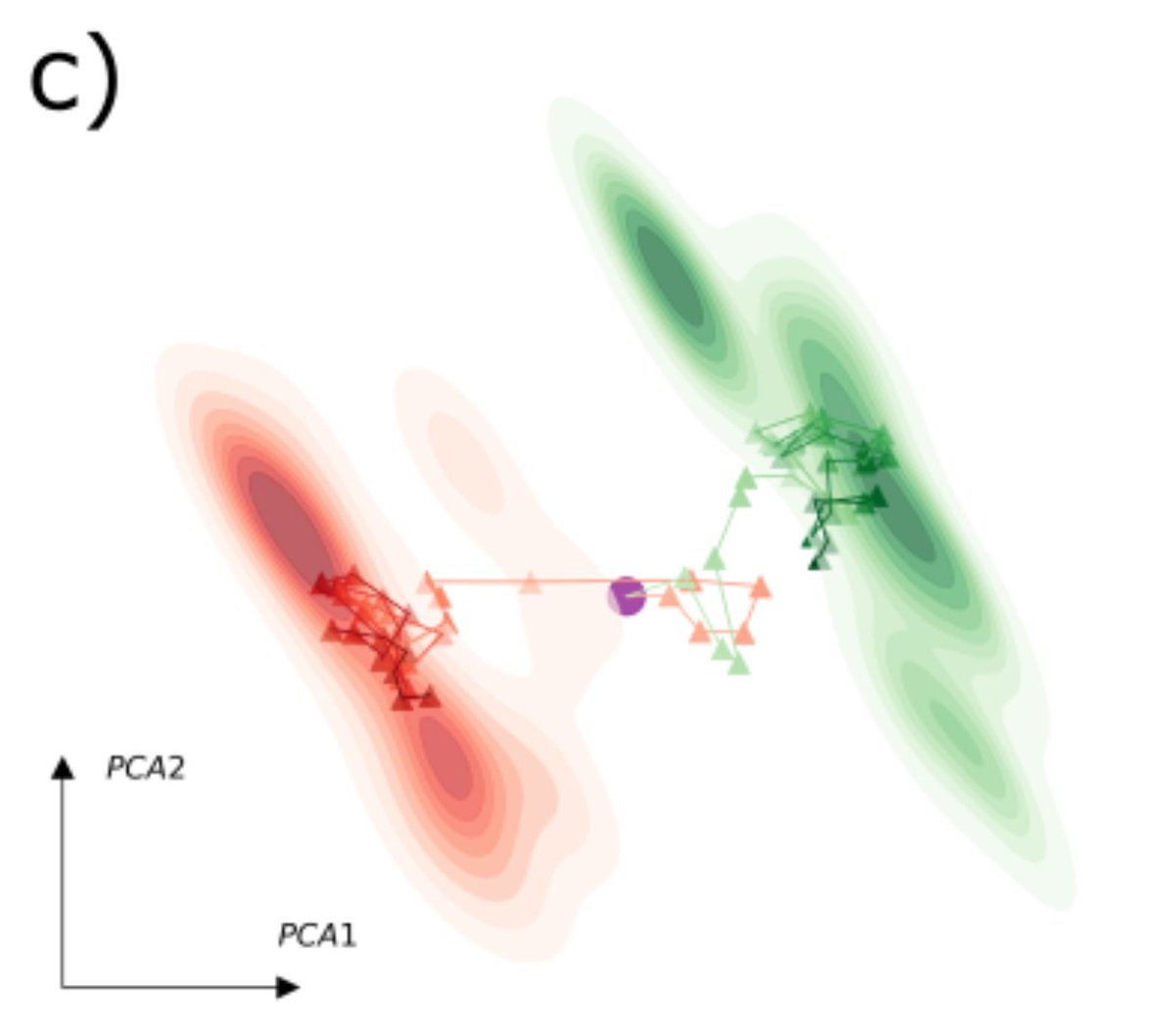
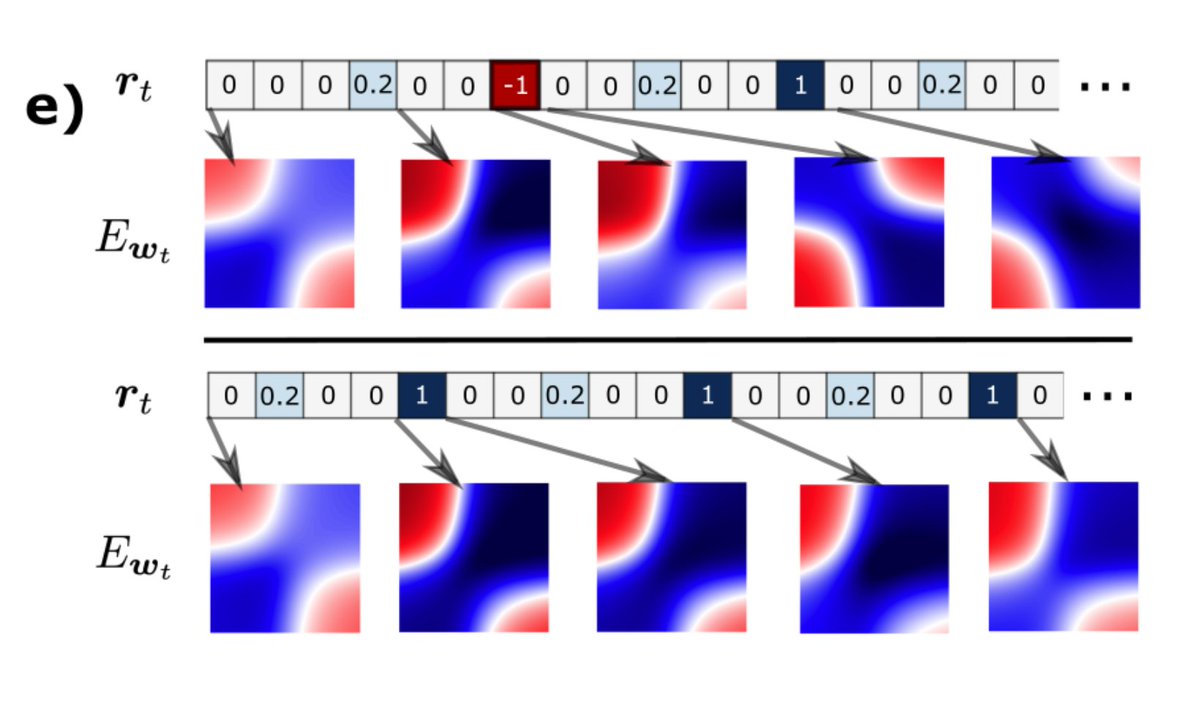
...We crafted networks able to continually self-modify themselves through recursive updates as a function of their weight state and sensorial information. The resulting agents are able to adapt fast and precisely in multiple tasks from maze navigation to robot control...
...Interesting properties emerge: Agents adapt rapidly, with behavioural changes interpretable as sharp modulations of the network Hopfield energy and identifiable attractors in the synaptic space .They are more robust and learning transfer better to unseen tasks variations...
We are pleased to present our work: an efficient attribution method based on Sobol indices for explainability!
Our new NeurIPS paper is available at https://t.co/iKX7h31tVE.
https://t.co/mRzSD0vswM for the implementation of the method🎉
To appear at NeurIPS 2020 (spotlight). Paper, code, and data at https://t.co/BJagzKoF9X.
Thanks to the reviewers for suggesting we emphasize the flood-filling routine discovered by the models for segmentation, resembling classic neuro/cog-sci work on human segmentation routines.
In future work, we would like to investigate the robustness and generalization properties of such controlled models as well as their similarities with fast-synaptic modulation systems observed in neuroscience.
9/9
Thanks for reading!
Excited to present my first work as a PhD student at
@ANITI_Toulouse and @tserre-lab at
@BrownUniversity with Rufin VanRullen and Thomas Serre: "Neural Optimal Control for Representation Learning". Preprint
https://t.co/mG5n5Ze5zE
Code & Notebook to come! Read more below!
1/9
Overall, this work suggest that a static parametrization of ANN is suboptimal as it constrains a single transformation to account for the whole data pop. On the contrary, considering them as flexible objects dynamically modulated might enhance their representation power.
8/9