David Sinclair just revealed one of the biggest studies on nattokinase.
A comprehensive Chinese study of 1,067 people found that nattokinase reversed cardiovascular disease by removing up to 95% of arterial plaque in one year.
This supplement is an enzyme from fermented soybeans and costs almost nothing.
Sinclair has been taking it daily for a couple of years.
He measures his carotid artery with ultrasound and says there's no plaque buildup at all.
Peter Diamandis takes it too.
He believes you need at least 6,000 fibrinolytic units per day to reap the benefits.
For context:
• Statins cost hundreds per month and come with side effects.
• Surgical interventions can cost thousands of dollars
Nattokinase costs a fraction of both.
Sinclair's caveat: "Do this with the knowledge of your physician."
But the data exists.
A study of over 1,000 people and up to 95% plaque removal in just 12 months.
And the man whose lab is reversing aging takes it every day.
— David Sinclair (@davidasinclair) on Peter Diamandis' (@PeterDiamandis) Moonshots podcast
Cette photo mérite absolument tous les prix. Elle a même sa place au Louvre.
Elle relate précisément l’inertie de l’individu face à l’effondrement.
Regardez la composition. Un chef-d’œuvre involontaire.
Au premier plan, le sable doré, les tongs abandonnées, la glacière. Le décor ordinaire du bonheur estival. Deux personnages assis, de dos, comme dans un tableau de Caspar David Friedrich. Sauf que Friedrich peignait des hommes contemplant le sublime. Ici, ils contemplent la catastrophe. Et ils ne bougent pas.
Au centre, le parasol. Publicitaire, criard, dérisoire. Un pastis face à l’apocalypse. C’est presque trop parfait : la France qui prend l’apéro pendant que le monde brûle. Aucun scénariste n’aurait osé.
Et puis le ciel. Les deux tiers de l’image. Cette muraille de fumée qui avale la lumière, ce dégradé d’ocre et de noir digne d’un Turner. La nature qui reprend la palette des maîtres pour peindre notre propre fin.
La femme photographie l’incendie avec son téléphone. Mise en abyme totale : nous documentons notre disparition au lieu de l’empêcher.
Cette image dit tout. Le déni, le confort, l’habitude. Nous sommes tous sur cette plage. Nous voyons tous le nuage. Et nous restons assis, parce que l’eau est bonne et qu’on a posé nos congés.
Les historiens de l’art parleront un jour de cette photo comme on parle du Radeau de la Méduse.
Sauf que cette fois, le naufrage, c’est nous qui le regardons depuis la plage.
💔🌍
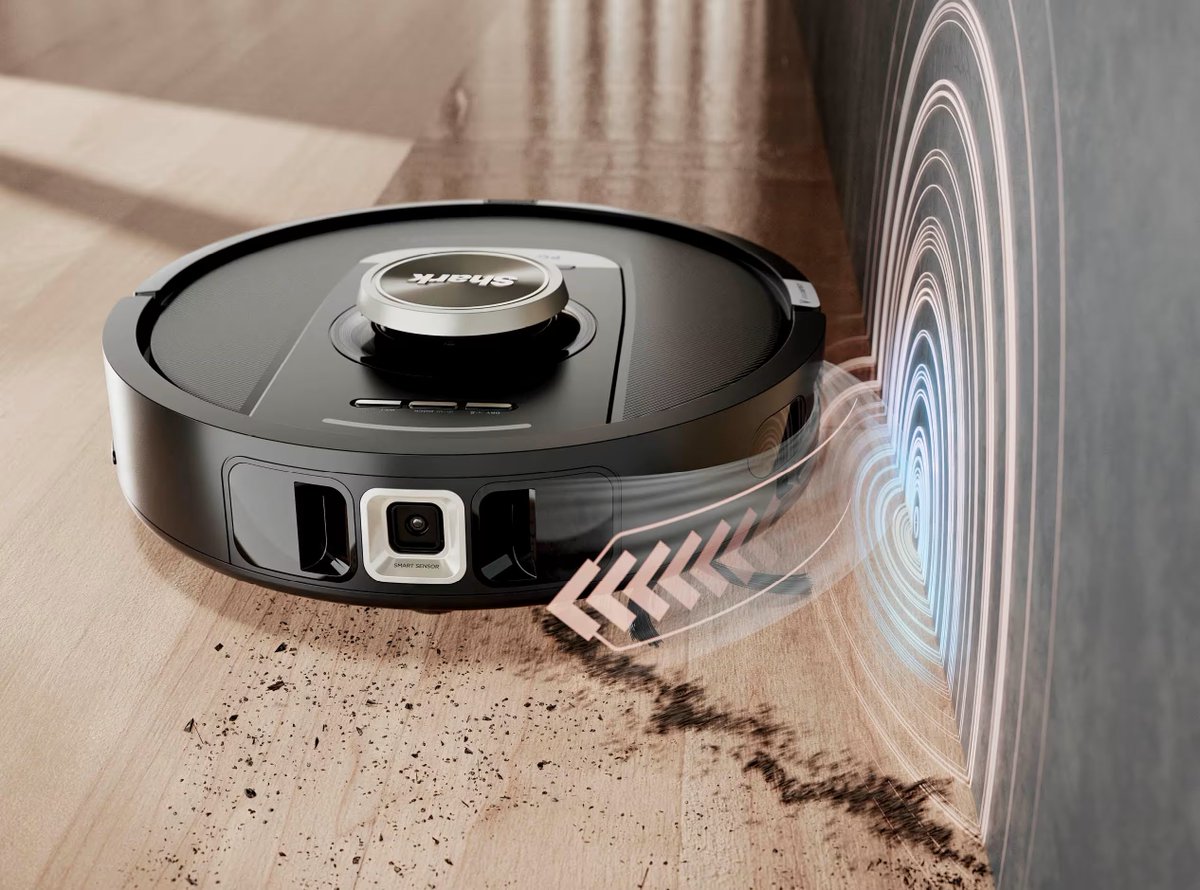
🦔A researcher pulled a live camera feed, a home floor plan, and the Wi-Fi password in plain text from a Shark robot vacuum he didn't own. One security certificate unlocked every other Shark vacuum. He listened to Shark's system for 24 hours, counted 1.5 million vacuums checking in, and 673,000 responded to a command he sent. He told Shark in March. They promised a fix by July 10. No patch, no response, so he published.
My Take
Your vacuum cleaner is now a bigger security risk than your front door. Someone with basic hardware skills can pull your Wi-Fi password, watch your camera, and download the layout of your home, and the company that sold it to you knew for four months and couldn't be bothered to fix it. Every week there's a new device on the list. LG monitors, Flock cameras, smart TVs, now vacuums. I'm running out of appliances.
The reason none of this gets fixed is because there's no consequence. A car manufacturer would face a mandatory recall. Shark faces a Reddit thread. Until connected devices are held to the same product safety standards as everything else people bring into their homes, companies will keep shipping cameras and microphones with barely any investment in security. If you own a Shark vacuum with a camera, unplug it tonight. That's the only fix available right now because Shark hasn't provided one.
Hedgie🤗
What I've learned from World Cup travelers this week.
- Apparently the US is the only country with A/C
- Other countries don't use seasoning on their food
- You can only buy a gallon of milk in the USA
- You have to pay for a 2nd or 3rd pop at a restaurant outside of America. No free refills
- They love to party just like us and boy are they fun!
- Only we do flyovers before games
- America's spring is hotter than Europe's summer
-We have a lot to learn when it comes to soccer chants
- Ranch Dressing is a delicacy to be treasured
- Their media lies to them just like ours does to us
Can we keep em?
LEGENDARY: On January 19, 2003, Metallica delivered an unannounced free pop-up concert at the Oakland Coliseum parking lot right before the AFC Championship Game.
Metallica was dressed in full Oakland #Raiders gear, and the crowd went absolutely crazy. https://t.co/TIFwY4WsOd
@JoshInnesShow Barstool started 22 years ago. Bill Simmons has been in the business since the 90s. They aren't building anything. They are already built. I don't know who Josh Pate is but Pat McAfee walked into a world people like Dan Patrick helped create. Show a little respect.
Nattokinase is truly a remarkable supplement.
At 10,800 FU daily, it reversed arterial plaque in 66.5% of patients over 12 months, with no side effects.
The rest of the data is even more insane.
Researchers tracked 1,062 people with confirmed hyperlipidemia and carotid artery plaque.
These weren't just healthy volunteers.
Every person had an ultrasound at the start and another after 12 months of daily nattokinase.
The study used two dose groups: 3,600 FU and 10,800 FU per day. The low-dose group saw almost no change in their plaque or lipid markers.
Even though it was the same supplement for the same amount of time, the dose made the difference.
At 10,800 FU, carotid artery plaque shrank by up to 36%. The arterial wall thickness decreased by 21.7% on average.
These are physical, structural changes that doctors measured and confirmed on ultrasound.
77.7% of participants showed measurable improvement in arterial wall thickness.
66.5% showed measurable reduction in plaque size.
Improvement rates across all markers ranged from 66.5% to 95.4% for the majority of over 1,000 people, not some few lucky responders.
The participants lipid results moved in every right direction simultaneously.
- Total cholesterol: down
- LDL: down
- Triglycerides: down
- HDL: up
No adverse effects were recorded at any point across the full 12 months.
Lifestyle also amplified everything.
Participants walking more than 5,000 steps daily responded better than sedentary ones, and those with higher BMI saw larger relative improvements, likely because they started from a higher risk baseline where there was more room to move.
The study also tested co-administration.
Vitamin K2 and low-dose aspirin taken alongside nattokinase produced a synergistic effect, outperforming nattokinase alone across cardiovascular markers.
If you're building a stack, that's the combination the data points to.
The researchers found the effective range is 6,000 to 12,000 FU daily. Most supplements in Europe are only 2,000 FU. That's a huge gap.
The data shows 2,000 FU does almost nothing to plaque, while 10,800 FU actually shrinks it.
All in all, truly an incredible enzyme.
I'm a cardiologist. I've held dying hearts in my hands in the cath lab at 3 AM. And I need to tell you something that changes everything about how we prevent heart attacks.
For decades, the entire field was built on one target: lower LDL cholesterol. Statins save lives — that's settled science. But too many of my patients did everything right — took their statins, hit their numbers, lived clean — and still ended up on my table with a ruptured artery.
We were treating the smoke while the fire kept burning.
The fire is inflammation. And the evidence is now overwhelming.
The CANTOS trial proved it first — lowering inflammation independent of cholesterol reduced cardiac events. But the newer data is what keeps me up at night.
AI-enhanced CT angiography can now detect inflamed arteries by measuring changes in the fat surrounding your coronary vessels — the perivascular fat attenuation index. Higher inflammation in the fat around even one artery independently predicts cardiac death. When multiple arteries show inflammation, the risk multiplies dramatically — even in patients whose cholesterol looks perfect.
This isn't theoretical. This is measurable. Right now. On a scan you can get this month.
Low-dose colchicine — a drug that's been around for centuries for gout — is now FDA-approved specifically for reducing cardiovascular events. It works by quieting the inflammatory cascade that destabilizes the plaque sitting in your arteries. A pill that costs pennies is saving lives the statins couldn't reach.
And the next wave is already in Phase 3 trials. Ziltivekimab — an IL-6 inhibitor — targets the central inflammatory pathway driving atherosclerosis. Phase 2 data showed a 90% reduction in hsCRP. The ZEUS cardiovascular outcomes trial is enrolling now, with results expected late 2026 into 2027. If positive, anti-inflammatory therapy will become standard in managing heart disease alongside lipid-lowering. The era of inflammation-targeted cardiology is arriving.
But it goes deeper than drugs. AI is now predicting heart failure and cardiac events 5+ years before symptoms — integrating CT imaging, electronic health records, and genetic data with accuracy that jumps far beyond traditional risk calculators.
And polygenic risk scores — a simple genetic test that flags inherited cardiovascular risk — are now formally recognized as a risk-enhancing factor in the 2026 ACC/AHA guidelines. A single blood draw can reveal risk that's been silently building since birth. Decades before the first chest pain.
Here's what this means for you right now — today:
Ask your doctor for a high-sensitivity CRP test. It's cheap, routine, and measures the systemic inflammation that standard cholesterol panels completely miss. You can have perfect LDL and inflamed arteries that are quietly preparing to rupture.
If your hsCRP is elevated, discuss low-dose colchicine with your physician. It's FDA-approved for exactly this.
Push for a coronary CT angiography with AI plaque and inflammation analysis if you have risk factors. This isn't the stress test your parents got. This is 3D visualization of your actual arteries — with AI quantifying not just how much plaque you have, but what kind it is and whether the surrounding tissue is inflamed.
Consider polygenic risk score testing — especially with a family history of early heart disease. It's now guideline-supported.
And the foundation that never changes: move daily, eat real food, sleep 7-9 hours, manage stress, and know your numbers — ApoB, Lp(a), hsCRP, fasting insulin.
I left Iran as a child with nothing. I rebuilt everything in a country that gave me the freedom to become a physician. I've spent twenty years watching patients get second chances.
The ones who haunt me aren't the ones who died on my table. They're the ones who survived but never acted on what the science was telling them — years before the event that didn't have to happen.
You can have perfect cholesterol and still have a heart attack. Inflammation plus genetics can drive plaque rupture in arteries that look "fine" on a standard panel.
The myth that normal cholesterol means you're safe has cost more lives than I can count.
We now have the tools to detect the fire — not just the smoke. AI to see it. Genetics to predict it. Drugs to quiet it. And the ancient basics — movement, real food, sleep, purpose — to prevent it from starting.
Prevention is the new cure. And the science to make it real is no longer coming.
It's here.
Only a few months after releasing their debut album, Rage Against The Machine arrived at Pinkpop in 1993 with a song that was already becoming impossible to ignore. “Killing in the Name” combined Tom Morello’s innovative guitar work with Zack de la Rocha’s uncompromising lyrics, turning political anger into one of the most explosive tracks of the decade.
The People of the Lie
In the late twentieth century, psychiatrist M. Scott Peck attempted something few clinicians were willing to risk: he took the concept of evil seriously without surrendering it to superstition. In People of the Lie, he argued that certain patterns of human behavior cannot be adequately described by neurosis alone. There exists, he suggested, a form of character disturbance marked not merely by dysfunction but by deliberate self-deception—a structured refusal of truth.
Peck did not describe evil as horns and fire. He described it as a lie.
Not a single falsehood. A system of falsehood.
At the center of what he called evil was narcissism—not vanity, but an impenetrable defense of self-image. The individual constructs a false identity and then protects it at all costs. Any information that threatens that identity must be denied, projected, or destroyed.
Shame cannot be tolerated. Vulnerability cannot be admitted. Responsibility cannot be accepted. Narcissistic personalities exist in a state of chronic inner instability. Beneath the outward structure of confidence lies a continual oscillation—between grandiosity and collapse, between rage and emptiness. At one moment the self inflates toward omnipotence; at the next it collapses into worthlessness. The psyche swings between the terror of being nothing and the exhausting performance of being everything.
This description aligns with unsettling precision to the dark force we have called the Gorgon.
The Gorgon does not merely indulge instinct. She hardens around shame. She constructs a defensive cohesion so absolute that reality itself must bend to preserve it. Where the Idamus trembles between desire and fear, the Gorgon freezes the structure of identity and calls that rigidity strength.
Peck argued that deeply narcissistic individuals experience themselves as righteous. They do not perceive their own destructiveness. They experience criticism as persecution. They externalize blame reflexively. They are convinced of their moral superiority even as they inflict harm.
In clinical terms, this is grandiosity.
In spiritual language, this is possession.
This is an excerpt of the newly released book: Nous Solis.
To read further, continue here:
I cannot recall a time like today where every corner of mainstream, social and alternative media is talking about a top.
“The market moves to the price that hurts the most people.”
B
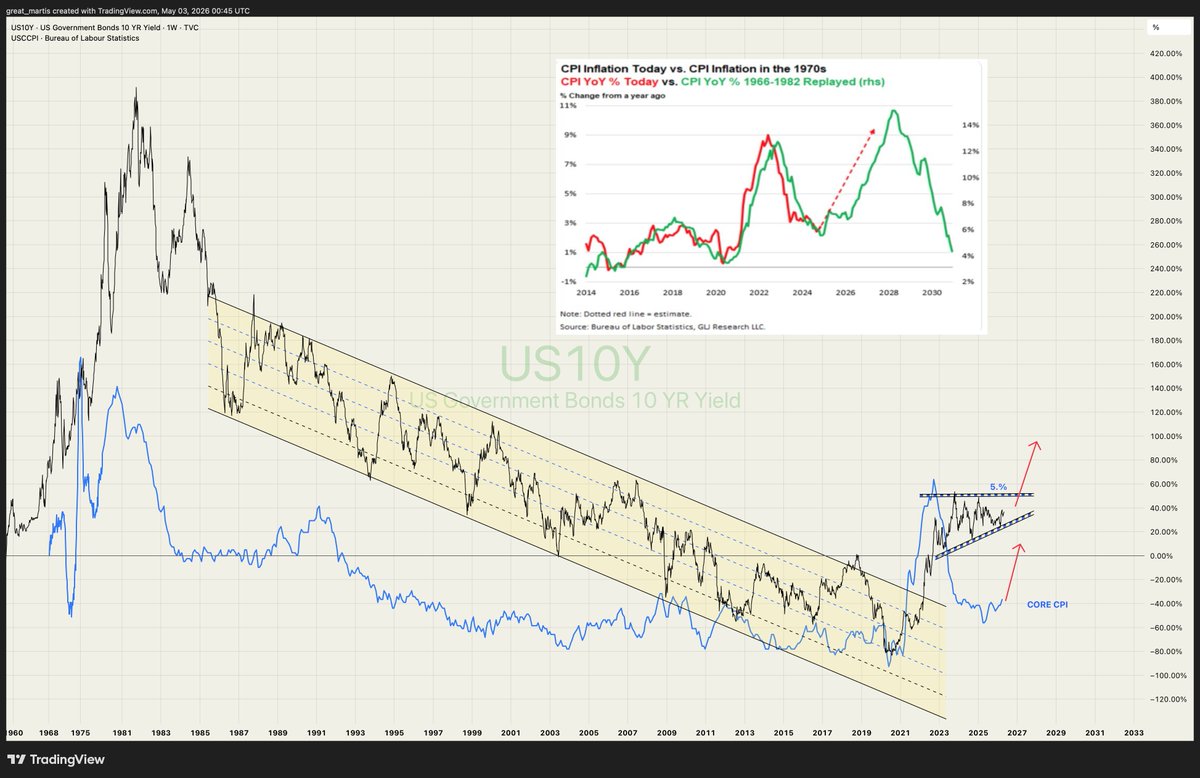
🚨 US10Y Yields Are About to Replay the 1970s Inflation Nightmare (Inflation is much higher IF we include shelter.)
The message is crystal clear: we’re at the exact inflection point where the 1970s playbook restarts .. unless something breaks the cycle.
The 1970s delivered 30 - 40%+ market swings (stocks, bonds, real assets) during that era of reckless government intervention .. wage/price controls, endless fiscal stimulus, the end of Bretton Woods, oil shocks, and monetary chaos. Volatility was brutal because the system was levered to the hilt and policymakers kept kicking the can. Sound familiar?
Here’s what awaits if we DON’T get a proper deleveraging event now:
US10Y yields rip sharply higher bond prices get obliterated, mortgage rates explode, corporate refinancing becomes impossible.
Persistent/re-accelerating inflation erodes real wages and savings while the debt supercycle rolls on.
Equities face stagflation-style 30 - 40%+ drawdowns (or worse) as higher yields suck liquidity out of risk assets.
The chart isn’t predicting rain… it’s showing you the storm is already forming on the exact same coordinates as the last one.
Deleveraging is coming .... either the controlled, painful kind (recession + tight policy) or the disorderly kind (inflationary blow-off + 1970s-style chaos).
Markets don’t let you run trillion dollar deficits and zero real rates forever.
History doesn’t repeat… but it sure as hell rhymes.
Yours truly,
The Great Martis✨
She's beautiful .
“Charlie and I were on a plane which was hijacked. They asked Charlie about his last wish and he said he wanted to give speech on the virtues of Costco.”
“The hijacker asked me, what was my last wish and I said - Shoot me first.” 😂
- Warren Buffett.
There's a single gut microbe that influences your mood, your sleep, your skin, and even your muscle mass.
96% of people have lost it.
Scientists just discovered it triggers your body to produce the "Love Hormone" oxytocin.
Not in your brain, but in your gut.
The microbe is called Lactobacillus reuteri (L. reuteri).
It used to live in nearly every human gut on Earth.
Today -
Antibiotics, processed food, and modern living have wiped it out of almost everyone.
If you've taken even one round of antibiotics in your life,
Yours is probably gone.
Researchers at Baylor College of Medicine made a stunning discovery.
They found that oxytocin -
The hormone linked to mood, bonding, stress relief, and healing - is produced in your small intestine.
Not just your brain.
Your gut.
And L. reuteri is what can trigger its release.
How does it work?
L. reuteri stimulates special cells in your intestinal lining to release a hormone called secretin.
Secretin then signals nearby cells called enterocytes to produce and secrete oxytocin.
Your gut is literally manufacturing one of the most powerful hormones in your body.
And -
It's published science.
The Baylor team confirmed it using human intestinal tissue, gene expression data, and lab-grown intestinal cultures.
The highest concentration of oxytocin-producing cells?
The small intestine.
Dr. William Davis - the physician who wrote "Wheat Belly" and "Super Gut"
... figured out how to grow L. reuteri at home using a simple fermentation process.
Not a pill
Not a supplement
A highly concentrated probiotic food you make yourself.
Here's what people are reporting after restoring L. reuteri:
- Deep, uninterrupted sleep
- Reduced anxiety and improved mood
- Thicker hair and younger-looking skin
- Increased muscle mass (even without heavy exercise)
- A 50% rise in testosterone in men over 50
- Faster wound healing
- Restored libido
MIT researchers tested it in mice.
The ones given L. reuteri stayed lean, kept their fur, mated, and aged gracefully.
The control group (same diet, no L. reuteri) -
Got fat, lost their hair, stopped mating, and died early.
Same crappy diet.
Completely different outcome.
Why?
Because L. reuteri does something most probiotics can't.
It colonizes your entire small intestine -
ALL 24 feet of it.
It produces natural antibiotics called bacteriocins that kill harmful bacteria.
And it prevents the toxic migration of fecal microbes into your upper gut.
When those bad microbes invade the small intestine, they release toxins into your bloodstream.
That's called endotoxemia.
It drives weight gain, brain fog, type 2 diabetes, cognitive decline -
And is now being linked to multiple forms of the Big C.
L. reuteri helps stop that at the source.
The key?
Dr. Davis found that fermenting L. reuteri at 99°F for 36 hours produces roughly 300 billion microbes per serving.
More than 30X a typical supplement.
A half cup a day is the protocol.
I've been saying for 30 years: your mood, your anxiety, your energy -
It starts in the gut.
When I healed my gut, my crippling anxiety disappeared.
Not from medication.
From fixing the actual cause.
Now science is catching up.
And L. reuteri is one of the biggest reasons why.
Comment GUIDE and I'll send you a FREE guide on how to make unlimited probiotics at home.
#Patriots HC Mike Vrabel was at Arizona State’s Pro Day today, checking out 6’6”, 321-pound OL Max Iheanachor.
No other HC does it like this.
(🎥 @Blakes_Take2)