Chronicling the adventures of @charvi_21 discovering what lives in her backyard (and sometimes beyond). Excited to see your neigh-bird discoveries! 🐦🦉🦆
@himanshuguptapr I couldn't believe the video, that's why I looked it up and chanced upon the whole story. seems like a telenovela. i've also almost always seen hornbills in pairs so i wonder what happened here 😞
looking at the ecosystem as a whole and each creature an essential part of it makes all the difference. i'm not (yet) having them crawl into my palm, but i'm also no longer evacuating the building.
"Insects are the food that make all the birds and make all the fish”
i used to be wildly afraid of insects pretty much my whole life until i started birding and realized there were no birds where there were no insects.
https://t.co/YEjZl895o9
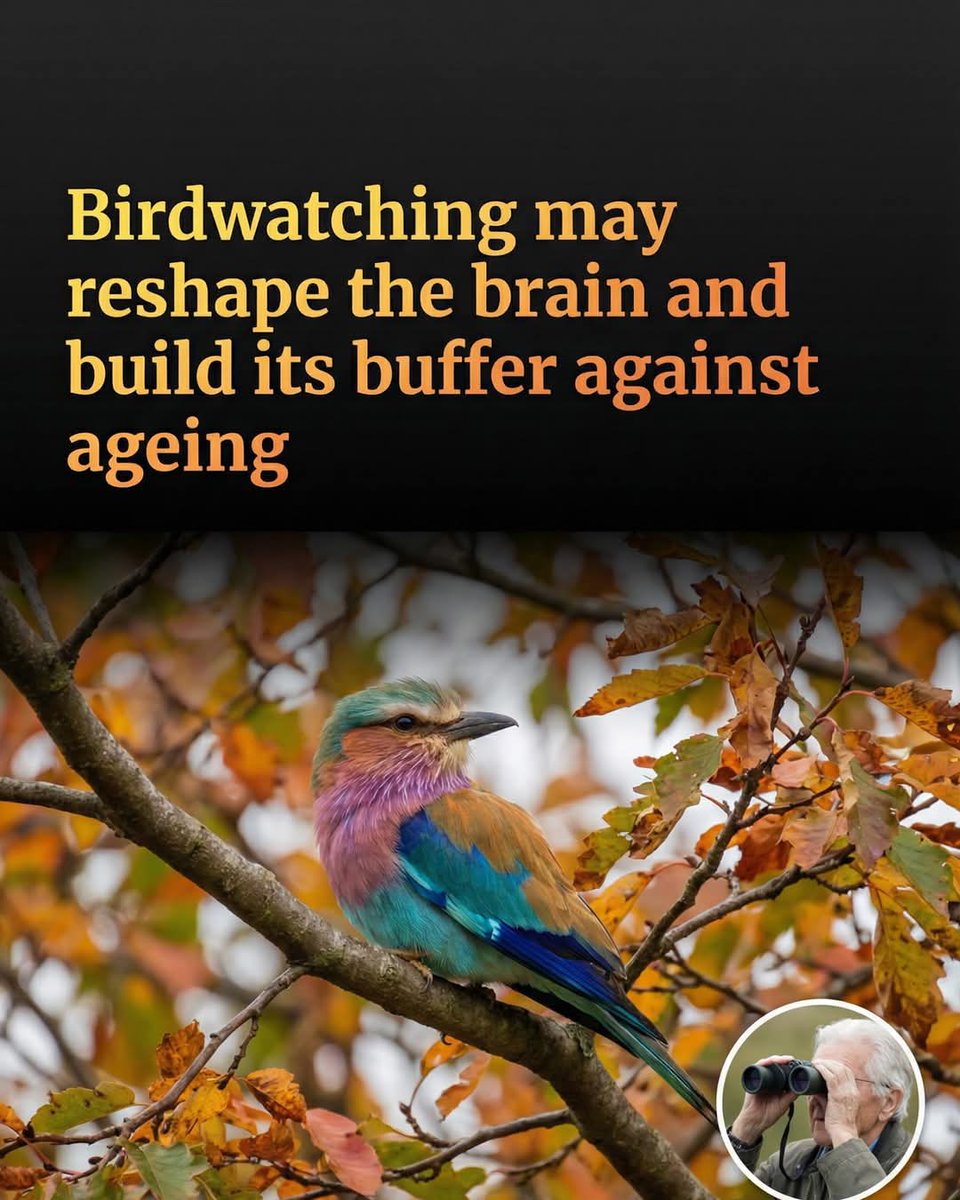
🚨 New research reveals that birdwatching can literally rewire the human brain.
For years, enthusiasts have touted the peaceful nature of birdwatching, but new neuroscientific evidence suggests the hobby offers far more than just relaxation. Researchers have discovered that expert birders possess significant structural differences in their brains compared to novices. These specialized neural pathways allow them to identify even unfamiliar species with remarkable speed and accuracy. Much like the cognitive shifts seen in polyglots or professional pianists, the act of birding appears to fine-tune the brain's visual and auditory processing centers, turning a casual interest into a powerful exercise in neuroplasticity.
This discovery highlights the brain's incredible ability to adapt and specialize based on our environment and interests. By consistently distinguishing subtle variations in plumage, song, and flight patterns, birdwatchers effectively rewire their minds to perceive details that others might miss. The study suggests that such expertise is not an innate talent but rather a result of prolonged practice that reshapes the cortex. Whether you are a seasoned field guide or a backyard enthusiast, this research reinforces the idea that engaging deeply with the natural world is not just a pastime—it is a cognitive investment that sharpens the mind for a lifetime.
source: University of Zurich. Birdwatching reshapes the brain in a similar way to learning a language or instrument. ScienceDaily.
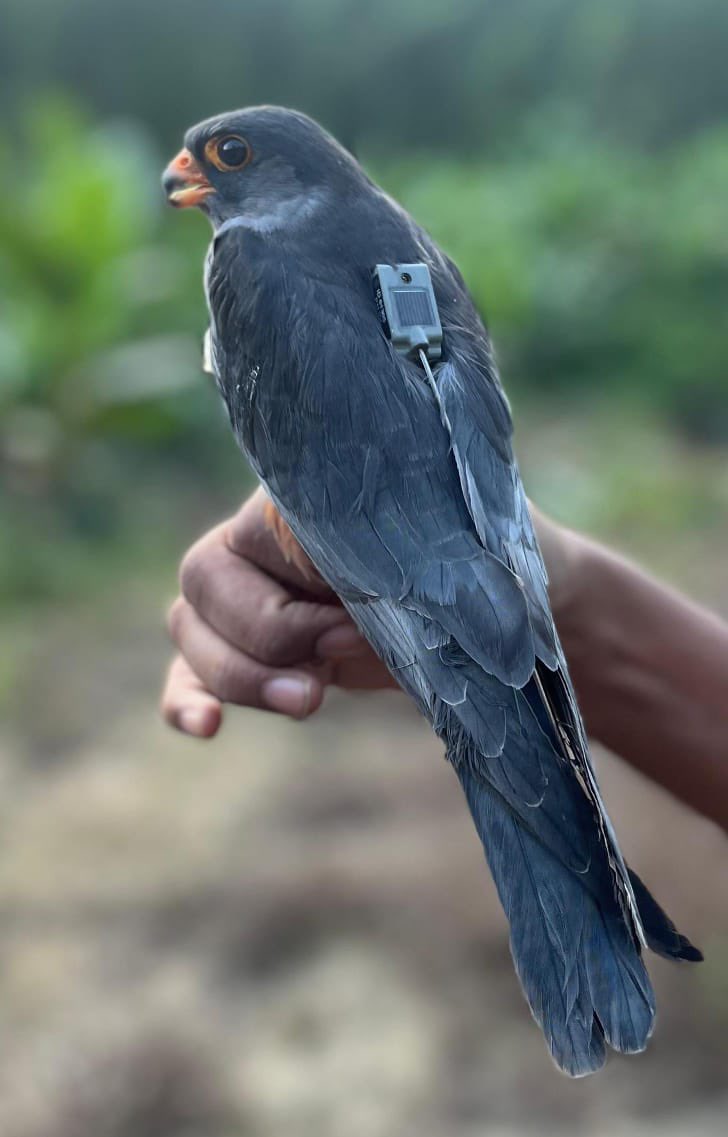
Here is an update - All three satellite-tagged Amur Falcons Apapang (male), Alang (young female) and Ahu (female) are now undertaking their daring Arabian Sea crossing. Apapang has already flown nonstop for 76 hours, covering 3100 km at an average of 1000 km per day, aided by strong easterly tailwinds. From here, the journey becomes even more extraordinary as they head towards Somalia on their epic 3000 km oceanic flight @sureshwii@wii_india #Amurfalcons
Caught this White-throated Kingfisher grabbing breakfast this morning, much less appetizing than my mushroom omelette. Plus I didn't even have to smash my food against a pipe before eating it. Ki…ki…ki…ki!
#IndiAves#BBCWildLifePOTD#ThePhotoHour#Luv4Wilds#BirdTwitter