I want to share my latest (very short) blog post: "Active Learning vs. Data Filtering: Selection vs. Rejection."
What is the fundamental difference between active learning and data filtering?
Well, obviously, the difference is that:
1/11
We reveal the fundamental role of local pseudo-symmetry in the emergence of low-energy grain boundaries in low-symmetry monoclinic Ga2O3 https://t.co/EhPHNb631U
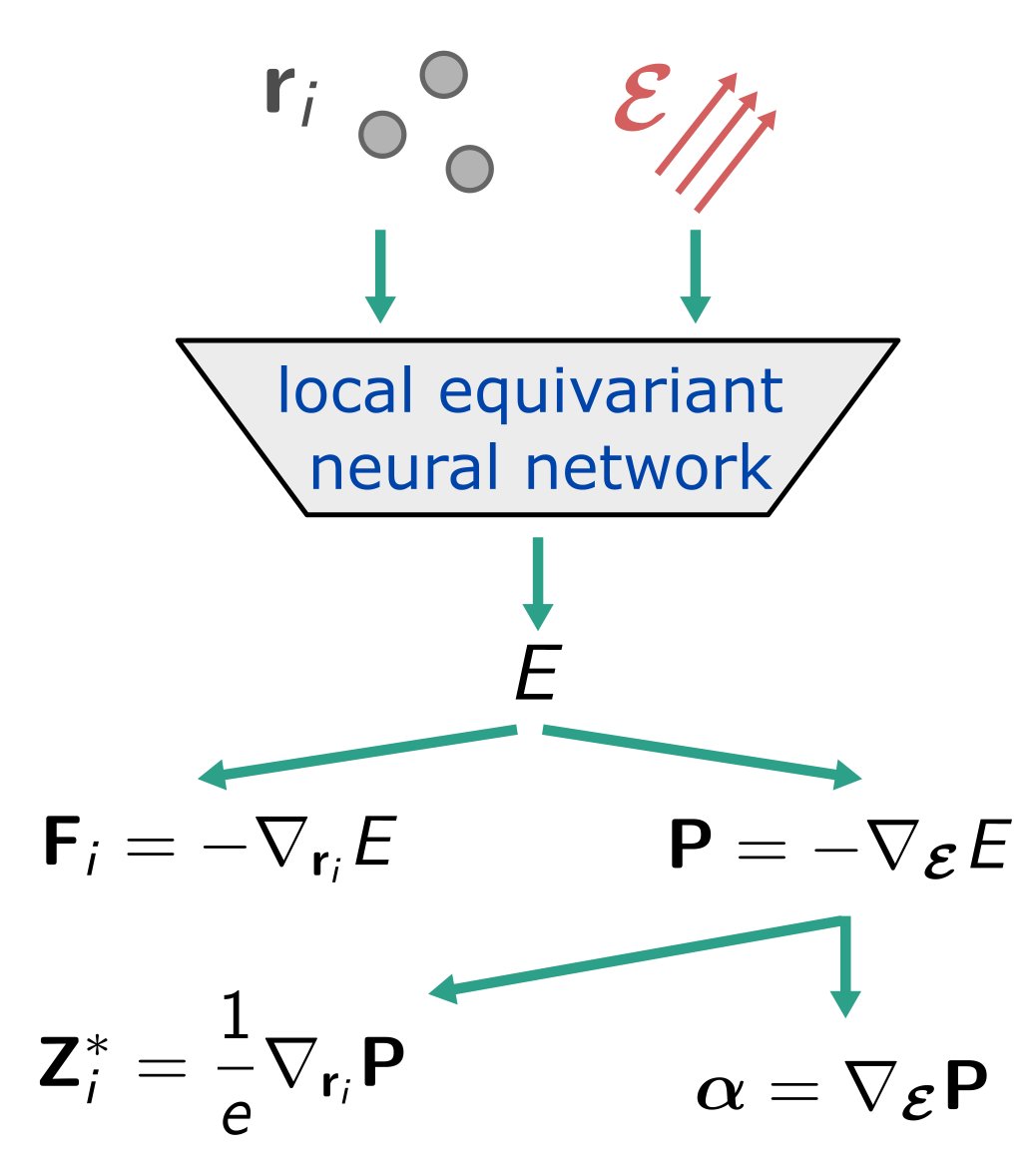
Exciting news! MatterSim has officially claimed the #1 spot on the #MatBench Discovery leaderboard https://t.co/DeL32uUB3a.
MatterSim is a SOTA #machinelearning force field for materials simulation, discovery and more https://t.co/g6dOMMDtVN. @luzihen#AI4Science@MSFTResearch
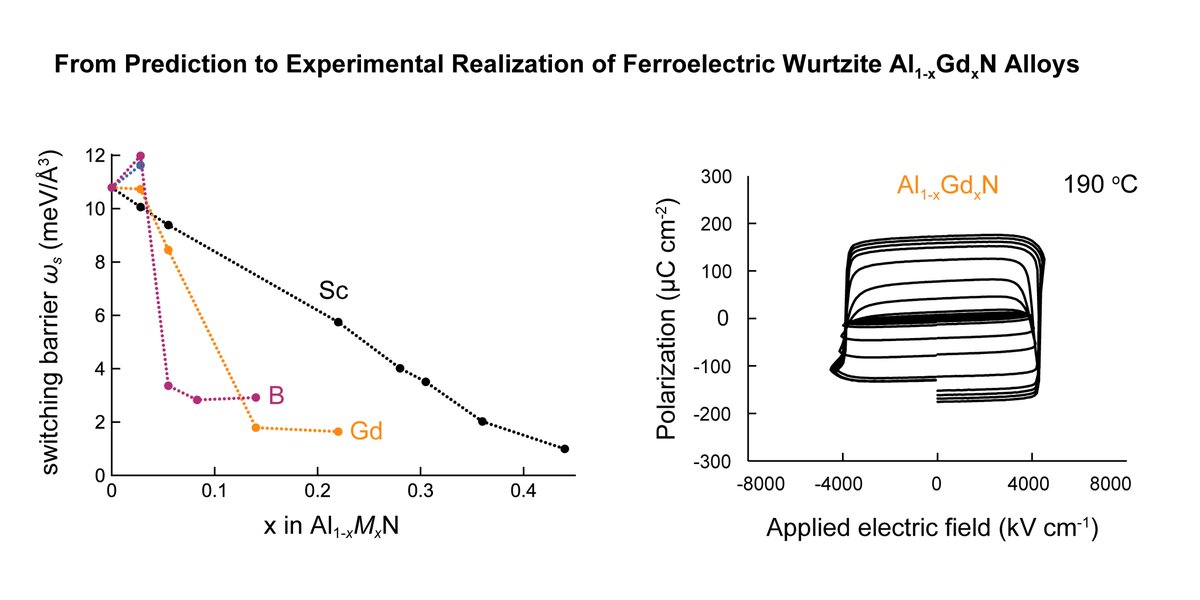
@ChengWeiLee2, Kei Yazawa demonstrate the computationally-guided discovery & experimental demonstration of new ferroelectric wurtzite (Al,Gd)N alloys. Collaboration with @coschoolofmines @NREL
Preprint: https://t.co/AmCM0qRRey
In this @AppliedPhysLett paper, led by @ChengWeiLee2, we begin to understand the defect makeup and their effect on the ferroelectric properties of wurtzite (Al,Sc)N. Contrary to the idea that defects are "bad", we find that they facilitate FE switching!
https://t.co/DudR2MXQF1
The time has already come for the upcoming 24-25 faculty application cycle!
This year, for ChemE, we love the growing need and interest in teaching faculty positions.
To account for this, we've added a " teaching" tab to the ChemE tracker- 2 already!
https://t.co/iVpz2CGNid
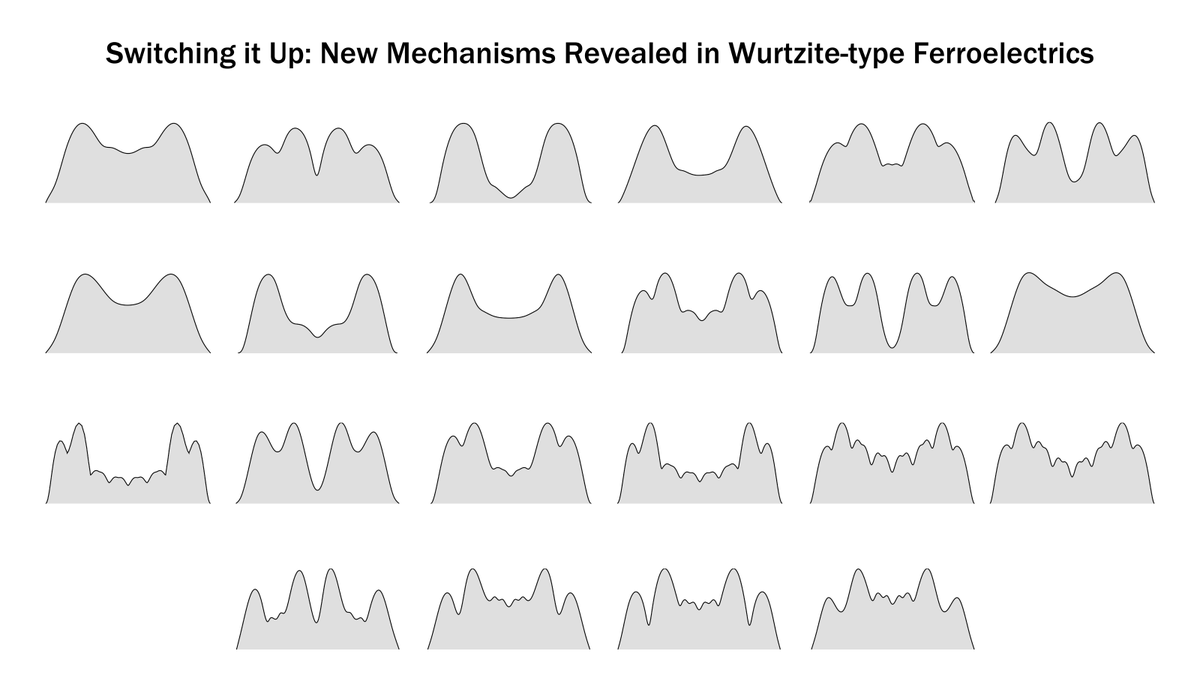
Polarization switching in wurtzite-type ferroelectrics is more complex than initially thought, involving multi-barrier transitions. Beautiful work by @ChengWeiLee2 revealing unique switching mechanisms and non-polar structures. @NREL @coschoolofmines
https://t.co/3lOhiHI0dr
@ChengWeiLee2 led this fantastic work! Project funded by @NSF DMREF, partly by @ENERGY. One of those rare occasions when the peer-review experience is pleasant - tough questions that required months of additional work but improved the paper. Thanks reviewers and @Matter_CP!
Emerging materials & design principles for wurtzite-type ferroelectrics, now out in @Matter_CP. In this study, led by @ChengWeiLee2, we identify potential wurtzite-type FE materials, new switching mechanisms, and design principles. @coschoolofmines @NREL
https://t.co/wzR9dwIyXJ
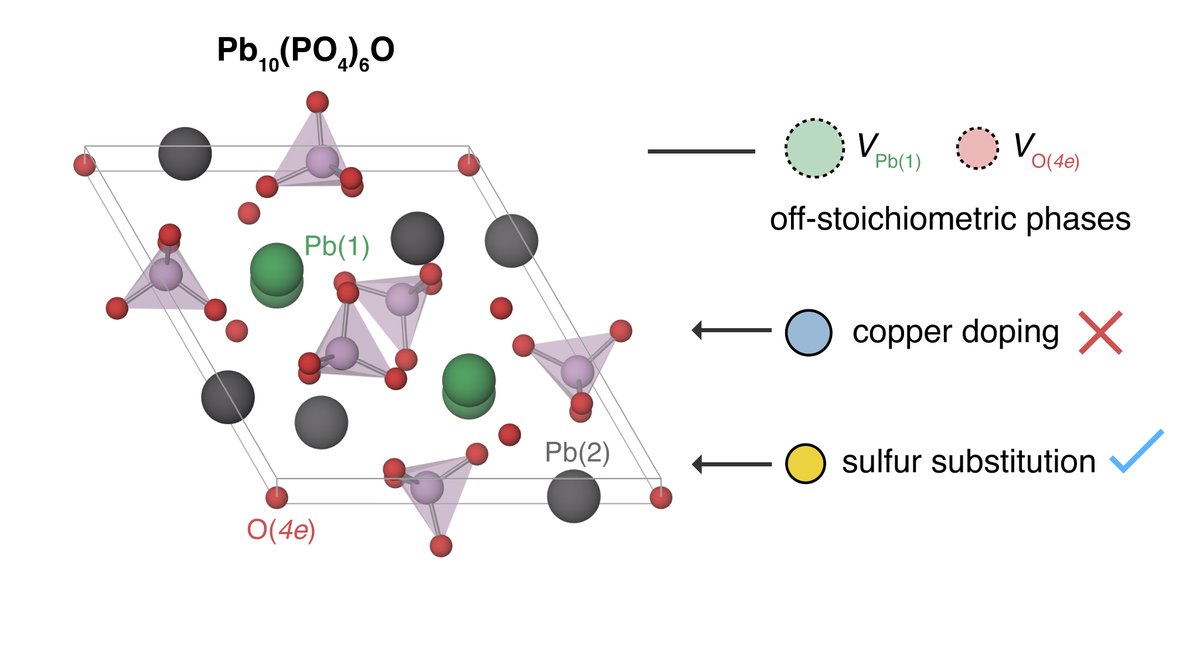
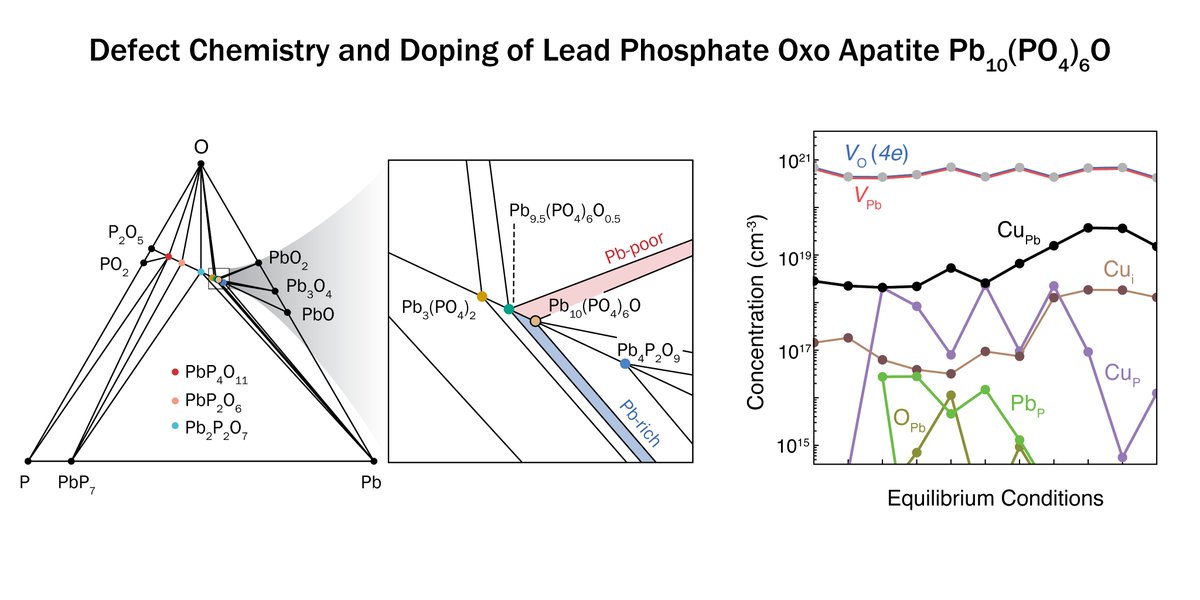
Experimental attempts to reproduce the #LK99 claims raised questions about composition, off-stoichiometry, Cu doping etc. Using defect calcs., @MichaelToriyama@ChengWeiLee2 provide useful insights in this
@ACSEnergyLett paper. #compchem
https://t.co/jY9HYpUyIh
Polarization switching in wurtzite-type ferroelectrics is not as simple as initially thought. Beautiful work by @ChengWeiLee2, in collab with @coschoolofmines @NREL folks, reveals unique switching mechanisms and non-polar structures. #compchem
https://t.co/NWGYvQ2baz
Experimental attempts to reproduce the #LK99 claims raised questions about the composition, off-stoichiometry, Cu doping etc. We're always thinking about phase stability/defects, so it piqued our interest. See what @MichaelToriyama@ChengWeiLee2 found...
https://t.co/3ildq78FuH
Wurtzite ferroelectrics have received a lot of interest since its first demonstration in AlScN (2019). We identify emerging materials and design principles, and reveal new switching mechanisms. Work masterfully led by @ChengWeiLee2@coschoolofmines @NREL
https://t.co/kv2lUU0DFj
Solar absorbers can be paralyzed by contact interfaces. Device efficiency of #CdTe solar cells can be improved (> 22%) with better contacts. We worked w/ @FirstSolar, @NREL to search for new back contacts. Now out in @ScienceAdvances#ScienceResearch
https://t.co/fPEhKHgRUG
Three classes of ternary oxides are identified as semiconductor candidates for high-#power#electronic devices using a high-throughput computational workflow and a review of doping and crystal growth feasibility. @coschoolofmines @NREL
https://t.co/kguSzrLdz7
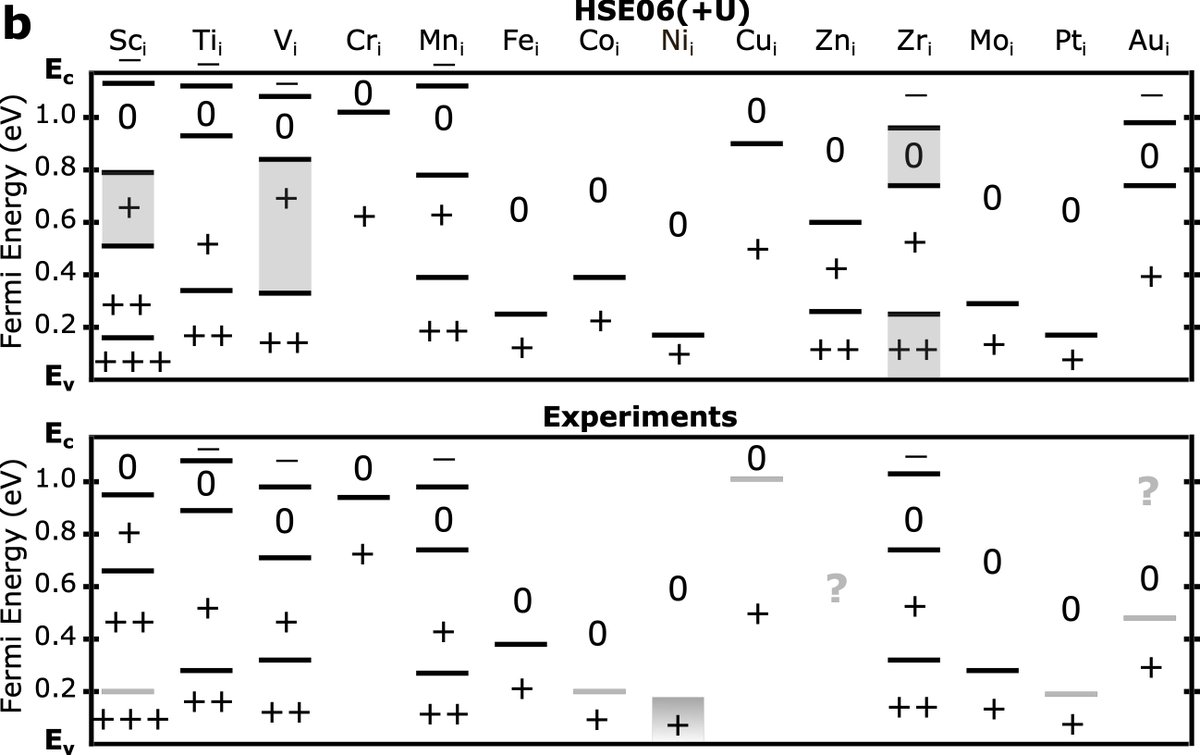
In this paper, we apply HSE06(+U), which takes into account the generalized Koopmans' condition, to have a comprehensive study on 3d TM impurities in Si and have a thorough comparison to existing experimental values (check out the supplemental materials!)
Finally got my first postdoc work at @coschoolofmines and @nrel published! Check out our (@AdeleTamboli, Meenakshi, and Vladan) work on Transition metal impurities in Si: computational search for a semiconductor qubit (https://t.co/hmYydpv9JA @ @Nature_NPJ Computational Materials
3d transition metal impurities in crystalline Si are generally thought to be well-studied in the literature due to its long-lasting technological interest. But the current knowledge is actually limited to the context of carrier traps (see all the question marks and gray bars)