Need help with Difference-in-Differences? Meet ChatDID: a GPT specialized in modern DiD methods and the de Chaisemartin–D'Haultfoeuille estimators and software packages.
Try it here:
https://t.co/nl2fiqBP7z
New project: "Build Your Academic Website in 15 Minutes" for new grad students or established academics (including my new site, "https://t.co/Zi0QLQs669"). To get one yourself, see https://t.co/eak19GQovz. It's easy, free, customizable, & fast.
Why do arguments often change people’s beliefs without changing their attitudes? In a new APSR with @PatrickPLiu and Scott Clifford, we point to belief relevance: arguments are more persuasive when they grapple with the idiosyncratic reasons people hold their political views.
**Personal Finance Notes for New Faculty** I intentionally chose a red day to post this, to avoid giving the impression that I am encouraging people to buy stocks.
https://t.co/jvfZZJKrL3
In 2020, I wrote a short note on personal finance for a Chinese-speaking young faculty audience and have updated the numbers since then. Ye said this is my most-read piece of writing. 🤣
This is the English version.
Over the years, I have also given many of our international students a 30-minute tutorial on this topic when they start academic jobs in the US.
They are excellent at what they do, but knowledge about US financial markets is often lacking. I hope this helps.
🚀 Big update for the did R package!
The headline: it is much faster ⚡
We also improved support for many things, including:
✅ clustered inference
✅ unbalanced panels
✅ factor/transformed covariates
✅ lots of fixes under the hood
Package site: https://t.co/Dqdp3mQv4a
“Just collect more data” is one of the most common responses to uncertainty in quantitative research.
But in a lot of social science, that advice is impossible—or even misleading. Our new working paper asks: when has a study reached its information limit?
1/ Happy to share that "Factorial Difference-in-Differences" (FDID), with Anqi Zhao and @pengding00, is out in JASA - ACS. https://t.co/XY39zo8sTw
It has been a truly thrilling experience working with Anqi and Peng.
Currently in FirstView: In “Estimating Treatment Effects on Proportions with Synthetic Controls,” @konboga and Lukas Stoetzer examine synthetic control methods (SCMs) and make the case for jointly estimating synthetic controls across multiple compositional outcomes.
Political economy of industrial policy. Now in print, a cautionary note on the politics of policies for structural transformation. In Steering Structural Change Eds. P-O Gourinchas, M Obstfeld, P Topalova. My chapter is available here: https://t.co/VLygyPjn7P
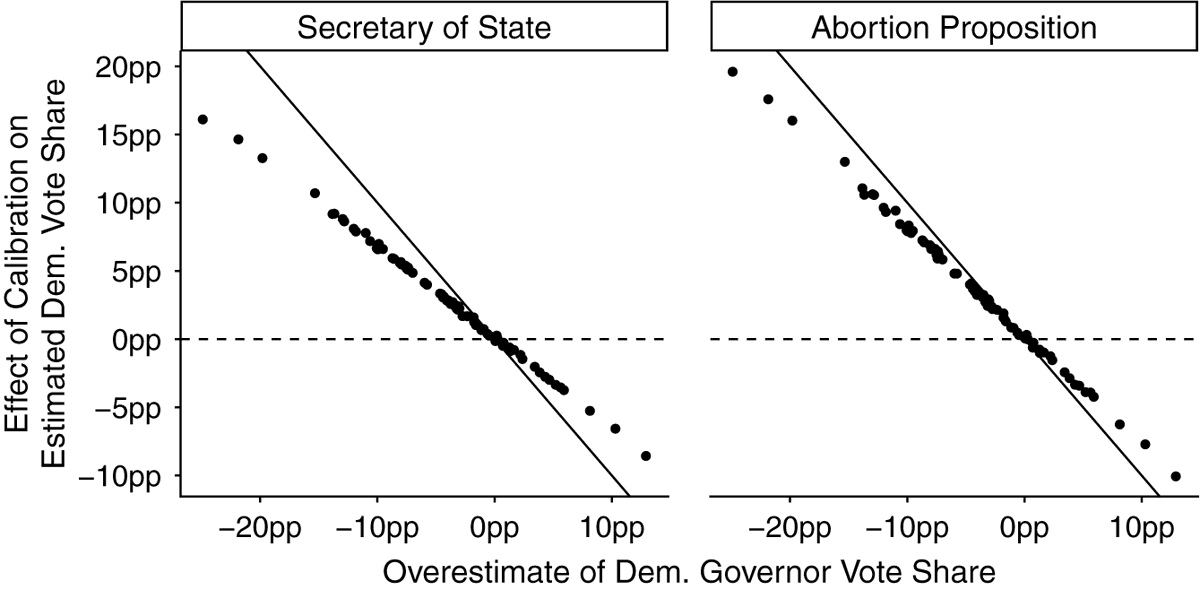
Currently in FirstView: In “Improving Small-Area Estimates of Public Opinion by Calibrating to Known Population Quantities,” @wpmarble and @joshclinton provide a framework for incorporating known population data to improve estimates of small subgroups in MRP models.
The end of an era. Now in print, an argument that the post-war era is coming to an end. In the LSE Public Policy Review 4, No. 2 (2026), available here: https://t.co/46vBtoHe8u
Currently in FirstView: In “Using Multilingual Language Technology to Classify Open-Ended Survey Responses: Conceptions of Democracy in a Cross-Cultural Survey Setting,” @StefanDahlberg, @JoakimNivre, and coauthors examine the use of LMs in analyzing survey open-ended responses.
Causal Inference with Differences-in-Differences: Credible Answers to Hard Questions
Clément de Chaisemartin and Xavier D'Haultfoeuille
Published: Dec 8, 2026
https://t.co/ZvkRpu1CAZ
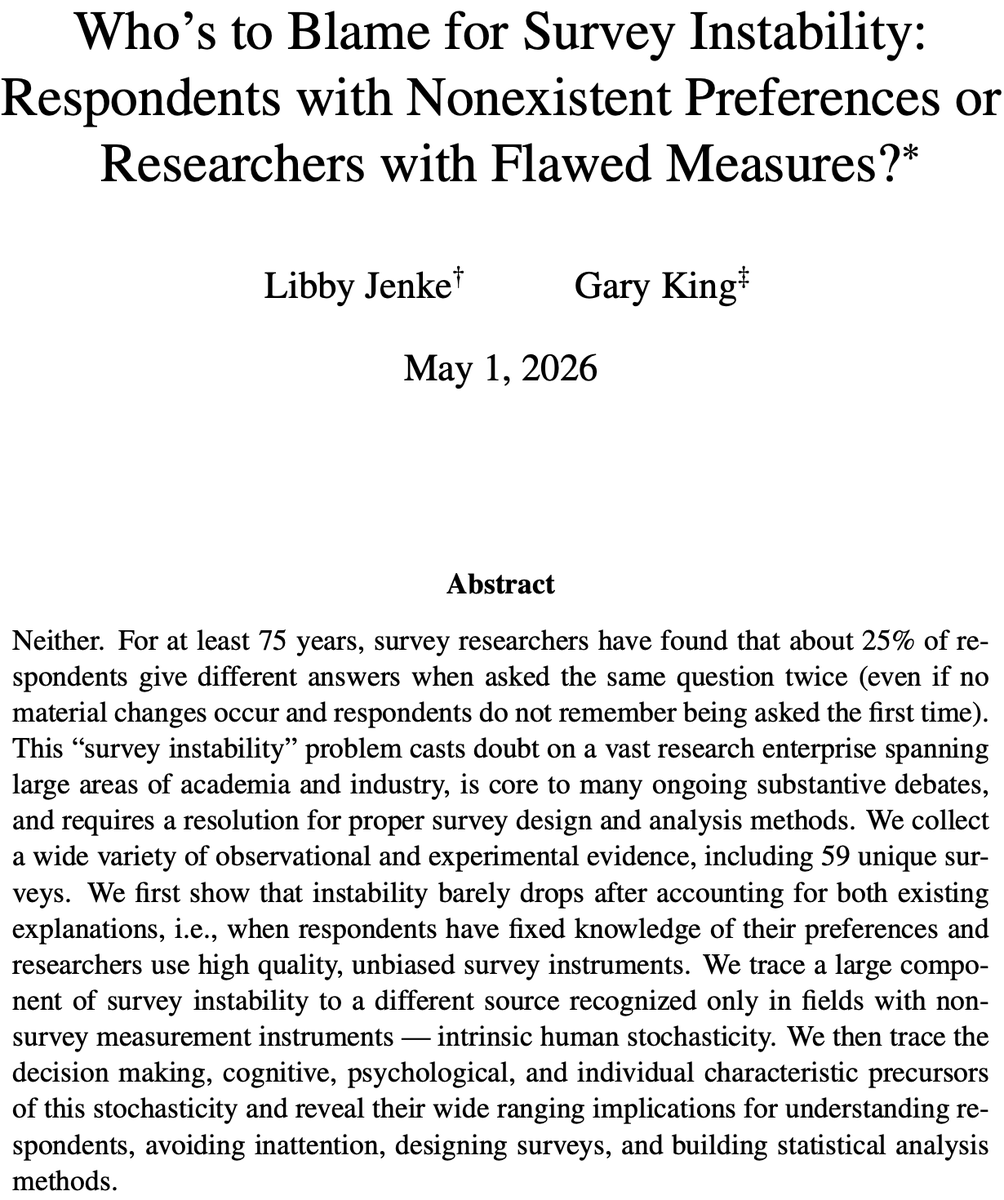
New paper: "Who's to Blame for Survey Instability: Respondents with Nonexistent Preferences or Researchers with Flawed Measures?" with @LibbyJenke. Comments welcome! https://t.co/5LhPD68qux