Our spatial FFPE-ATAC-seq is now published in @NatureComms! With extensive optimizations, it performs well across diverse tissues, unlocking the vast FFPE archive for spatial epigenomics. Big congrats to Pengfei Guo @pengfeo, Yufan Chen, and the team! https://t.co/zkxgmfTUeG
A man with a severe speech disability is able to speak expressively and sing using a brain implant that translates his neural activity into words almost instantly.
https://t.co/9De3Cg8MGN
I don't understand why people aren't using AI agents yet.
Most people use ChatGPT and stop there.
Here are 12 underrated AI tools that are 10x more powerful: ⬇️
Do we need to rethink near-death experiences? What’s really happening in the brain? NDEs might be a hardwired coping strategy: the dissociation, calmness, and detachment when facing death may actually be an evolutionarily protective response. For decades, people have asked me: "Is there something happening in the brain when people have a near-death experience?" How does the brain, at the edge of life, produce the powerful, often mystical experiences so many people describe. New insights on the topic have just been published in Nature Reviews Neurology by Martial and colleagues.
Key Points:
- This study by Martial and colleagues offers a compelling neuroscientific model of near-death experiences (NDEs).
- The authors try to move us from spiritual speculation toward biological plausibility.
- If we rethink these experiences, we might also learn something crucial about human consciousness itself.
- NDEs seem to involve a cascade of neurophysiological and psychological processes.
- These events can be triggered by physiological crises like a cardiac arrest (heart attack).
- These experiences seem to be linked to massive releases of neurotransmitters (serotonin, dopamine, noradrenaline, GABA, endorphins).
- The default mode network, temporoparietal junction, and brainstem arousal systems may all play key roles.
- Serotonin (5-HT1A, 5-HT2A) and glutamate are particularly implicated in the peaceful feelings and vivid hallucinations.
- The authors review the newly proposed NEPTUNE model that actually frames NDEs as "evolutionarily conserved responses."
- These episodes may not just be 'brain failures.' Should we be thinking of them as potential survival mechanisms.
My take: Why does this matter? This paper bridges what we once pictured as the mystical with the medical. It helps us understand that NDEs are not a supernatural anomaly, but rather a biological response to an extreme crisis. These NDEs may have evolved to help the brain cope, survive, and even encode memory in the final seconds of life.
My 5 Key Takeaways:
1- NDEs may reflect a brain in survival mode. In other words, these experiences likely originate from complex brain activity, not from flatlining or from brain inactivity.
2- REM intrusion, not just hypoxia, plays a role. The features of REM sleep (like atonia and vivid dreams) can possibly intrude into waking consciousness, helping explain out-of-body sensations.
3- Neurotransmitter surges may create mystical content. The massive releases of serotonin and dopamine can produce hyper-reality, hallucinations, and euphoria. These effects are similar to what is observed when using psychedelics.
4- NDEs might be a hardwired coping strategy. Think about it: the dissociation, calmness, and detachment when facing death may be evolutionarily protective responses. Ever heard the terms: playing dead or thanatosis.
5- We must rethink brain death and consciousness Brain activity may persist or surge briefly after cardiac arrest, suggesting we have much more to learn about when and how consciousness truly ends.
What is the bottom line? As we edge closer to understanding the neural basis of NDEs, we also open doors to new insights into the biology of consciousness. What we once attributed to metaphysics may now be understood as neurophysics. Let’s keep asking bold questions. Because understanding near-death may bring us closer to understanding what it means to be fully alive.
https://t.co/OmxqDunaFB
#Consciousness #Neuroscience #NearDeathExperience #Neurology #Serotonin #NDE #BrainScience #NatureNeuro #NEPTUNEModel
In a recent study (May 2025) published in Nature Genetics, Nomura et al.(@roelverhaak , Lavarone, @MarioSuva , @TiroshLab labs) leveraged single-nucleus RNA sequencing and bulk tumor DNA sequencing to unveil new dimensions of GBM complexity.
The team discovered three previously unknown malignant cellular states: differentiated neuronal (NEU-like), glial progenitor (GPC-like), and cilia-related. By integrating cellular composition, diverse cell states, and baseline gene expression programs, they defined three distinct GBM ecosystems—glial, ECM, and NEU—each characterized by unique genetic profiles, microenvironmental contexts, and transcriptional signatures.
This innovative framework highlights the interplay between tumor genetics and anatomical location in shaping GBM biology, providing a powerful roadmap for developing targeted and personalized therapeutic strategies.
@YNeurosurgery@SylvesterCancer @MGHCancerCenter @UMneurosurgery@MDAndersonNews@DanaFarber@Dukeneurosurg@SeoulNatlUni@UofTNeuroSurge@broadinstitute
In a medical milestone, a customized base editor was developed, characterized in human and mouse cells, tested in mice, studied for safety in non-human primates, cleared by @US_FDA for clinical trial use, manufactured as a complex with an LNP, and dosed into a baby with a severe, rapidly progressing genetic disease... all in an astounding 7 months. Best of all, the infant patient shows apparent benefit. Congratulations to @kiranmusunuru, Rebecca Ahrens-Nicklas, and other team members for this heroic and inspiring effort, which has implications for the hundreds of millions of patients that suffer from thousands of genetic diseases.
https://t.co/wsgvvRYPVM
We are thrilled to announce that CosmoSort has been awarded 1st place in The Scientist's 2024 Top 10 Innovations! This recognition underscores our commitment to advancing cell sorting technology. https://t.co/Rqj5lXvgEV
Have you ever wondered which single cell/spatial omic technology to use? Excited to share the scTrends Consortium's first report on single-cell and spatial genomics tech! Check out our comment in @NatureBiotech! #Genomics#Biotech#scTrends https://t.co/ov7YYA7DTB
Each year, @NatureBiotech highlights companies that have received sizeable early-stage funding in the previous year. Tenpoint Therapeutics optimizes delivery and generation of stem-cell-derived retinal cells for vision repair. https://t.co/c60szHh7O1
Each year, @NatureBiotech highlights companies that have received sizeable early-stage funding in the previous year. Tome Biosciences inserts large DNA sequences into precise genomic locations, overcoming limitations of base and prime editing. https://t.co/B0cvidTPx1
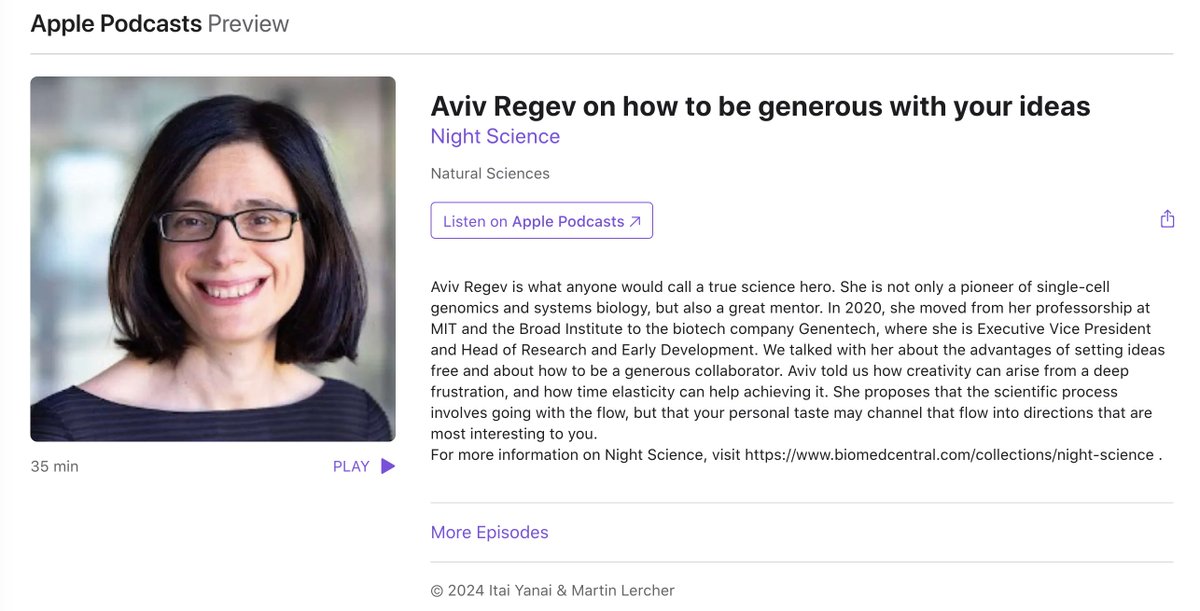
Aviv Regev on collaborations: be generous with your ideas, your abilities, with resources that you have, your time, your mindset... And when everyone in a collaboration behaves in this way, then of course, it's a lot of fun.
https://t.co/dyVDQGxKsj @nightsciencepod
An orangutan in Sumatra surprised scientists when he was seen treating an open wound on his cheek with a poultice made from a medicinal plant https://t.co/WxVsDpYLE1
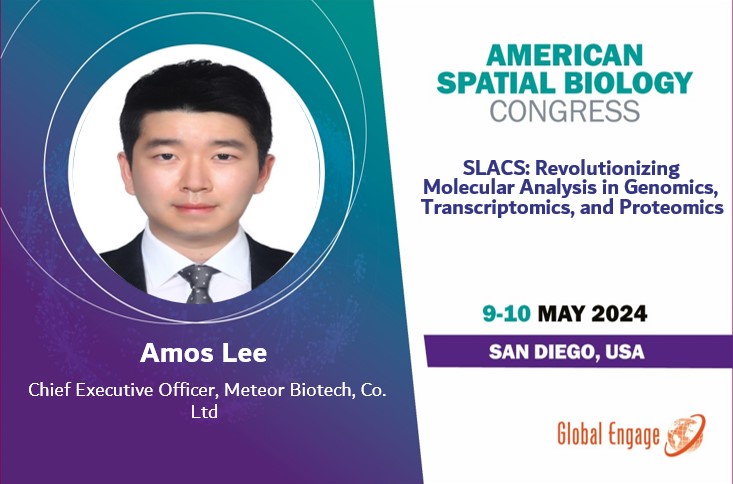
Gearing up for #ASBC2024! 🚀 Meet our CEO, @ChoongwonLee. Passionate about biotech, Amos will share groundbreaking advancements in spatial biology using our #SLACS technology.
Discover how we're transforming healthcare. Stay tuned! 🧬
#SpatialBiology#HealthcareInnovation