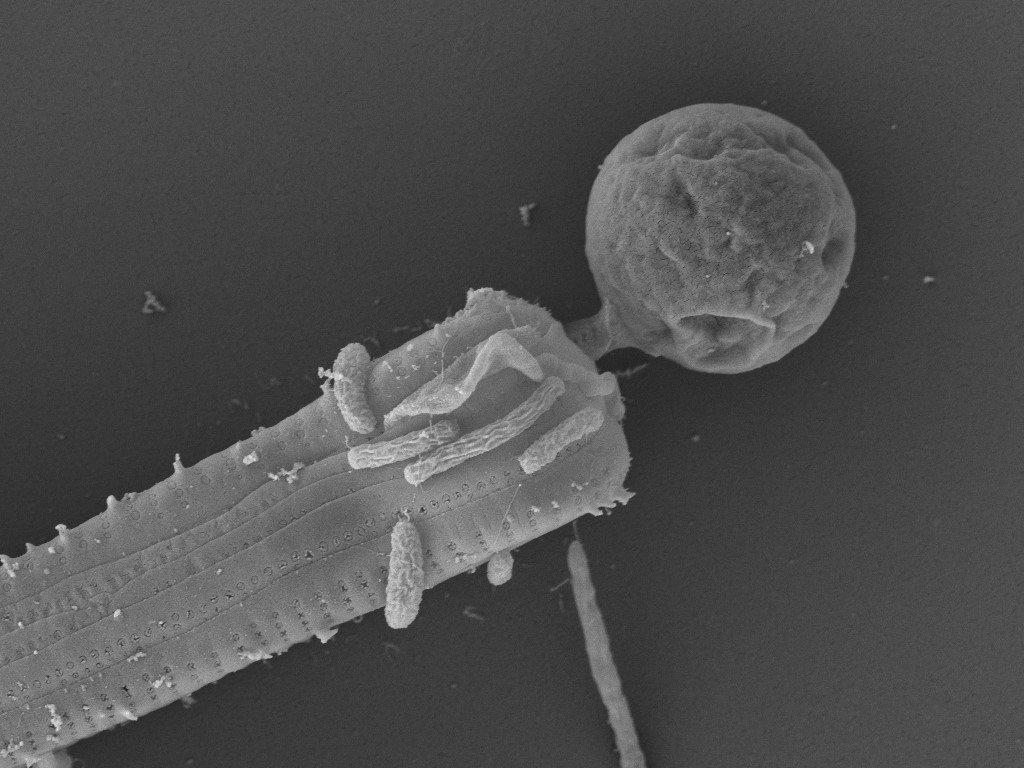
We are hiring! Our group is looking for someone who is passionate about microscopy and perhaps also likes molecular biology. 🔬❤️🔬 #fungi#microeukaryotes#plankton
👉https://t.co/dWYdXM62CD
Join our team as a #postdoc in #plankton research! Discover the world of #marinefungi, microbe-microbe interactions and #biogeochemistry. Spread the word or apply now. https://t.co/E3Q2aI4SVV
#DarkFungalTaxa are the focus of a new study based on the UNITE database. #Metabarcoding discovers myriads of species that cannot be named under the current International Code of Nomenclature and remain overlooked by conservation biologists. https://t.co/4NE0b5XUk7
🌊Open #postdoc position at WasserCluster Lunz in my group. If you have a PhD in aquatic biogeochemistry or similar field and like #water, #ecology, #carbon, traveling, and collaborative projects, this might be your job😃 Read more here https://t.co/aE7X32CyZi
Freshwater ecosystems cover 1% of the Earth yet harbour 10% of all species.
But 1/3 of these #freshwater species are now threatened with extinction.
This #WorldWildlifeDay let's remember (& commit to saving) the amazing biodiversity in our rivers, lakes & freshwater wetlands
Next to the Alexander v. Humboldt Fellowships, TUM also offers the option for Ukraine researchers to continue their work with us 🦠🌊🏗️: https://t.co/Q7aXqQZwVM
Researchers in Ukraine: the German @AvHStiftung has opened their funding opportunity for researchers in danger for you. You can apply with a German host until 18 March. I would be more than happy to host you @unibt/ help you find a host. #IStandWithUkraine
https://t.co/0qLYRGM3CF
PhD position with a research focus on phytoplankton-parasite interactions: “Fungal parasitism along a salinity gradient: an overlooked driver of marine phytoplankton blooms” at University of Turku, Finland starting at April 1st. More information here: https://t.co/BA98M0lKBI
I will be hiring a candidate to do a Ph.D. in Ecology and Evolution in the #Miintlab@Stockholm_Uni and @scilifelab
Topic “Interactions and dependencies on the free-living microbial world”
Please RT and apply 👇🏽
https://t.co/eukbOEGqTj
Today is the International Day of LGBTQ+ People in STEM #LGBTQSTEMDAY to celebrate and highlight the work and barriers of LGBTQ people in science, technology, engineering, and maths (STEM) https://t.co/gFP5kZMw8h 🏳️🌈🔬🧬👩🔬🧑🔬 @thembauk@PlymUni
We need your help! Until now, it has been normal for scientists to be able to access digital sequence data. But "open data/open dsi" is in danger! Support us by spreading the position paper "Keep digital sequence information a common good". THANK YOU! https://t.co/yIQ43Lht5y
@AllisonDoerr14@naturemethods I'd vote for a circular authorship, like a pie chart, next to a contribution statement. The single authors' name can then be compiled from first letters of all authors so that the article can still be cited in an author-year style.
Microbes are everywhere in the environment and even live in our cities and on our streets.
"Urban microbes” or "road microbes" are closely associated with human society as @Chris___W and Renato Liguori tell on the #FEMSmicroBlog. #FascinatingMicrobes
https://t.co/c6iQQO3iXq