@DustinWalper The no-fixtures part is wild. How much of the 1/16 accuracy comes from sensing (scan-to-CAD registration) vs. the robot's own repeatability? And what happens when a part is too far out of tolerance to correct?
can't wait for "Introducing Robot Control in Claude, in beta in the US.
Connect the hardware you choose, and Claude runs it from plain-language instructions. Tell it to restock line 3 or sort the returns bin, and Claude plans the task, controls the arm, and checks its own work. Access is full control, and Claude can move, sort, and pack anything on your floor."
Introducing Personal Finance in Claude, in beta in the US.
Connect the accounts you choose, and Claude answers your money questions in everyday language, from your own balances and transactions. Access is read-only, and Claude can't move, manage, or invest your money.
Robots are getting better at completing tasks. But what happens when they make a mistake?
We fine-tuned π₀.₅ on two real-world manipulation tasks to showcase whether recovery demonstrations can improve policy reliability more effectively than additional successful demonstrations. 🧵
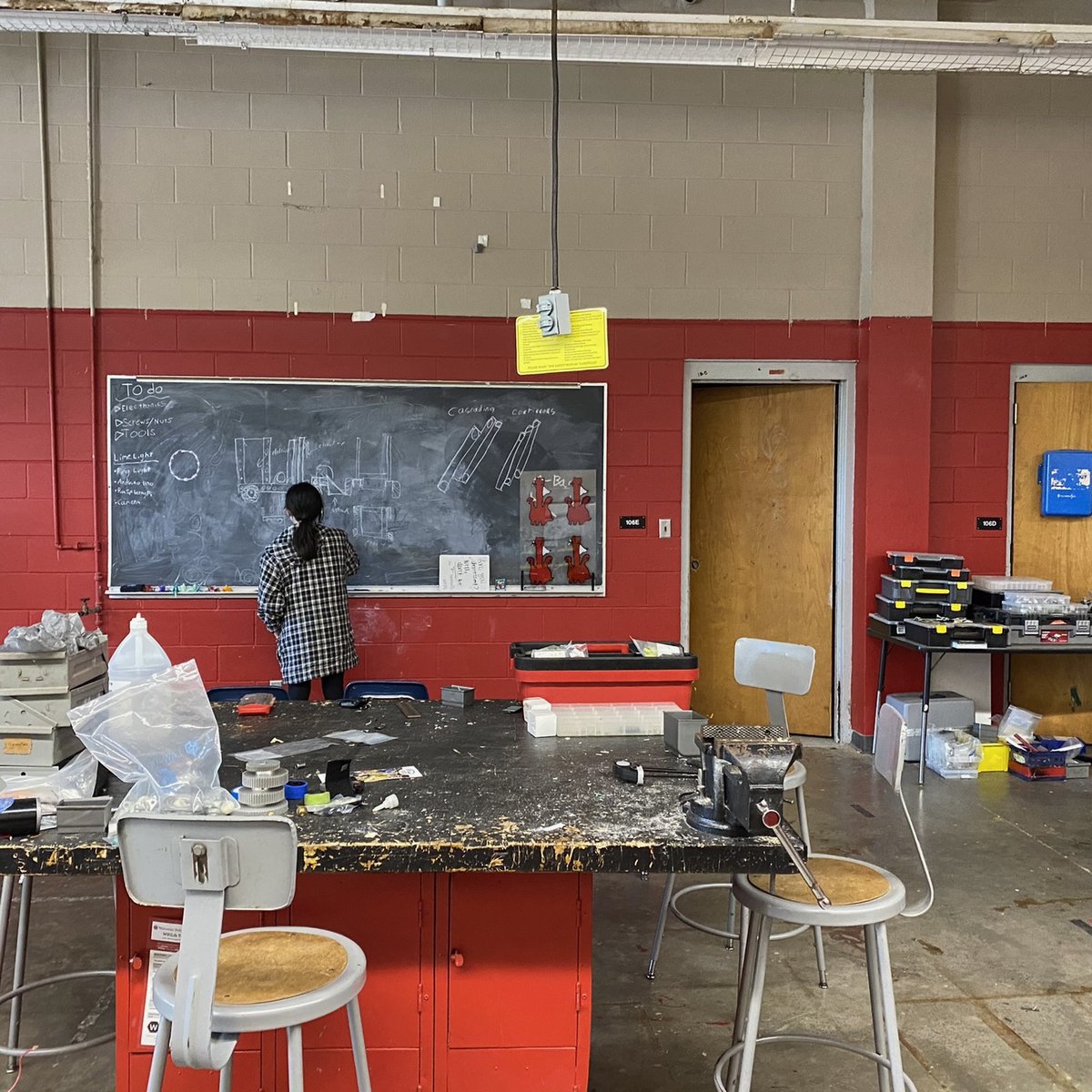
8 years ago, Ashley and I were two of the only girls on our high school robotics team. When we first joined, our club was heavily in debt and barely had enough money to compete.
So we did everything we could to keep it alive. We fixed cars, collected and sold scrap metal, even built a furnace out of an old microwave. Somehow, we raised over $100K to revive the club and get our team to competitions. We spent countless late nights building robots, debugging code, and figuring things out together.
I went on to Harvard, and Ashley went to Columbia. Our paths took us in different directions, but 8 years later, we’re back building robots together, this time as cofounders in NYC.
Funny how life comes full circle!
We’ll be in SF next week! If you’re building in physical AI, robotics, or robot deployment, we’d love to meet and learn what you’re working on. DMs open!
Cindy and I started building robots together 8 years ago.
What started as late nights around writing autonomous and teleop code turned into a shared belief: the hard part of robotics isn’t getting a robot to do something once. It’s getting it to keep working when the environment, task, or product changes.
We’re building together again.
If you build, deploy, or operate robots, we’d love to talk.
#robotics #startups
My feed is full of robotics demos and research papers. I’d love to see more discussion about who will actually buy this stuff and what it takes to deploy it.
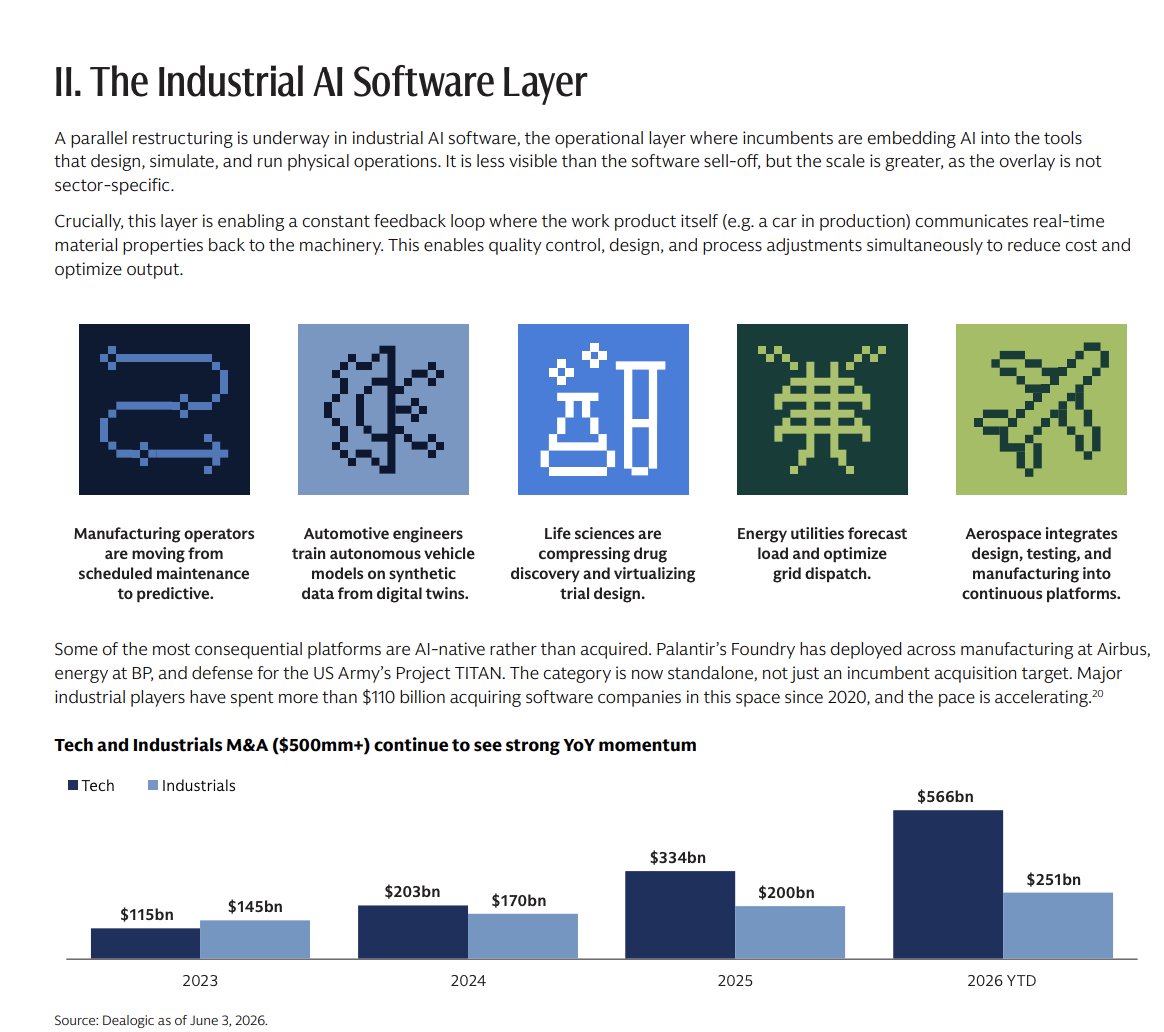
I used to be an analyst at Goldman covering industrials. Think paper and packaging, environmental services, HVAC. A lot of these “unsexy” businesses generate serious cash flow and have money to buy.
The industrial software M&A activity is insane. This Goldman report puts it at over $110B since 2020.
A few things that stood out to me:
- Digital twins let companies test changes virtually before touching a production line. That matters when downtime costs money.
- Valuable training data lives inside factories. Getting access to real workflows and failure cases is a big part of building the product.
- Companies already own automation equipment. Helping it handle new tasks gives you somewhere concrete to start.
- Deployment means fitting into existing operations. Someone has to integrate the equipment, train the operators and prove the economics.
For builders, I think there’s a huge opportunity in making one repetitive job easier to automate, then showing the customer it works reliably and pays for itself.
https://t.co/tVO1DAXau3
Really interesting work! I’m curious about the architecture choice here. Since the motion-level reasoning is only used during training, do you think there’s a benefit to having explicit reasoning or skill composition at inference time, especially for novel tasks? Or is the intuition that a sufficiently trained VLA can internalize that reasoning?
@_varunnair I was quoted $20/hr for processed data by a Chinese vendor not sure what the market rate is in the states but that’s roughly ~$40m in capital spent if the market buys 2m hours
If you want to build in physical ai, you should probably learn Mandarin.
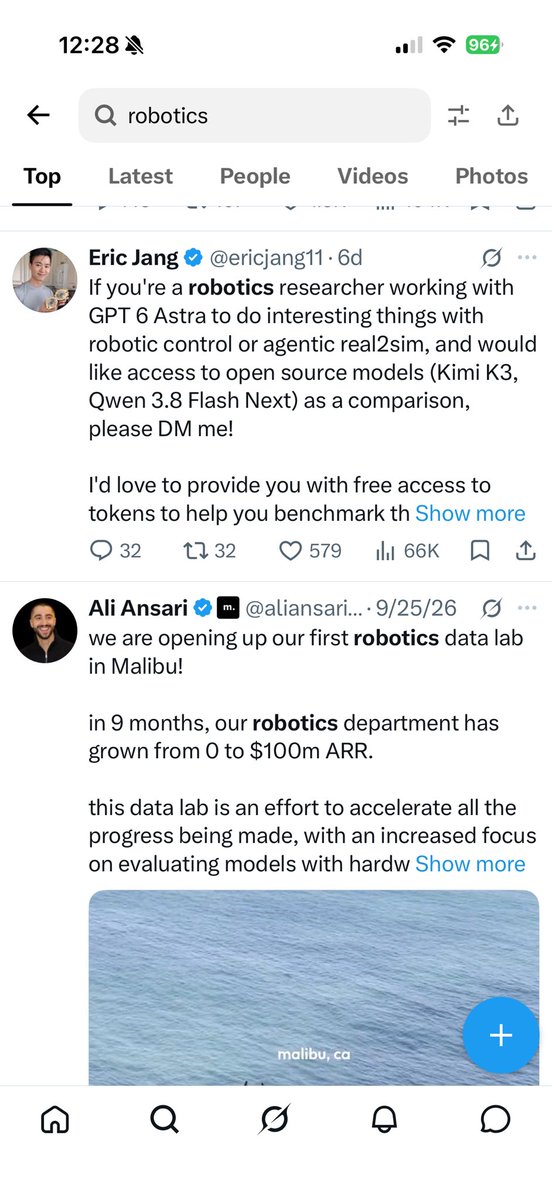
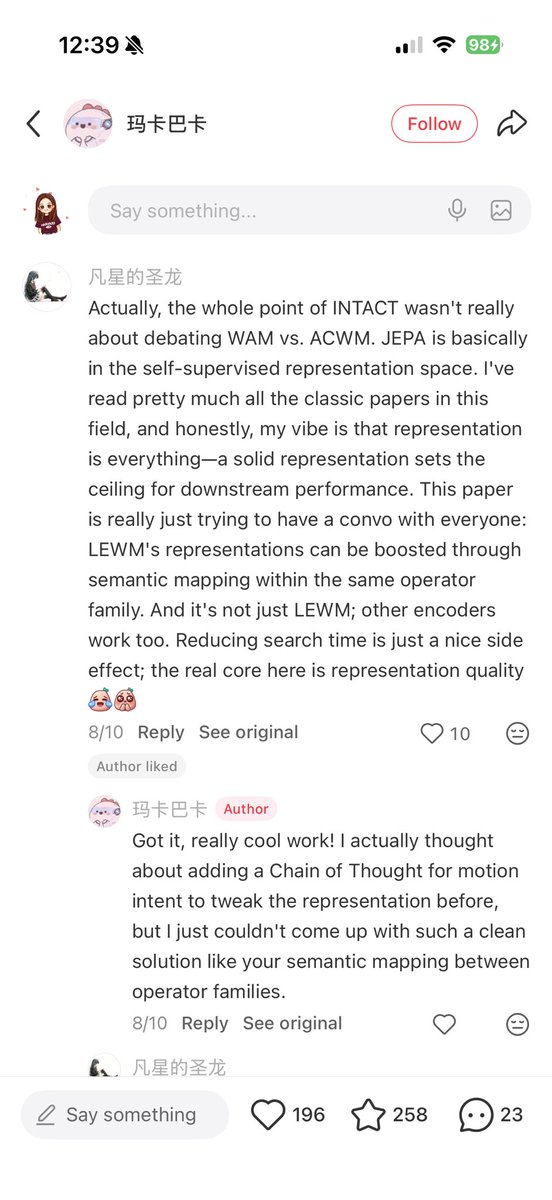
X is where I usually go to follow robotics researchers and developers. But lately I’ve realized I’m getting some of my highest-signal information from xhs (RedNote).
Search “robotics” on X and you’ll find launches, demos, papers, and a lot of noise. Search “robotics” on RedNote and the feed looks completely different.
PhD students posting detailed paper breakdowns. Engineers walking through how VLAs actually work. Researchers sharing experiment notes and failed demos. Long tutorials explaining implementations step by step. And sometimes the best part is the comment section, where other researchers start debating methods, datasets, hardware, and what actually worked.
It feels less like following the robotics news cycle and more like accidentally getting access to a giant research group chat.
And this matters because an enormous amount of robotics talent is Chinese. China’s footprint in engineering research has grown dramatically, yet a lot of that knowledge doesn’t diffuse cleanly into the English-speaking internet. The information asymmetry is kind of crazy.
For physical ai, I’m increasingly convinced Mandarin might be an underrated technical advantage😂
@rayhanyrazzak@speedrun I love this! I remember spending months looking at pfas, tsdf facilities, incinerators etc for a deal. Very unsexy industry but with a lot of capital
@ethanwjahn That makes sense. I recently saw a discussion on rednote about using EMG and better gloves to capture force/contact signals that video misses. Makes me wonder if UMI + richer sensing is the next data hype haha
say hi to kled v3, the data collection layer for agi.
any dataset a lab can describe, collected from the real world by 500,000 people in under 72 hours.
This is super interesting. If agents are collaborating by passing latent states instead of text, I’m curious how stable those shared latent representations stay as you add more recursion rounds or more heterogeneous agents. Does the latent space eventually drift or lose information, and if so, is there a point where another round of collaboration actually starts hurting performance?