EM/ICM/PHEM doc. LOVE learning + teaching. I work in the sky above Sydney, have the attention span of a bullet, + often have days that are like cartoons #FOAMed
Infant intubation tips every resus team should know:
https://t.co/rOe9CcO3qV
Kids feature a lot at Resuscitation Wizardry:
Paediatric cases, and concepts that apply to every age
London, 7–8 December. Tickets still available:
https://t.co/ys0a9boFXh
Ever wondered why a coronary occlusion gives the ECG it does?
Block any part of the coronary circulation on a 3D heart and watch the 12-lead (and the echo!) evolve.
Free for learning and teaching. Have fun!
https://t.co/xsLx9GMqLL
#FOAMed#ECG#OMI#MedEd#Cardiology
Ever wondered why a coronary occlusion gives the ECG it does?
Block any part of the coronary circulation on a 3D heart and watch the 12-lead (and the echo!) evolve.
Free for learning and teaching. Have fun!
https://t.co/xsLx9GMqLL
#FOAMed#ECG#OMI#MedEd#Cardiology
Sister ship Voyager 1 is currently ~24h 00m 00s of light travel time from Earth, or 25,902,000,000 km / 16,095,000,000 mi / 173.145 AU (2026:322:120000:1L) ONE LIGHT-DAY from Earth! …
Concerning pulse pressure unfortunately cannot spoil the results of the big ANDROMEDA-PEGASUS (3000 pts almost 200 centers) because under review but: septic shock pt with PP<40 almost 80% probabilities of low VTI, if PP >55, only 9% probability. Great for initial decisions
Occlude an artery. Watch the 12-lead and the echo answer.
Superb build by @cliffreid with Claude Code. Posterior OMI, Aslanger, de Winter... on one 3D heart.
For anyone reading ECGs in theatre or ICU.
Now in Built Between Cases:
https://t.co/hCbz3kn9iv
https://t.co/Q6kM2mKd8a
Infant intubation tips every resus team should know:
https://t.co/rOe9CcO3qV
Kids feature a lot at Resuscitation Wizardry:
Paediatric cases, and concepts that apply to every age
London, 7–8 December. Tickets still available:
https://t.co/ys0a9boFXh
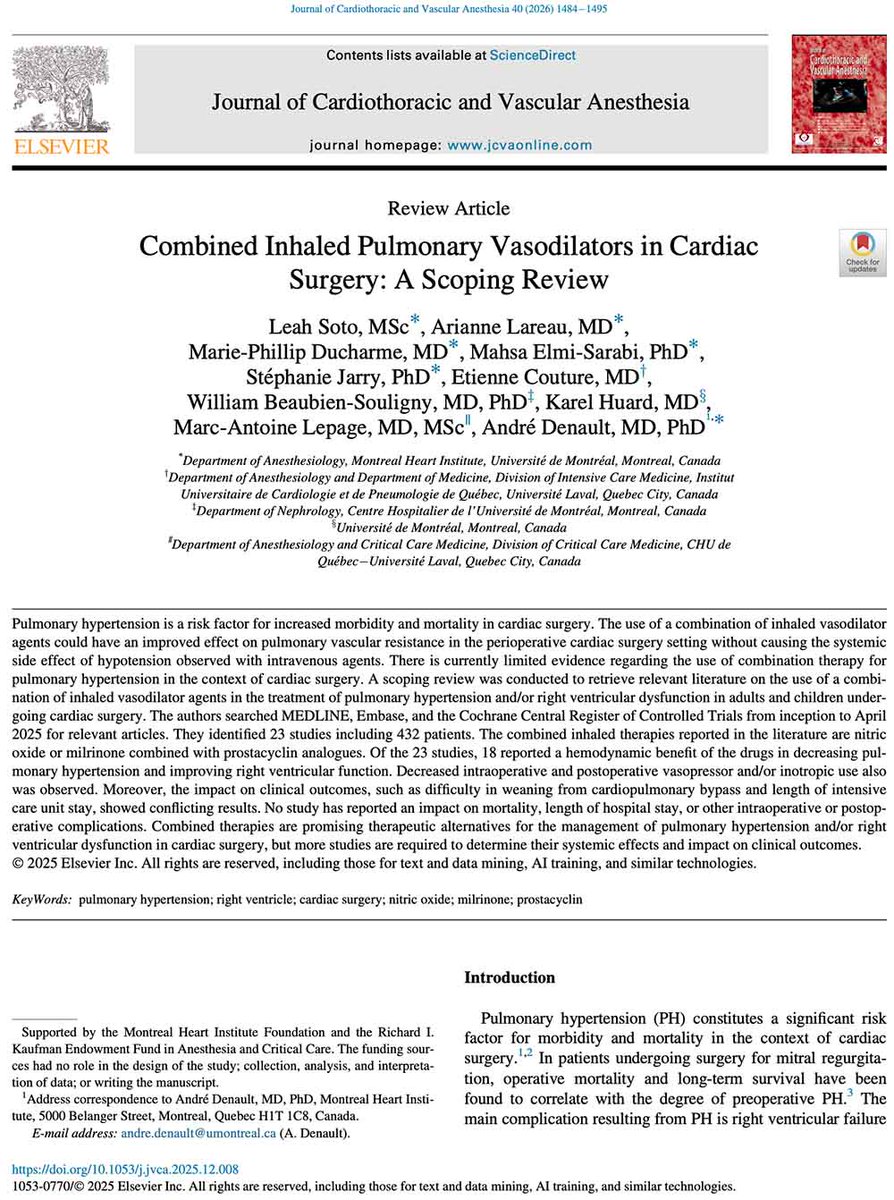
I just updated the IBCC chapter on pulmonary vasodilators, here are new pearls I learned 🤯
🫁 The dosing of inhaled pulmonary vasodilators is a little different for ARDS versus for treatment of RV failure. In ARDS, you're shooting for selective vasodilation of the best-ventilated alveoli to maximize V-Q matching, so you want a mid-range dose (too high and you start vasodilating the worse-ventilated alveoli). In RV failure you're trying to vasodilate every alveoli as much as possible to bring down the pulmonary vascular resistance, so go high.
🫁 Nebulized milrinone causes selective pulmonary vasodilation for ~20-30 minutes, then gets systemically absorbed. One dose of nebulized milrinone in the OR is great, but scheduling milrinone nebs q4hr doesn't make pharmacological sense (it doesn't achieve consistent pulmonary vasodilation and there are risks of systemic accumulation in renal failure). IMHO milrinone nebs don't have much role in ICU. If you want to give milrinone just give it IV.
🫁 There's a gradually escalating amount of evidence supporting combined simultaneous use of inhaled epoprostenol and inhaled NO to treat RV failure. See the article by Andre Denault below. This may be a good option for RV failure before escalating to an Impella RP Flex. It's pretty easy to trial a patient on inhaled pulmonary vasodilators - if they work great, if they don't work you haven't lost much.
#1/2, link in next post.
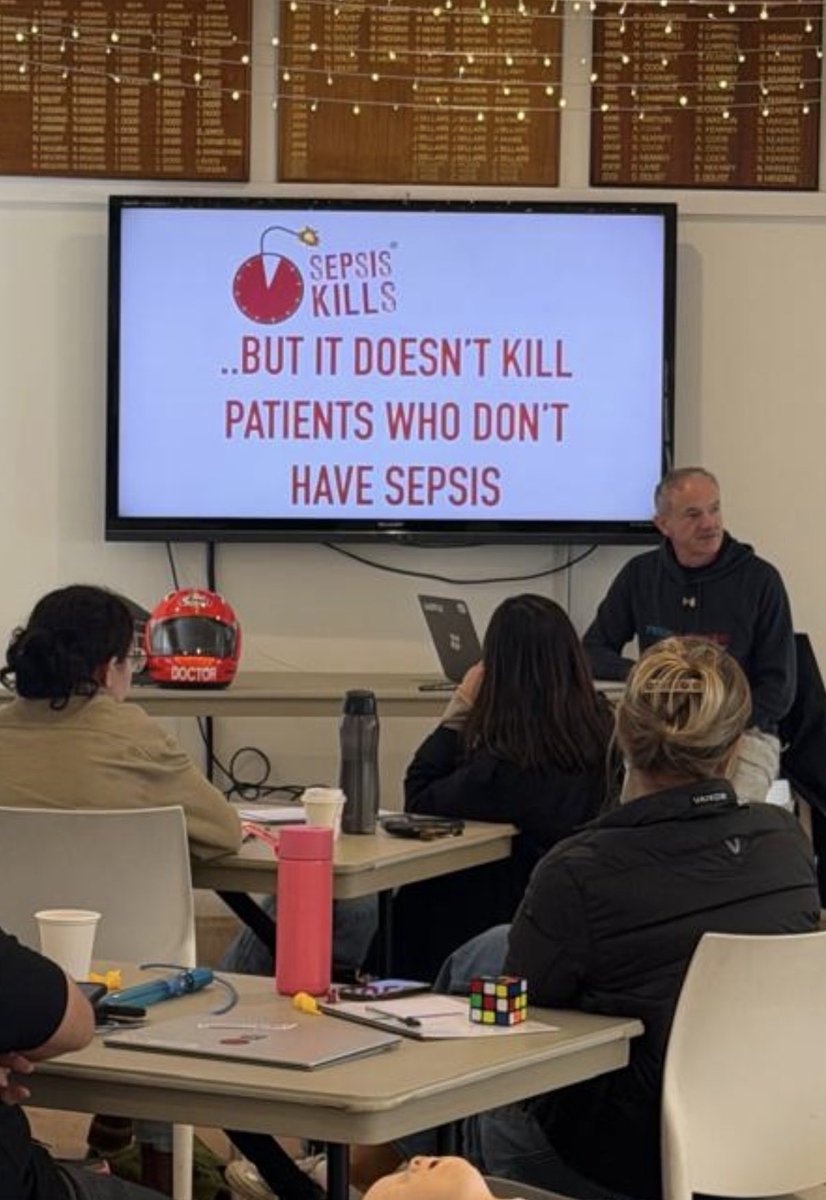
An elevated lactate should not lead to a knee-jerk diagnosis of sepsis. Use deliberative thinking and a knowledge of very basic biochemistry to identify why the lactate is elevated.
This is non-negotiable if you are serious about striving for excellence in resuscitation.
Everything you need to know is in this video. Watch it all the way through and your practice will change for the better.
https://t.co/xb7uB7WP7J
Plenty more critical care airway and advanced paediatric resuscitation covered in the Resuscitation Wizardry 2 day course
London 7-8 December
Early bird tickets available until the end of this week
https://t.co/2YbPodmyUF
20 something day old bronchiolitis intubated by ED registrar
Points to note
1. Orogastric tube- essential kit in infants with resp failure esp on CPAP
2. Leading with suction catheter
3. Easy to overshoot - larynx isn’t far down
4. Infant bougie
5. Cuffed tube
6. Relative brady
#ICU Physiology Secrets: Is vasopressin really “pulmonary-friendly”?
I’ve heard several times that vasopressin is “lung-friendly.” That it may even dilate the pulmonary vasculature. Or that the pulmonary circulation has no vasopressin receptors. Have you heard the same?
It made me wonder how much human evidence actually supports these claims. Does vasopressin constrict the pulmonary circulation less than norepinephrine? Does it lower PVR? Does it improve RV function? Or does it simply raise systemic pressure without raising PA pressure as much? These are related questions, but they are not the same question.
So I went looking for the human evidence. With the caveat that I did not have full-text access to a few potentially relevant studies, this is what I found:
1. Start with the receptor, but don’t stop there
Liu et al. examined human arterial samples and found V1a receptor (AVPR1A) protein was abundant in pulmonary arteries: about 2.2× mesenteric, 2.2× coronary and 1.9× peripheral arteries, and similar to renal arteries. Six samples of each artery type were studied. So the pulmonary circulation clearly does not lack V1a receptors. But expression is not function, and this study didn’t show what a human pulmonary artery does when exposed to vasopressin.
2. Put human pulmonary arteries in an organ bath, and things get interesting
Currigan et al. compared isolated human pulmonary and radial arteries. Vasopressin was a potent radial-artery vasoconstrictor but produced no significant change in pulmonary arterial tone. Norepinephrine constricted both.
Hussain et al. found an even more striking contrast. Maximal contraction of human pulmonary-artery rings was 61% of the KCl response with norepinephrine (12 rings from 4 patients) versus 0.18% with vasopressin (8 rings from 2 patients). That 0.18% gets my attention, but so does the denominator: eight rings from two patients...
These experiments provide a compelling physiologic basis for vasopressin behaving differently in systemic and pulmonary arteries. Still, these are isolated vessels in a bath, not PVR measured in a hypoxemic, ventilated patient with pulmonary hypertension and a failing RV.
3. What happens in actual patients?
Mizota et al. reported a lung-transplant patient with pulmonary hypertension in whom, during pulmonary-artery clamping, a 0.5-U vasopressin bolus raised systemic systolic pressure 35.2% with minimal change in PA pressure. Norepinephrine boluses in the same patient raised systemic systolic pressure 14.8% and PA systolic pressure 6.7%. A beautiful physiologic observation but n = 1, during major surgery, with other vasoactive infusions running.
Tayama et al. studied 9 post-cardiotomy patients with vasodilatory hypotension and pulmonary hypertension. Vasopressin raised mean systemic pressure from 47.3 ± 9.5 to 76.5 ± 12.2 mmHg, while PVR did not change significantly. Cardiac index fell, although it remained in the normal range. The pulmonary/systemic pressure ratio fell from 0.66 to 0.47. Be careful with that: a ratio can fall simply because the systemic denominator rises. A falling ratio is not pulmonary vasodilation.
Adamson et al. studied 28 Fontan patients undergoing catheterization. Vasopressin raised systemic pressure and SVR while PVR fell by 0.4 ± 0.4 Wood units, with no significant change in PA pressure or cardiac index. That is human PVR data, but a small effect from a single study. And Fontan physiology has no subpulmonary ventricle, so it is not a model of the adult ICU patient whose RV is failing against a high pulmonary vascular load.
4. What does the larger comparative evidence show?
Gordon et al. analyzed 779 septic-shock patients from VASST, 241 of them managed with a PA catheter. At similar systemic pressures, vasopressin reduced norepinephrine requirements and heart rate. In the PA-catheter subset, there was no detected difference in cardiac index or stroke-volume index over the first 96 hours. Inotropes were used more often in the vasopressin group.
That is much stronger comparative evidence than an organ bath or a case report. But PVR wasn’t reported, RV function wasn’t measured directly, PA-catheter use wasn’t randomized, and these were septic-shock patients, not patients selected for RV failure.
Geube et al. studied 153 elective cardiac-surgery patients who developed intraoperative hypotension in a single-center, cluster-randomized, multiple-crossover study. They found no statistically significant difference between vasopressin and norepinephrine in the primary time-weighted mPAP/MAP ratio or in RV free-wall strain, a secondary endpoint. That doesn’t support a simple claim of pulmonary selectivity or better RV function in this setting. But a pressure ratio is not PVR and can move with the systemic denominator, and these patients weren’t selected for established RV failure.
5. PA pressure may be the wrong scorecard
Dalla et al. studied 11 septic-shock patients (a small study) in whom norepinephrine was titrated in random sequence to MAP targets of 60, 75 and 90 mmHg. At the highest versus lowest MAP, mean PA pressure rose 19%, which at first glance sounds bad for the RV. But PVRI and effective pulmonary arterial elastance did not increase, while RV function improved: free-wall strain became more negative (−19% to −25%), TAPSE rose 22% and RV stroke-work index rose 15%.
This doesn’t prove norepinephrine is better than vasopressin. It shows why PA pressure alone is a poor scorecard for what the RV is doing.
So where do I land?
Vasopressin’s “pulmonary-friendly” reputation has a legitimate physiologic basis. In small organ-bath studies, human pulmonary arteries show very little direct constriction to vasopressin. In small clinical series, systemic pressure rose without a clear rise in PA pressure. Fontan patients' data show a small fall in PVR, about 0.4 Wood units, in a circulation with no subpulmonary ventricle.
But there’s an evidentiary ladder:
Little pulmonary-artery constriction → lower PVR → better RV performance → clinical superiority over another vasopressor.
Those are four different claims, and the human evidence gets thinner with each step.
What I’d really like to see is a prospective vasopressin-vs-norepinephrine comparison in patients who actually have RV dysfunction with elevated pulmonary vascular load. It should measure systemic and PA pressures, PAOP, cardiac output, PVR, RV function, tissue perfusion and, ultimately, clinical outcomes.
Until then, I’ll still consider vasopressin an attractive pressor when the RV is in trouble. That’s a physiologically informed choice, not a proven RV-outcome advantage. “Pulmonary-friendly” is a compelling hypothesis with human support, not a guarantee that the RV benefited.
When your RV is failing, what pressor do you reach for first and what do you measure to decide whether it helped?
Brilliant tool for medical education 👏
Visualizing how coronary occlusions affect ECG changes and echo findings is an excellent way to understand cardiac anatomy and ischemia.
Everyone studying medicine or cardiology should give this a try. A fantastic learning resource for students and clinicians alike.
Early bird extended! 🧙♂️
Resuscitation Wizardry, 7–8 Dec in London: two days of case-based resus, from airway, shock and neuroprotection through to how to make things happen when the system is working against you.
£330 early bird now runs until 7 Nov (then £385).
🎟️ https://t.co/ngor1IkBIZ