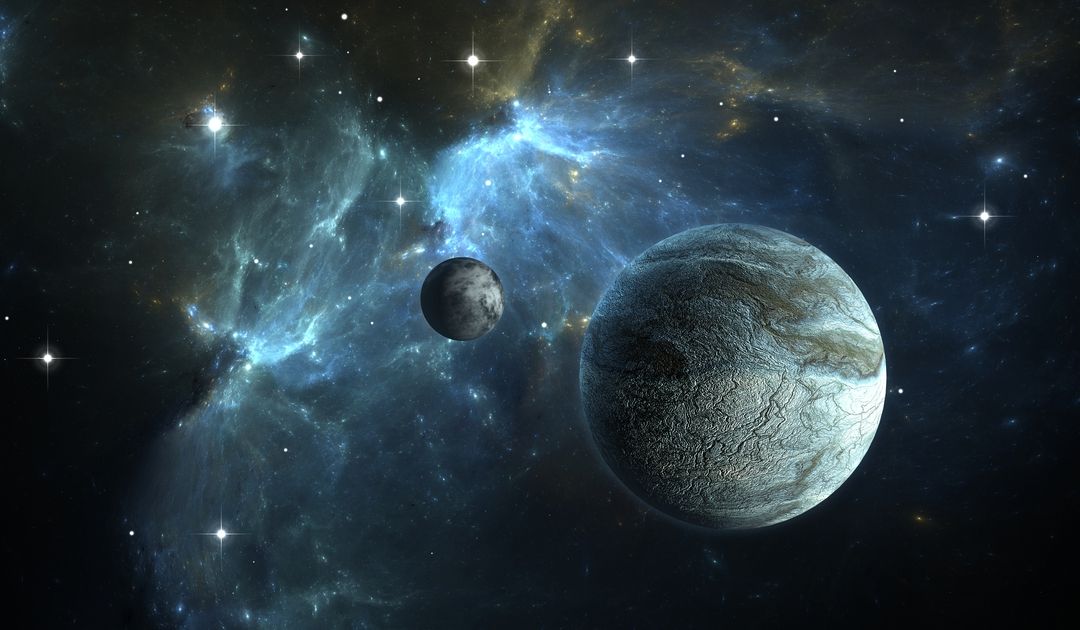
Planet Nine — a massive world thought to be orbiting the Sun far beyond Pluto — may be a black hole the size of a baseball instead. https://t.co/FBGAdXiofz
Ancient Earth might have been blanketed in a huge magma ocean when it was struck by a Mars-sized object called Theia, which helped forge the Moon. https://t.co/ycMqKSMENS
Staggeringly huge, surprisingly small, and blisteringly fast — stars come in many sizes and flavors. Here are some of the strangest. https://t.co/rjp5qPVzuZ
Last year, astronomers detected clouds of liquid water in the hydrogen-rich atmosphere of an exoplanet 124 light-years away. Now, new research suggests its surface could be habitable. https://t.co/wjm6m01p6z
It’s been nearly 30 years since a NASA spacecraft has visited Venus. But that could change, as missions to the planet are two of the four finalists for the agency’s next two $500 million planetary missions. https://t.co/p0CSf32vMN
The Moon holds Earth’s 23.5-degree tilt steady. Without our satellite, the planet would wobble, dramatically affecting seasons and climate. https://t.co/WToM0U5Zjt
Do you ever dream about exploring places like the Moon & Mars? We’re accepting applications March 2-31 for the next class of #Artemis Generation astronauts.
What questions do you have about how to #BeAnAstronaut? Tag them w/ #AskNASA! Learn more: https://t.co/TongSWS4GL
We can't keep using chemical rockets to put satellites in orbit. They're too expensive, the fuel is heavy—you need even more fuel to carry the fuel. SpinLaunch has a different idea: physically throw a missile off the planet. Let's do the physics: https://t.co/6SFUDb5fhK
During its flyby of Pluto in 2015, NASA's New Horizons mission captured a now iconic image of a heart-shaped feature on the dwarf planet. And new research about Pluto's "frozen heart" has revealed that its heartbeat actually controls wind https://t.co/S6GShVvIP0
A #SnowMoon will illuminate the night sky on Sunday, Feb. 9, reaching its peak of fullness at 2:33am ET. Be sure to bundle up and take a look! https://t.co/oTuVUxCg7H
Any future collision between our observable universe and a bubble universe will presumably happen on cosmological timescales — tens of billions of years or longer. https://t.co/bMk0JDDqDF