Solar System bodies make deep space exploration more fuel efficient!
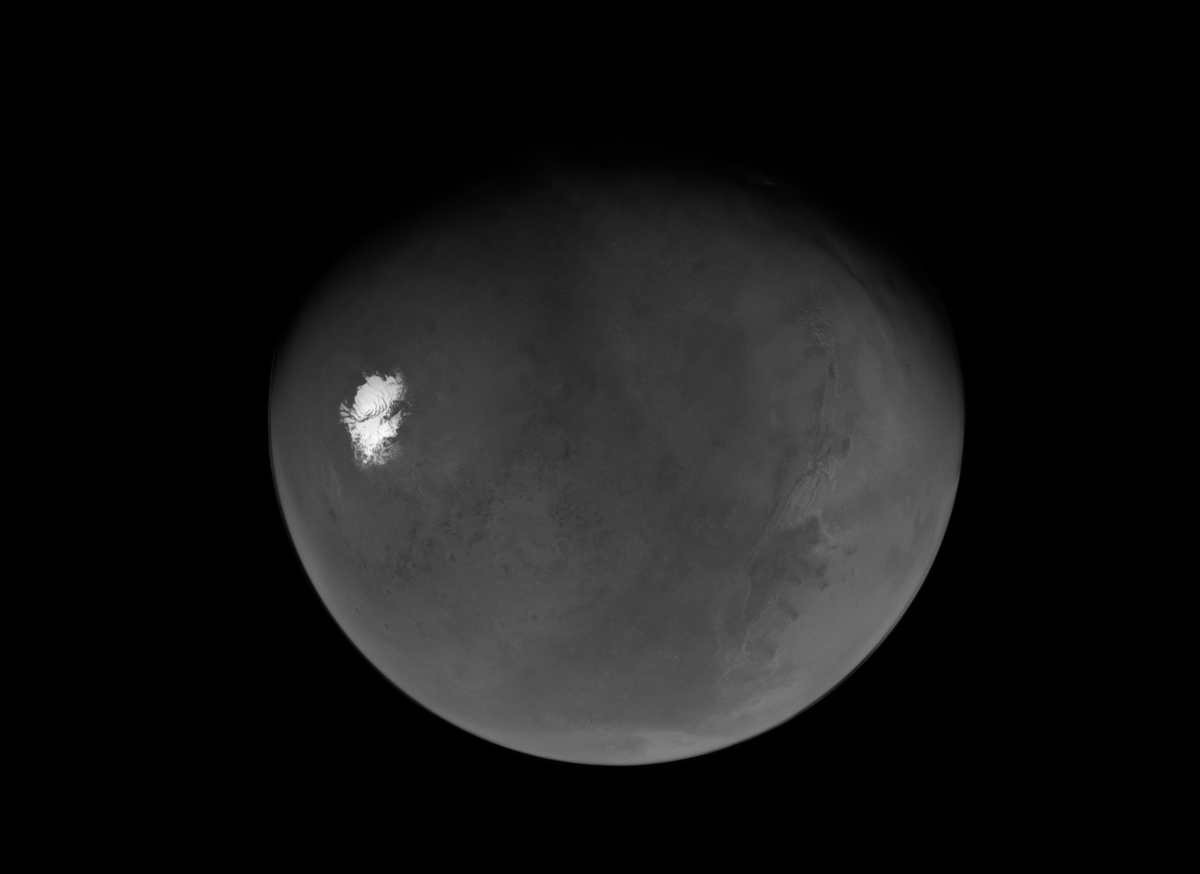
Today’s video shows the Psyche spacecraft gaining speed and changing its trajectory with minimal fuel spent due to a gravity assist from Mars in May 2026.
Mars has an average orbital speed of almost 87,000 km/h (54,000 mph) around the Sun. Its orbital motion and its gravity allowed Mars to pull Psyche along with it, increasing the spacecraft’s speed.
Gravity assists have been used since 1959’s Luna 3 mission to allow for spacecraft (the Voyagers, Cassini) to reach farther than they could with fuel alone.
This assist helped the Psyche spacecraft on its journey to the Psyche asteroid, which it will reach in 2029.
While passing Mars, the spacecraft tested instruments that will analyze the asteroid’s composition and magnetic field.
This is the first mission to an asteroid thought to be largely made of metal, an essential building block for planets, rather than rock or ice.
Video Credit: NASA/JPL-Caltech/ASU/True Story Films
Text: Keighley Rockcliffe (NASA GSFC, UMBC CSST, CRESST II)
On July 25, an initial onsite inspection by the NASA Madrid Deep Space Communications Complex (MDSCC) emergency response team found wildfire damage primarily to pavement and surrounding vegetation, with no significant structural damage observed to antennas or buildings.
Additional inspections and testing will continue as safety procedures allow. The situation remains dynamic, and comprehensive assessments will proceed as conditions stabilize and access improves.
Meanwhile, NASA's Space Communications and Navigation (SCaN) Program has seamlessly transitioned mission support to its other Deep Space Communications Complexes in Goldstone, California and Canberra, Australia, ensuring continuity of operations and uninterrupted spacecraft communications.
The safety of NASA personnel remains the agency's highest priority. All personnel at MDSCC are safe, and NASA extends its sincere gratitude to Spanish emergency responders and members of The Ministry of Defense, The Ministry of Interior, and The Ministry of Science, Innovation and Universities for their professionalism and tireless efforts in helping protect the facility under extremely challenging conditions.
NASA is also thinking of its partners at the European Space Agency (ESA), whose colleagues continue to be affected by the broader wildfire emergency.
NASA will continue to monitor the situation closely and provide updates as new information becomes available.
Mars in motion! ⏩
While on its way to explore a mysterious, metal-rich asteroid, our Psyche spacecraft sped by Mars for a gravity assist to pick up speed and adjust its trajectory. As it approached the planet, it captured this series of high-res snaps.
GOODBYE . My friends, I’m just going to walk quietly away from Twitter for now . I am not happy with what’s happened at Twitter & I’m not happy to be in a place that is so angry & divisive . But I’ll still be alive on Instagram. https://t.co/23YkeePui4
And I miss my blue tick !
“Each of us has a little tiny, finite life. We have enormous gifts that need to be shared, and that's the stuff we need to be doing. We have got to push as far as humanly possible.”
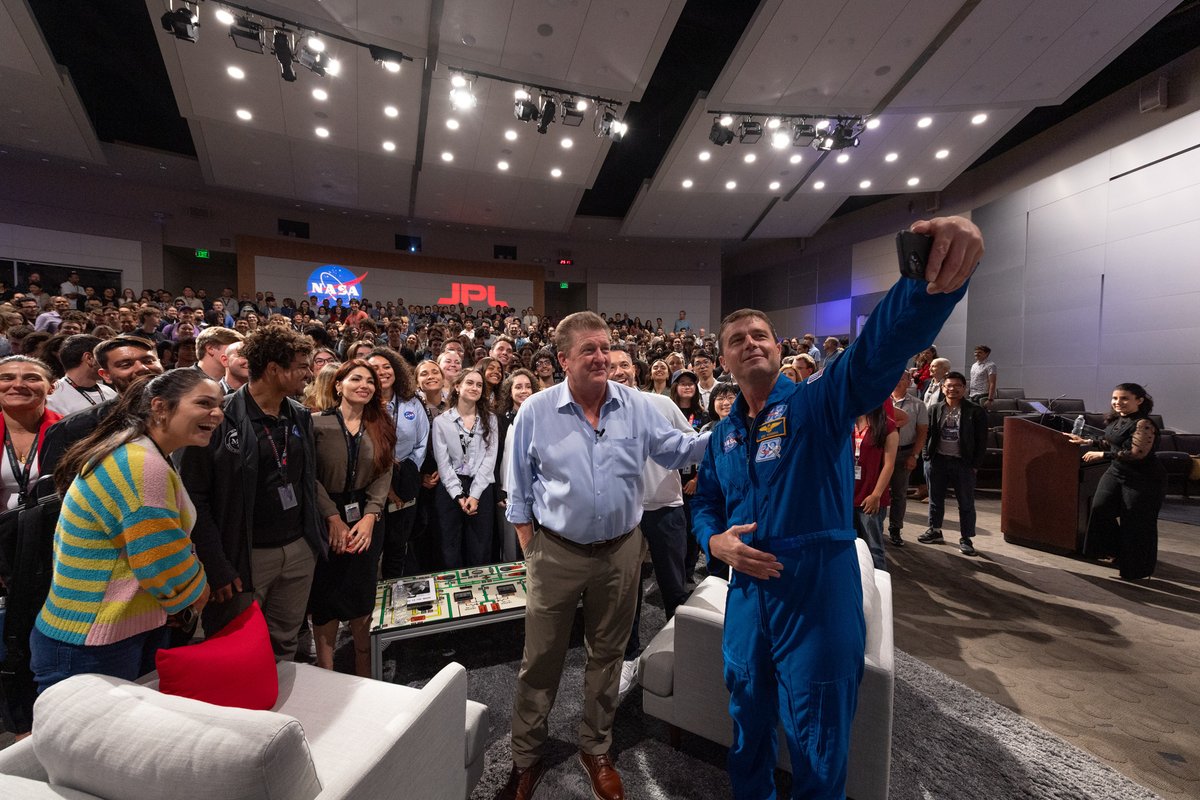
Thanks to @astro_reid for the inspiring visit to JPL!
Great to be back at @NASAJPL and spend time with the people driving some of NASA’s most ambitious missions.
The future of exploration depends on teams like this, and I couldn’t be more excited about what’s ahead. Dare mighty things.
Did you miss the conjunction of Jupiter and Venus last night? You didn't! Not really, because the pair will still appear close together tonight. Look to the western sky after sunset. In this view from June 10th, see if you can spot Mercury near the horizon as well.
This Memorial Day, we honor the brave men and women who made the ultimate sacrifice in service to our nation.
Their courage secured the freedoms that make great endeavors possible and continues to inspire generations of Americans to serve something larger than themselves.
We remember them, and we remain forever grateful.
First stop, Mars. Next stop, Psyche 📍
On May 15, our Psyche spacecraft swung by Mars on its way to its next destination: a metal-rich asteroid also named Psyche. The Red Planet gave the spacecraft a 1,000-mph speed boost and provided some stunning photos as well!
The initial reports are in: #MissionToPsyche aced its Mars flyby. ☑️
With the Red Planet in the rearview mirror, the spacecraft will soon resume using its solar-electric propulsion system to make a beeline to the main asteroid belt and rendezvous with the asteroid Psyche.
Pause your doomscrolling for 5 seconds, check out these images from a spacecraft that is on its way to explore a metal rich asteroid... but WAIT! It stopped by Mars for a little zoom first and took some great pictures during the flyby. Neat!
Hello Mars, goodbye Mars 👋
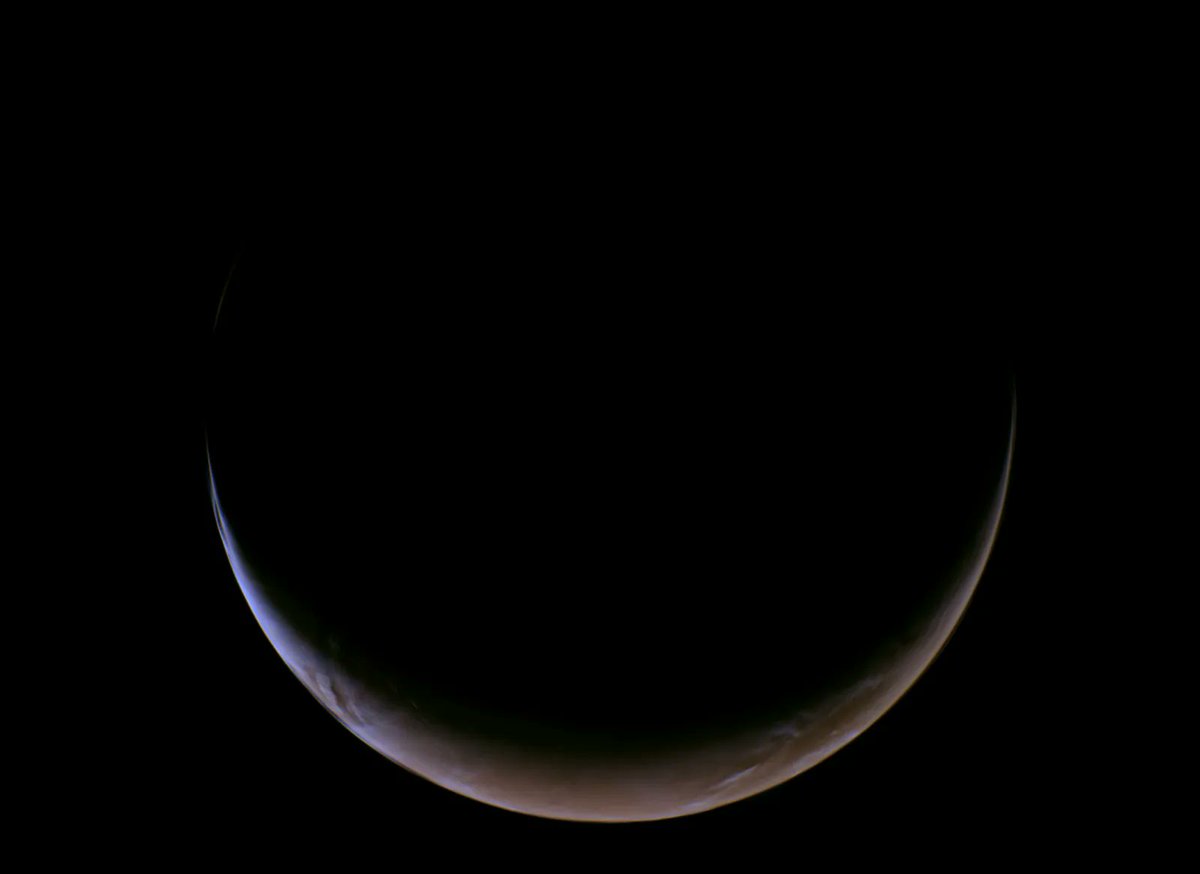
NASA’s #MissionToPsyche spacecraft was speeding by the Red Planet on May 15 when it snapped this rare, crescent view of Mars. The successful flyby flung the Psyche spacecraft toward its final destination: the metal-rich asteroid Psyche. 1/2
@NASAJPL Psyche sends its data via the giant antennas of NASA's Deep Space Network. You can see which DSN stations are active and which spacecraft they're communicating with in real time at: https://t.co/9YYSKDwd2Q
Distance: 5,020 miles
Speed: 11,660 mph
Right now, NASA's #MissionToPsyche is approaching Mars.
Current distance: 29,780 miles
Current speed relative to Mars: 10,340 mph
This simulated view, based on actual trajectory data, comes from our Eyes on the Solar System experience.
Ride along: https://t.co/9xfOG4mRl4
Future spacecraft may be able to “think” for themselves.
NASA is testing a next-gen space processor that can withstand the harsh conditions of space, while improving computing power. So far, testing shows it operating at 500 times the performance of chips currently in use. https://t.co/aqAsJxhRCA
The metal-rich asteroid Psyche is one of the most fascinating places in the solar system. This gravity assist maneuver will bring NASA’s mission to explore it one step closer to its destination! All about the #MissionToPsyche: https://t.co/HIlOkmiOTe
As it passes about 2,800 miles (4,500 kilometers) from the Martian surface at 12,330 mph (19,840 kph), the #MissionToPsyche team will calibrate the spacecraft’s instruments – and grab some close-up snapshots of the Red Planet! Details: https://t.co/u0vRRMxk3t 2/2
NASA’s #MissionToPsyche – on its way to explore a rare, metal-rich asteroid – is about to get a speed boost from Mars. 🚀🏁
On May 15, spacecraft will harness the Red Planet’s gravitational pull as a slingshot to increase its speed and adjust its trajectory. 1/2
Powering the next giant leap.
A novel electromagnetic thruster that runs on lithium metal vapor was successfully fired up for the first time during initial tests at JPL.
Fully developed and paired with a nuclear power source, these thrusters could reduce launch mass and support payloads required for human Mars missions.