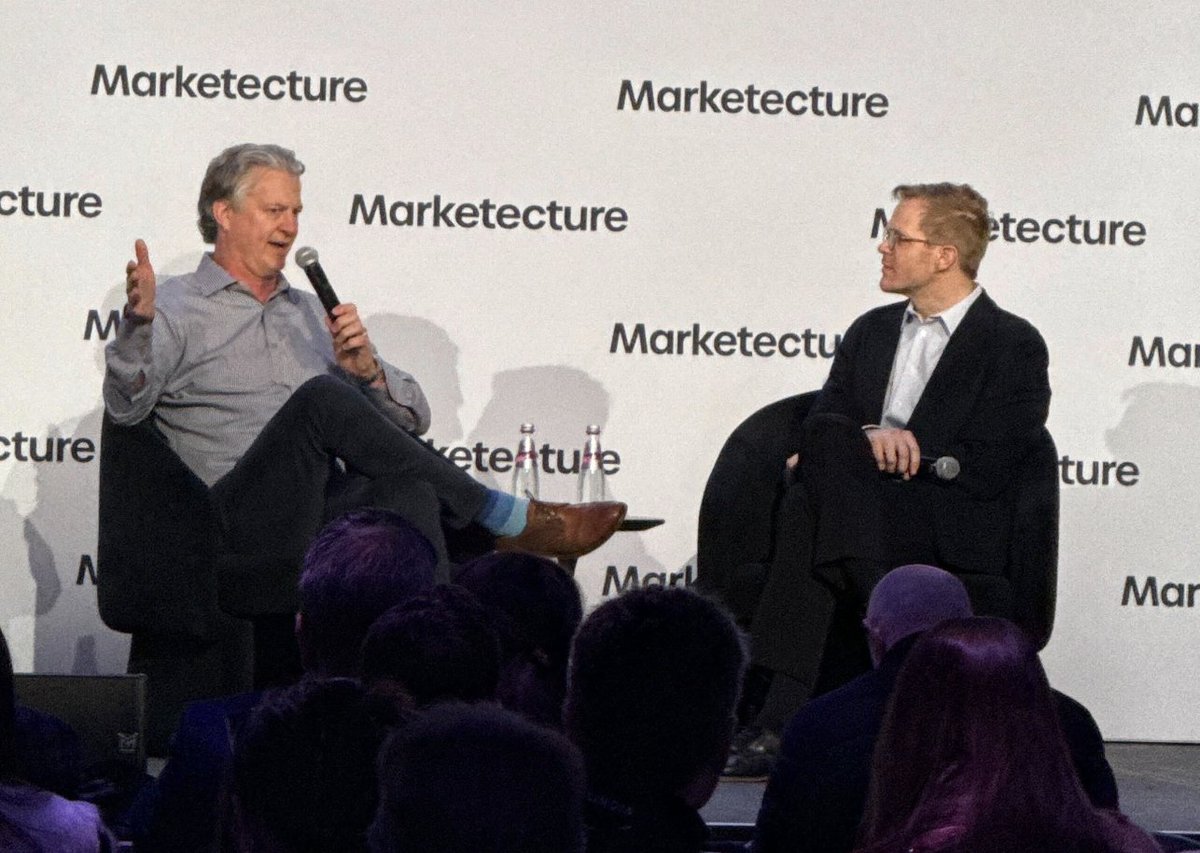
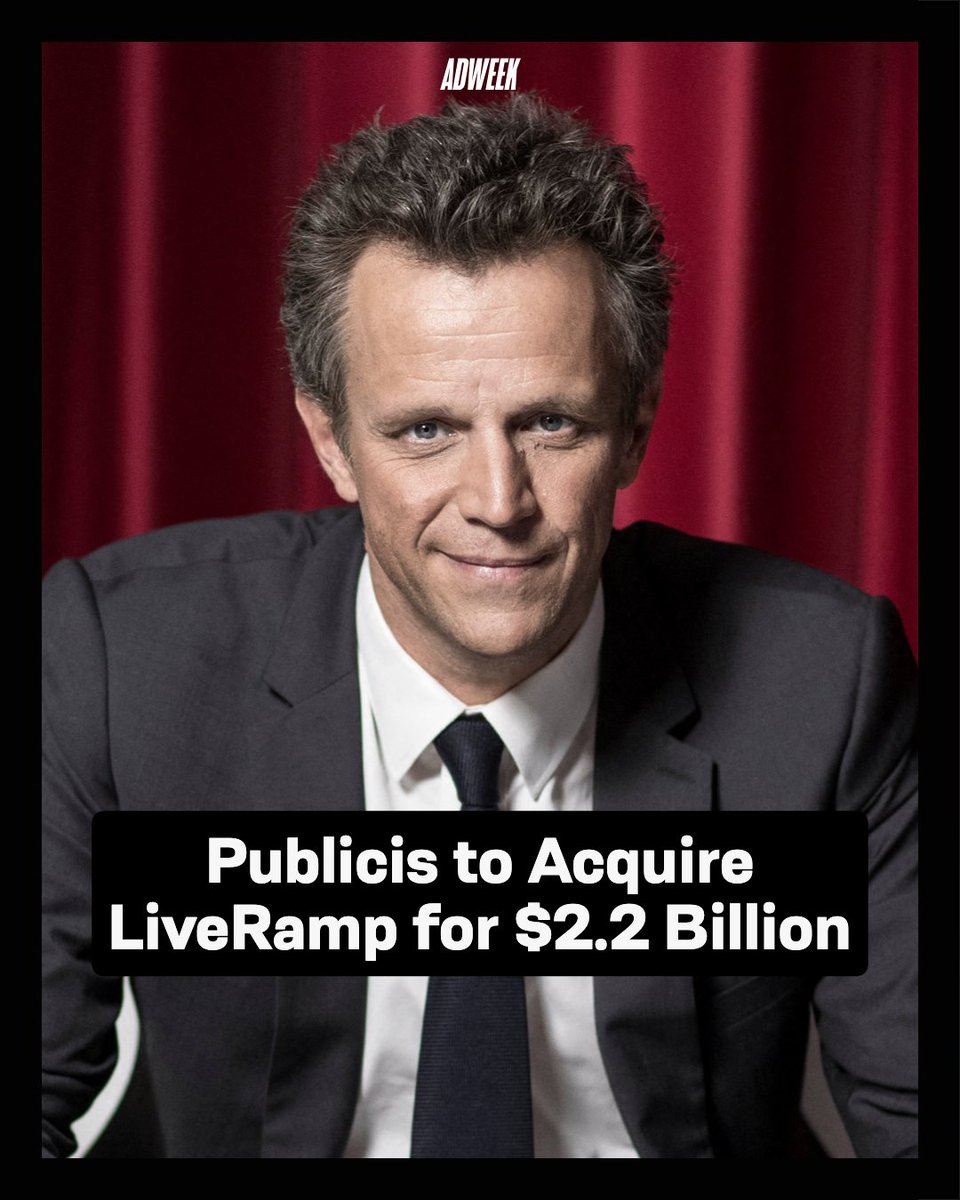
Great insight to watch on @PublicisGroupe $2.2b acquisition of global data collaboration platform @LiveRamp $RAMP to accelerate data co-creation, and agentic AI data assets powering brands, along with consumer identity applications. https://t.co/Na5GkgUvz9 #AI#Data
BREAKING | @PublicisGroupe has agreed to acquire @LiveRamp for $2.2 billion in a deal funded by a mix of cash and debt.
Read more about the acquisition 👉 https://t.co/hxOJHCKRYa
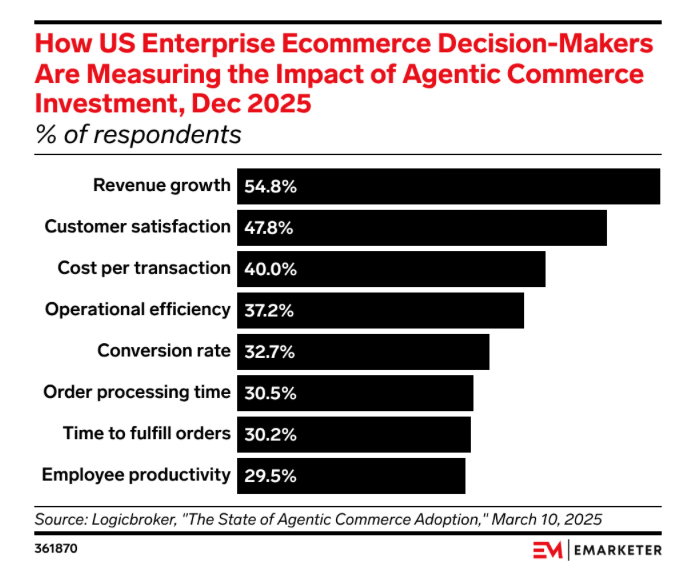
Revenue growth tops the agentic commerce scoreboard.
Key stat: 55% of US enterprise ecommerce decision-makers measure agentic commerce success by revenue growth, the top KPI in Logicbroker's December 2025 study and the only metric cited by a majority.
#AI#ecommerce
From idea to activation, frictionless advertising. 🚀
Your ideas move fast.
Your campaigns should too.
With our CreativeConnect:
⚡ Go live faster
⚡ Capture real attention
⚡ Drive real engagement outcomes
Less passive exposure. More active attention.
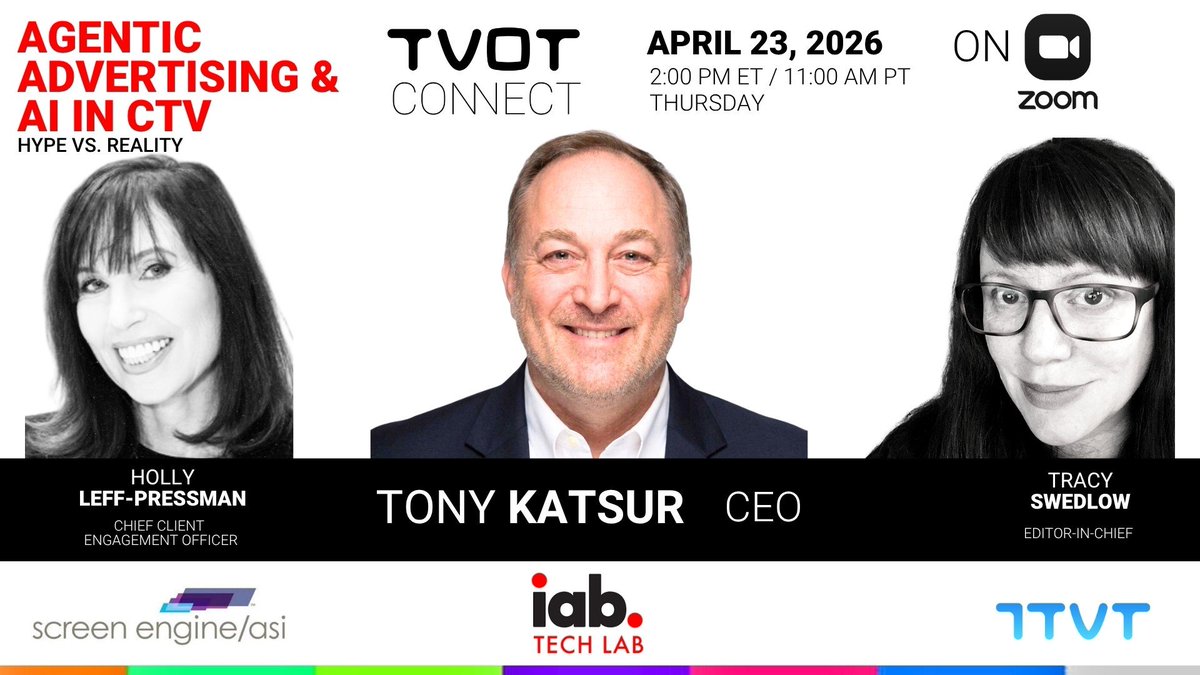
AI is reshaping CTV—fast. Join #IABTechLab CEO @AnthonyKatsur tomorrow at 2pm ET at TVOT Connect as he breaks down what agentic AI really means for programmatic advertising, measurement, and the future of streaming: https://t.co/Yh3FpMHcgb
From Atlas and aQuantive to LiveRamp.
This week on The Build Podcast, Scott Howe traces how data, not chance, shaped his career path and why acquisitions, org design, and speed matter more than ever in ad tech: https://t.co/Jn92unRaml
How purchase data is redefining TV ad performance and driving revenue.
Combining CTV with purchase data allows marketers to optimize for business outcomes instead of viewership, particularly as streaming platforms introduce more shoppable format https://t.co/nZdT1lduzu #CTV
Agencies’ top concerns this year are client spending and the effects of AI, according to a Digiday+ Research survey conducted in the fourth quarter of 2025 among 62 agency professionals. https://t.co/FNz9IyFaa7
Reddit's purchasing influence is growing.
Brands could miss conversations happening in real-time on @Reddit, where over 180 million US users discuss products, share recommendations, and influence purchases before companies even know what's trending. https://t.co/Z71O8UyYqY
The Trade Desk $TTD is testing automated buying features that combine data, media, and tech costs into one price while simplifying campaign management, per Digiday. The “Trading Modes” give clients two options to run campaigns.
https://t.co/nygxcnPMH1
CTV home screen ads are giving marketers a more effective route to performance. Home screen CTV ads offer a high-attention path to results.
https://t.co/iDbtqnCGIw #CTV#DigitalMarketing
Bye bye banner ads.
Say hello to @CollectiveAud advertising experiences that increase attention, engagement, conversions and generate real-time first party data.
The new standard for advertising on the open web. https://t.co/EGHHaAxWR9 #DigitalMarketing#DigitalMedia
As The Trade Desk whines about its media coverage, I just wanted to share that Yahoo DSP has launched new data-targeting capabilities for Netflix inventory.
https://t.co/UB4iSWKbOh
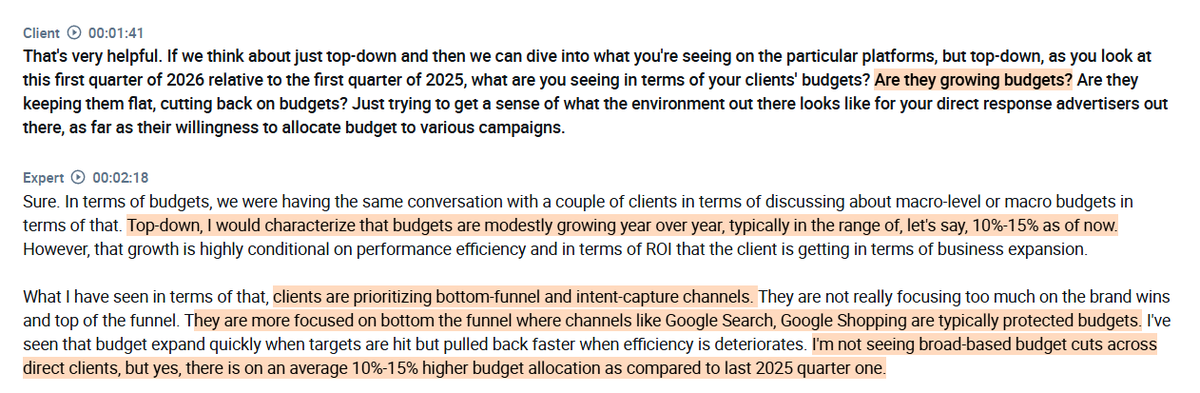
Interview with an industry expert on automation transparency delivering efficiency gains across digital advertising ( $GOOGL, $META ):
- The expert describes the current budget environment as steady, with clients allocating around 10-15% more to their campaigns YoY. He is quick to add that this growth is not unconditional. Clients are tying budget increases directly to the ROI and performance efficiency they are actually seeing in their accounts. From what he is observing across his client base, Google Search and Google Shopping are the protected budgets right now, with most advertisers firmly focused on bottom-funnel and intent-capture channels rather than brand awareness or upper-funnel activity.
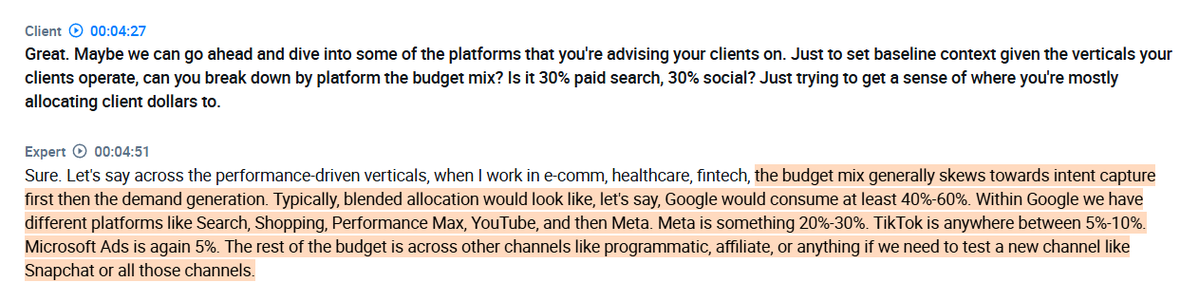
- When allocating budget across performance-driven verticals like e-commerce, healthcare, and fintech, the expert prioritizes intent capture over demand generation. $GOOGL has the largest share, consuming 40-60% of the total budget across Search, Shopping, PMax, and YouTube. $META sits in second place at around 20-30%, followed by TikTok at 5-10% and $MSFT Ads at roughly 5%. The remainder gets spread across programmatic, affiliate, and any newer channels worth testing, like $SNAP.
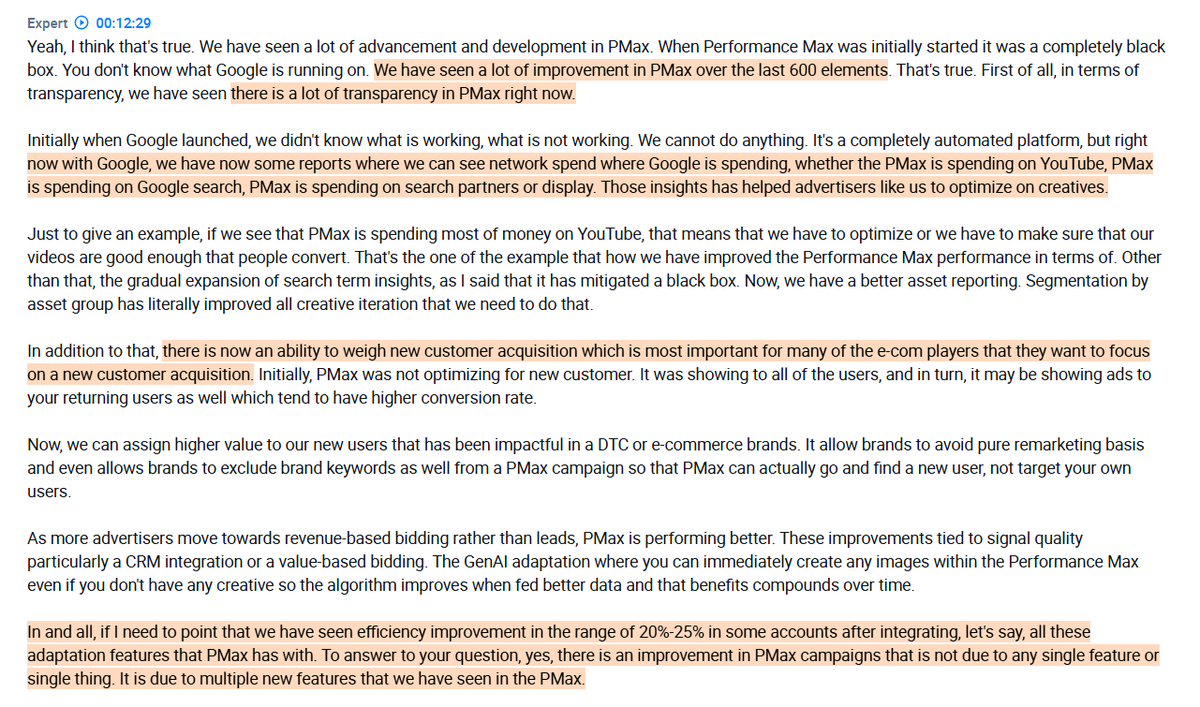
- The expert believes Performance Max has made significant progress over the last year. In the past, the platform offered very little visibility into where budgets were actually going, but that has changed. Rather than a single feature driving this, it has been a combination of improvements that, together, have delivered efficiency gains of around 20-25% across some of his accounts. The biggest shift has been transparency. Advertisers can now see exactly where PMax is allocating spend across YouTube, Search, and Display, which makes creative optimization far more targeted and deliberate.
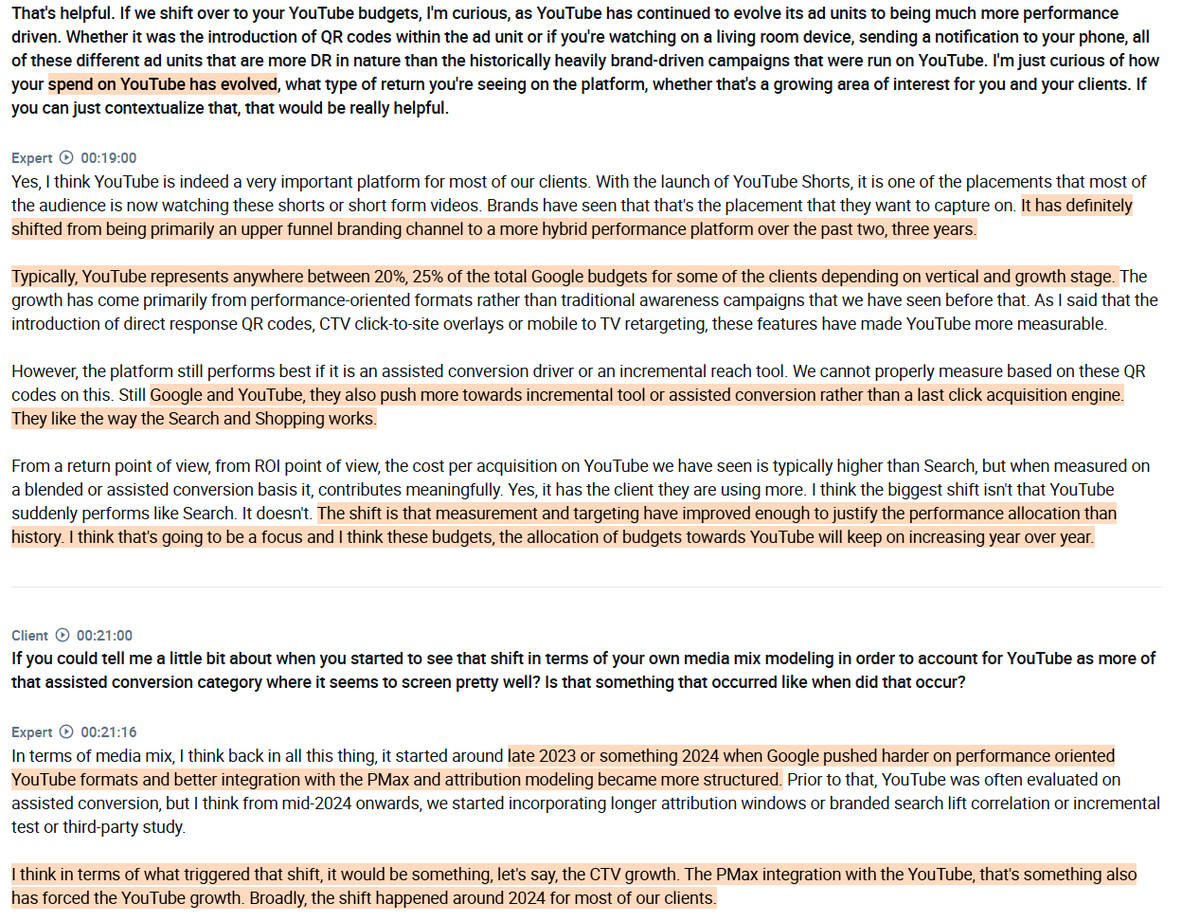
- The expert highlights that YouTube has meaningfully shifted from a primarily upper-funnel branding channel to a hybrid performance platform over the past two to three years, now representing around 20 to 25% of total $GOOGL budgets. The growth has been driven by performance formats such as direct-response QR codes, CTV click-to-site overlays, and mobile-to-TV retargeting, which have made the platform far more measurable than before. Still, he is clear that YouTube still does not perform like Search.
- According to the expert, CPA is higher, and the platform works best as an assisted-conversion driver rather than a last-click acquisition engine. The real shift he points to is not in raw performance but in measurement, with better attribution modeling, longer attribution windows, and PMax integration making it easier to justify performance budget allocation. He expects YouTube's share of budgets to continue growing as measurement improves further.
- The expert emphasizes that the gap between Advantage+ and PMax generative tools has largely closed over the last six months. A year ago, $META had a clear edge in practical usability, particularly around creative variation, image expansion, and social-native copy generation. Today, he sees them as broadly comparable but with different strengths. $META still feels more native for social formats and rapid creative testing, while $GOOGL's generative tools have improved significantly and now integrate more seamlessly into performance automation workflows, particularly within PMax asset groups.
OpenAI could lean on The Trade Desk’s automated ad platform to help sell ads in ChatGPT before eventually building its own ad tech stack. https://t.co/vilBMdxLpx
Media companies are battling AI firms over content scraping. But what happens next? @people Inc. CEO Neil Vogel joins @Adweek Mark Stenberg to discuss how publishers can compete by focusing on what AI companies cannot replicate.
#IABTechLab’s new Content Monetization Protocol (CoMP) framework is open for public comment until April 9! We’re excited to have support from @BeelerTech, Bertelsmann, Mobian, People Inc., and The Weather Company! https://t.co/wifwi8Q0f8
Real-time optimization is table stakes. Everyone can do it.
What sets Symitri apart is trusted access to data advertisers would never push into the open bidstream. By handling data securely and privately, Symitri delivers deeper insights, smarter targeting, and better performance that competitors can’t match.
That’s what happens when trust unlocks better results.
Learn more at https://t.co/kwL7HV9b2S
#FirstPartyData #DigitalAdvertising