If Epic games wanted more people developing on UE, you have to reduce the hardware spec to run the engine / editor. it is just so painful for people don’t have a monster machine. AI can democratize game development, but it won’t happen if the hw bar is still there.
TBH, it is actually also painful for people who has a monster machine due to the iteration speed.
All this UE6 talk, here's what I really want to know: How fast does it compile and how fast does it launch?
Vanilla UE 5.8.4 is already 9300(!!) compilation units, and takes 46m on a good machine (7950x3D, 96GB RAM, Nvme).
Unless this drops drastically, I don't see the point.
Full Mario 64 in Mixed Reality! Running in real 3D (no stereoscopic crap) natively at 90FPS and also running on my desk! 😋
Again, Opus 5.5 + PICO CLI combo made it quite straightforward.
Such a bliss to play an oldie at 90 FPS in 3D.
Disclaimer: I own an original physical copy of Mario 64. This project is not associated with Nintendo or PICO.
10 minutes with an iPhone, and this gorgeous craftsman house is now a 3D world you can walk through! It still blows my mind how easy Echo-3 makes this.
Go capture your favorite space 🙂 https://t.co/HyEGpokZXJ
Phantom Blade Zero is one of the best action games we've ever played, one that recognizes the genre's strengths and weaknesses and addresses both with fantastical Wuxian style. Though the action genre is always jam-packed with new releases, few are as special as this.
Our Phantom Blade Zero review: https://t.co/VACk0zOHTH
I got early access to @PICOXR's new device. So I just connected it to GPT-6 Astra and build a whole planet full of real-time data. 🌍
Live flights, quakes, even the ISS. Tap any place, get a 3D city. 👇
We have a huge pivot underway here at Epic, moving developers around to retool for maximum AI acceleration.
The aim isn't to do the same stuff with fewer people, but to enable everyone here to build MORE and BETTER stuff, and to bring the benefits to all teams using Unreal.
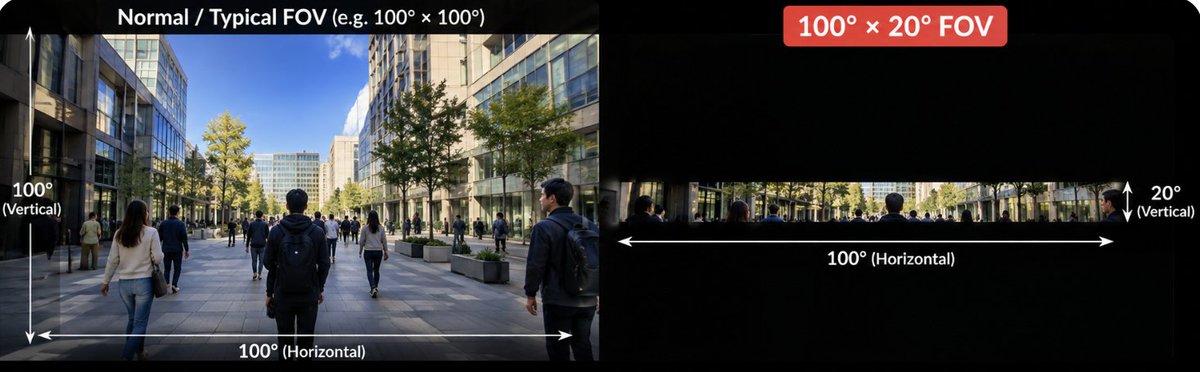
IMO, diagonal FOV is such a dirty marketing trick 😆. You can have a 100° horizontal and a 20° vertical FOV and claim a 102° diagonal FOV. That’s mathematically correct, but the actual experience would look like absolute shit, you’d literally be looking through a slit.
FOV is fundamentally 2D. Trying to represent it with a single number is just misleading (of course, they knew it ).
@Cooe_14 They are not estimates. Meta gave me those figures directly.
The confusion here is that Xreal Aura is 70° *diagonal*.
Xreal Aura's horizontal × vertical is around 61° × 41°.
🚀 PICO CLI 0.5.0 is live!
Build your first spatial app from a single sentence — AI can create, build, debug, and run it on the PICO Emulator.
Learn more: https://t.co/ezj5rsPtBv
Got ideas or feedback? Tag @PICOXR_Dev
Join our Discord: https://t.co/T6aUnvDOBU
It’s even cooler in XR.
The project looked so good that I had to try porting it to XR using the PICO Spatial SDK, and it worked in the PICO Emulator!
Here’s a short video of the result. I hope @thebuggeddev might be interested in bringing it to Project Swan.
Only if education could be this interactive ❤️🔥
I've had a looong wish to build something genuinely useful through vibe coding, and I finally did it.
A 3D human anatomy application built with @threejs using GPT 5.6 Sol.
It all started with a single design image that I created using GPT Image 2.0. I then used it to generate every 3D organ image, one by one.
Next, I converted each of those images into 3D models using @tripoai (and no, they didn't sponsor this 😄).
After that, I opened Codex, wrote a master prompt based on the design, and gave it the prompt, the design image, and all the 3D models.
Codex built the first version beautifully, but there was one big problem.
Every single 3D model was nearly 120-150 MB. That obviously wasn't practical for the web and was giving a performance of 16fps.
After a few iterations, Codex optimized each model down to roughly 2–5.5 MB while preserving the visual quality, reducing the total asset size from ~900 MB to just 28.6 MB. And each model loads on demand.
Along the way, Codex also generated those anatomical illustrations showing where each organ sits in the human body, and even created the interactive hotspot markers that explain different parts of every organ. It handled all of that.
The process wasn't exactly one shot, but it also wasn't difficult. You just have to do it step by step.
It genuinely felt like building something that could make learning anatomy much more engaging.
The inspiration came from @DilumSanjaya's 3D animal plant cell project. I remember seeing it and thinking, "I want to build something like this one day."
And I did it :D
Live: https://t.co/gIFgkj8UVB
Code: https://t.co/nijvyWcyxO
@Mononofu@JensenHuang This is a false equivalence. Everyone has the right to keep their code private. The problem is when someone tries to stop OTHERS from open sourcing.