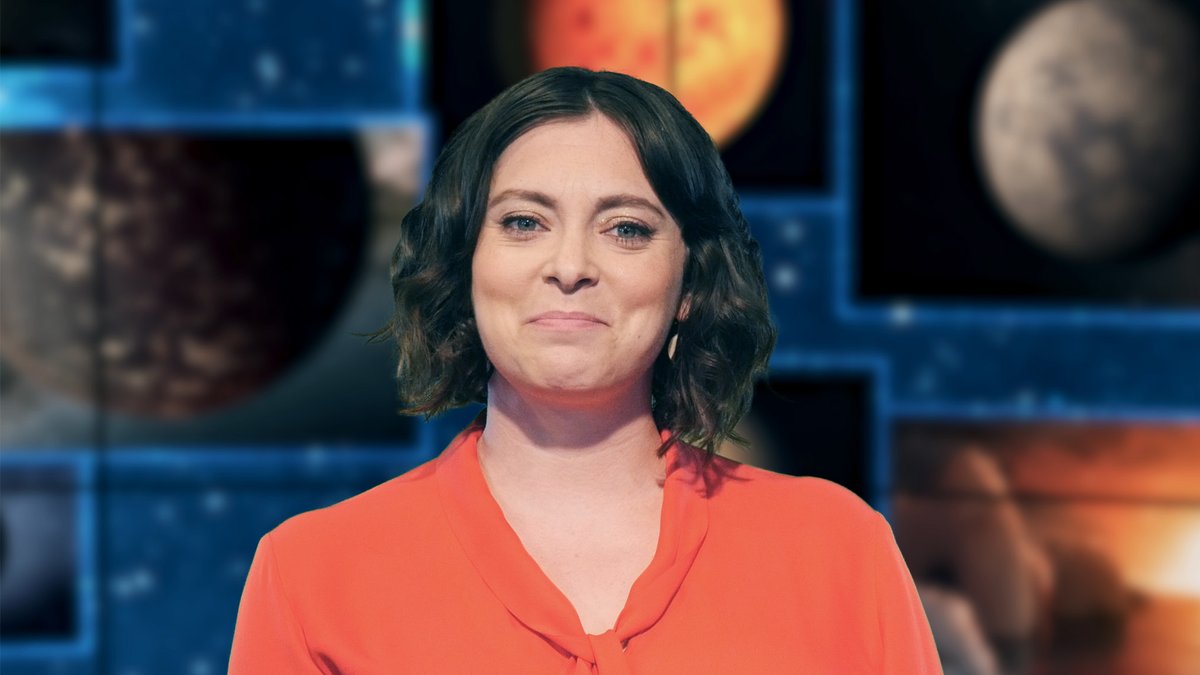
You probably didn't know you needed to hear Rachel Bloom sing a sassy song about exoplanets today, but here we are. #AstroVariety https://t.co/1EdQiT6yTB
NASA's 2022 #AstrophotoChallenges is almost here!
This year's target is the mysterious Eta Carinae, once the second-brightest star in the sky. Find out what happened and how YOU can visualize it with @MicroObs tools at the May 3 #AskTheAstronomersLive. https://t.co/qyERaXiR3X
There are billions and billions of stars with planets -- and now there's an incredible song about them! It's performed by Rachel Bloom and produced by my @Cool_Cosmos colleagues. Be sure to check out the rest of the Astrophysics Variety Hour too:
https://t.co/zD2HyYQbhl
It's HERE! What do you get when you mix Hollywood stars, music, comedy, and science? The Astrophysics Variety Hour! Why not learn how scientists discover faraway worlds while having a laugh? Don't miss the closing song about finding exoplanets sung by Rachel Bloom! #AstroVariety
How do astronomers find planets in star systems...without even seeing them? Host @FeliciaDay and friends explore where people and planets came from as we channel-surf through the galaxy in the Astrophysics Variety Hour! #AstroVariety https://t.co/Sh82tFHgb6
Are you ready for some star-studded FUN? 🌠🌟✨
Here's a sneak peek of the Astrophysics Variety Hour that drops next week, featuring human star @FeliciaDay! (Watch for cameos of another type of star—those orbited by exoplanets.) Sound ON! #AstroVariety
📢 Calling all girls! Do you think a career in engineering might be right for you? We talked to female engineers across @NASA to get the inside scoop on engineering careers.
Celebrate #GirlDay2022 & find out 6 things you might not know about engineering!
https://t.co/6Pb6KshmN5
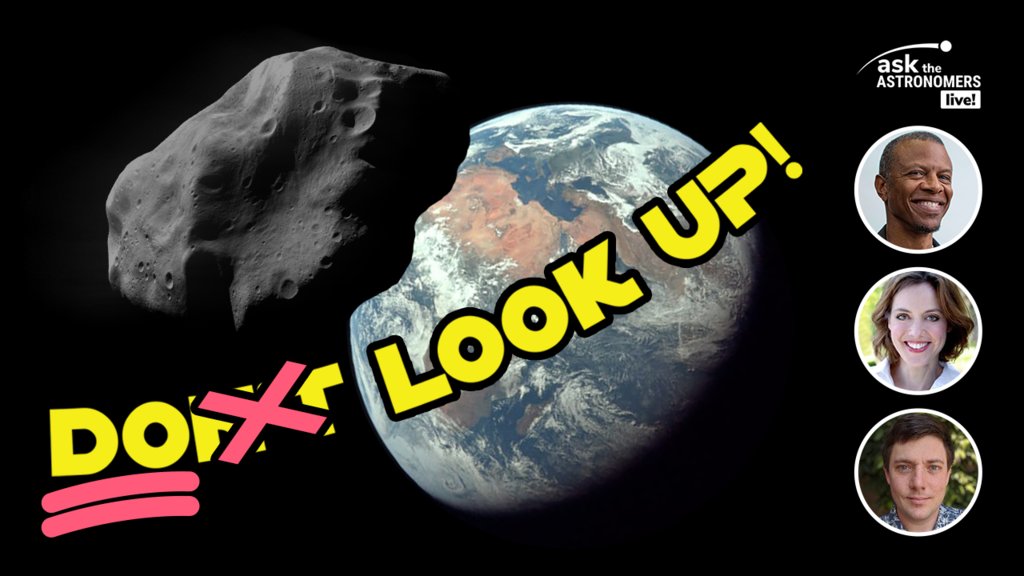
Got a question about asteroids or comets for our guest astronomers? Tweet it with hashtag #AskTheAstronomersLive and it may be answered during the show! Join us in 15 min. on YouTube or Facebook; live stream links at https://t.co/yyl68oGvTD. #DontLookUp
Yes, DO look up! February's #AskTheAstronomersLive features @AmyMainzer, science consultant for @dontlookupfilm, and @JoeMasiero, Deputy PI for the NEOWISE mission, which tracks Near-Earth Objects (NEOs). Join them with host @phillamarr 3:15p PT Feb. 24. https://t.co/yyl68oGvTD
Yes, DO look up! February's #AskTheAstronomersLive features @AmyMainzer, science consultant for @dontlookupfilm, and @JoeMasiero, Deputy PI for the NEOWISE mission, which tracks Near-Earth Objects (NEOs). Join them with host @phillamarr 3:15p PT Feb. 24. https://t.co/yyl68oGvTD
It was exactly five years ago today that the seven-planet TRAPPIST-1 system was announced. Learn from @NASA scientists how they characterized and visualized the rocky worlds in ~30 minutes! #AskNASA
NASA's Spitzer Space Telescope played a key role in discovering and characterizing the 7-planet TRAPPIST-1 system, and Dr. Robert Hurt helped us visualize them.
Today at 11am PT/2pm ET, you can #AskNASA how he translated science data into illustrations. https://t.co/TbcRcmCASY
Some stars are famous for their outbursts.
Eta Carinae's Great Eruption in the 1840s expelled 10% of its mass and created a nebula that continues to expand almost two centuries later. A 3D #astroviz uses @NASA data to show and tell the star's story.
https://t.co/LDIcpqnzbE
NASA's most technically advanced space telescope, @NASAWebb, launches in just two weeks!
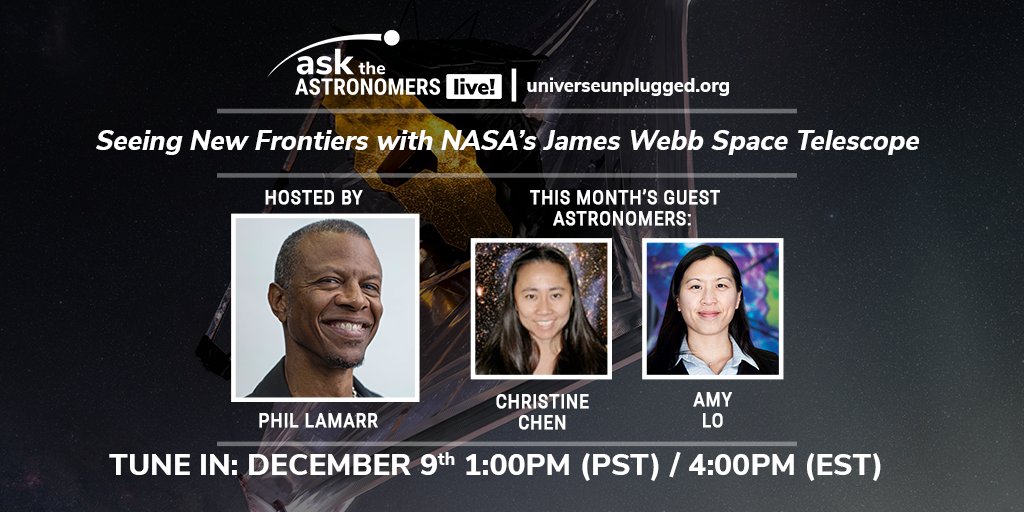
We'll chat with @northropgrumman engineer Amy Lo about the spacecraft's innovative tech at #AsktheAstronomersLive tomorrow (Dec. 9), 1pm PT/4pm ET https://t.co/yyl68oYF7L #UnfoldTheUniverse
At December's #AskTheAstronomersLive chat, guest astronomer Christine Chen of @stsci will answer YOUR questions about the exciting scientific discoveries we can expect from @NASAWebb. Join us at 1pm PT/4pm ET Dec. 9. Live stream links at https://t.co/qyERaXiR3X #UnfoldTheUniverse
Join the #AskTheAstronomersLive crew for the monthly chat happening in 5 minutes! The chat will be live-tweeted from the @UniverseVids account.
Live stream: https://t.co/3ZhvvYcHWT
It's also not too late to submit a question for our guests!
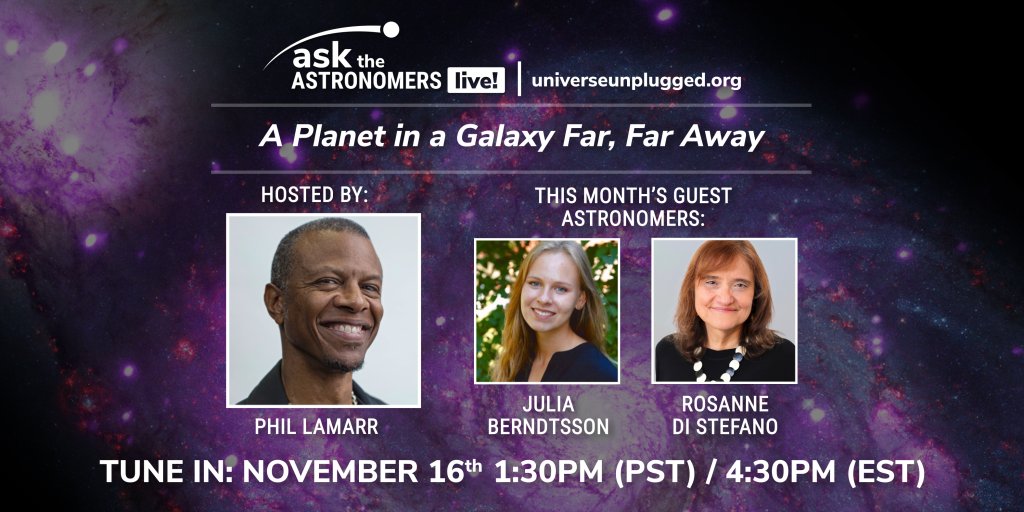
There are more than 4,500 planets outside our solar system, but only ONE may be in a different galaxy -- 23 MILLION light-years away! @phillamarr and guests will chat about using X-rays to find extragalactic planets at November's #AskTheAstronomersLive. https://t.co/qyERaXAssx