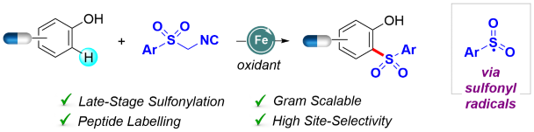
Late-Stage Radical Ortho-C−H Sulfonylation of Peptides and Phenolic Drugs upon Iron Catalysis @ACSCatalysis@ehu_kimika Congratulations to @gironcarlota and Martin Villamor for their hard work! https://t.co/nJaHk6brMZ
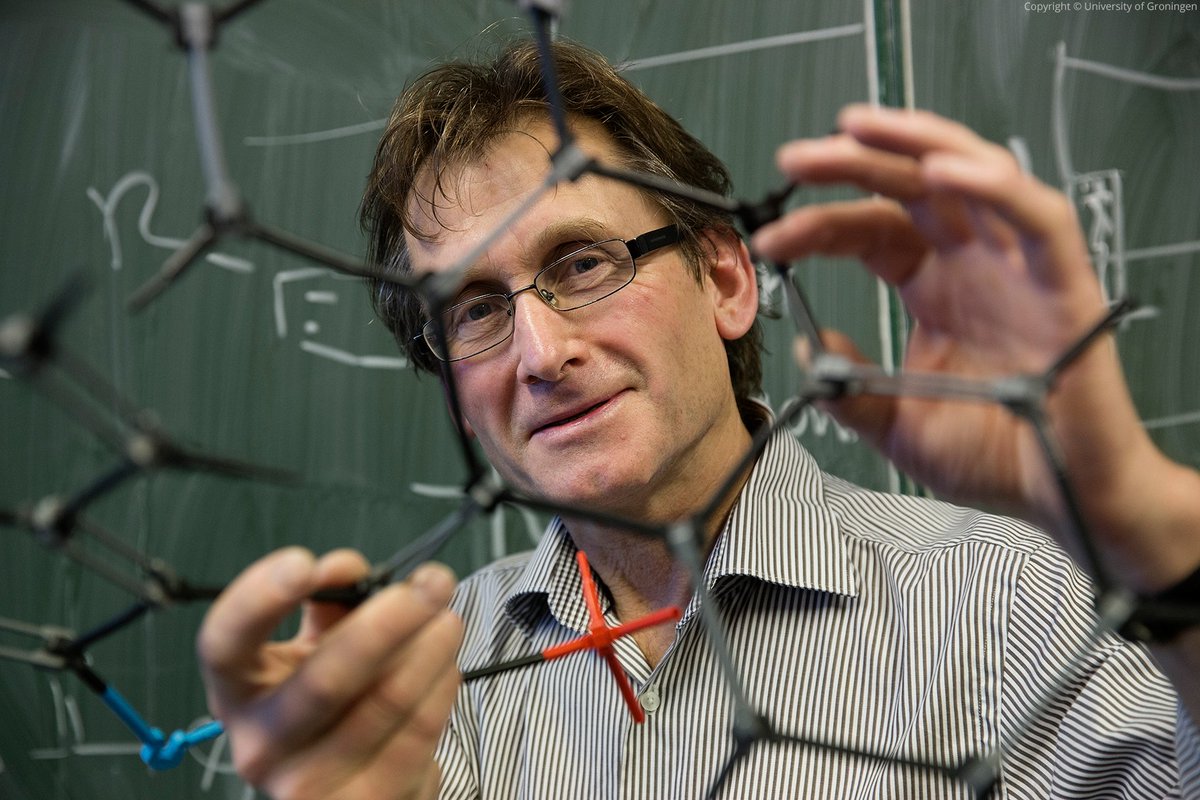
"When I draw a molecule in China or in Argentina, it is the same molecule. People understand immediately without knowing Spanish or Chinese. That is beautiful. Our common goal is not about power or borders of the country, it is about bringing forward human knowledge."
- Ben Feringa, awarded the 2016 Nobel Prize in Chemistry
Check out our new tutorial review in @green_rsc !!
👉👉https://t.co/KF8oXdkxYO
Rethinking photocatalysis: TADF compounds challenge metal-based complexes as efficient, sustainable alternatives—even in energy transfer.
@discunipd@KAELMEUR
🎁What? Ben Feringa turns 75? Hard to believe when one has a chance to listen to him or to talk to him—but it is true: HBT #NobelLaureate Ben Feringa turns 75 today.
He was born near Groningen in the Netherlands into a farming family on May 18, 1951, as the second of ten children, and he learned not to shy away from hard work. He studied chemistry from 1969 onwards at the University of Groningen @univgroningen, where he received his PhD in 1978 for work with Hans Wynberg. Among other things, he accomplished a #StereoselectiveSynthesis of #BINOL, which started his lifelong interest in #stereochemistry and #chirality.
From 1978 until 1984, he worked at the @Shell Laboratories in Amsterdam and in Sittingbourne, Kent, UK, where he learned the peculiarities of industrial research. In 1984, he returned to his alma mater in Groningen, first as a junior faculty member and, from 1988 onwards, as a full professor; he has remained loyal to this renowned university to this day.
Ben Feringa is perhaps most famous for his work on #MolecularMotors, for which he received the Nobel Prize in 2016 together with Jean-Pierre Sauvage and Fraser Stoddart. This is only one of the many topics in #OrganicSynthesis, #SupramolecularChemistry, #MedicinalChemistry—especially #photopharmacology—and #SystemsChemistry to which Ben Feringa’s group has made fundamental contributions. A captivating read is his Nobel Lecture, published in 2017 in @angew_chem: https://t.co/mkmLq6NEqw
Aside from his scientific work, he has served the community in manifold ways: as a member of editorial boards, as a member of illustrious academies, and as a teacher who reaches out to the general public and to young schoolchildren, for whom he published a book—together with Anouk Lubbe—about everyday molecules: https://t.co/He5WYiEwx8
Ben’s motto, “Being a scientist is a way of life,” says it all.
Researchers in Science report a kilogram-scale synthesis of enlicitide, a peptide drug for lowering low-density cholesterol that is in a Phase 3 clinical trial.
This new synthesis route leverages engineered enzymes and crystallization of key intermediates, substantially cutting down the number of reaction steps while improving yield. Learn more in a new #SciencePerspective: https://t.co/2g5nUA7d9G
Haritz Sardon donostiarrak eskuratu du Espainiako Kimika Elkartearen Ikerkuntzako Bikaintasunaren Saria. "Sariak kimika etikoago eta zirkularragoaren alde egin dugun apustua bide zuzena dela erakusten du", nabarmendu du Sardonek.
@upvehu
https://t.co/ffvbQ4Z1jF
Buen ejemplo de valorar a la plantilla. En @ehu_kimika@ryc_upvehu@upvehu lejos de valorarnos nos bloquean la promoción desde hace años...el cambio se anuncia pero nunca llega y eso que "Euskadi es diferente"
La UCLM reconoce a sus investigadores Ramón y Cajal por impulsar el talento investigador y fortalecer el proyecto científico de la institución.
https://t.co/bVJdrxJWzY
🚨Peer review is supposed to be thoughtful, rigorous, and carried out by experts who genuinely engage with the work. Lately, that’s not always what it feels like. We are being “ChatGPT-reviewed” not “peer-reviewed”.
Today, my group experienced this directly. What is frustrating is not just the review itself, but what it represents. This came from a highly respected journal.
We all know how difficult publishing already is. Adding layers of vague, artificial feedback that dictate how we should write, or even what experiments we should do, without even reading or understanding the work only makes things worse.
This is not about resisting new tools. It’s about responsibility. If we lose rigor and accountability in peer review, we risk weakening the foundation of scientific credibility.
We should not normalize this. It needs to be called out! 🚨
🚀 New paper out!
We’re happy to share our latest work on (hetero)arene C–H chloro- and bromodifluoromethylation enabled by Fe photodecarboxylation catalysis 🔆 just published in Organic Letters @JOC_OL https://t.co/MfHz7aCEwM
La @upvehu no cuida a sus investigadores. Prioriza antigüedad vs fecha de acreditación para promocionar. Constante decepción con el trato recibido desde GV y EHU. Dilatan la promoción y cancelan convocatorias de financiación a grupos de investigación ¿excelencia? De chichinabo
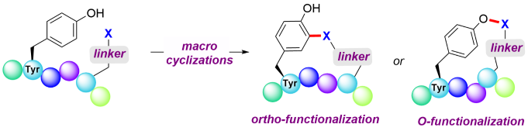
Happy to contribute with a review to a Special Issue in honor of the brilliant scientist and good friend Prof. Pep Cornella @CornellaLab for the 2026 Tetrahedron Young Investigator Award "Macrocyclizations toward the Assembly of Tyr-Linked Cyclopeptides" https://t.co/8lkSQt28JW
"Unified Access to Biaryl-Bridged Linkages Unlocks Structural Diversification of Noncanonical Cyclic Peptides” has appeared in @ChemRxiv: https://t.co/MpVcBQOUh1
Collaboration with @RongbiaoTong
📢 Another exciting invited speaker! Prof. Marcos G. Suero (@MarcosGSuero), ICIQ (@ICIQchem), will join us at the XXX Biennial Meeting of @geqor in Gijón.
🗓 17–19 June 2026
🔗 Register now: https://t.co/agqeQQkE9F
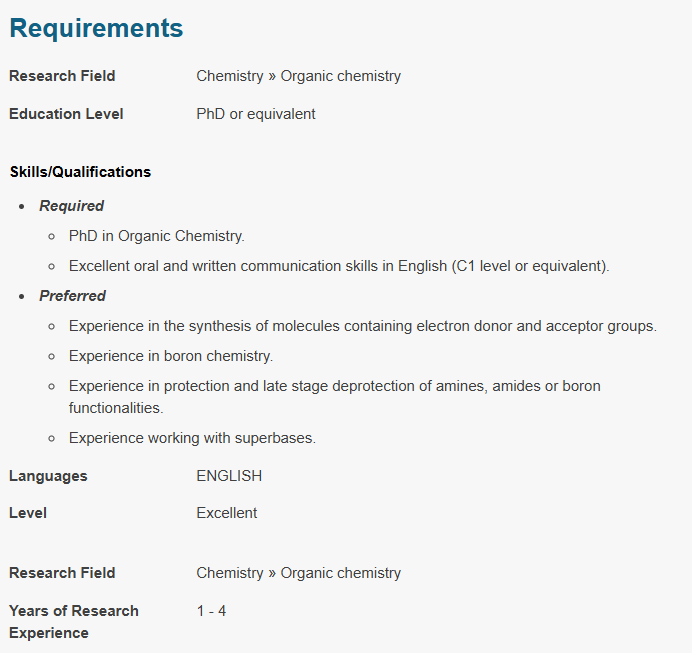
🔊Postdoc Position. Synthesis of Conjugated Donor-Acceptor Molecules for Charge-to-Spin Conversion
📍University of the Basque Country @ehu.eus 🗓️ Fecha límite/Deadline: 13/04/2026
➡️ https://t.co/kOhJdtifn9