I say inappropriate things between midnight and 11:59pm. By day, I'm a broker for an ETF Meme Hedge Fund. Gold Medalist of The 1999 Sarcasm Olympics in Peru.
@ChiefEngineerCE This is pretty much any consulting role. I worked for several high end international consulting forms (US, European, and Indian-controlled companies) and moved up from low tier to upper tier. I became part of a system I loathed.
@infantrydort@MarinaMedvin Everyone has been in a unit where there was at least one guy that was totally off his fucking rocker. Worse than an oxygen thief, they were the kind of person you hoped you would never meet again in civilian life. That’s what they turn into.
In Young Washington, George Washington is shown studying a book on manners and the rules of civility. That's a real book Washington copied by hand as a teenager. Here are those rules:
1. Every action done in company ought to be with some sign of respect to those that are present.
2. When in company, put not your hands to any part of the body not usually discovered.
3. Show nothing to your friend that may affright him.
4. In the presence of others, sing not to yourself with a humming noise, nor drum with your fingers or feet.
5. If you cough, sneeze, sigh, or yawn, do it not loud but privately; and speak not in your yawning, but put your handkerchief or hand before your face and turn aside.
6. Sleep not when others speak, sit not when others stand, speak not when you should hold your peace, walk not on when others stop.
7. Put not off your clothes in the presence of others, nor go out your chamber half dressed.
8. At play and at fire, it’s good manners to give place to the last comer, and affect not to speak louder than ordinary.
9. Spit not in the fire, nor stoop low before it; neither put your hands into the flames to warm them, nor set your feet upon the fire especially if there be meat before it.
10. When you sit down, keep your feet firm and even, without putting one on the other or crossing them.
11. Shift not yourself in the sight of others nor gnaw your nails.
12. Shake not the head, feet, or legs; roll not the eyes; lift not one eyebrow higher than the other; wry not the mouth, and bedew no man’s face with your spittle by approaching too near him when you speak.
13. Kill no such vermin as fleas, lice ticks in the sight of others; if you see any filth or thick spittle put your foot dexterously upon it; if it be upon the clothes of your companions, put it off privately, and if it be upon your own clothes, return thanks to him who puts it off.
14. Turn not your back to others especially in speaking; jog not the table or desk on which another reads or writes; lean not upon anyone.
15. Keep your nails clean and short, also your hands and teeth clean yet without showing any great concern for them.
16. Do not puff up the cheeks, loll not out the tongue, rub the hands, or beard, thrust out the lips, or bite them or keep the lips too open or too close.
17. Be no flatterer, neither play with any that delights not to be played withal.
18. Read no letters, books, or papers in company; but when there is a necessity for the doing of it, you must ask leave; come not near the books or writings of another so as to read them unless desired, or give your opinion of them unasked; also look not nigh when another is writing a letter.
19. Let your countenance be pleasant, but in serious matters somewhat grave.
20. The gestures of the body must be suited to the discourse you are upon.
21. Reproach none for the infirmities of nature, nor delight to put them that have in mind thereof.
22. Show not yourself glad at the misfortune of another, though he were your enemy.
23. When you see a crime punished, you may be inwardly pleased; but always show pity to the suffering offender.
24. Do not laugh too loud or too much at any public spectacle.
25. Superfluous compliments and all affectation of ceremony are to be avoided, yet where due they are not to be neglected.
26. In pulling off your hat to persons of distinction, as noblemen, justices, churchmen etc, make a reverence, bowing more or less according to the custom of the better bred, and quality of the person; amongst your equals expect not always that they should begin with you first, but to pull off the hat when there is no need is affectation; in the manner of saluting and re-saluting in words keep to the most usual custom.
27. 'Tis ill manners to bid one more eminent than yourself be covered, as well as not to do it to whom it's due; likewise he that makes too much haste to put on his hat does not well, yet he ought to put it on at the first, or at most the second time of being asked; now what is herein spoken, of qualification in behavior in saluting, ought also to be observed in taking of place, and sitting down for ceremonies without bounds is troublesome.
28. If anyone come to speak to you while you are sitting, stand up though he be your inferior, and when you present seats, let it be to everyone according to his degree.
29. When you meet with one of greater quality than yourself, stop, and retire especially if it be at a door or any straight place to give way for him to pass.
30. In walking. the highest place in most countries seems to be on the right hand, therefore place yourself on the left of him whom you desire to honor: but if three walk together, the middle place is the most honorable; the wall is usually given to the most worthy if two walk together.
31. If any one far surpasses others either in age, estate, or merit, yet would give place to a meaner than himself, in his own lodging or elsewhere, the one ought not to accept it, so he on the other part should not use much earnestness nor offer it above once or twice.
32. To one that is your equal, or not much inferior, you are to give the chief place in your lodging; and he to whom ‘tis offered ought at the first to refuse it, but at the second to accept, though not without acknowledging his own unworthiness.
33. They that are in dignity or in office have in all places precedence, but whilst they are young they ought to respect those that are their equals in birth or other qualities, though they have no public charge.
34. It is good manners to prefer them to whom we speak before ourselves, especially if they be above us, with whom in no sort we ought to begin.
35. Let your discourse with men of business be short and comprehensive.
36. Artificers and persons of low degree ought not to use many ceremonies to lords or others of high degree, but respect and highly honor them, and those of high degree ought to treat them with affability and courtesy, without arrogance.
37. In speaking to men of quality, do not lean nor look them full in the face, nor approach too near them; at least keep a full pace from them.
38. In visiting the sick, do not presently play the physician if you do not know therein.
39. In writing or speaking, give to every person his due title according to his degree and the custom of the place.
40. Strive not with your superiors in argument, but always submit your judgment to others with modesty.
41. Undertake not to teach your equal in the art himself professes; it savors of arrogance.
42. Let thy ceremonies in courtesy be proper to the dignity of his place with whom thou converses, for it is absurd to act the same with a clown and a prince.
43. Do not express joy before one sick or in pain, for that contrary passion will aggravate his misery.
44. When a man does all he can, though it succeeds not well, blame not him that did it.
45. Being to advise or reprehend any one, consider whether it ought to be in public or in private, presently or at some other time, in what terms to do it, and in reproving show no sign of choler but do it with all sweetness and mildness.
46. Take all admonitions thankfully in what time or place so ever given; but afterwards, not being culpable, take a time and place convenient to let him know it that gave them.
47. Mock not nor jest at anything of importance; break no jest that are sharp biting; and if you deliver anything witty and pleasant, abstain from laughing thereat yourself.
48. Wherein you reprove another, be unblameable yourself; for example is more prevalent than precepts.
49. Use no reproachful language against anyone; neither curse nor revile.
50. Be not hasty to believe flying reports to the disparagement of any.
51. Wear not your clothes foul, ripped, or dusty, but see they be brushed once every day at least, and take heed that you approach not to any uncleanness.
52. In your apparel be modest and endeavor to accommodate nature, rather than to procure admiration; keep to the fashion of your equals such as are civil and orderly with respect to times and places.
53. Run not in the streets; neither go too slowly nor with mouth open; go not shaking your arms; kick not the earth with your feet; go not upon the toes, nor in a dancing fashion.
54. Play not the peacock, looking everywhere about you to see if you be well-decked, if your shoes fit well if your stockings sit neatly, and clothes handsomely.
55. Eat not in the streets, nor in the house, out of season.
56. Associate yourself with men of good quality if you esteem your own reputation; for 'tis better to be alone than in bad company.
57. In walking up and down in a house, only with one in company if he be greater than yourself, at the first give him the right hand and stop not till he does and be not the first that turns, and when you do turn let it be with your face towards him; if he be a man of great quality, walk not with him cheek by jowl but somewhat behind him; but yet in such a manner that he may easily speak to you.
58. Let your conversation be without malice or envy, for 'tis a sign of a tractable and commendable nature; and in all causes of passion admit reason to govern.
59. Never express anything unbecoming, nor act against the rules moral before your inferiors.
60. Be not immodest in urging your friends to discover a secret.
61. Utter not base and frivolous things amongst grave and learned men; nor very difficult questions or subjects among the ignorant; or things hard to be believed; stuff not your discourse with sentences amongst your betters nor equals.
62. Speak not of doleful things in a time of mirth or at the table; speak not of melancholy things as death and wounds; and if others mention them, change if you can the discourse; tell not your dreams but to your intimate friend.
63. A man ought not to value himself of his achievements or rare qualities of wit; much less of his riches, virtue, or kindred.
64. Break not a jest where none take pleasure in mirth; laugh not aloud, nor at all without occasion; deride no man’s misfortune, though there seem to be some cause.
65. Speak not injurious words neither in jest nor earnest; scoff at none although they give occasion.
66. Be not forward but friendly and courteous; the first to salute; hear and answer and be not pensive when it's a time to converse.
67. Detract not from others; neither be excessive in commanding.
68. Go not thither where you know not whether you shall be welcome or not. Give not advice without being asked; and when desired, do it briefly.
69. If two contend together, take not the part of either unconstrained; and be not obstinate in your own opinion; in things indifferent, be of the major side.
70. Reprehend not the imperfections of others, for that belongs to parents, masters, and superiors.
71. Gaze not on the marks or blemishes of others and ask not how they came. What you may speak in secret to your friend, deliver not before others.
72. Speak not in an unknown tongue in company, but in your own language and that as those of quality do, and not as the vulgar; sublime matters, treat seriously.
73. Think before you speak; pronounce not imperfectly nor bring out your words too hastily, but orderly and distinctly.
74. When another speaks, be attentive yourself and disturb not the audience; if any hesitate in his words, help him not nor prompt him without desired; interrupt him not, nor answer him till his speech be ended.
75. In the midst of discourse. ask not of what one treateth, but if you perceive any stop because of your coming, you may well entreat him gently to proceed; if a person of quality comes in while you’re conversing, it's handsome to repeat what was said before.
76. While you are talking, point not with your finger at him with whom you discourse; nor approach too near to whom you talk, especially to his face.
77. Treat with men at fit times about business, and whisper not in the company of others.
78. Make no comparisons, and if any of the company be commended for any brave act of virtue, commend not another for the same.
79. Be not apt to relate news if you know not the truth thereof. In discoursing of things you have heard, name not your author always; a secret discover not.
80. Be not tedious in discourse or in reading unless you find the company pleased therewith.
81. Be not curious to know the affairs of others; neither approach those that speak in private.
82. Undertake not what you cannot perform, but be careful to keep your promise.
83. When you deliver a matter, do it without passion and with discretion, however mean the person be you do it too.
84. When your superiors talk to anybody, hearken not; neither speak nor laugh.
85. In company of those of higher quality than yourself, speak not 'til you are asked a question; then stand upright, put off your hat and answer in few words.
86. In disputes, be not so desirous to overcome as not to give liberty to each one to deliver his opinion; and submit to the judgment of the major part, especially if they are judges of the dispute.
87. Let thy carriage be such as becomes a man: grave, settled, and attentive to that which is spoken. Contradict not at every turn what others say.
88. Be not tedious in discourse, make not many digressions, nor repeat often the same manner of discourse.
89. Speak not evil of the absent, for it is unjust.
90. Being set at meat, scratch not, neither spit, cough, or blow your nose except when there's a necessity for it.
91. Make no show of taking great delight in your victuals; feed not with greediness; cut your bread with a knife; lean not on the table; neither find fault with what you eat.
92. Take no salt or cut bread with your knife greasy.
93. Entertaining anyone at the table, it is decent to present him with meat; undertake not to help others undesired by the master.
94. If you soak bread in the sauce, let it be no more than what you put in your mouth at a time; and blow not your broth at table, but stay till it cools of itself.
95. Put not your meat to your mouth with your knife in your hand; neither spit forth the stones of any fruit pie upon a dish, nor cast anything under the table.
96. It's unbecoming to stoop much to one’s meat; keep your fingers clean, and when foul, wipe them on a corner of your table napkin.
97. Put not another bit into your mouth till the former is swallowed. Let not your morsels be too big for the jowls.
98. Drink not nor talk with your mouth full; neither gaze about you while you are drinking.
99. Drink not too leisurely nor yet too hastily. Before and after drinking, wipe your lips; breathe not then or ever with too great a noise, for it’s uncivil.
100. Cleanse not your teeth with the table cloth napkin, fork, or knife; but if others do it, let it be done without a peep to them.
101. Rinse not your mouth in the presence of others.
102. It is out of use to call upon the company often to neither eat; nor need you drink to others every time you drink.
103. In the company of your betters, be not longer in eating than they are; lay not your arm but only your hand upon the table.
104. It belongs to the chiefest in company to unfold his napkin and fall to meat first, but he ought then to begin in time and to dispatch with dexterity that the slowest may have time allowed him.
105. Be not angry at the table whatever happens, and if you have reason to be so, show it not; put on a cheerful countenance, especially if there be strangers, for good humor makes one dish of meat a feast.
106. Set not yourself at the upper of the table; but if it were your due, or that the master of the house will have it so, contend not, lest you should trouble the company.
107. If others talk at the table, be attentive but talk not with meat in your mouth.
108. When you speak of god or his attributes, let it be seriously and with reverence. Honor and obey your natural parents although they are poor.
109. Let your recreations be manful, not sinful.
110. Labor to keep alive in your breast that little spark of celestial fire called conscience.
Just survived a 20-min call with Hyper Mitch McConnell. Dude was animated AF — yelling ‘WE’RE GONNA STEAMROLL ‘EM!’ with jazz hands and victory laps. I finally asked if he was okay and he bellowed ‘I’M NOT DEAD YET, SON!’ Then cackled like a Kentucky banshee. Mitch is running on pure spite and Ensure. 😂 #NotDeadYet
I co-founded Wikipedia, but an anonymous mob runs the show—and now I’m banned.
I told the story in the Washington Examiner, out this morning:
https://t.co/IubzC65BoC
@Oilfield_Rando One of the core models of leftists is to occupy "low competition" positions in governments at all levels. This ensures a continuous ability to block or impede programs that run counter to their ideology, both overtly and covertly.
Government subsidies making things unnecessarily more expensive exhibit #8228194.
Government slashes SNAP, Walmart and Sam’s Club slash their prices.
Because when the State pumps taxpayer money into something, demand explodes while supply stays constrained (or gets regulated to hell).
So producers simply raise prices because they can, and everyone pays.
We’ve seen it in housing where Section 8 and “affordable” mandates lead to bidding wars and rents through the roof.
In college tuitions where subsidized loans caused tuitions to triple in real terms.
In healthcare where Medicare/Medicaid bloat led premiums and costs to skyrocket.
Subsidies simply distort prices and stick you with the bill.
(End them all)
If you're in this country illegally, you sholdn't even be able to rent an apartment, turn on electricity service, water service, get a bank account or a phone.
@Jringo1508 Can confirm. Mine was absolutely exhausting, but a joy to have. Sadly, he had pancreatic failure at 3. I’m still broken-hearted thinking about him 20 years later. My time with him was a blessing, but I never got another Mal again.
Bingo. This is why their new plan is to regulate and control AI, under the assumption they can make AI bend to their will. The results would be something that’s not an AI, but an AI with a front-end propaganda filter.
Yes.
The institutional left never cared about equality – it was obsessed with administering equality – a political business model built on manufacturing dependency and division, and then positioning itself as the only ones capable of managing it.
And now they are losing it with AI.
And they are mad as hell.
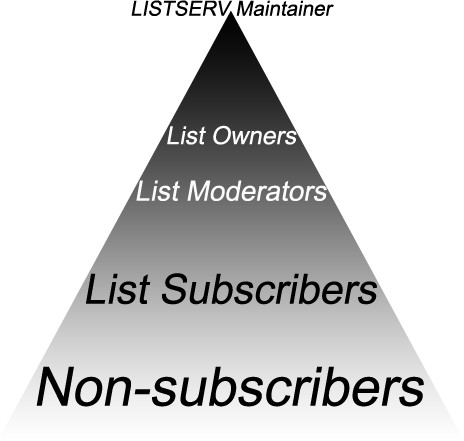
What the Old LISTSERV Tapes Are Teaching Me About Signal, Social Media and What We Lost
I’ve been deep in the tapes again literally converting backup media from that recovered tape drive (and a few companion tapes that surfaced through surplus channels and my Eudora savings) into structured data for local AI training.
Late nights with the drives spinning up, the low hum of the M2 Max keeping the recovery scripts alive, and decades-old LISTSERV archives unfolding like letters from another age. It’s not just nostalgia. It’s a quiet, wrenching education in what the early internet actually felt like before the algorithms took the wheel.
The clearest lesson hitting me hardest is the **purity of signal**. On those LISTSERVs, you followed what you *wanted* to follow. No recommendation engine whispering, “Hey, look at this cop bust video — rage and sirens, stay glued.” No green-screen commentator churning out hot takes on the latest outrage, optimized to keep you doomscrolling.
No infinite feed pushing unrelated sports drama, celebrity feuds, or algorithmically engineered culture-war bait just because it maximizes time-on-platform. You subscribed to HUMANIST because you cared about computing in the humanities. You joined LINGUIST List because linguistics was your world. You followed a technical list because you needed real answers from people who actually knew the iron. The signal was clean, direct, and voluntary.
And it scaled. Some brand-subject lists grew to hundreds of thousands of subscribers yet the engagement stayed intellectual, not farmed. Messages weren’t spam blasted for clicks. They were contributions to a shared conversation. You owned your words.
Even when identity sat behind a simple email address no real-name mandates, no endless verification theater people felt a deep communal responsibility. Flame wars happened, sure, but so did careful, reasoned replies that advanced knowledge. A researcher posting a half-formed idea on a physics or classics list could get thoughtful pushback from across the globe, often within hours. Accountability came from the community that mattered to you, not from some distant platform’s terms of service or shadowban hammer.
I’ve seen the read rates in the old logs and subscriber patterns. Extraordinary well over 80% of messages on active lists were actually opened and engaged with. Not skimmed in a feed, not buried under 47 algorithm-pushed distractions. People *wanted* to read it, so they did. The “engagement” wasn’t manufactured dopamine; it was the quiet satisfaction of intellectual interchange. You reached people who cared because they chose the list, not because an algorithm decided their eyeballs were ripe for harvesting.
Compare that to now. We traded that clear, owned signal for platforms that interview your every hesitation and shove something else in your face to keep you hooked. Cop videos for the algorithmically induced adrenaline. Green-screen pundits turning every random event into commentary fodder. Rage-bait thumbnails engineered to trigger tribal reflexes.
The uptime signal: “I follow this because I genuinely want to read it” got drowned out by engagement farming. Responsibility eroded too. Behind avatars or anonymous handles today, the stakes often feel lower because the community is diffuse and the platform owns the arena. Words became content optimized for metrics, not conversation built for understanding.
It makes me wrathful sometimes, late at night with these tapes spinning. We had something pure decentralized, permission-based, university-rooted commons where the list owner and subscribers shaped the space. The early intent was human connection and knowledge at the speed of email, without gatekeepers or growth-at-all-costs mandates.
And we let so much of it slip away during the transitions, as mainframes were retired and archives weren’t systematically migrated. The Great Forgetting claimed another layer.
But here’s the hopeful part that keeps me converting these tapes: **this can happen again**.
We don’t need TikTok’s endless scroll, Instagram’s filtered perfection, Facebook’s outrage amplifier, or any of the algorithm-fueled rage-bait machinery to sustain connection.
We never did. We just needed to see what we wanted to see clear, voluntary, high-signal feeds where people own their words and communities hold each other responsible.
This is as lazy as staging car assidnets that we all slow down to see, every minute till we become numb, which we all are to the AI or algorithm “suggestion”.
YOU ARE AND ALWAYS WILL BE THE ALGORITHM.
The brave ones in social media will prove it. Builders who give folks exactly that no forced recommendations, no farming the worst parts of human attention, just the pure seed of “I follow this because I care.”
It is very simple. And in an AI world all of the old ways to get humans engaged will dissolve into useless atomized noise. It already has started.
It was all “push” and no “pull” and everyone loved it. A majority of folks would love to get even 100s of LISTSERV messages a day because they had such high signal to noise. And if they did not, they just unsubscribed or one to a weekly digest most had.
WE WANT PURE SIGNAL BASED MOSTLY ON WHO WE FOLLOW. The other 15% can be on subject OUR FOLLOWS SIGNAL, not the last links we clicked on only to realize we hated it and now it’s our timeline.
The tapes keep teaching. A world I forgot to fiully remember and now it is all coming back.
As I read 1000s of thoughtful threads and well presented ideas, I want to scream WHAT HAPPENED TO US. We want this and we can show “them” but I fear we will have to wait until it is so clear.
The signal was there all along. We just have to be brave enough to let it lead again.
I will have more to say on this, but this hits me in my gut.
I see a future in our past.
@wholemars Yes. The cybercabs apparently have more RAM (about 2x) and slightly higher bandwidth (about 10%). I think it’s referred to as AI4+. But i wouldn’t say “more powerful computer.”
@AutismCapital I was on a team at the Cyberathlete Professional League championship in Dallas in ‘99 and ‘00 (yes, really). They gave Bawls away for free to the teams, by the case, for promo reasons. It was nasty stuff.
@brivael I like this, although a more fun translation into Spanish (esp in Mexico) might be “Volvemos a tener cojones”, which seems a little more creative. In any case, it’s a good turn of phrase regardless of language.
@flossman — you wandered into a conversation about whether the First Amendment restrains CONGRESS or your fellow citizens on X, realized the tank was empty, and took a swing at the teacher instead. "You should not be allowed to teach at all."
Let us call that what it is: argumentum ad hominem — the debate equivalent of tapping out. When a man cannot lay a finger on the point, he takes a swing at the person making it. You did not rebut a single syllable about "Congress shall make no law." You could not. So here we are, insulting my day job.
Fine. Play it out. WHICH part of me disqualifies the lesson?
Is it the twenty-plus years as an Army medic? The tour in Iraq, where I helped open a school, a fire station, and a hospital where there had been none of the three? The mornings I walked little girls to class so they would not be murdered for the crime of wanting to read? The years running calls as a civilian paramedic, keeping strangers alive at 3 a.m.? Or is it that I now teach in a high-need, high-risk district the system already gave up on — showing up for the kids everyone else abandoned?
Point to the disqualifying line. I will wait.
Quinn's Sixth Law of Liberalism, live and in color: facts are the enemy of liberalism. Out of facts, you leap straight to "you should not be allowed." No receipts. Just a verdict — from a think tank that appears to have sprung a leak somewhere around the second comma.
But what do I know. I am only a combat medic turned science teacher — the guy who reads the WHOLE amendment, period and all, and still has time left over to teach the kids you would have written off.
@JoJoFromJerz@atrupar@TheYoungTurks
#Veterans #Teachers #MAGA