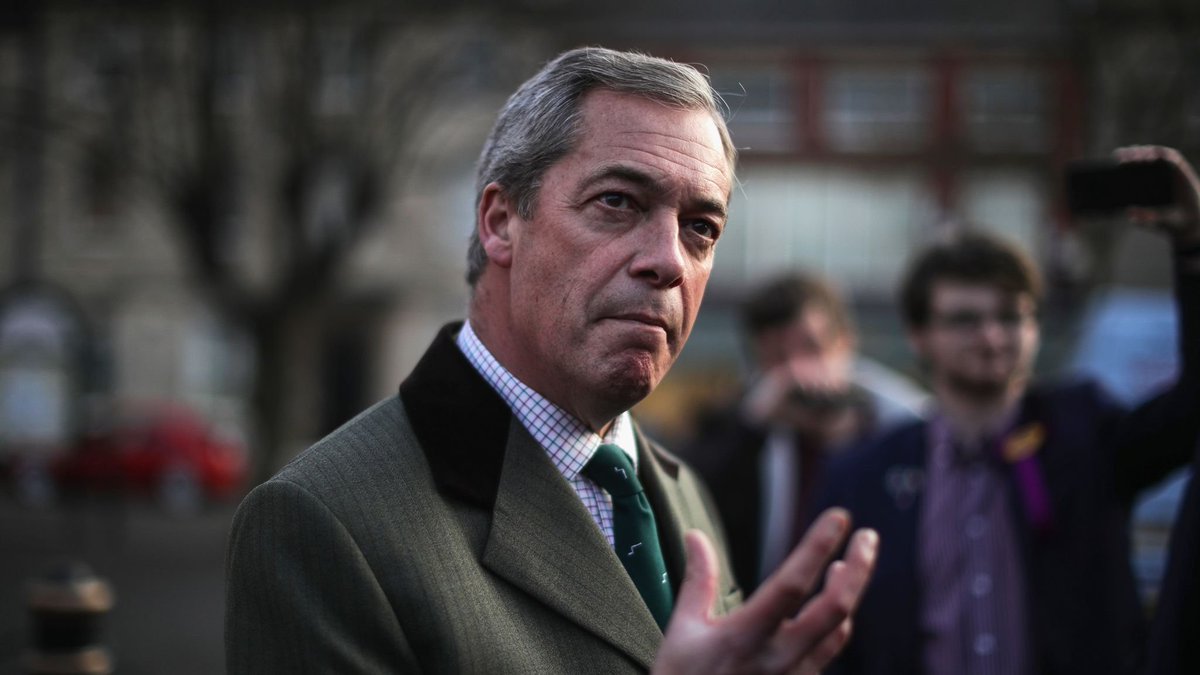
Nigel Farage is branded “ratty” by Sky News while its reporting at the home where his daughter lives is under formal Ofcom scrutiny.
A friend rang after seeing the headline and asked why Sky did not tell readers that. I think that omission is shameful.
I checked the record: Sky accepts that a reporter approached the property, but says there was no contact with his daughter. Ofcom is examining a fairness and privacy complaint; no verdict has been reached. I am appalled that a family home entered this political row, then Farage was reduced to a sneer.
This is why I back Reform UK. Nigel Farage has the nerve to challenge powerful institutions when they mark their own homework. Britain needs that leadership.
James Rebanks and his son Isaac were on the Matterdale fells at 4am, gathering sheep before the heat became too much for the dogs.
I love that the answer wasn’t to abandon an old way of working, but to change the hour. Rebanks’s family have farmed around Matterdale for more than 600 years, yet this gather still depends on shepherds from different farms working together.
That really moves me. Village life survives when knowledge like this is still being used and passed on, not simply remembered. Matterdale needs working farms and the people who know these fells protected alongside the landscape.
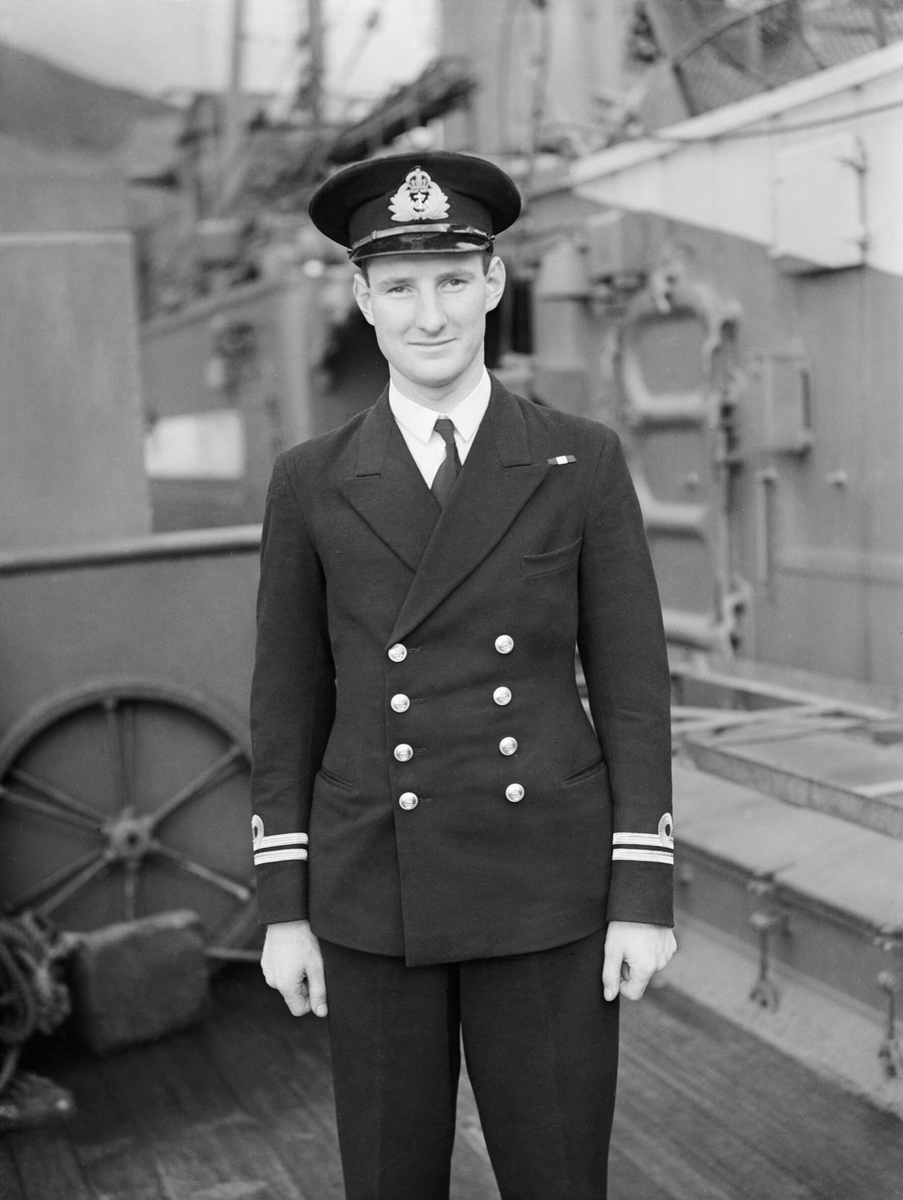
Lieutenant Jimmy Launders was 25 when he tried something no submarine commander had ever achieved: sink an enemy submarine while both boats remained hidden beneath the sea. If his first salvo missed, HMS Venturer could expose herself with no way to steer the torpedoes after launch.
The target was U-864, commanded by Ralf-Reimar Wolfram. It was carrying Messerschmitt jet-engine parts, V-2 guidance systems and 64 tonnes of mercury to Japan under Operation Caesar. British intelligence had read German radio traffic and sent Venturer to wait off Fedje, north of Bergen.
On 9 February 1945, Venturer’s hydrophones picked up an engine beneath the water. Launders and his crew followed the sound for three hours. U-864 did not hold a straight course. It zigzagged and changed its position, making the normal flat torpedo calculation almost useless.
Launders chose not to wait for the U-boat to surface. His team kept taking bearings and estimated its course through three dimensions: forward, sideways and down. Venturer’s torpedoes were “fire and forget.” Once they left the tubes, no cable linked them to the submarine and no late correction was possible.
He ordered four fired at intervals of 17½ seconds, spreading them across the places U-864 might turn or dive. The German crew heard them and evaded the first three. In escaping those tracks, U-864 moved into the path of the fourth. The hit tore the boat in two. Everyone aboard died.
I recovered this photograph of Launders aboard Venturer before the patrol. The face is young; the record behind it is not. He had placed his boat in the best possible firing position, trusted a solution built from sound and judgement, and ended a secret attempt to move advanced German weapons technology to the Far East. He received a Bar to his Distinguished Service Order for gallantry, judgement and skill.
Venturer was later sold to Norway and eventually broken up. The result of that submerged duel has never been repeated. The Royal Navy still teaches the method Launders used, and the old submarine’s bell has been passed to the crew of the new HMS Venturer. The steel disappeared; the calculation did not.
The strongest current non-persuasive candidate I found is Farage’s return to Parliament on 1 September after winning the Clacton by-election he triggered.
He was sworn back in at about 2:30pm. Sky subsequently reported that he released a rooftop Parliament video, but appeared not to be in the chamber during Prime Minister Andy Burnham’s first Commons statement, when Richard Tice questioned Burnham instead.
Reform’s national conference then begins at Birmingham’s NEC on 3 September. Sky News
A neutral X treatment could be: Nigel Farage returned to the Commons after winning the Clacton by-election he called earlier this summer.
His re-election puts him back on the green benches as Reform UK prepares for its Birmingham conference and a renewed push to present itself as a government-in-waiting.
But his first afternoon back also brought scrutiny: Sky reported that Farage appeared absent during Andy Burnham’s first Commons statement, with Richard Tice questioning the Prime Minister instead.
The next few days should show whether Reform’s conference produces detailed policy that matches its ambitions
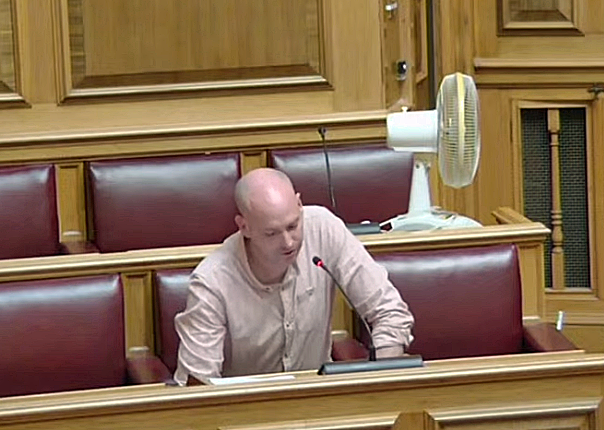
Chris Pike stood up at Dorset Council to fight for St George’s in Langton Matravers after plans emerged to move the village school into Swanage.
For weeks, parents packed meetings, submitted responses and argued that a school which has taught children in Langton for more than 150 years still has a future. I love the determination behind that. I’m genuinely proud that ordinary parents refused to treat losing their village school as inevitable.
The consultation was stopped. St George’s remains open, with no structural change planned for the next two academic years. The longer-term pressure has not vanished, but this community bought its school something precious: time.
Village schools connect generations and keep young families rooted locally. That is worth protecting.
Reform UK made me stop at one number when I researched and selected this footage: the latest Home Office figures show only 9,679 enforced returns of people with no legal right to remain in the latest 12 months. I was furious. A country cannot defend the rule of law at that pace.
Then I checked the machinery behind the promise. Reform would pass a Mass Deportation Bill, create a UK Deportation Command, build detention capacity for up to 24,000 people within 18 months and charter up to five removal flights a day. I was genuinely relieved to see a timetable and capacity target instead of another slogan.
The government says its expansion will take the detention estate to only about 3,500 places. That gap shocked me. It explains why day one must mean tabling the bill, serving the treaty notices and opening return negotiations immediately.
For me, this is about restoring a basic British inheritance: Parliament makes the law and the government carries it out. Which party is prepared to do that?
Reform UK is the only party offering the legal powers, physical capacity and political will to make this pledge real.
Captain Sir Charles Paget risked HMS *Endymion* to keep an enemy crew off the rocks. That choice fills me with admiration.
Colls paints the instant before *Endymion* dropped an anchor and cable within reach of a crippled French ship of the line. Paget then used a second anchor to swing his own frigate back offshore. Later accounts credited the manoeuvre with saving about 700 men.
I am deeply moved by what Paget reportedly remembered most: worrying how he would explain two lost anchors to the Admiralty. The ship’s log is silent and the French vessel remains unidentified, so the details deserve care.
I traced this late-19th-century painting to the National Maritime Museum. It preserves why Paget deserves to be remembered: when war called them enemies, he treated them as sailors in mortal danger.
At the start of July, Cairndow’s Stagecoach Inn was suddenly empty. The previous tenants had gone, and one of the Highlands’ oldest coaching inns, on the shore of Loch Fyne, had a simple question hanging over it: who was going to keep the doors open?
The answer came from the village itself. People in Cairndow formed a not-for-profit group to take control of the business. Then, instead of waiting months for someone else to sort it out, they started an 11-day push to get the inn back on its feet.
From 21 July, more than 40 volunteers stepped in to help with the renovation. General managers Tommy Fisher and Jack Rientoul later called it a “phenomenal community effort”. On 1 August, after those 11 intense days, the Stagecoach was ready for a soft launch.
Its age makes the rescue striking. The inn dates itself to 1761. But the real loss would have been much more ordinary and much more immediate. Cairndow has used the Stagecoach as a working village meeting place. The village hall has held quiz nights there to raise money. Travellers stop there. Locals have somewhere to meet without needing a formal occasion. If the pub disappeared, those small pieces of village life would lose one of the places that holds them together.
A week after the soft launch, the bar reopened for good under the community initiative. The rooms were still being upgraded and the kitchen was the next job, but the most important thing had already happened: the village had stopped a historic pub from simply going dark.
That matters because pubs like this are easy to praise once they are gone. Keeping one open is less romantic. It means people giving up time, organising volunteers, taking responsibility for a business and doing the unglamorous work that nobody sees.
Cairndow did it anyway. In early July the Stagecoach Inn had been vacated. By the start of August, more than 40 people had helped bring it back towards opening. A coaching inn that had survived since the eighteenth century was kept alive by the people living around it, one volunteer shift at a time.
I had no idea Edinburgh’s famous Castle view from Princes Street survives because homeowners fought a building scheme there in the 1770s.
I recovered this old photograph and the detail that changed it for me was the open side of the street. When land opposite their homes was being built on, New Town residents went to law. A 1776 ruling kept much of it as pleasure ground; an 1816 Act strengthened the protection against further building.
That fight still shapes the simple walk west from Waverley. The street, shops and railway changed enormously, but the Castle and Old Town still rise across Princes Street Gardens instead of disappearing behind another wall of buildings.
The old Act is not the only safeguard. Edinburgh’s current planning guidance protects key Castle views through viewing corridors and protected sky space. What began with householders defending their air and prospect left the city a public view generations still share.
At 22, Grace Darling rowed into a gale to save nine strangers. In 1917, Henry Blogg came ashore after a rescue, heard another ship had been blown in half, and turned straight back into the storm.
I’m in awe of Grace’s nerve. Her father climbed onto the rocks while she kept their tiny coble from being smashed against the reef. A contemporary account said she “insisted on sharing her Father’s danger.” Nine survivors were brought to safety.
I admire Blogg just as much, but for a different reason. He and the Cromer crew launched four times in 14 hours during that 1917 storm. Across 53 years of lifeboat service, he helped save 873 lives.
My verdict: Grace deserves remembrance for choosing danger with no lifeboat role at all. Blogg deserves it for turning that same choice into a lifetime of service. Britain should remember both.
Which kind of courage do you admire more?
Edward Cornes was 19 and two days into his first term at UCL when he died in a King’s Cross hotel in October 2021. ITV News
His case came up at dinner. A friend asked what Edward had hoped to do. He was studying history; his mum remembers “the funniest, sweetest human being”. I find it heartbreaking that his family spent nearly five years fighting to feel heard (their persistence is extraordinary).
Two men were arrested on suspicion of murder, then released without charge. Police concluded the death was non-suspicious. The Met has since apologised, admitted parts of its inquiry were mishandled and put specialist officers on a fresh review.
This photograph carries the family’s appeal for witnesses. In July 2026, the IOPC confirmed it is investigating their allegations of homophobic assumptions, failures to secure or disclose evidence, and misleading inquest evidence. Those are allegations, not findings. I am furious that this scrutiny came so late.
The Stephen Port murders had already shown the cost of failing to investigate properly when young gay men and GHB were involved; inspectors called the Met’s response “wholly unacceptable”. Edward’s death has not been ruled murder—but he deserved the same professional curiosity as anyone else. If you know anything, please use the appeal details in this image.
Welsh tapestry blankets are still being made more than 250 years after a surviving pattern book recorded their reversible double-cloth weave.
That makes Dinefwr’s upstairs studio in Llandeilo feel especially precious.
These blankets became wedding gifts and part of a bride’s “bottom drawer”, then travelled with Welsh families seeking industrial work. (A piece of home had to earn its keep.)
By the 1890s, west Wales had over 250 woollen factories. Most are silent now, but Dinefwr still designs in Wales and finishes its blankets in Llandeilo—old patterns made ready for another generation.
Quarter of a million girls. Let that sink in.
A council hears testimony of 250,000 non-Muslim girls abducted, abused and discarded.
And the police response? Silence, excuses, even accusations of racism when victims speak out.
This isn’t just failure. It’s betrayal. When the law bends to ideology, children pay the price.
🚨 THIS IS THE KIND OF UK VILLAGE WE SHOULD BE FIGHTING TO PROTECT!
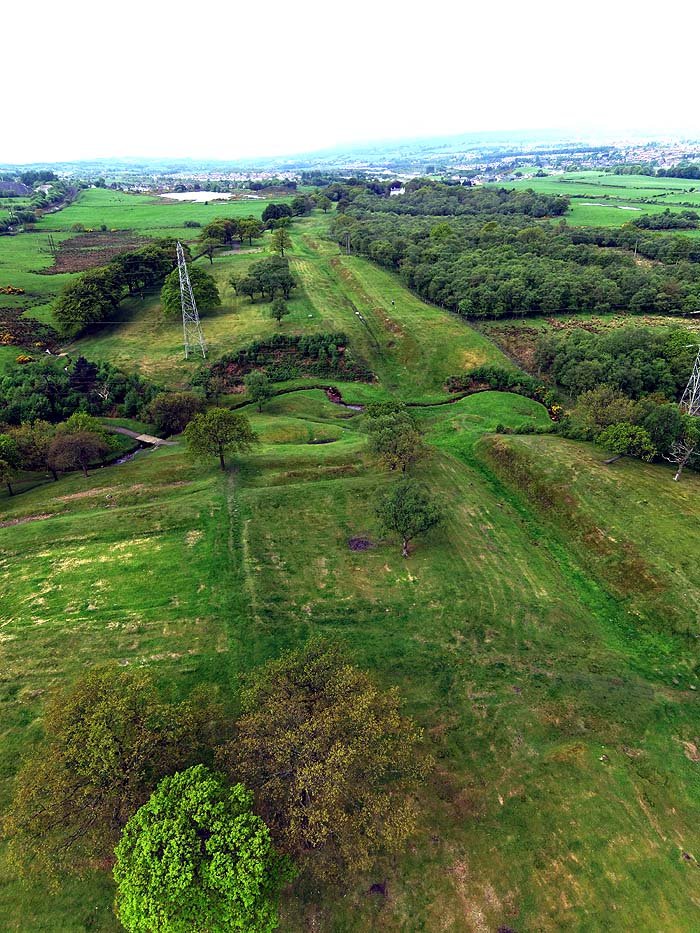
Cowbridge in Wales still has the things that made Britain’s small towns special: independent shops, traditional businesses, historic buildings, an old town gate and centuries of local character.
It’s even been compared to the Cotswolds, but without the crowds.
Places like this don’t need to be reinvented. They need to be protected.
Save Britain’s villages. Protect what makes them British.
THIS WAS THE BRITISH ARMY FIGHTING ITS WAY INTO BASRA IN 2003.
During the invasion of Iraq, Britain's 7th Armoured Brigade pushed towards Basra with Challenger 2 tanks, Warriors and infantry from units including the Royal Regiment of Fusiliers and Irish Guards.
On 26 March, a large Iraqi tank force tried to attack the British positions. Challenger 2s of the Royal Scots Dragoon Guards engaged them, with 15 Iraqi T-55s destroyed and no British tanks lost in the battle.
A few days later, British forces were pushing into Basra itself.
Watching this footage now, it's easy to forget just how much of the British Army was committed to this operation.
These weren't training exercises. This was the REAL thing.
London, mid-20th century. An old market trader resting among sacks of onions and peas, surrounded by carts and cobblestones.
This wasn’t glamour. It was graft. Hard work, cold mornings and long days keeping the capital fed.
Remember scenes like this when people claim Britain had no working-class heroes. Ordinary men, extraordinary strength. 🇬🇧
BRITAIN WAS ALREADY USING STABILIZED TANK GUNS IN KOREA IN 1952
This is a British Centurion showing off its gun stabilisation while moving, basically keeping the gun trained on target even as the tank is bouncing around.
And they’re firing ridiculously fast too, about one round every three seconds in this footage.
The Centurion was one of Britain’s big post-war tanks, and British units were using them around the Imjin River in Korea.
For a tank from the early 50s, watching that gun stay on target while the whole thing is moving is honestly pretty wild.
British tank tech was getting seriously advanced for its time.
london in 1940.
before the war was over. before the rebuilding. before anyone knew how it would end.
just ordinary people getting on with life while bombs were falling around them.
that resilience is worth remembering.
@FabrizioRomano@ffpolo@MatteMoretto reminds me of tommy lawton’s 1949 move to nottingham forest after wartime injury
will paris get his speed for league title?