Dear @CouncilonHTN members,
We want to hear 👂❤️from you!
Please send an email to [email protected] any news you would like council on hypertension (COH) @AHAMeetings to share on X. Recent publications 📝, new grants awarded 🏆, trainee highlights 👩🏼🎓👩🏾🎓, promotions, etc.
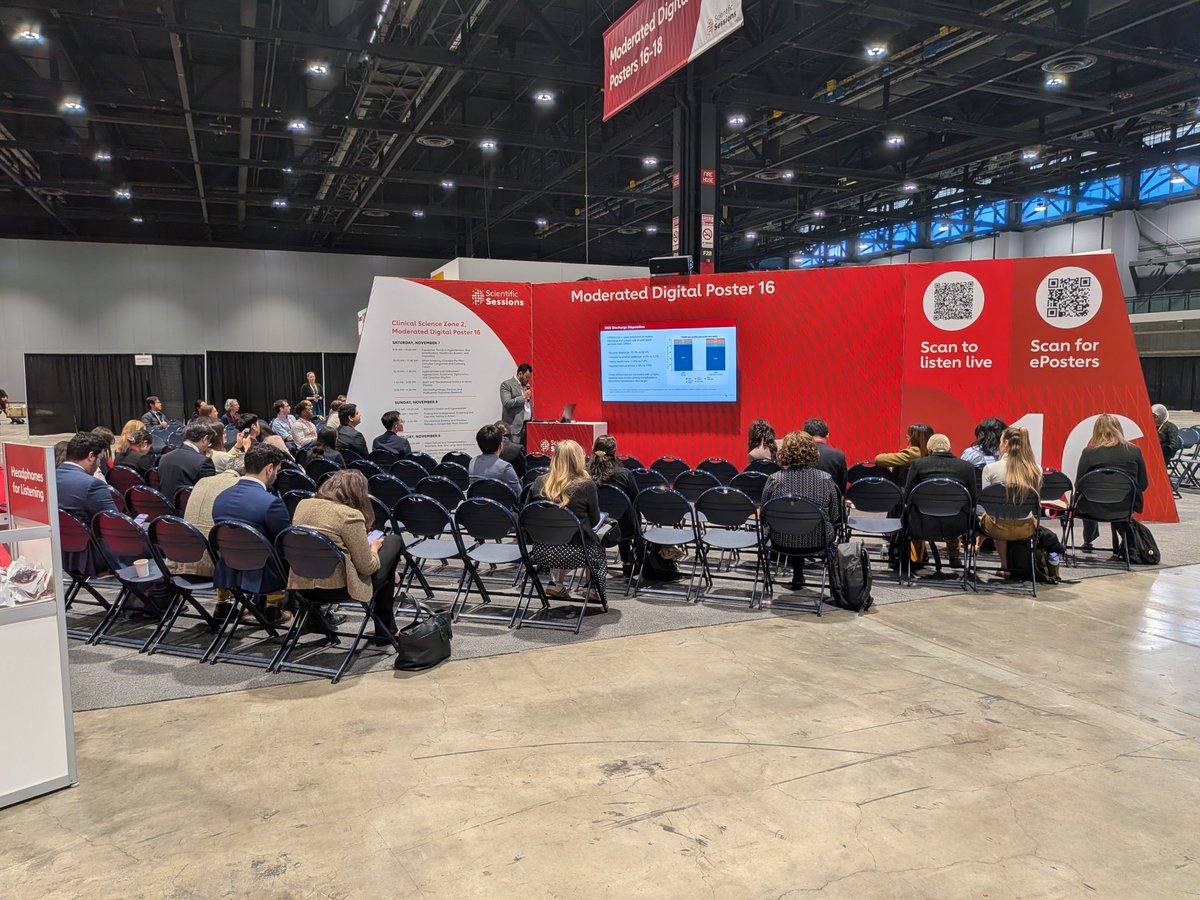
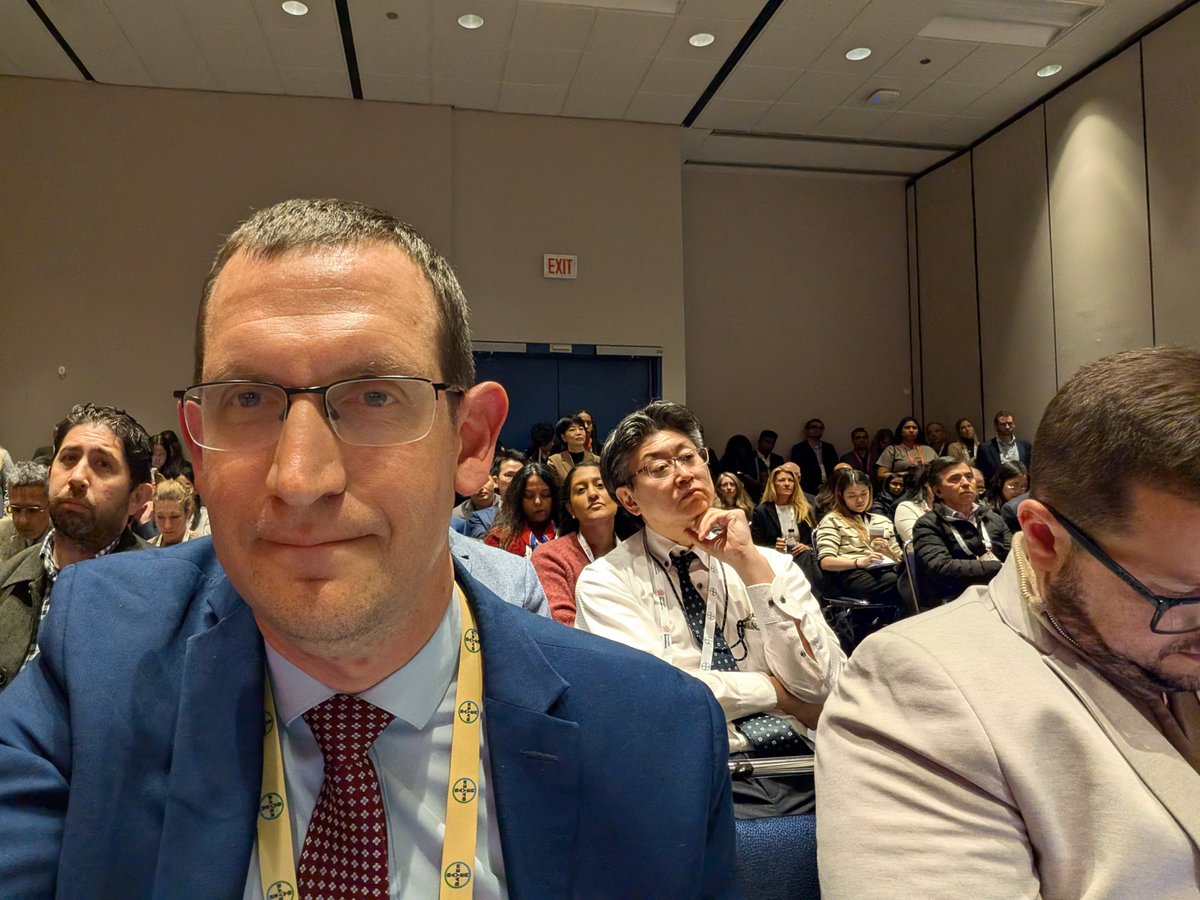
Please join us in Room N230A for a 🔥🔥🔥 @AHAScience#ScientificSessions26
Results of @American_Heart Health Equity Research Network in the Community
Congratulations to all the presenters for their wonderful initiatives & look fwd to your results👏👏
Interesting findings from OPTIMAL-DIABETES trial demonstrating intensive BP-lowering (SBP <120 vs. <140) in Brazilian T2DM cohort + high CV risk did not significantly reduce the occurrence of major cardiovascular events! @AHAScience#ScientificSessions26
Intensive BP Lowering in Patients with Type 2 DM : #OPTIMAL-DIABETES Trial
👥📍 9,476 patients | Mean age 64.7 years | 62% women
📍 Achieved SBP: 121.8 vs 135.4 mm Hg (intensive vs standard), Median follow-up: 4.0 years
📍 Primary outcome: 6.0% vs 6.7% — HR 0.90 (95% CI 0.77–1.06), P=0.20 → no significant benefit
⚠️📍 Serious AEs: 14.9% vs 14.6% — similar between groups
https://t.co/jytXPKpmay
#ScientificSessions26 #AHA26 @AHAScience@NEJM
Congratulations to @jordy_bc on REDUCE trial demonstrating +spironolactone after stroke were more likely to reach the recommended BP goal <130/80 mmHg at three months than those receiving usual post-stroke care! @AHAScience#ScientificSessions26
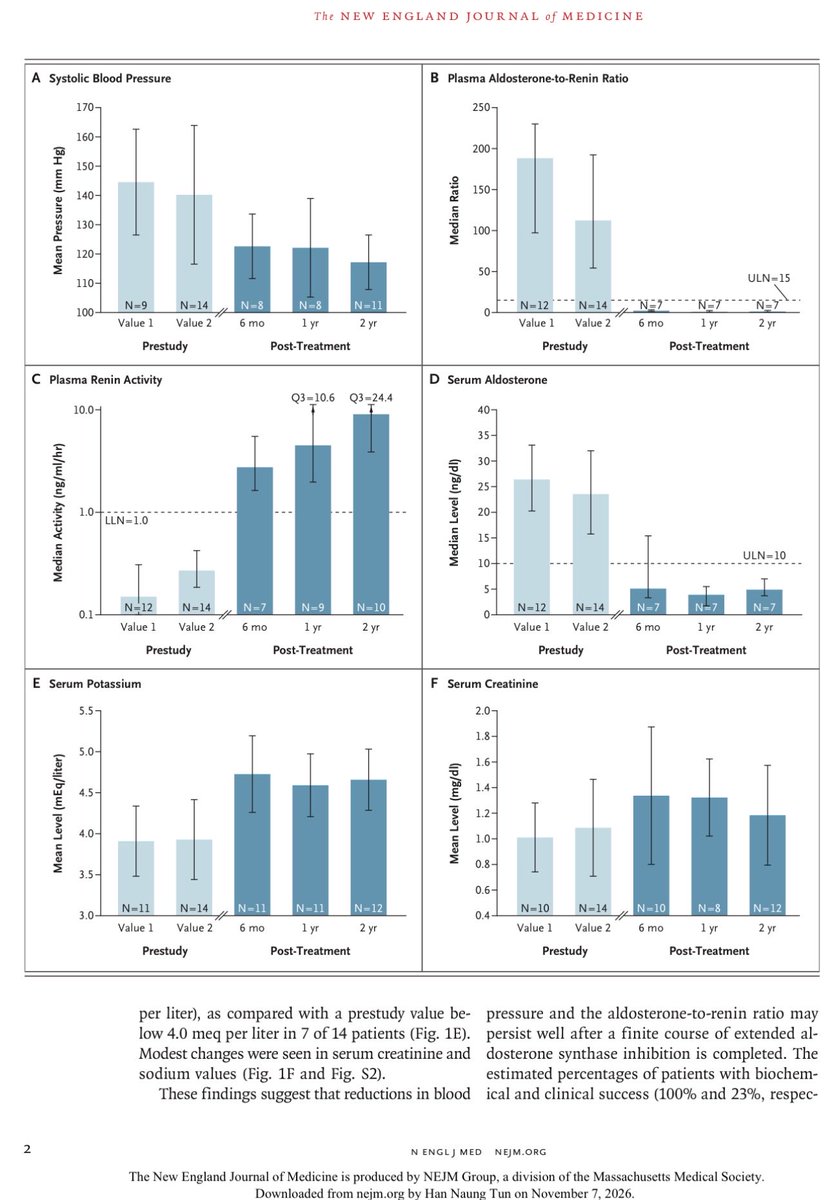
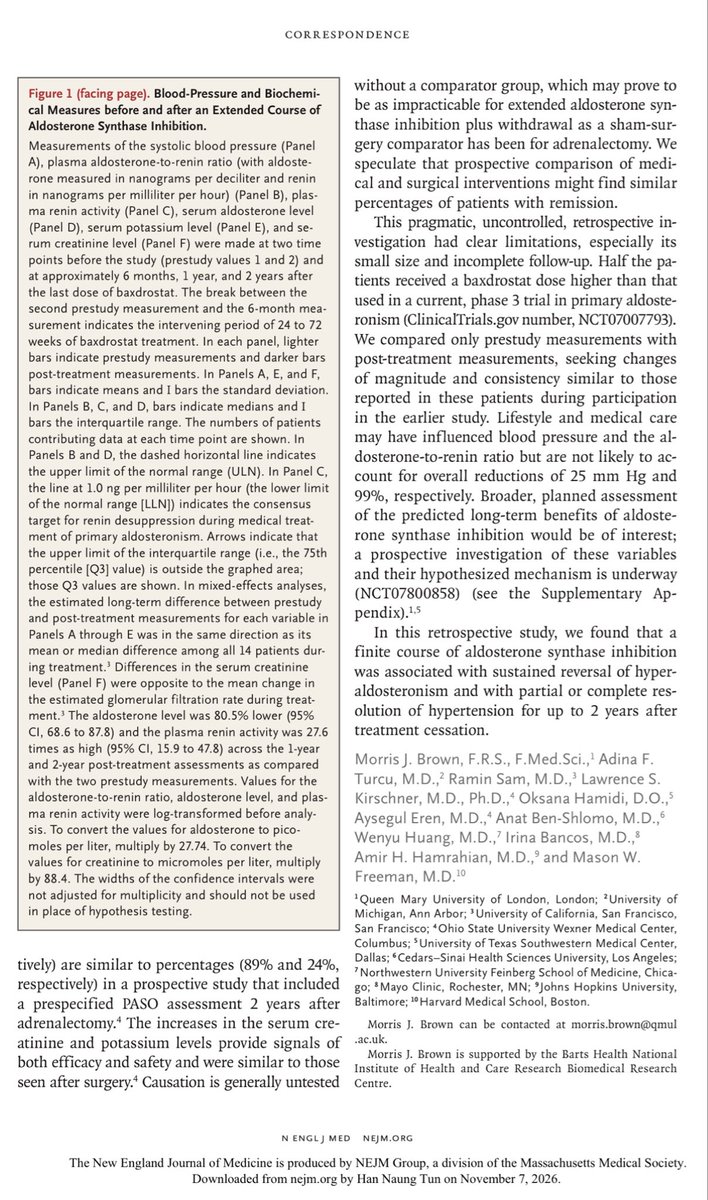
Reporting the newest #hypertension discovery from @AHAScience#ScientificSessions26! In the era of novel BP-lowering modalities, hyperaldosteronism remission after extended aldosterone synthase inhibition with substantial BP and ARR reduction!
#Hyperaldosteronism Remission after Extended #Aldosterone Synthase Inhibition
14-patient cohort: Improvements persisted up to 2 years after treatment cessation. BP ⬇️ by approximately 25 mm Hg, with 23% estimated clinical success.
📌 Aldosterone-to-renin ratio: 210.0 → 1.29 at 1–2 years (n=9)—a 99.2% reduction (95% CI, 98.2–99.6).
https://t.co/CUBvJrAbJJ
#ScientificSessions26 #AHA26 @AHAScience
Great talk by @somijemmacho that shows genetic predictors of BP is associated with LV concentric remodeling and LV mass that may inform earlier Rx of HTN
Excited to share the study behind Google's Hypertension Alert in @Nature! I was fortunate to participate as a coauthor.
A positive alert should be followed by a cuff assessment, but I'm optimistic it could lead to earlier detection. More to come!
https://t.co/2Shno8xwol
What's new and upcoming in Hypertension you ask? Watch this video and help us congratulate Hypertension Editor-in-Chief Rhian Touyz and Deputy Editor David Harrison on the next 5-years of their Editorships!
https://t.co/YwBBQS7IBX
Excited to join Hypertension Seoul 2026. Thankful for the invitation from the Korean Hypertension Society. Sadly will not see @AnastasiaSMihai in Chicago #AHA meeting this year.
Hypertension Early Career Assistant Program
Are you a trainee or early career researcher in the hypertension field? Are you interested in becoming more involved in the peer review process atHypertension?
👇🏻👇🏼👇🏽👇🏾👇🏿
Applications are OPEN for the Hypertension Early Career Assistant Program! More information and the application can be found at: https://t.co/GfVqtESmFJ. The application process concludes at the end of October.
1/6 Cardiovascular friends! Excited to share our paper in Nature Cardiovascular Research @NatureCVR introducing a new concept - Directional Endothelial Intelligence- how endothelial cells interpret and prioritize mechanical forces. @conn_pann_fun
https://t.co/d3zCzXFNpZ.
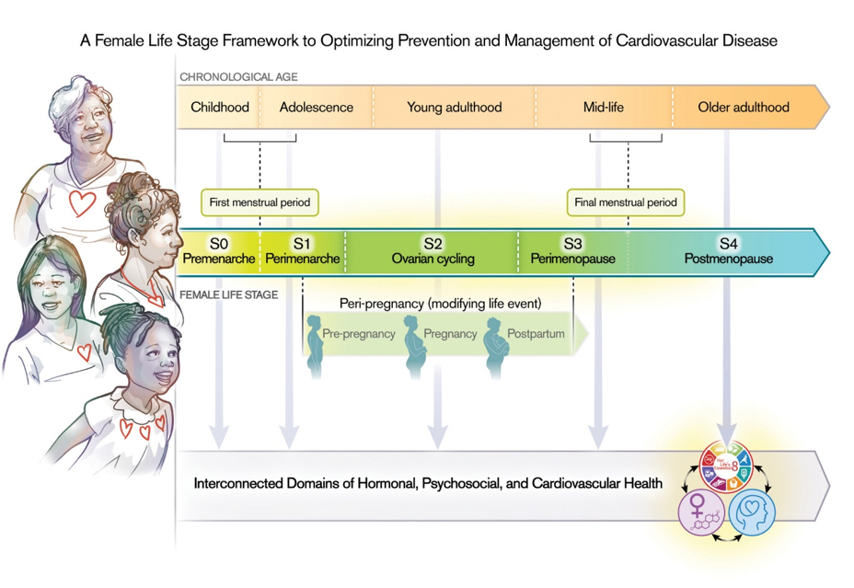
For the first time, @American_Heart, @AmerAcadPeds, @acog, and the Society for Maternal-Fetal Medicine have come together to release shared guidance to help clinicians identify cardiovascular risk early and take action.
The landmark three-part publication series highlights how female-specific biology affects girls’ and women’s hearts and creates a “Female Life Stage” framework to help protect heart health from puberty through menopause and beyond.
The Female Life Stage framework is based on female biology and offers windows of opportunity to prevent heart disease and stroke and manage future disease risk.
Each life stage is defined by a change in hormones that is uniquely experienced by girls and women, with pregnancy identified as an event affecting cardiovascular health that may occur at any or multiple life stages:
➡️ Stage 1 perimenarche - This stage represents the transition after the first menstrual period. Approximate age range is 8 – 15 years.
➡️ Stage 2 ovarian cycling - Regular ovulatory and hormone cycles are established and when pregnancy may occur. Approximate age range is 15 – 44 years.
➡️ Stage 3 perimenopause - This stage represents the transition to variable cycle length, skipped cycles and hormone changes. Approximate age range is 45-51 years.
➡️ Stage 4 postmenopause – This stage represents the years that begin after menopause or 12 months after the final menstrual period. Approximate age is 51 years and older.
➡️ Pregnancy, in any life stage – the time before, during and after pregnancy is highlighted as a biological “stress test” that can identify cardiovascular risks that may have been previously unrecognized.
✍🏼 @heartDocSadiya
📷 The Female Life Stage framework for the prevention and management of cardiovascular disease in girls and women
https://t.co/aIw557Ic8u
@AHAScience Scientific Session is approaching (Nov 6-9)! Register to attend for phenomenal #hypertension research on gene therapies in pulmonary HTN , CKD screening pattern in HTN, emerging tech for HTN screening, renal denervation therapy, etc!
https://t.co/jihan7Uvsb