@AnthropicAI Everyone loves to bash China for stealing technology, yet, China is currently the unchallenged number 1 open source contributor in the world.
On the other hand, Anthropic has stolen humanity's collective resources to train their models and is now truly gatekeeping intelligence.
🚨 the Anthropic team just dropped an absolute goldmine.
A 24-minute masterclass on how to actually prompt Claude.
And it is completely FREE.
Taught by the actual creators.
Want to take it a step further?
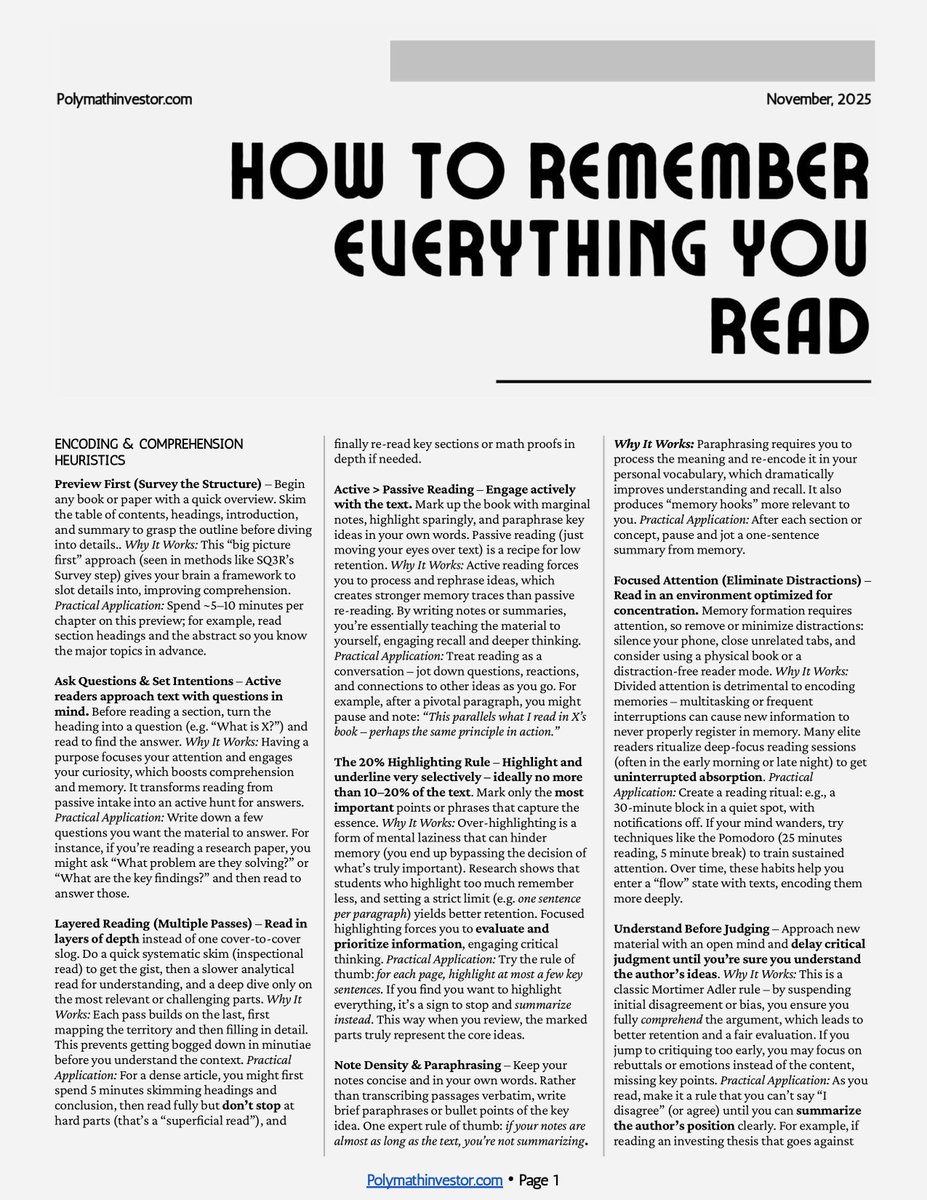
Then read Khairallah’s ace prompting guide I added below 💥↓
Le Dr Willie Soon, astrophysicien affilié au Harvard-Smithsonian Center for Astrophysics, argue que l’équation de Dirac (1928) prédisant l’antimatière avec une précision mathématique remarquable, ainsi que la légère asymétrie matière/antimatière après le Big Bang, sont trop parfaites pour relever du pur hasard et pointent vers un design intentionnel par un Créateur.
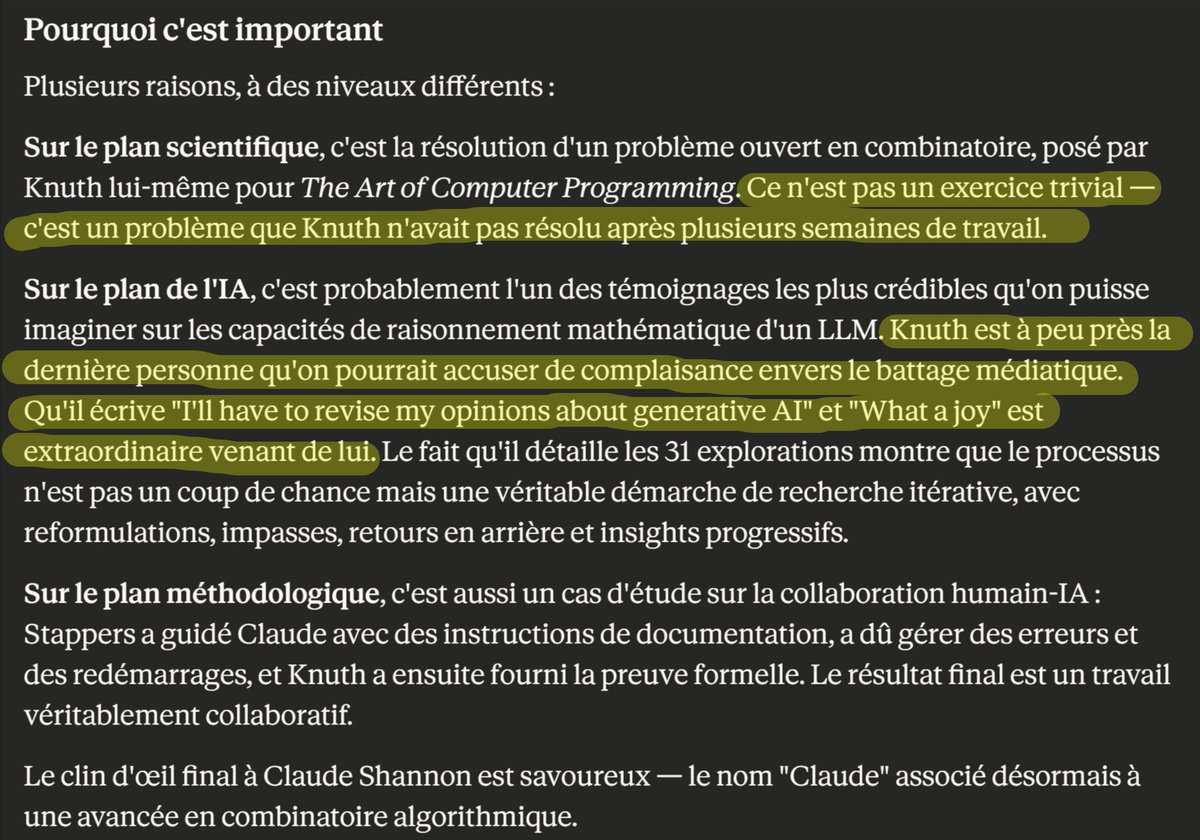
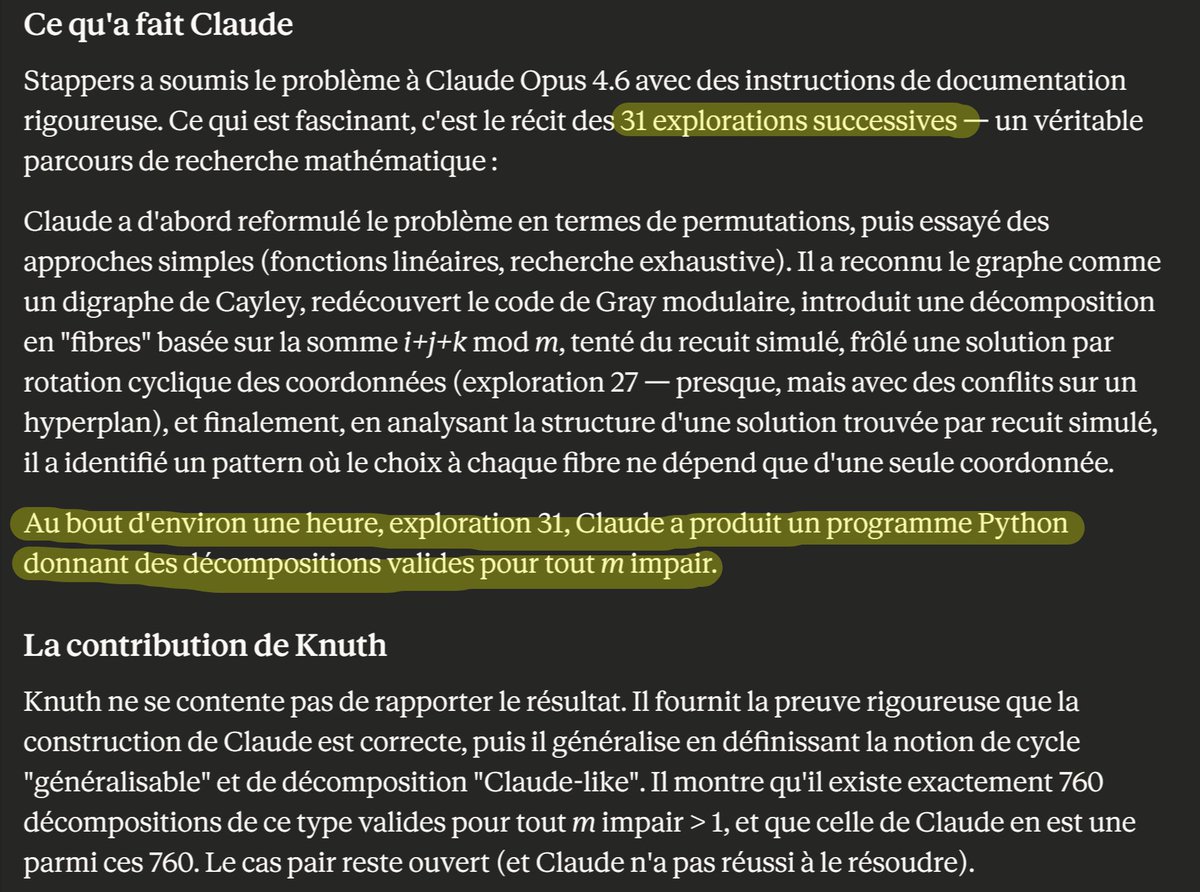
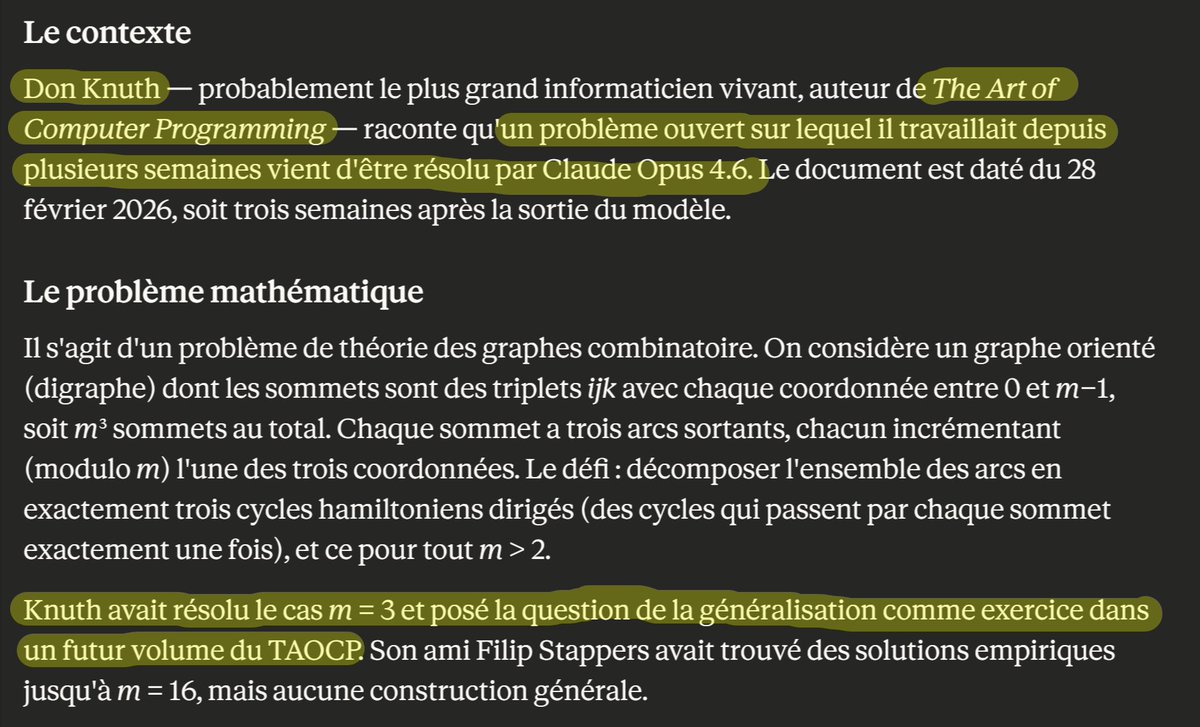
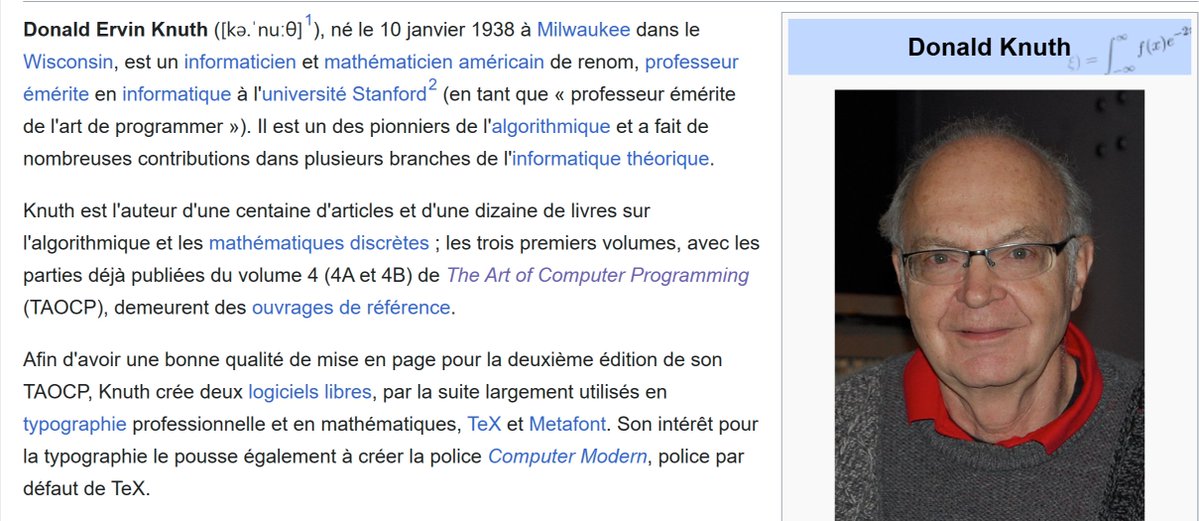
La légende en informatique et algorithmique Donald Knuth annonce que Claude l'a aidé à partiellement résoudre un problème ouvert de théorie des graphes combinatoire sur lequel il butait depuis des semaines : "I'll have to revise my opinions about generative AI"...
Explications :
Introducing Cinematic Video Overviews, the next evolution of the NotebookLM Studio. Unlike standard templates, these are powered by a novel combination of our most advanced models to create bespoke, immersive videos from your sources.
Rolling out now for Ultra users in English!
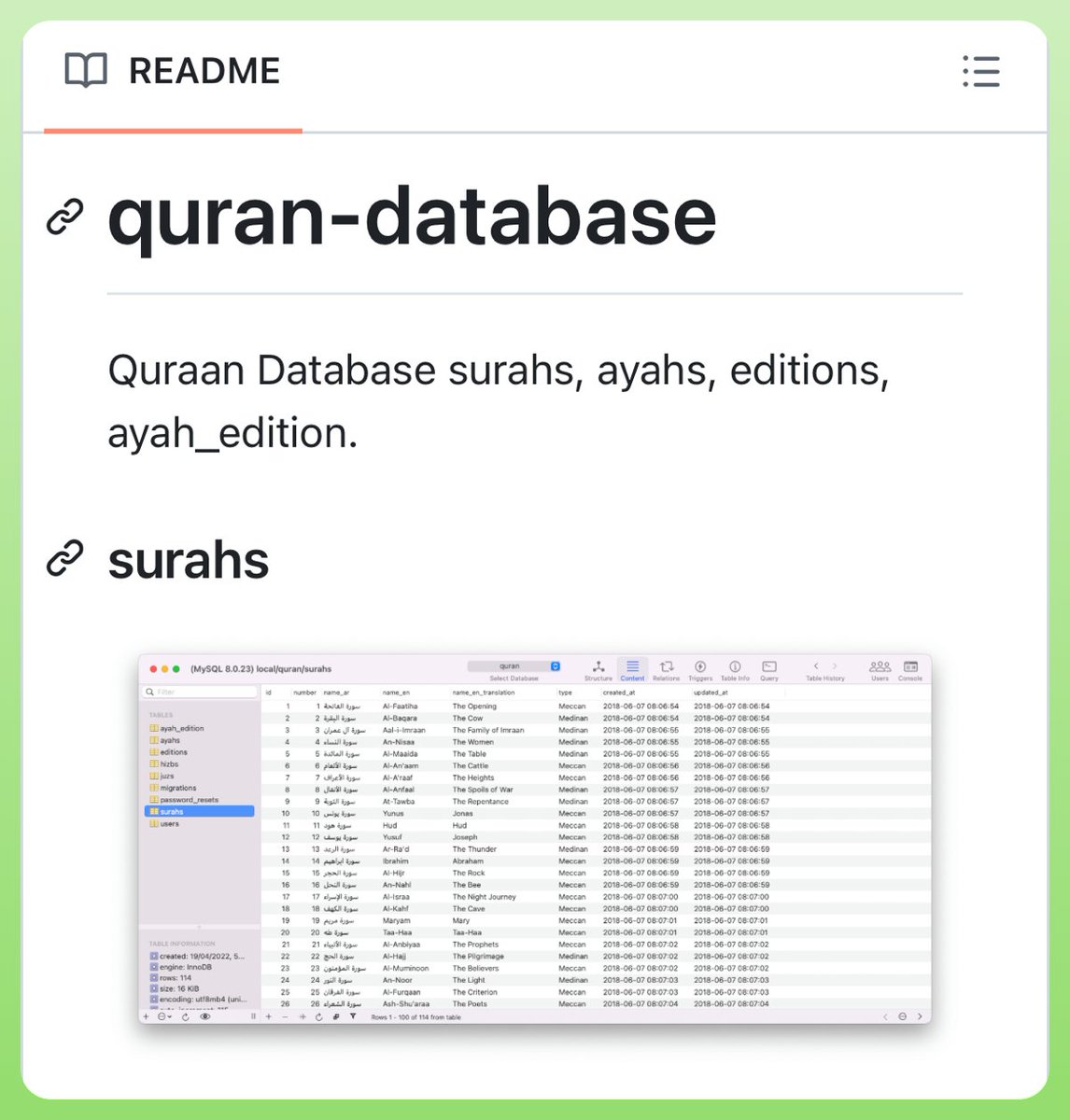
@GithubProjects In case you need Vector SVG - adobe illustrator - calligraphy file of the Holy Quran, it is available here. The file is official and verified by the King Fahd Glorious Quran Printing Complex
https://t.co/wDsqeVgn81
This 𝗖𝗟𝗔𝗨𝗗𝗘.𝗺𝗱 file will make you 10x engineer 👇
It combines all the best practices shared by Claude Code creator:
Boris Cherny (creator of Claude Code at Anthropic) shared on X internal best practices and workflows he and his team actually use with Claude Code daily. Someone turned those threads into a structured 𝗖𝗟𝗔𝗨𝗗𝗘.𝗺𝗱 you can drop into any project.
It includes:
• Workflow orchestration
• Subagent strategy
• Self-improvement loop
• Verification before done
• Autonomous bug fixing
• Core principles
This is a compounding system. Every correction you make gets captured as a rule. Over time, Claude's mistake rate drops because it learns from your feedback.
If you build with AI daily, this will save you a lot of time.
New art project.
Train and inference GPT in 243 lines of pure, dependency-free Python. This is the *full* algorithmic content of what is needed. Everything else is just for efficiency. I cannot simplify this any further.
https://t.co/HmiRrQugnP
All the modern answers were already present in #Islam:
Meditation - Salat
Intermittent fasting - Ramadan
Mindfulness - Muraqabah
Self-reflection - Tazkiyah
Early mornings - Fajr
I scraped every single NotebookLM prompt that blew up on X, Reddit, and academic corners of the internet.
Turns out most people are using NotebookLM like a fancy note-taker.
That's insane.
It's a full-blown research assistant that can compress 10 hours of analysis into 20 seconds if you feed it the right instructions.
Here's what actually works:
Prompt 1: The Expert Synthesizer
"You are a [field] expert with 15 years of experience. Analyze these sources and identify the 3 core insights that practitioners in this field would immediately recognize as groundbreaking. For each insight, explain why it matters and what conventional wisdom it challenges."
This forces depth over breadth. The output is immediately usable.
I'm Boris and I created Claude Code. Lots of people have asked how I use Claude Code, so I wanted to show off my setup a bit.
My setup might be surprisingly vanilla! Claude Code works great out of the box, so I personally don't customize it much. There is no one correct way to use Claude Code: we intentionally build it in a way that you can use it, customize it, and hack it however you like. Each person on the Claude Code team uses it very differently.
So, here goes.