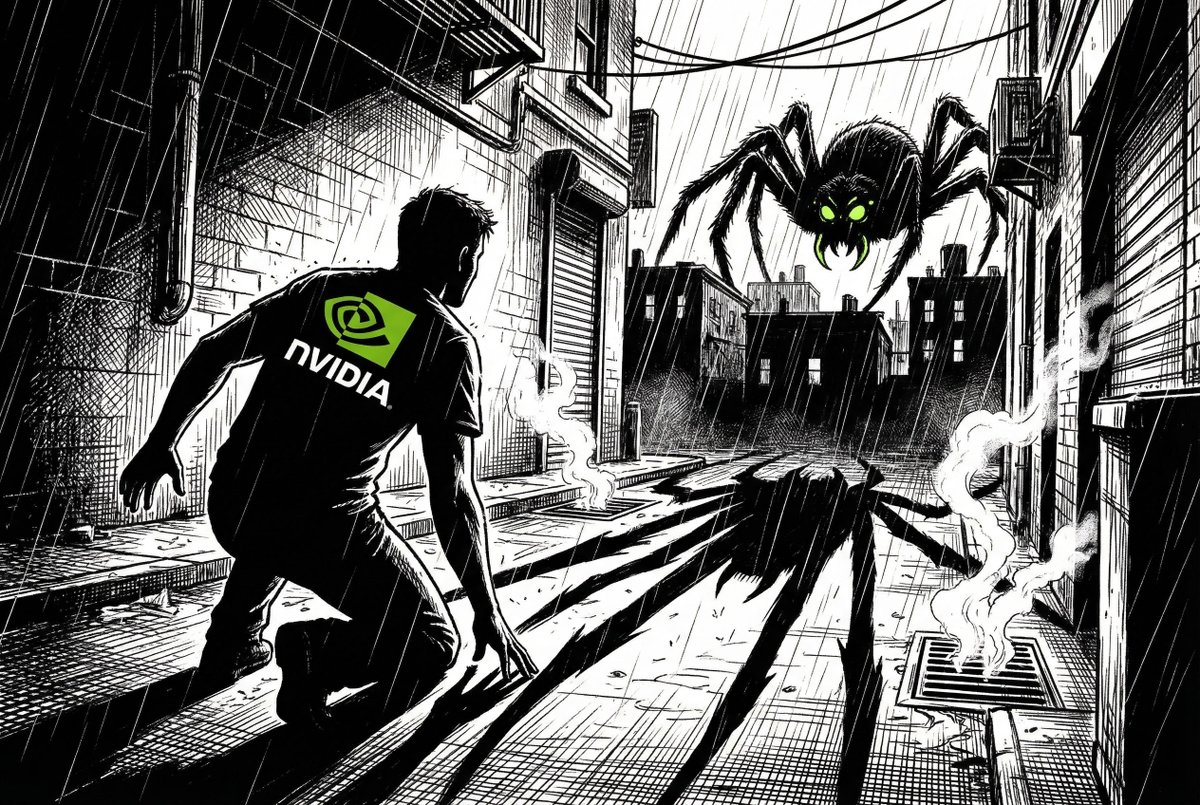
The Venture Capital Reckoning - The giants are getting bigger, the solo GPs are getting bolder, and the comfortable middle is quietly running out of reasons to exist.
There is a question that has been circulating in venture capital for the better part of three years, stated quietly in partner meetings and less quietly on X: what, exactly, is a venture capital firm for? The honest answer is becoming harder to give. Not because venture is dying — it isn't — but because the model that defined it for forty years is splitting, and the part being left behind is the comfortable middle.
Marc Andreessen (@pmarca on X) has spent the better part of a decade arguing that software is eating the world. The quieter corollary, which is now plainly visible, is that AI is eating the cost of building software. A founder who would have needed a seed round of $2 million to hire a development team and get to a working product can now get there in weeks with a laptop and a few API subscriptions. The capital required to go from idea to revenue has collapsed. This does not make venture irrelevant. It does fundamentally change what venture is for.
The traditional model assumed that capital was scarce and therefore valuable. A partner at a Menlo Park firm could command a 20 percent board seat and a standard two-and-twenty fee structure because the founder had nowhere else to go. That logic is unwinding. Capital is abundant. What is scarce — what has always actually been scarce — is judgment, access, and the kind of pattern recognition that comes from having seen a hundred companies scale through the same set of problems. The firms that have built those things into the product itself are pulling away. Everyone else is running out of road.
Paul Graham (@paulg on X) understood this before most. Y Combinator is not a venture firm in any traditional sense. It is a standardisation machine — a repeatable process for taking raw founders and compressing the earliest stages of company formation into something that can be done at scale. The model works because YC offers something no check can buy: a cohort, a network, and a signal that the broader ecosystem treats as meaningful. The capital is almost secondary.
Harry Stebbings (@HarryStebbings on X) arrived at the same insight from the opposite direction. He built the audience first — 20VC became the largest venture capital media brand in the world, 100 million downloads, access to every significant partner at every significant firm — and then converted that distribution into a fund. The 20VC Fund now manages over $800 million. His LPs include founders of unicorns. His deal flow comes from founders who have been listening to him for years. The conventional wisdom is that you raise a fund and then build a brand to support it. Stebbings reversed the order entirely, and it worked because he understood that in a world of abundant capital, the scarce resource is trust — and trust is built through content, consistency, and genuine insight over time, not through a partnership letterhead.
Elad Gil (@eladgil on X) proved something different but equally disruptive: that the partnership model is not actually necessary at all. Gil is a solo GP who has backed Airbnb, Stripe, Coinbase, Figma, and Notion, and who recently raised over a billion dollars without a single partner. The fund that has produced that hit rate is run by one person. His argument, which he has made through his book and through the consistency of his portfolio, is that speed and conviction are competitive advantages, and both are easier to maintain without the friction of committee decisions. When a deal is interesting, Gil can wire a check. A partnership needs a Monday meeting.
Elizabeth Yin (@dunkhippo33 on X) built something different again at Hustle Fund — a pre-seed fund that writes checks of $25,000 at a pace and scale that no traditional venture firm would contemplate, deliberately investing in founders who don't fit the profile that Sand Hill Road has historically favoured. The thesis is not charity. It is arbitrage. If the market is systematically undervaluing a class of founders because it filters by pattern rather than by merit, then a fund willing to look earlier and more broadly will see opportunities that others miss. Hustle Fund has backed over 300 companies. The portfolio is, by design, diversified in ways that a twelve-investment partnership fund never could be.
What these approaches have in common is not size or strategy. It is the recognition that the old value proposition of venture — we have capital, you need it — is no longer sufficient. The firms extracting the most from this moment are the ones that have replaced that proposition with something more durable: a brand that founders trust, a solo operator with the network and judgment to move fast, a model so early and so accessible that it reaches founders before anyone else does, or a platform so systematically valuable that the capital is almost an afterthought.
The firms in trouble are the ones that have done none of these things — the $200 to $500 million partnership vehicles with generic theses, standard terms, and no particular reason for a founder to choose them over the alternatives. AI has not destroyed the venture model. It has clarified it. The firms that were adding real value will continue to. The firms that were mostly providing capital in a capital-constrained world are discovering, with some urgency, that the constraint has moved.
#vc #venture #finance
The one-person software company is now real — and it changes everything. / Vibe coding, OpenClaw, and three founders who proved that one person with the right tools can now build what used to take a team.
There is a phrase Andrej Karpathy (@karpathy) put into circulation in early 2025 — vibe coding — that the industry initially treated as a joke. Describe what you want in plain language, let the AI write the code, accept the output, iterate. Don't worry about understanding what's underneath. The joke, it turned out, was on anyone who didn't take it seriously.
By early 2026, the evidence was in. Peter Steinberger (@steipete), a former iOS developer who had sold his company for a reported €100 million and retired, came back from retirement bored, built an agentic AI assistant in his spare time, named it after a lobster, and watched it accumulate 247,000 GitHub stars and 47,700 forks before he had even decided what to do with it. OpenClaw became the fastest-growing open-source project on the internet. Steinberger was coding alone, shipping constantly, iterating in public. Jensen Huang mentioned him at GTC. Sam Altman hired him. The lobster took over the world, as Steinberger put it, with characteristic understatement.
This is not a story about one person getting lucky. It is a story about a structural change in what software development costs, and who can do it.
Pieter Levels (@levelsio) saw this coming before almost anyone. He has been building and shipping products alone — no co-founder, no team, no investors — since 2014. His portfolio now generates approximately $3 million a year. The model he proved was simple: find a real problem, build the smallest possible solution, ship it, see if anyone pays. The constraint was always time. One person can only build so much. What AI coding tools have done is remove that constraint. Levels was doing this when it was hard. The point he has made repeatedly is that it is now easy enough for almost anyone.
Tony Dinh (@tdinh_me) is the proof. A software engineer from Vietnam, he quit his job, built in public, failed several times publicly, and eventually hit $83,000 in monthly recurring revenue running products entirely by himself. His most successful product, Typing Mind, launched within hours of ChatGPT going public and has continued to compound. He does the coding, the design, the marketing, the customer support, and the iteration. He is not a genius. He is organised, fast, and willing to ship something imperfect and fix it later. That combination, which used to require a team, now fits in one person's working day.
The question this raises is not whether the solo founder model works. It clearly does. The question is what happens to the software industry when the cost of starting a software company approaches zero and the primary constraint becomes distribution rather than development. Venture capital funds teams, not individuals. It assumes that building is the hard part and that scale requires headcount. Neither of those assumptions is as reliable as they were two years ago. Custom ASIC shipments from cloud providers are projected to grow at nearly three times the rate of GPU shipments in 2026 — a sign that even at the infrastructure level, specialisation and efficiency are beating brute generalisation. The same logic applies at the product level. A focused solo founder who knows their user and can iterate in hours now outmanoeuvres a funded team that needs two weeks to schedule a sprint.
This is not a utopia. Distribution is still hard. Most vibe-coded apps don't find users. The people who succeed in this environment are not simply technical — they are builders who understand marketing, who build in public, who treat X as a distribution channel as seriously as they treat GitHub as a development environment. Steinberger's lobster went viral because he shipped relentlessly and talked about it honestly. Levels built an audience over a decade before the revenue followed. Dinh spent years failing before the products clicked. The romantic version of the story — one weekend, one idea, overnight success — is largely fiction. The realistic version is: lower barrier to entry, same difficulty of distribution, very high reward for the rare person who can do both.
What has changed is who gets to try. The cost of a failed experiment is now a few weeks of work and a modest API bill, not two years of runway and a team of eight. That changes the calculus of risk entirely. The one-person software company is no longer a curiosity. It is an increasingly common and increasingly serious form of the business. The venture industry has not yet worked out what to do about that. The solo founders have.
#vibecoding #openclaw #software #tech #ai
The Real Challenge to NVIDIA / featuring Jensen Huang, Mark Zuckerberg @satyanadella@sundarpichai@ajassy@LisaSu#nvidia /
Three weeks ago, Jensen Huang walked onto the floor of the SAP Center in San Jose — home of the San Jose Sharks, temporarily redecorated as a throne room — and told a crowd of 30,000 that he now sees a trillion dollars in purchase orders for Nvidia's Blackwell and Vera Rubin chips through 2027. The number had doubled since last year. A robotic Olaf the snowman waddled onstage. There was a cartoon campfire singalong with robots. The leather jacket was immaculate. The show is getting bigger every year, and so, for now, is the company it represents.
But beneath the spectacle of GTC 2026 was something more interesting than another record revenue forecast. Huang spent considerable time this year talking about inference — the process by which trained AI models actually respond to queries, generate text, power agents, return results. He said the word 36 times in his keynote. That emphasis was not accidental. Training, the phase of AI development that made Nvidia what it is, is becoming a smaller part of the picture. Inference is where the volume lives. And inference is where Nvidia's grip is genuinely, materially, and increasingly vulnerable.
Nvidia's dominance in AI training was built on two things: its GPU architecture, which happened to be well-suited to the matrix multiplication at the heart of neural network computation, and CUDA, the proprietary software layer it built over twenty years that locked researchers, developers, and eventually entire industries into its ecosystem. The H100 and now the Blackwell architecture became the de facto currency of the AI build-out. To train a large model in 2023 or 2024, you needed Nvidia. There was no serious alternative. The company achieved gross margins of 88 percent on its H100 chips — chips that cost roughly $3,300 to manufacture and sold for $28,000. It locked in 60 percent of TSMC's advanced CoWoS packaging capacity. It was, and remains, one of the most complete monopolies the technology industry has ever produced.
The easy narrative — AI equals GPUs equals upside — is fading. What matters now is where AI workloads actually land, how durable capital spending proves to be, and which vendors retain pricing power as inference, efficiency, and deployment take centre stage. Huang's answer at GTC was characteristic: don't defend the GPU in isolation; swallow the whole stack. Vera Rubin, Nvidia's new platform, can train large models with one-quarter the number of GPUs versus Blackwell and deliver ten times higher inference throughput per watt at one-tenth the cost per token. Nvidia also unveiled the Groq 3 LPU — the first chip from the startup whose intellectual property and key personnel Nvidia acquired for $20 billion in December 2025, its largest deal ever. Paired with Vera Rubin, the Groq 3 LPX rack can increase throughput for a one-trillion-parameter model by 35 times compared with the previous Blackwell generation. Huang is not merely selling chips. He is pitching a vertically integrated operating layer for the agentic AI economy — silicon, networking, software, factory design tools, robotics simulation, and now orbital data centers. The ambition is to make switching costs so high that the question of an alternative never becomes practical.
The problem is that the most powerful organisations in the world have already decided to ask it anyway.
Google, Amazon, Meta, and Microsoft — the four hyperscalers whose collective capital expenditure on AI infrastructure is projected to exceed $700 billion in 2026 — have each concluded that dependence on a single external chip supplier is a structural business risk they cannot sustain. Their collective shift to custom silicon is a strategic move to ensure competitiveness. The depth and maturity of that shift is the real story of 2026.
Google was first. Its Tensor Processing Units, designed in-house and built by Broadcom and TSMC, have been running Google's internal AI workloads for nearly a decade. The latest generation, codenamed Ironwood, runs on a 3-nanometre process and uses Optical Circuit Switching to dynamically reconfigure its Superpods, allowing for ten times faster collective operations than equivalent Ethernet-based clusters. Google now reports that over 75 percent of its Gemini model computations are handled by its internal TPU fleet. Sundar Pichai's company is not simply building an alternative to Nvidia — it has largely replaced Nvidia for its core inference workloads, and it is beginning to market that capacity externally. Anthropic, Midjourney, Salesforce, and Safe Superintelligence have all signed agreements to run workloads on Google TPUs. Anthropic announced a landmark expansion in October 2025: access to up to one million TPU chips, a deal worth tens of billions of dollars that will bring over a gigawatt of compute capacity online in 2026. The significance is not lost on anyone. Anthropic — the company whose Claude models run on Nvidia hardware in most enterprise deployments — is betting a substantial portion of its compute future on Google's silicon.
Amazon has followed a parallel path. AWS's Trainium and Inferentia chips, designed by its Annapurna Labs division, offer 30 to 40 percent better price performance than other hardware vendors, according to Ron Diamant, Trainium's head architect. Trainium3 entered volume production in early 2026, offering 2.5 petaflops of performance on a 3-nanometre process, with an UltraServer configuration that interconnects 144 chips into a single liquid-cooled rack capable of matching Nvidia's Blackwell architecture in rack-level performance while offering a significantly more efficient power profile. At the same time, Andy Jassy's company continues to fill its data centres with Nvidia GPUs for customer-facing workloads, because the flexibility, software support, and multi-cloud portability that Nvidia offers cannot yet be replicated for the full range of enterprise use cases. The strategy is not replacement but diversification — reducing dependency, gaining bargaining power, and offering cheaper alternatives in segments where the workloads are predictable enough for custom silicon to excel.
Meta is doing something similar but with different logic. Mark Zuckerberg's company has deployed its Meta Training and Inference Accelerator — MTIA — primarily to offload high-volume recommendation engine workloads from Nvidia H100s, allowing Meta to reserve its Nvidia GPUs for advanced AI research. Meta's 2026 roadmap includes its first dedicated in-house training chip, designed to support the development of Llama 4 and beyond within its massive Titan clusters — gigawatt-scale campus projects that are raising questions about the long-term sustainability of the AI infrastructure arms race. Reports that Meta is exploring a partial shift of training workloads to Google's TPUs have added another dimension. Whether that materialises or not, the signal is clear: a hyperscaler the size of Meta is now willing to entertain serious alternatives to Nvidia in its most compute-intensive operations.
Microsoft, under Satya Nadella, has had a more complicated path. Its in-house Maia chip programme faced delays and internal difficulties. Microsoft's next-generation chip, codenamed Braga, was delayed until 2026, placing the company in the position of continuing to purchase Nvidia Blackwell GPUs at high prices to meet OpenAI's computing demands. The company's CTO Kevin Scott has been publicly pragmatic about this: Nvidia offers the best price-performance, and Microsoft will use what works. But Maia 200 is now powering a significant portion of ChatGPT's inference workloads, and the partnership with Intel's 18A foundry for its next chip generation shows that Microsoft is not abandoning its custom silicon ambitions. It is merely behind schedule.
Beyond the hyperscalers, the competitive landscape is also fragmenting at the startup level, in ways that pose a different kind of threat. Cerebras Systems has built chips the size of entire wafers that handle inference workloads at speeds Nvidia cannot match for certain model sizes. SambaNova unveiled the SN50 chip in early 2026, claiming five times faster performance than competitive chips and three times lower total cost of ownership compared to GPUs for agentic AI workloads. The Groq LPU — the company whose technology Nvidia just paid $20 billion to absorb — was generating 800 tokens per second on inference tasks where Nvidia's GPUs operate at a fraction of that speed for latency-sensitive applications. By acquiring Groq, Nvidia has neutralised one challenger while simultaneously signalling that it recognises inference-optimised architectures as the next battleground.
The structural question underneath all of this is software. Nvidia's CUDA ecosystem — twenty years of development, four million developers, every major machine learning framework optimised for CUDA first — has always been the real moat. The hardware competes; the software traps. But that moat is being crossed. OpenAI's Triton has emerged as the industry's primary off-ramp, allowing developers to write high-performance kernels in Python that are hardware-agnostic, with mature backends now available for Google's TPU, AWS Trainium, and AMD's MI350 series. The OpenXLA compiler, backed by Google, Amazon, and other parties, allows PyTorch models to be deployed across hardware architectures with minimal modification. The software advantage that once made Nvidia indispensable is not gone, but it is eroding at a pace the company would have found unthinkable five years ago.
Lisa Su's Advanced Micro Devices occupies the most straightforwardly competitive position in the merchant chip market. AMD's Instinct accelerators — the MI300X and now MI350 series — offer genuine hardware advantages in memory bandwidth that matter specifically for inference workloads. The MI300X carries 192 gigabytes of memory and 5.3 terabytes per second of bandwidth, a configuration that benefits large language model inference where memory is the binding constraint. Su has been consistent and disciplined in targeting breadth over dominance — positioning AMD across PCs, industrial systems, and embedded use cases, while its software stack ROCm continues to close the gap with CUDA. AMD is unlikely to dethrone Nvidia in training. It does not need to. A ten-to-fifteen percent shift in inference market share would represent tens of billions of dollars in annual revenue, and AMD is the only merchant-chip alternative that enterprise customers without hyperscaler resources can actually deploy.
Then there is energy. And this is where the Middle East enters the picture, not as background noise but as a structural constraint that reshapes the competitive calculus in ways the financial markets have not yet fully absorbed.
Energy typically accounts for up to 60 percent of a data centre's operating costs. The sector was already navigating rising electricity prices — US electricity prices jumped 6.9 percent in 2025, more than double the headline inflation rate, according to Goldman Sachs. A single Nvidia B200 Blackwell chip draws 1,200 watts — nearly double its predecessor. Hyperscaler AI capital expenditure is projected at $700 billion in 2026, with over a trillion dollars in total private AI infrastructure capital planned. The energy requirement embedded in that spend is immense, and it is vulnerable.
The Strait of Hormuz facilitates the daily transit of approximately 20 percent of the world's oil consumption and a significant portion of liquefied natural gas. Since the US-Israel operation against Iran began on 28 February 2026, that chokepoint has been effectively closed. Wood Mackenzie analysts warned that a disruption to LNG flows through the Strait would be comparable in scale to the curtailment of Russian gas to Europe in 2022, when prices at European hubs briefly touched the equivalent of nearly $600 a barrel of oil. Data centres across North America and Europe have been pivoting toward gas-fired generation as a primary power source. The war has placed that bet under direct pressure.
A prolonged conflict in the Middle East could also disrupt supplies of helium and bromine, key materials in semiconductor manufacturing. Qatar produces over a third of the world's helium supply. QatarEnergy's Ras Laffan Industrial City was hit by an Iranian drone attack, taking the site offline. Phil Kornbluth, president of Kornbluth Helium Consulting, has said it is getting hard to imagine that the industry is not facing a minimum two-to-three month shutdown of helium production, with a four-to-six month period before the supply chain returns to normal. Helium is used in lithography and heat transfer in chip fabrication. There is no viable substitute. TSMC, which manufactures the overwhelming majority of advanced AI chips, is an island nation with its own significant energy insecurity. Add a global helium shortage to already-constrained TSMC capacity, and the supply chain for Nvidia's products tightens from two directions simultaneously.
Morningstar equity analyst Jing Jie Yu told CNBC that the high dependency on crude oil indicates significantly higher costs for AI data centres, which are roughly three to five times more power-hungry than regular data centres, and that this could significantly increase the total cost of ownership for hyperscalers, posing a direct threat to AI infrastructure adoption. The logic is uncomfortable but straightforward: soaring oil prices could drive AI companies to throttle their purchases of Nvidia's pricey GPUs, and could drive more data centre operators toward AMD's cheaper GPUs or toward developing their own custom accelerators. The war is not just raising energy costs. It is accelerating the economic incentive to find alternatives.
Iranian-affiliated forces have named regional offices, cloud infrastructure, and data centres linked to Google, Amazon, Microsoft, Nvidia, IBM, Oracle, and Palantir as targets. Iranian drone strikes have already hit three AWS data centres in the UAE and Bahrain — the first military strikes on US hyperscalers in history — causing fires, power outages, and knock-on disruptions to banking and payments services across the region. Nvidia temporarily closed its Dubai offices after nearby strikes. The war has also placed the Gulf's ambitions to become a sovereign AI superpower in direct question. The UAE, Saudi Arabia, and Qatar had collectively attracted billions in hyperscaler investment on the basis of abundant cheap energy, political stability, and data sovereignty requirements. The Gulf Cooperation Council expects the data centre market in the region to grow to nearly $9.5 billion by 2030, with PwC predicting capacity to triple from one gigawatt in 2025 to 3.3 gigawatts over the next five years. Those projections were made before the missiles started landing.
The picture that emerges from all of this is not a story of Nvidia's collapse. The trillion-dollar order pipeline is real. The CUDA ecosystem will not dissolve in an earnings cycle. The Vera Rubin platform is genuinely advanced, and Huang's move to absorb Groq — neutralising the most credible inference-only challenger while simultaneously claiming inference efficiency leadership — is the kind of strategic manoeuvre that has kept Nvidia ahead for twenty years. The leather jacket is not just theatre. The man inside it is a very good competitor.
But the structural forces now aligned against Nvidia's current form of dominance are not cyclical. Hyperscalers are spending tens of billions of dollars per year to reduce their dependence on a single supplier, and they are years into programmes that are now producing chips competitive enough to run a significant fraction of their own workloads. The software moat that made Nvidia's position seem permanent is being crossed by open-source tooling that the entire industry is motivated to accelerate. The energy economics that underpinned the GPU's brute-force approach are tightening, structurally and geopolitically, in ways that favour efficiency-optimised custom silicon over general-purpose raw compute. And a war in the Middle East is raising the cost and risk of the entire infrastructure build-out in ways that compress margins and accelerate the search for cheaper alternatives.
Based on AI server shipment growth rates, custom ASIC shipments from cloud providers are projected to grow 44.6 percent in 2026, while GPU shipments are expected to grow 16.1 percent. Nvidia will grow. The market will grow faster without it. That is the definition of losing ground.
The era when Nvidia was the only serious answer to the question of how to run AI is over. What comes next is a more fragmented, more competitive, more energy-constrained landscape in which Nvidia remains formidable but no longer irreplaceable. The question is not whether its dominance will erode. It is whether the company's pivot to become the operating layer of the entire AI economy — factories, agents, robots, space — can move fast enough to stay ahead of the floor collapsing beneath the GPU business that funded it all.
Jensen Huang built an empire. Now he is building the infrastructure empire needs to run on. Whether those are the same thing remains, for the moment, genuinely open.
Is the Latest 'Salvator Mundi' Real?
The $450 million Leonardo is locked in a palace and hasn't been seen since 2017. A better one just went on sale.
read: https://t.co/LFSSU9qI9z
#salvatormundi#leonardodavinci@TEFAF#tefaf
Art Dubai 2026 has Officially Been Postponed!
The fair's 20th edition has been rescheduled, reformatted, and quietly reduced. The war has not.
Read: https://t.co/N0cNIVYaCz
@artdubai#artdubai
Third party perspective: Gary Marcus (@GaryMarcus)
Neither pure academic nor industry evangelist, Marcus functions as something more unusual: a public intellectual willing to antagonize both sides of the AI divide. via @CriticalRegard#ai
Read article: https://t.co/ZON99NuHS0
Is @AnthropicAI Operating More Ethically than @OpenAI ? / The AI companies that court government power and the one that refuses — and what history says about the difference.
Read: https://t.co/c5hHhiCnih