@alexanderrX_@KanishkaNarayan Personally I think we need AI that works for Britain that considers impacts to people and our country, blindly following the US approach isn't sensible or sovereign.
@KanishkaNarayan Many replies miss the point. Model choice and avoiding unnecessary inference are real levers on cost and carbon across a whole civil service. ‘Don’t say thank you’ is marginal, fair. But the fix is better evidence, not removal.
@KanishkaNarayan Environment and adoption aren’t a trade-off: right-sizing models and using simpler tools where they suffice is how AI scales affordably. Personally I’d urge measuring and publishing AI’s energy, water and carbon impacts rather than dropping the guidance.
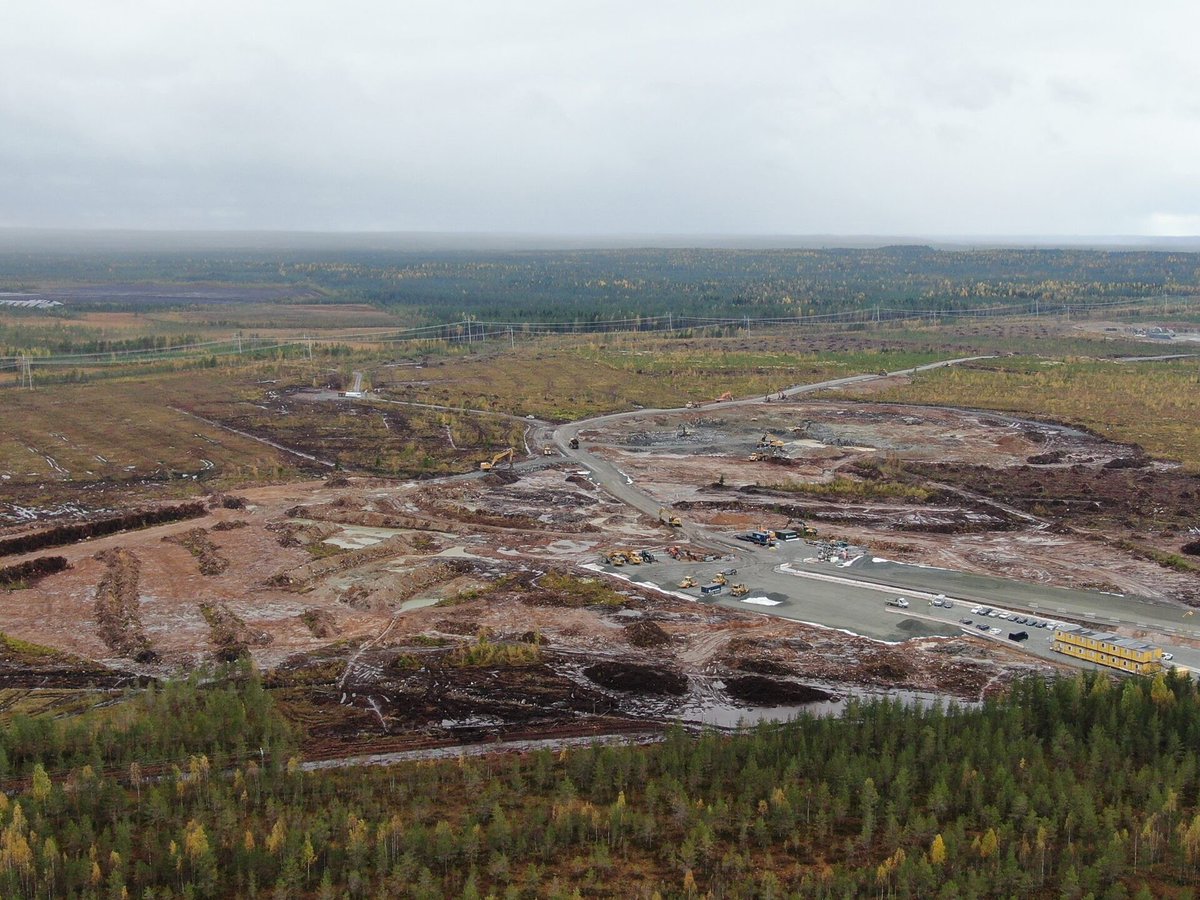
🦔Google sent contractors to chainsaw 300 hectares of forest in northern Finland for new data centers. About 740 acres, roughly 500 football fields. They started months before the required environmental impact assessments were finished. Finland's conservation association filed a complaint calling it "gross incompetence or gross disregard for Finnish legislation, or at worst both." Google says they complied with the Forestry Act. Finland's licensing agency opened an investigation on September 19th, days after Google announced €13 billion in new data center investment in the country.
My Take
Google spent €13 billion to expand in Finland and couldn't wait for a permit review before cutting down the trees. Finland gave these companies electricity tax breaks for years to attract data center investment, so I doubt anyone in government pushes back too hard now. You don't pick a fight with your biggest infrastructure customer over 740 acres when the money is already committed.
This isn't the first time either. Equinix spilled 5,000 gallons of diesel at a facility in New Jersey and nobody got in real trouble for it. The AI buildout is spending so fast that local governments can't keep up, and most of them don't want to. A €13 billion commitment turns a regulator into a cheerleader pretty quick. I think we're going to see a lot more of these stories before anyone with real authority decides to do something about it.
Hedgie🤗
The number of prominent people who have said stuff like this that are willing to make a public bet to put their money where the mouth is is exactly zero.
(@elonmusk said something similar in 2024 about 2025; I offered him a $1M bet against, and he didn’t take it. Dario made similar claims, since proven false, around the same time, etc. Media never holds them to account, so hypers keep on hyping, without penalty.)
🦔Sebastian Rucci's company, Imperial Valley Computer Manufacturing, is suing for 287 million gallons a year from the Colorado River to cool a $10 billion, 330-megawatt AI data center in California's Imperial Valley. It would be the largest in the state. He promised not to touch the river. He had a deal for recycled wastewater from El Centro and Imperial, but both cities backed out, and the Imperial Irrigation District said no too. The Colorado River is the only freshwater source for 180,000 people in Imperial Valley and serves 40 million across seven states during a drought. He hasn't named who the data center is being built for.
My Take
Rucci bought 160 acres of active farmland and plans to dry it out and redirect the water to his facility. Legally he bought the land and the water assignment, so he's within his rights. But Imperial County has 17.6% unemployment and depends on agriculture, and about 100 permanent jobs don't replace what those farms support. If the data center closes in a few years, dried-out farmland doesn't bounce back. He also chose evaporative cooling when 25% of data centers already run closed-loop systems that use a fraction of the water. He picked the cheapest option in the driest place.
A $10 billion project with no named tenant, suing a drought-stricken river for water it was promised it wouldn't need. I'd want to know who's paying for this.
Hedgie🤗
@HedgieMarkets@Fhotec Major discrepancy here, though, isn't there? As I understand it, this is another human driven too? So isn't it going to be hard to fire people if they are the ones driving the usage of this? Perhaps headcount reductions but not entire elimination?
🦔Microsoft's internal strategy document for its new AI assistant Scout says the explicit goal of phase one is to "make people addicted." The doc, obtained by 404 Media, outlines a three-phase plan from "addictive app to agentic platform."
The tool sits on your desktop, manages your calendar, triages your inbox, files expenses, and acts on your behalf. It requires access to your accounts and files. Security and compliance are things to "figure out" later. Nadella already uses it.
My Take
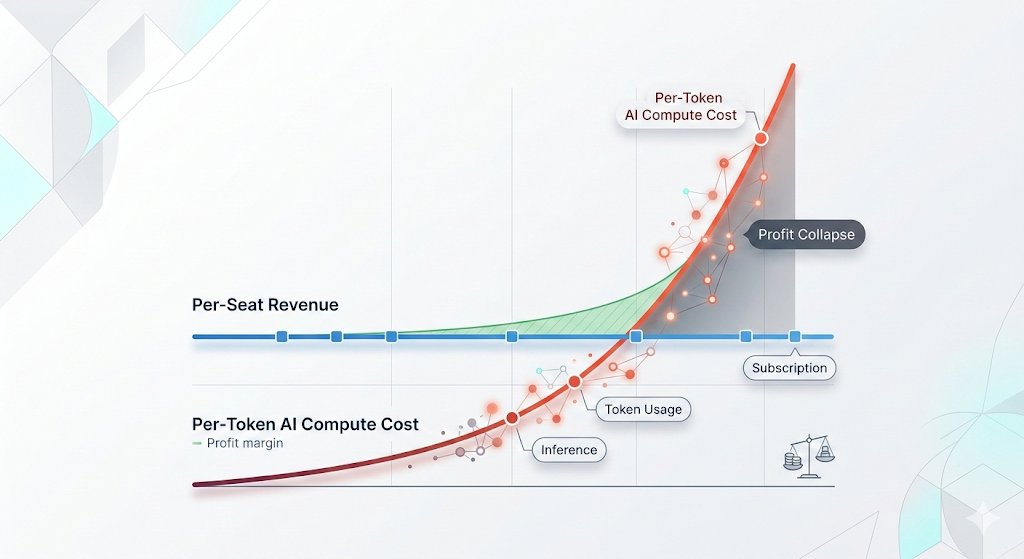
After everything this week, I think this document accidentally explains the entire AI business model. Not just Microsoft's, everyone's. The product can't sustain itself on current pricing. We know that because Copilot just proved it on Monday. The unit economics don't work at flat rate. So the play is to get people locked in before the real bill arrives. Make the tool essential to how you work, let your company cut the people who used to do those tasks, and by the time consumption pricing kicks in, walking away costs more than paying up.
IBM's CEO just told us the industry needs $6 to $8 trillion in capex to chase revenue he says doesn't exist. Google diluted shareholders to fund a buildout it can't cover from cash flow. Oracle fired 30,000 people during a record quarter to redirect salaries into data centers. And Microsoft's answer to all of that is an internal doc where step one is addiction. They're not selling the product on value. They're selling dependency. Get people hooked before anyone calculates what it costs to run, and make sure they can't leave once they find out. A product that needs addiction to survive is a product that can't survive on its own.
Hedgie🤗
https://t.co/eux8IbCxxm
🦔Qualcomm CEO Cristiano Amon told Computex this week that AI agents will replace your phone as the center of your digital life. The agent follows you across every device, earbuds, glasses, phone, laptop, and never turns off. 6G networks will "make all of us into walking cameras," and by tracking millions of radio connections, network operators will build a digital twin of every road, car, bicycle, and pedestrian in your city. "Resistance is futile," Amon said.
My Take
A CEO just stood on stage and told investors his company's vision is an AI agent that follows you everywhere, sees what you see, hears what you hear, and feeds it all into a digital replica of your city where every person and vehicle is tracked. He said "resistance is futile" like that was a selling point and not a threat.
This week Ring got sued for labeling people's faces without consent. Microsoft put "make people addicted" in a strategy doc. MicroAGI sent cameras into apartments. And now Qualcomm is pitching the hardware layer that ties all of it together into one continuous feed from your earbuds to a datacenter, running around the clock. Each company sells its piece as a standalone product, but they all benefit from the same outcome: you generate data constantly and it flows through their compute. Amon says economics will drive adoption and he's probably right. But I haven't heard a single person on any of these stages this week ask whether the people generating all that data actually want this future. The pitch is always to investors, never to the public. I feel like that should bother more people than it does.
Hedgie🤗
🦔Microsoft canceled its internal Claude Code licenses this week after token-based billing made the cost untenable, even for a company with effectively infinite cloud resources. Uber's CTO sent an internal memo warning the company burned through its entire 2026 AI budget in just four months. American AI software prices have jumped 20% to 37%, and GitHub (owned by Microsoft) is dropping flat-rate plans for usage-based billing across its products.
My Take
The AI subsidy era is ending in real time. The same company that put $13 billion into OpenAI and built the Azure infrastructure powering most of Anthropic's compute just looked at the bill from a competitor's coding tool and decided it was not worth paying. That is not a productivity failure on Anthropic's end. Token-based pricing is forcing every enterprise customer to confront the actual cost of running these models at scale, and the number turns out to be far higher than the flat-rate experiments suggested.
This ties directly to my Gemini Flash post yesterday. Anthropic, OpenAI, and Google all raised effective prices in the last six months. Enterprises that built workflows assuming AI costs would keep falling are now watching annual budgets evaporate in months. Two outcomes look likely from here. Either enterprises scale back AI usage to fit budgets, which slows the revenue ramp the labs need to justify their valuations ahead of IPOs, or the labs cut prices and absorb the losses, which makes the unit economics worse at exactly the wrong moment. Both paths land in the same place, the numbers stop working, and somebody has to take the writedown.
Hedgie🤗
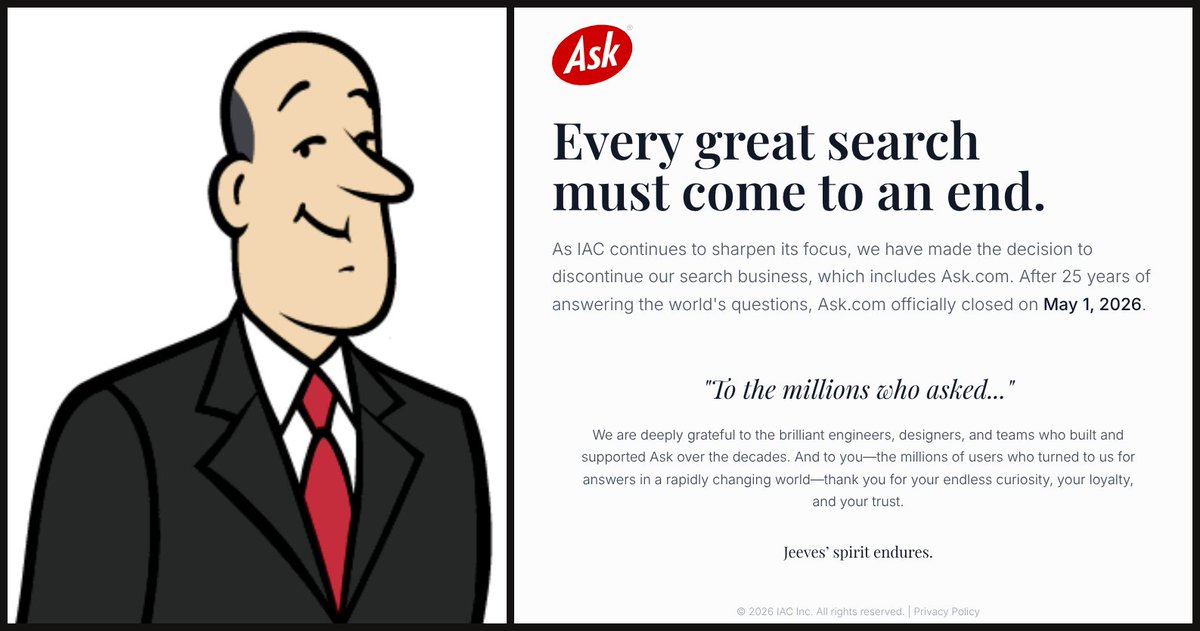
I regret to inform you that Ask Jeeves is dead. The site closed yesterday. Web 1.0 lost another founder.
Ask Jeeves: 3 June 1996 - 1 May 2026. Send no memes.
China just turned 10,000 drones into a single coordinated system 🤯
What looks like a light show is actually something deeper.
10,000 autonomous units moving in perfect coordination.
No collisions. No chaos. Just precision.
One wrong signal could collapse the entire formation.
Instead, they behave like a single system.
I see this as more than a spectacle.
It’s a glimpse into how AI systems are evolving — from isolated tools to coordinated swarms that act together in real time.
The first time you look at it this way, the implications go far beyond entertainment.
So here’s something I’d be curious to hear from you:
Where do you think swarm intelligence like this will have the biggest impact next?
#ArtificialIntelligence #Drones #Robotics #Innovation #FutureOfTech
How is AI impacting people and the planet, and how can we do better? 🌍
In my most recent TED talk, I shed light on how the current way we do AI and explore ways forward in which we can make it more sustainable -https://t.co/JIXRmdeb16