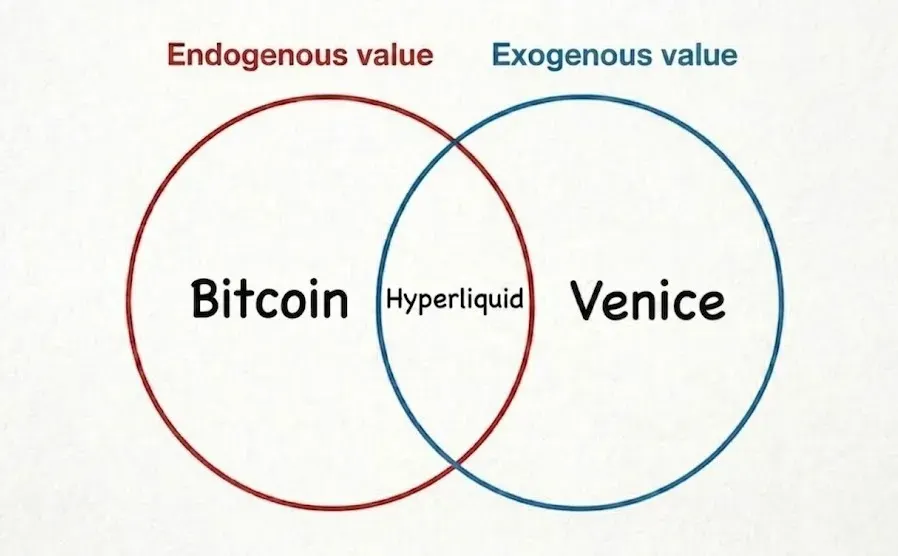
Some of the most interesting things in crypto right now like AI inference products, stablecoin infra, fintech lenders, move uncorrelated with how BTC is doing.
Their revenue doesn't reverse in a drawdown because it was never a function of crypto token prices.
The funny paradox about becoming a great writer is that each time you learn more about writing, the learning gets you both farther from, and closer to, becoming a great writer.
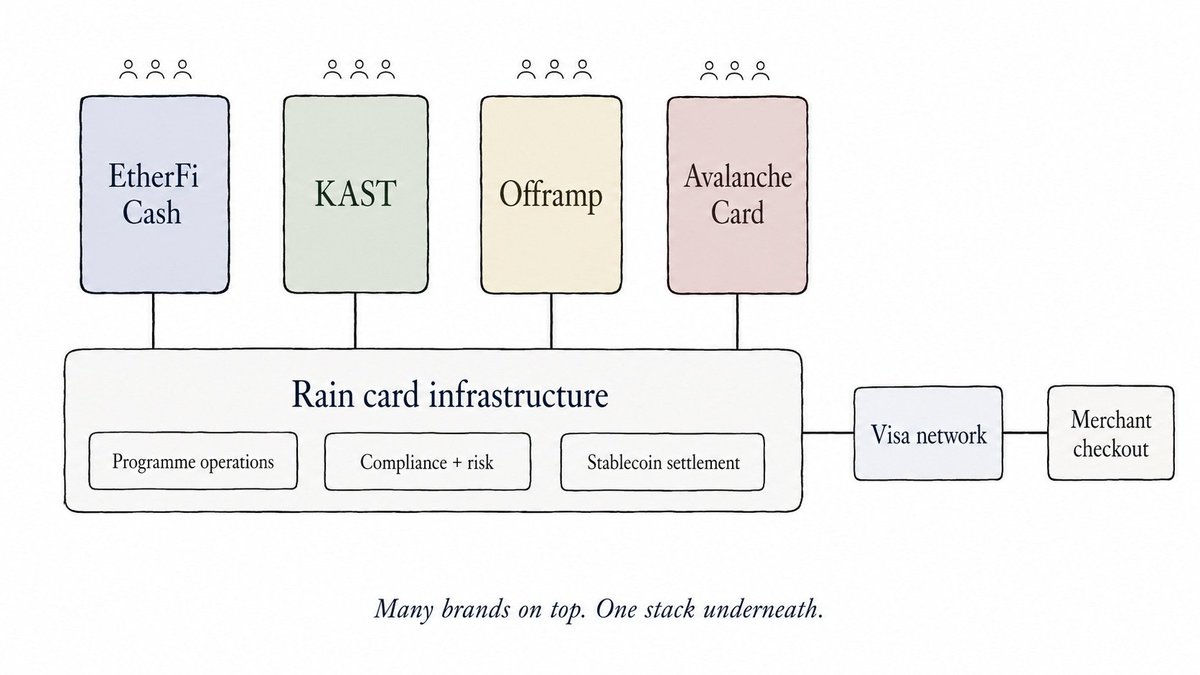
What kind of crypto card you use is no longer a moat because they all offer similar cashback and rewards. Cards that now own layers across the stack underneath the swipe are the ones that stand out.
@raincards gets this. It earns from every swipe thanks to its vertical integration across the infrastructure stack.
@CrypticPD writes more on this here 👇
Unpopular thought: Humans complain about AI taking away jobs because, like every other technological breakthrough, AI is forcing us to evolve, reinvent and go out of our comfort zones to differentiate ourselves from robots.
That's what is more unsettling - to adapt.
What do institutions need in a chain for them to consider it seriously?
@gluk64 joins us to talk about how @zksync is going after 5,000 banks with Ethereum as their moat.
The same reflexivity explains how investors' perception of stock markets shapes their investments; these decisions, in turn, shape companies' decision-making, which then impacts the markets.
The loop continues.
Explains why the alpha is in understanding human behaviour.
I read something (will reveal the source at the end of the post) yesterday that changed how I see the power of human perception.
Most relationships in the world that involve a human being and a scientific/factual aspect will never be a clean, one-sided cause-and-effect relationship. They will always be reflexive and cyclical.
This idea perfectly explains how manifestation works. I don’t think there is any factual, reasoned science that backs manifestation. It’s simple social-science at play.
Here’s an example…
When you act confidently in front of the world, the world perceives you as confident and authoritative. The same perception then drives you to act more confidently and be someone with authority. This cyclical loop feeds on itself.
Got lost in this beautiful thought while reading about how George Soros talks about reflexivity in his book, The Alchemy of Finance.
The world is really funny…
People want to be rich, but don’t want to learning how finance works.
People want to travel, but the only ones that really get to see the world are their phones and cameras.
People want to upskill, but they don't want to go through the grind of doing, falling and learning.
People want to become wise, but they seldom want to critically question their own biases.
Most people still value prediction markets as separate businesses. Given the kind of vertical integration we are seeing in crypto, that valuation framework is outdated.
@RobinhoodApp sold over 12B event contracts in the first 9 months of launching its prediction markets. Over the next three months, it sold 8.8B.
Robinhood already offers trading in equities, options, and spot crypto. By integrating PMs on top of these, its valuation has a cross-selling effect that neither @Kalshi nor @Polymarket can boast of.
Both the incumbent PM leaders have announced their foray into crypto and futures trading. But will they enjoy the same advantage as Robinhood?
In the latest piece for @Decentralisedco, we argue Robinhood may be better positioned for this vertically integrated world. 👇
8 billion people, 50 trillion thoughts a day. Most of these never get typed, posted, or documented. This is why no machine will ever replace you in storytelling.
Wrote a little something about what I reflected on at my work in the past few months. 👇🏾
Hi everyone! Anyone here who has tried to use the Kaveri on Wheels app or knows someone who has? For reference you can see the picture of the tanker.
P.S- This is for a news story
#cauverysanchari#kaverionwheels