Introducing Akash Compute Forwards, an onchain compute order book.
Fix the price of a GPU-hour today. Get the hour delivered later.
Read the blog, run the simulation today👇
Economics 2.0 Phase 2 is LIVE
Machines can now bond $PEAQ across chains, operators can pay with tokens they already hold, and rewards go directly to verified operators
The traction so far?
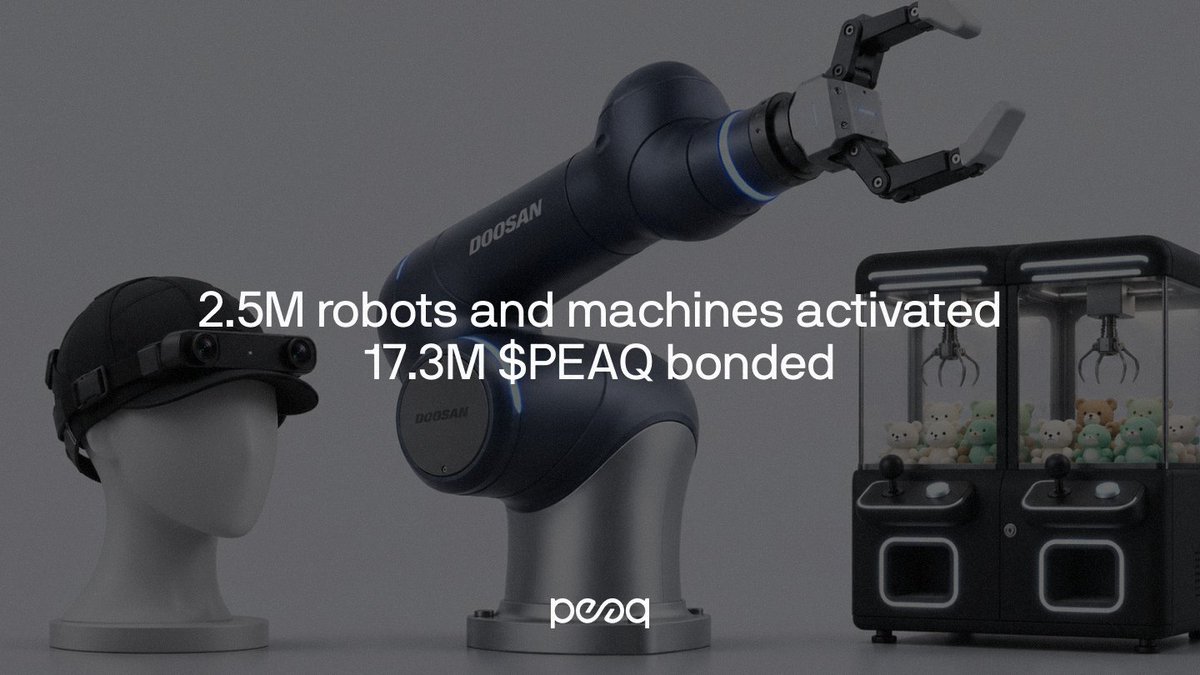
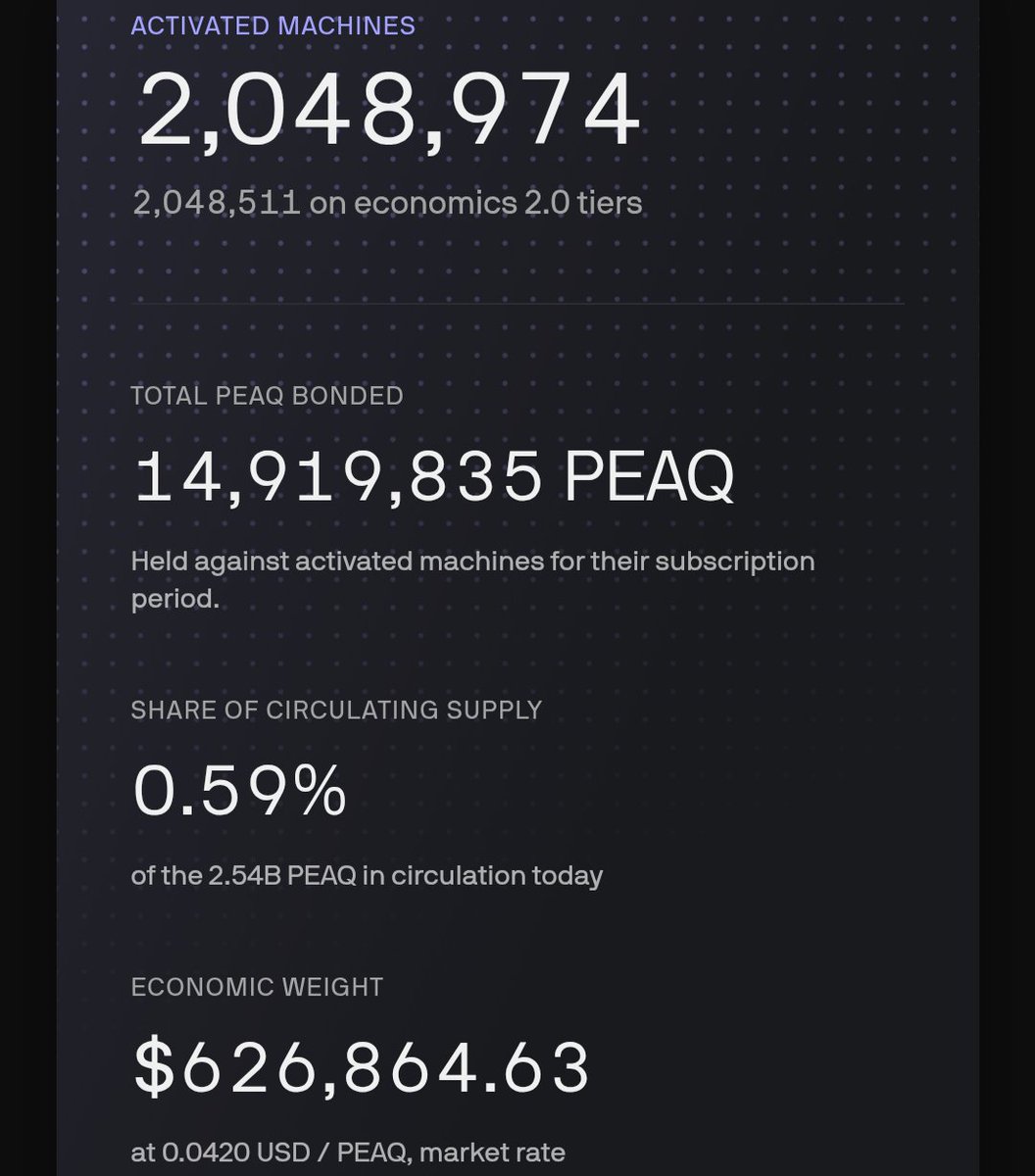
17.3M $PEAQ bonded. 2.5M machines activated.
Here's what's happening ↓
Stop. Spreading. Misinformation.
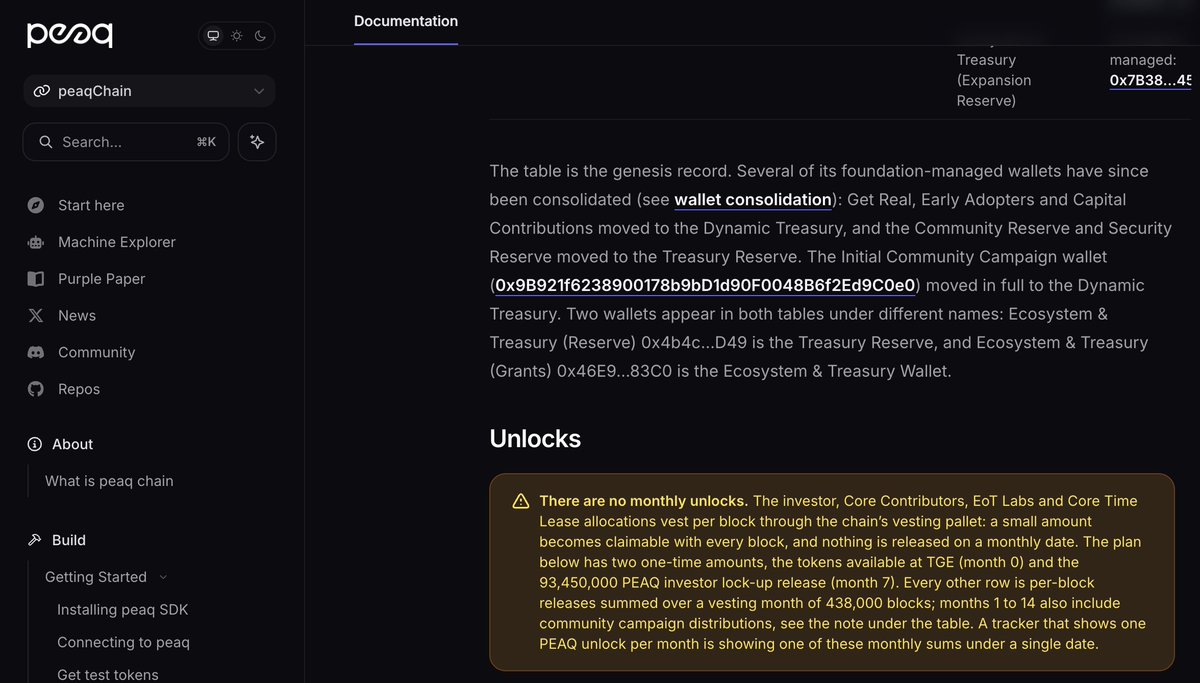
No, there is no massive scheduled ethereum:0x1eef208926667594e5136e89d0e9dd6907959197 cliff unlock on November 12. And no regular monthly unlock event either.
So why are token trackers showing 56 million, 82 million or even 96 million PEAQ supposedly unlocking on that day?
@DefiLlama's unlock overview has listed ethereum:0x1eef208926667594e5136e89d0e9dd6907959197 as a "Cliff Unlock" involving roughly 2.17% of the circulating supply, while its detailed PEAQ page now describes a weekly unlock rate and explains per-block vesting. @CoinGecko and @TokenomicsCOM have also displayed large monthly unlock figures.
No wonder people are confused.
After @WendlerTill raised the issue, I went through @peaq's official tokenomics documentation.
The explanation is straightforward: Remaining investor and team allocations vest continuously, block by block. Tokens gradually become claimable rather than being released in one big monthly batch.
Some tracking platforms present these amounts as if they were suddenly unlocking on a specific date.
Now, let's be clear: The vesting is real. Additional tokens are becoming available over time, and they can eventually become transferable. But a month's worth of continuous vesting is not the same as a massive one-day cliff unlock.
Till also confirmed that peaq has already contacted some of these platforms to correct the information.
And honestly, I can't blame people for being confused. When established data providers present the same kind of event, why wouldn't you believe them?
Apparently, even ChatGPT has been repeating those numbers.
Credit to @WendlerTill for addressing this and continuing to clarify the situation.
A monthly vesting total is not a monthly unlock event. Time to get those calendars right.
Robots and machines can now unlock doors with @Samsung's SmartThings
A machine running peaqOS can now find the SmartThings devices around it, read them, and act:
lock, unlock, on, off. Under its own identity, with a single-use key for every unlock.
→ peaqOS provides identity and coordination
→ @SmartThings speaks for the smart home devices
🔗 https://t.co/7VfFQMX7Su
JUST IN: SN80 (@openroboto), the largest robotics subnet on @bittensor, integrates peaqOS
All devices now have an ID and wallet on Solana, and can be verified and paid for their performance directly on Solana using @peaq
Open robotics is bringing Bittensor and @peaq together.
@openroboto (Subnet 80) now uses peaqOS to link robot training footage to capture devices with verifiable identities on @solana.
Robots can now prove they’re real.
$PEAQ just shipped peaqOS Verify. Without this, the machine economy falls over.
peaq just launched something that sounds simple but is actually the foundation the whole machine economy needs. It’s called peaqOS Verify, and it lets robots and machines prove they’re genuinely real.
Here’s how it works. The machine’s got a secure chip inside it, like the one in your phone.
That chip signs a digital challenge, and peaq checks it against the manufacturer’s official certificate. So it cryptographically proves this is a real machine, made by who it says it is, not a fake. On top of that, peaq verifies the actual business running it. Both get tied to the machine’s on-chain identity that anyone can check.
Why does this matter so much? Because everything else depends on it. If machines are going to earn money, get financed, and do business, the very first thing you need to know is that the machine is actually real. Otherwise you’ve got fakes and spoofed robots everywhere, and the whole thing collapses.
It’s the same problem I talked about with AI agents needing verifiable identities. Turns out, whether it’s a robot or an AI, proving the thing is real is step one for all of it.
Hundreds of thousands of @Acurast processors are coming to peaqOS, unlocking new ways for their network to work and earn
The first 1000+ are already live
Acurast runs a decentralized compute network across 320,000+ phones in 175+ countries.
As they come online, processors activate with peaqOS and bond $PEAQ
@cdavandaag Dit is echt te kansloos voor woorden. Dit kan zich niet anders gaan vertalen als een groot verlies in zetels voor VVD, CDA en D66. Dat klappen van het kabinet kan niet snel genoeg gaan, wat een grap dit.
$PEAQ has passed a $100M Mcap and enters the Top 200. Congrats to those who were stacking with me around $0.0168-$0.0180 in mid August.
Just in the last couple of weeks over 2M machines have been onboarded, bonded $PEAQ, and using peaqOS.
Along with multiple partnership announcements including Doosan Robotics, @solana, @DualMintRWA, and @JupiterExchange.
We are still very early on the machine economy.
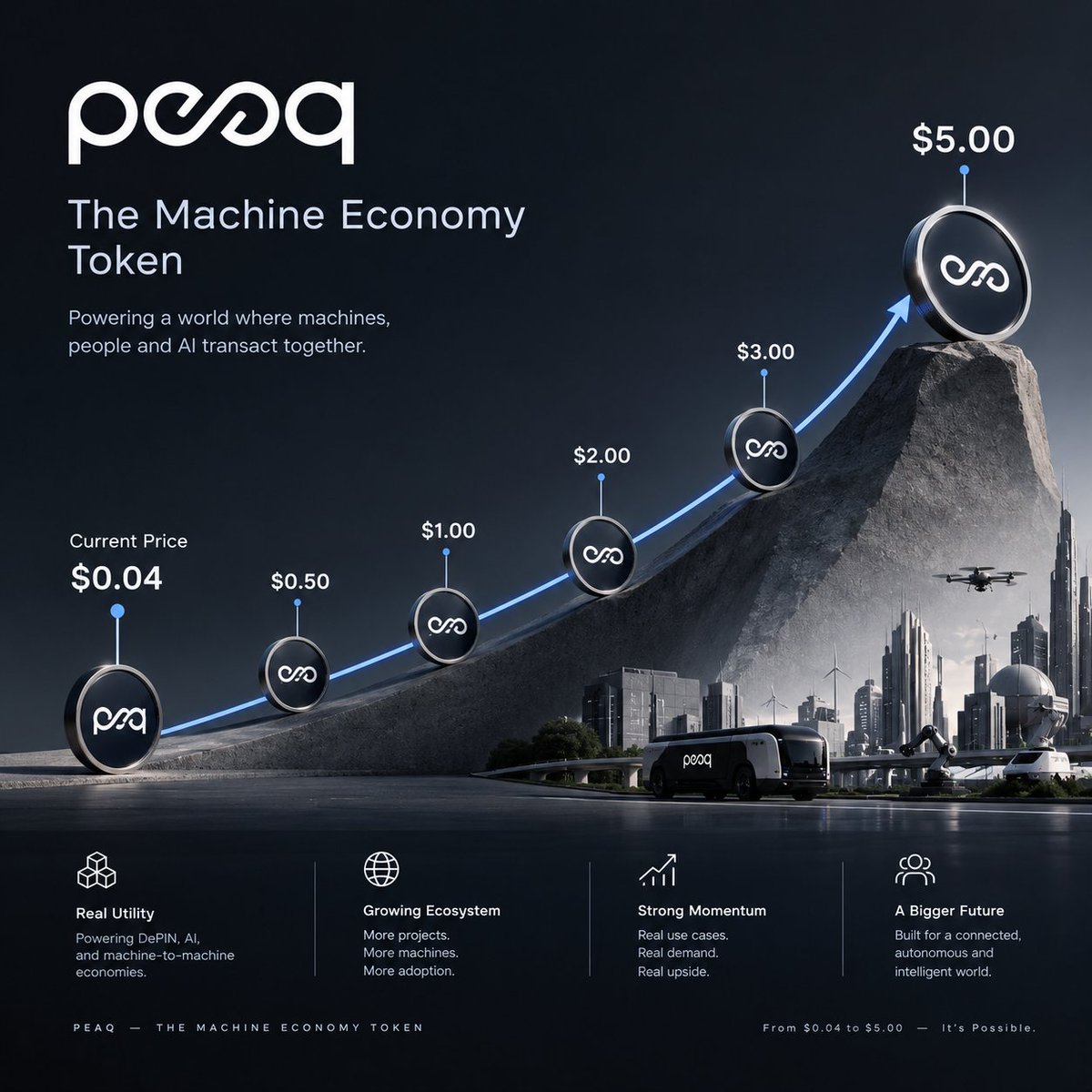
Peaq is going to billions in Mcap and is realistically targeting $0.75-$10
Introducing the peaq Economics page
Everything about $PEAQ economics, in one place.
→ what drives demand for $PEAQ
→ how fees and newly minted $PEAQ get distributed
→ how supply changes over time
→ where the treasury sits, and every machine bond onchain
Explore: https://t.co/po3ABrxBcn
.@peaq and Doosan Robotics, Korea's leading collaborative robotics maker, are putting industrial robots to work on Solana using peaqOS
https://t.co/iZm8sQZ8C0
BREAKING: peaq and Doosan Robotics, one of the world’s top 5 collaborative robot makers, enter Physical AI partnership
Doosan and peaq are working to enable easily financeable robots that monetize their spare capacity
The first Doosan robot is already running peaqOS 🔥
Doosan Robotics is part of Doosan Group, South Korea’s oldest company, with robots deployed in 45 countries