Exciting news!🧠 The 5th annual NeurReps Workshop, Symmetry and Geometry in Neural Representations, returns to #NeurIPS 2026, in person on December 11 or 12 in Sydney. Submit your research on symmetry, geometry, and topology in artificial and biological neural networks.
Our work on Block-Sparse Featurizer is out 🧊 :)
We revive an old idea from the structured sparsity literature and use it to carve activation space into meaningful regions.
It's a first concrete answer to the question our concept manifolds work left open ! :)
The big advance in the science of human aging is the ability to quantify it and relate the metrics to health and disease. A new paper today @CellCellPress takes this to the next level with organ clocks and multiple biologic layers (omics) of data across the lifespan.
https://t.co/h3n4eGPAvs
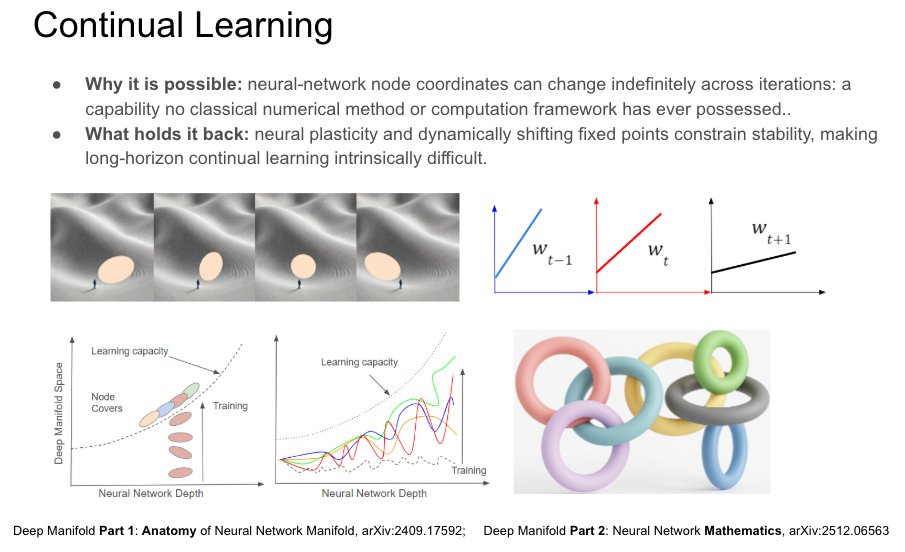
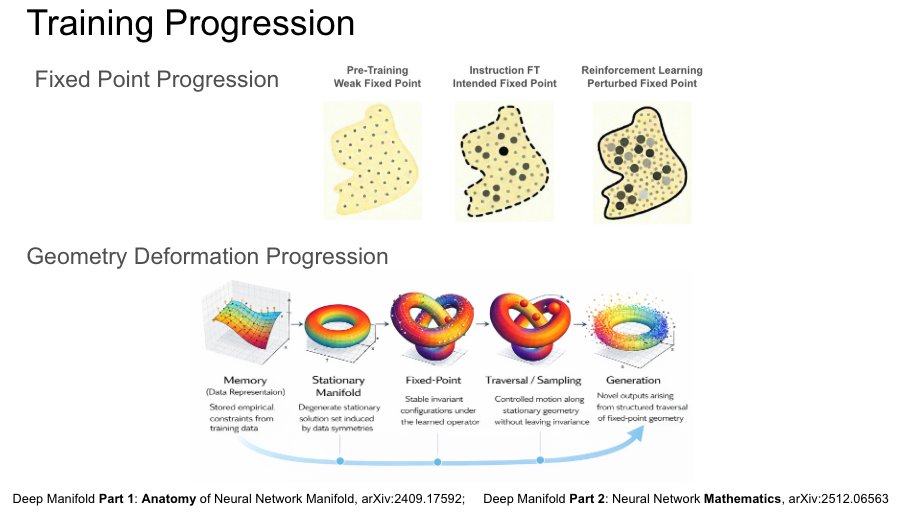
Neural networks might speak English, but they think in shapes.
Understanding their rich *neural geometry* is key to understanding how they work – and to debugging and controlling them with precision.
Starting today, we’re releasing a series of posts on this research agenda. 🧵
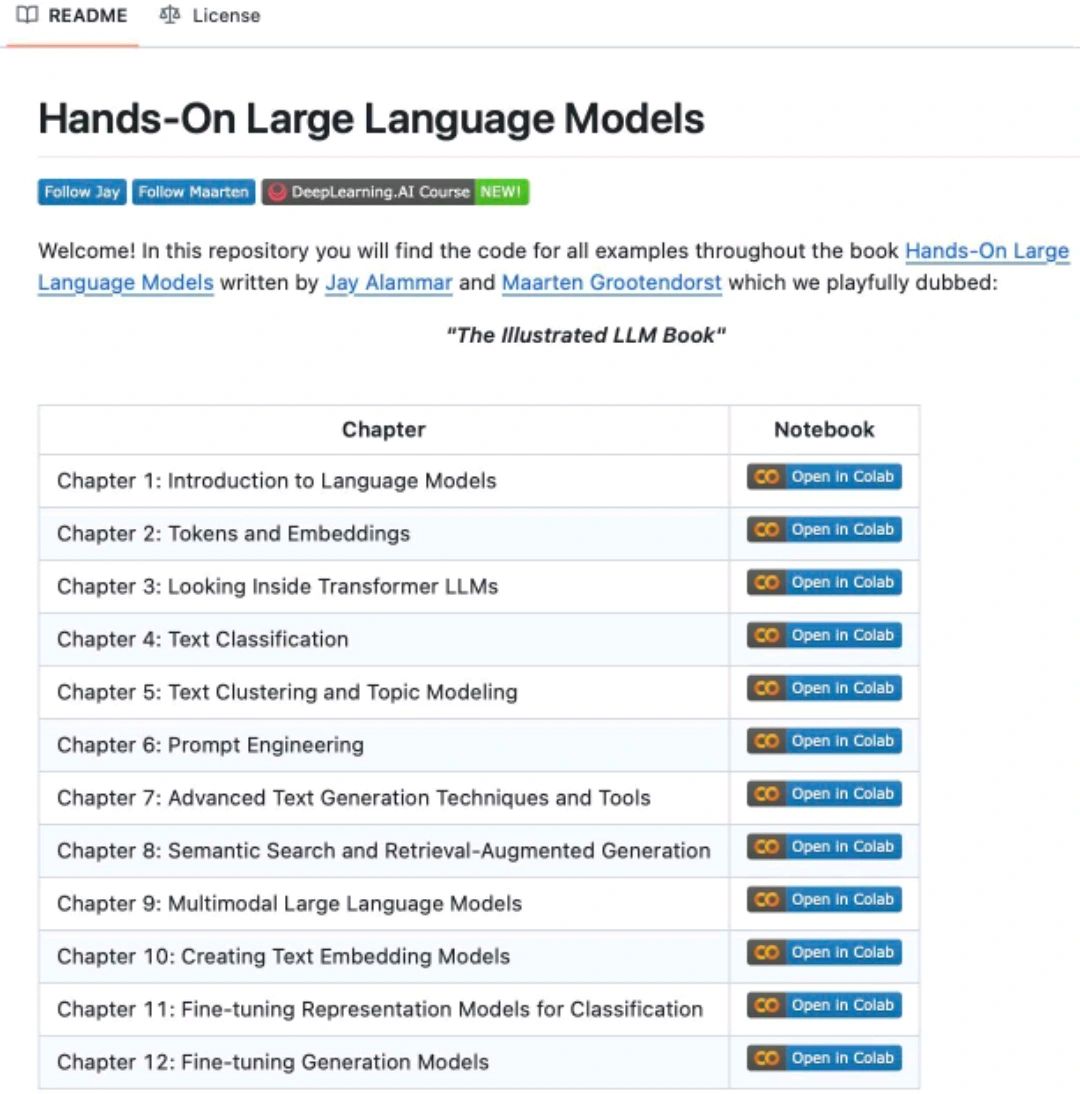
Jay Alammar is the best teacher in AI. Period.
If you have ever seen "The Illustrated Transformer," you know his diagrams are legendary. He also open-sourced the entire codebase for his O'Reilly book: Hands-On Large Language Models.
It’s effectively a visual masterclass in LLMs for free.
Chapter 1: Introduction to Language Models
Chapter 2: Tokens and Embeddings
Chapter 3: Looking Inside Transformer LLMs
Chapter 4: Text Classification
Chapter 5: Text Clustering and Topic Modeling
Chapter 6: Prompt Engineering
Chapter 7: Advanced Text Generation Techniques and Tools
Chapter 8: Semantic Search and Retrieval-Augmented Generation
Chapter 9: Multimodal Large Language Models
Chapter 10: Creating Text Embedding Models
Chapter 11: Fine-tuning Representation Models for Classification
Chapter 12: Fine-tuning Generation Models
I will put the repo link in the comments.
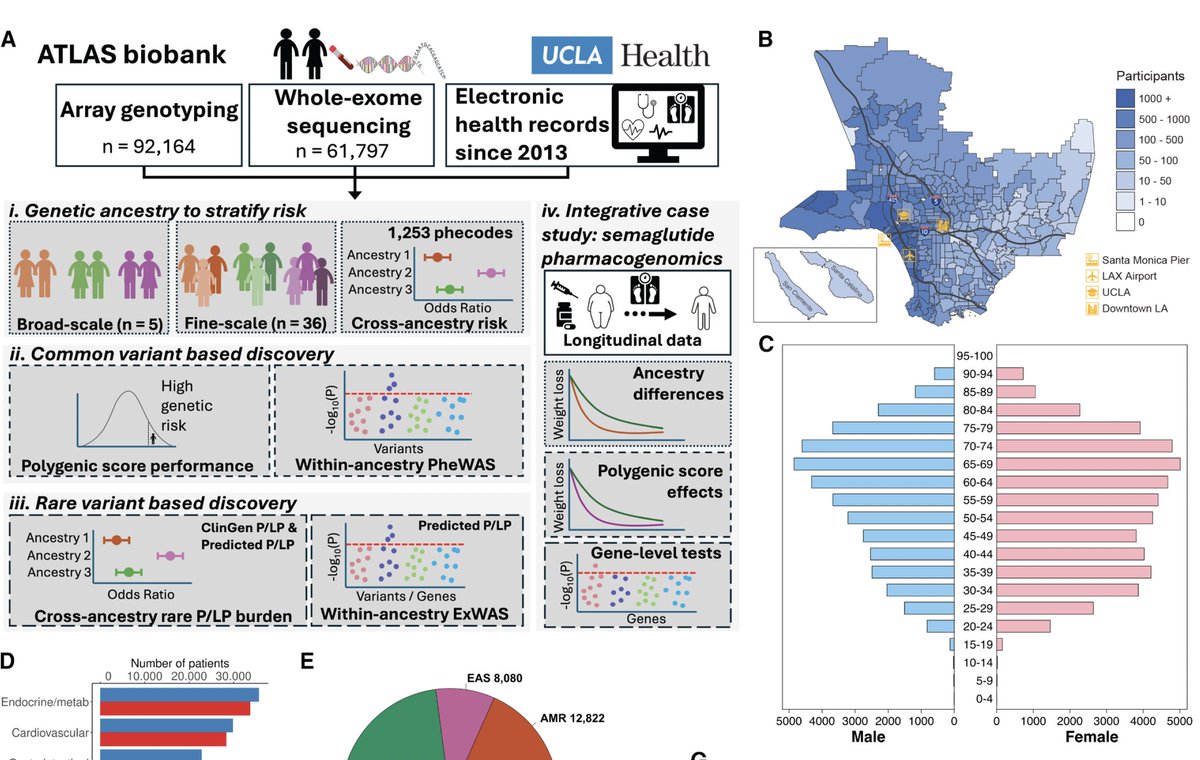
Advancing precision health discovery in a genetically diverse health system
https://t.co/OWLbJh3BIc #PM101
"These findings illustrate how ancestrally diverse biobanks from a single health system yield robust disease associations and pharmacogenomic insights."
Sci-Hub is an evil website that pirated 85M+ research papers and made them freely available
And now they've added AI to their database to make Sci-Bot.
It answers your questions using latest, full-text articles.
But DO NOT use it. We should all try to make billion-dollar academic publishers richer.
I'm putting the link below so you know how to avoid it.
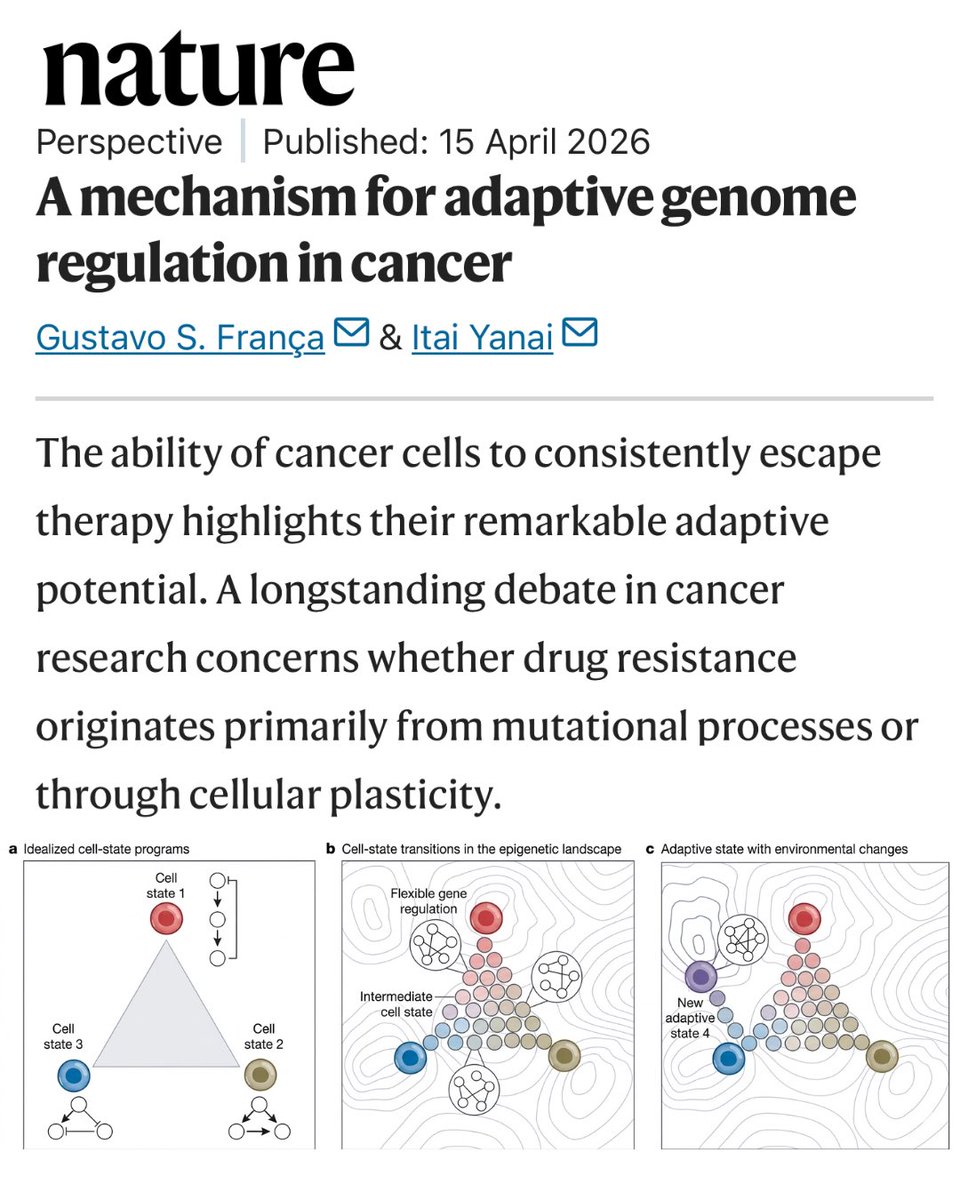
New research in Nature suggests cancer cells can learn to resist therapy, not by mutating, but by reprogramming themselves.
In #lungcancer, resistance to targeted treatments is a significant challenge. Understanding how this happens is an important step in the search for better treatment
🔗 https://t.co/RvSA6FljUj #LCSM
Now out in @GenomeBiology!
HistoGWAS combines histology foundation models, statistical genetics and generative AI to characterize variant effects on tissue morphology, enabling genetic analysis at the tissue scale.
Led by @skc_2017@HelmholtzMunich@PioneerCampus
Watch this great video that Dr. Ashley Kiemen has made.
It shows how we use AI to map individual immune cells in the vicinity of precancerous lesions of the human pancreas (PanINs).
More here: https://t.co/I67TTPPwMm
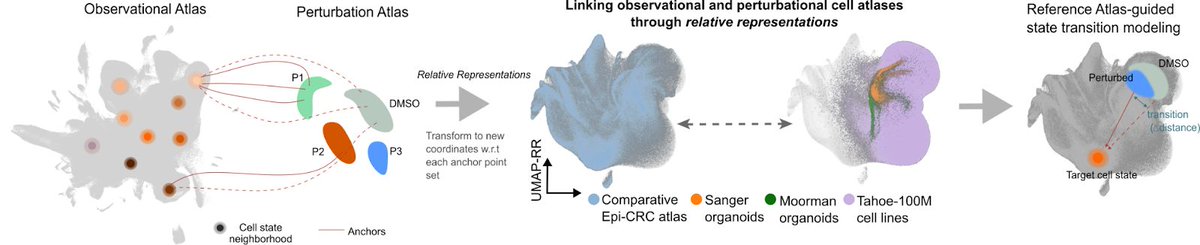
New preprint with Garnett lab 🚀: from descriptive → causal single-cell atlases in CRC.We build the largest CRC atlas (>300 pts, 1.5M cells) using continual learning, and link cell states to causal drivers via Tahoe-100M, validated in organoids! https://t.co/WTKMeKCjWS
I wrote an implementation of HDBSCAN with cannot-link constraints. If you have a clustering problem with known connectivity patterns in it, check it out.
https://t.co/rigDisLqpO