@wrelagf You can pay with a check or money order as an alternative. When you pay with a card, there is always a payment processor that takes a cut. It just happens to be Paypal in this case. You don't need a Paypal account to pay with your card though.
About 3,600 seeds of yacon (Smallanthus sonchifolius). These are collected from first and second year clones that have been selected for earliness, flowering & seed set, sweetness, and root color. This is the first year making much selection.
Some seedling mashuas. These are a mix of open pollinated progeny from Okeho, Ahahawat, and Satop. It is very hard to pick winners with mashua seedlings, so I will grow everything again from tubers next year.
Fina de Carballo, a Spanish heirloom potato from the Galicia region. Its origin is unknown, but its traits are consistent with Chilean ancestry. It has very good flavor but low yield, no noticeable disease resistances, and is barely fertile enough to work with.
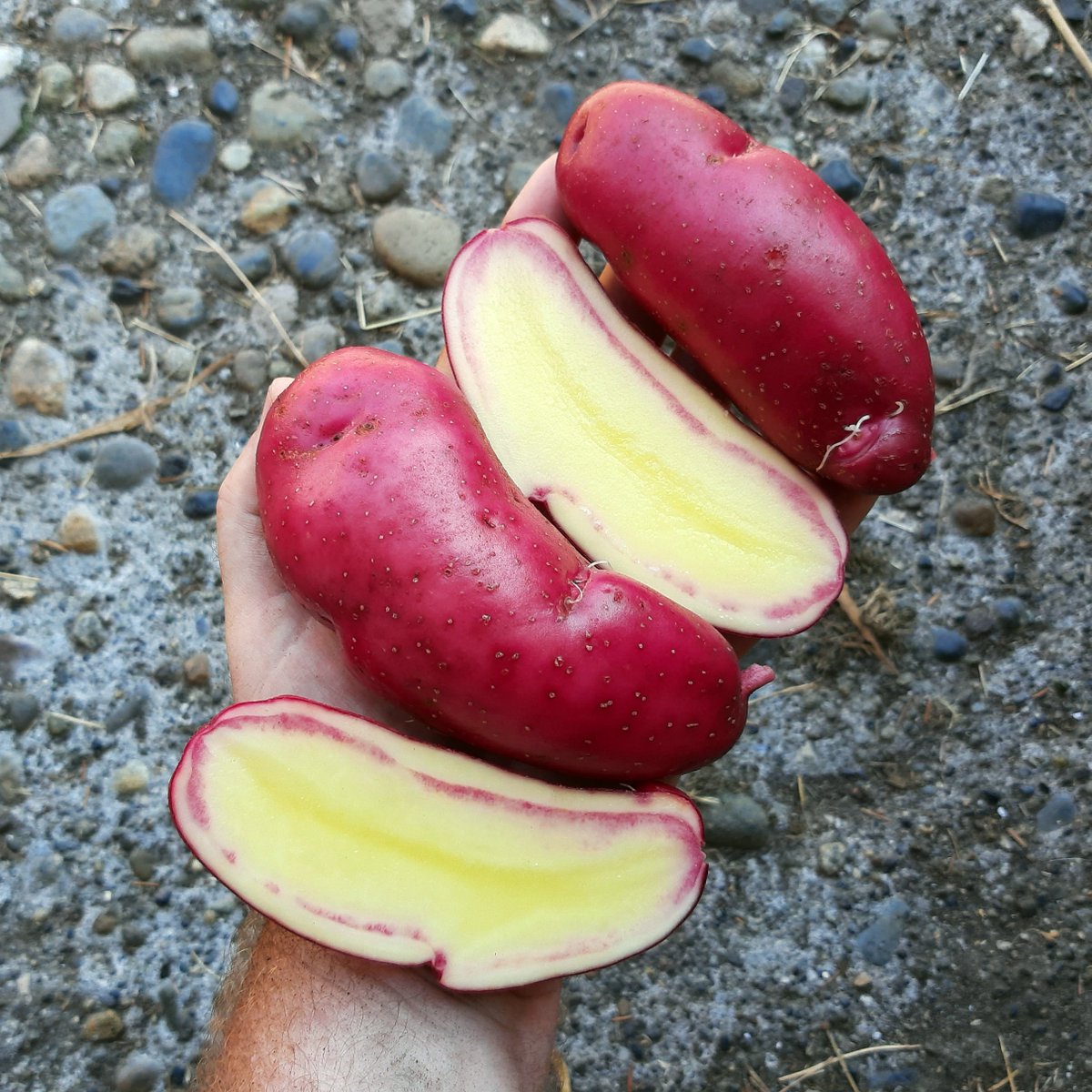
Another keeper, although I am a little disappointed with this one because it was showing some scab despite two resistant parents. This is BS278 x Bloody Banana, a tuberosum haploid crossed with a domesticated diploid variety.
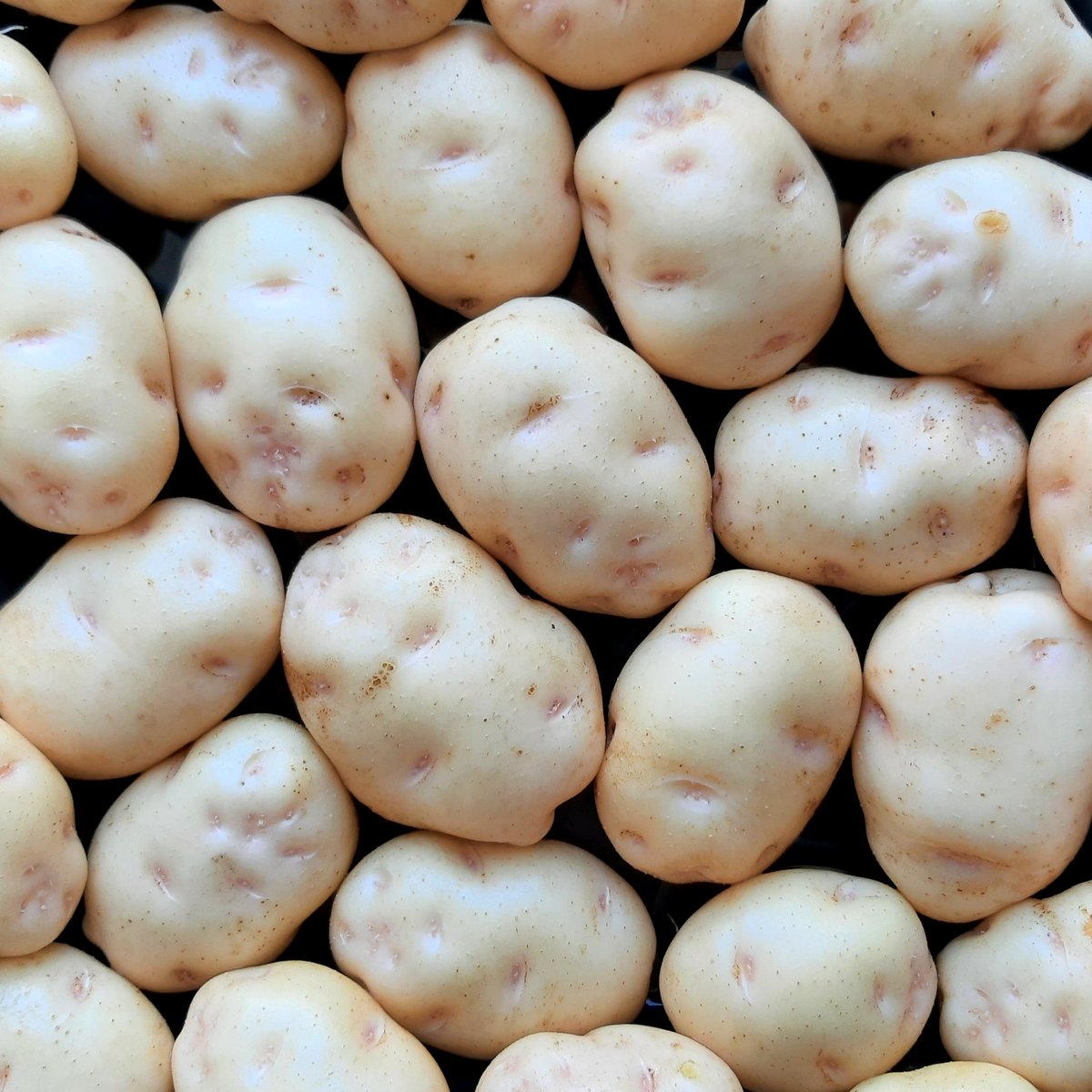
First new potato of the year that is a keeper. Deeper yellow flesh than the picture captured. Waxy texture and excellent flavor. I'd prefer more uniform size, but these were grown under dry conditions and may perform better with normal soil moisture. Diploid out of Jancko Phinu.
This is what it looks like when a potato has no dormancy. These plants just started dying back and the tubers are already sprouting. Not a useful trait in my climate, but it can be in frost free climates. This is a 2021 seedling out of Jancko Phinu.
Ozette, a pacific northwest heirloom potato. Like most potatoes of Chilean origin, it is male sterile and cannot self pollinate. It also has poor female fertility, so the flowers tend to drop even when pollinated. I keep trying though and get the occasional berry for the effort.
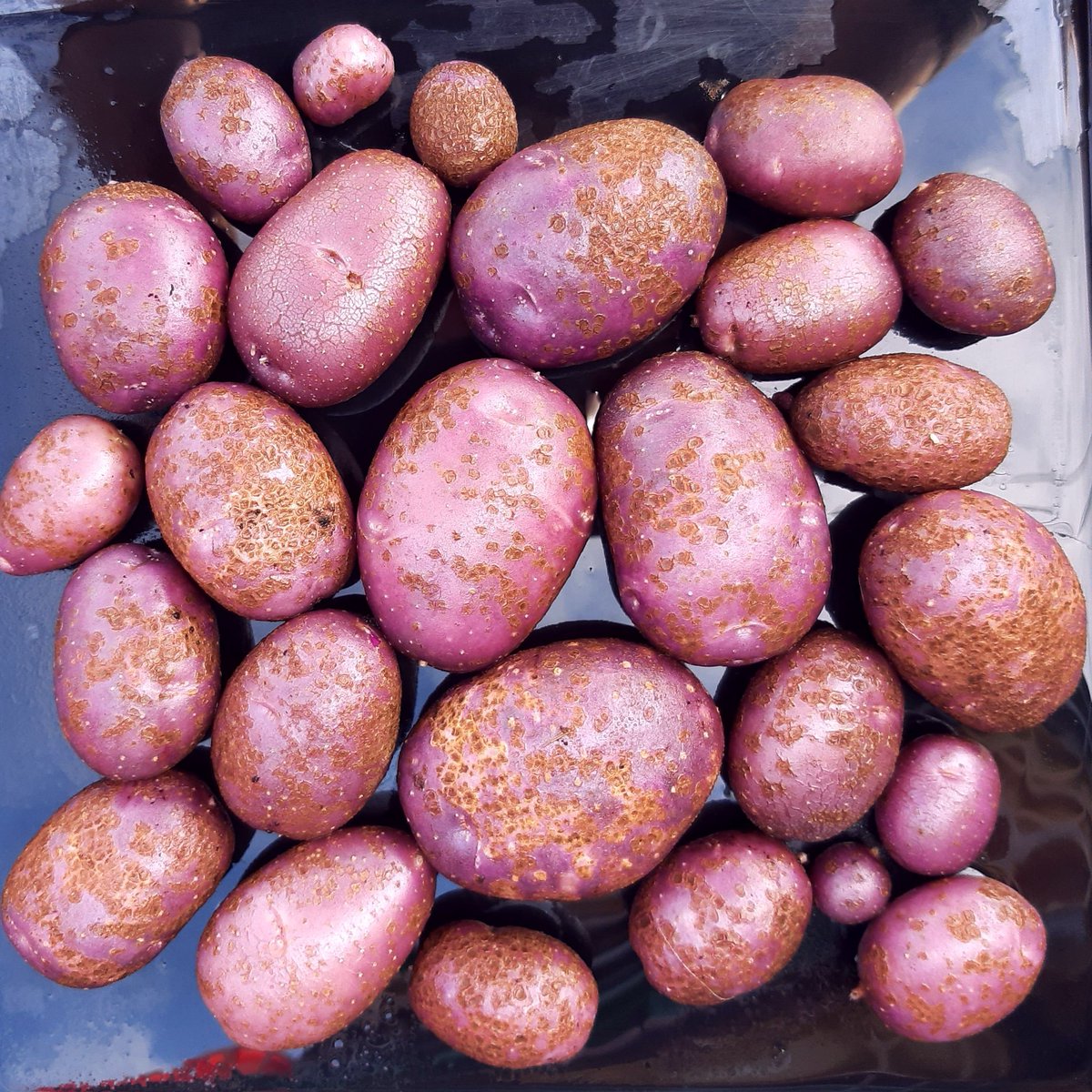
First potato of the year is disappointing. That's normal. I usually show the few that I select to keep, but there are 100s that I discard for each one of those. This 2021 seedling performed well last year and had good flavor, but 2022 yield of four plants was less than 2 lbs.
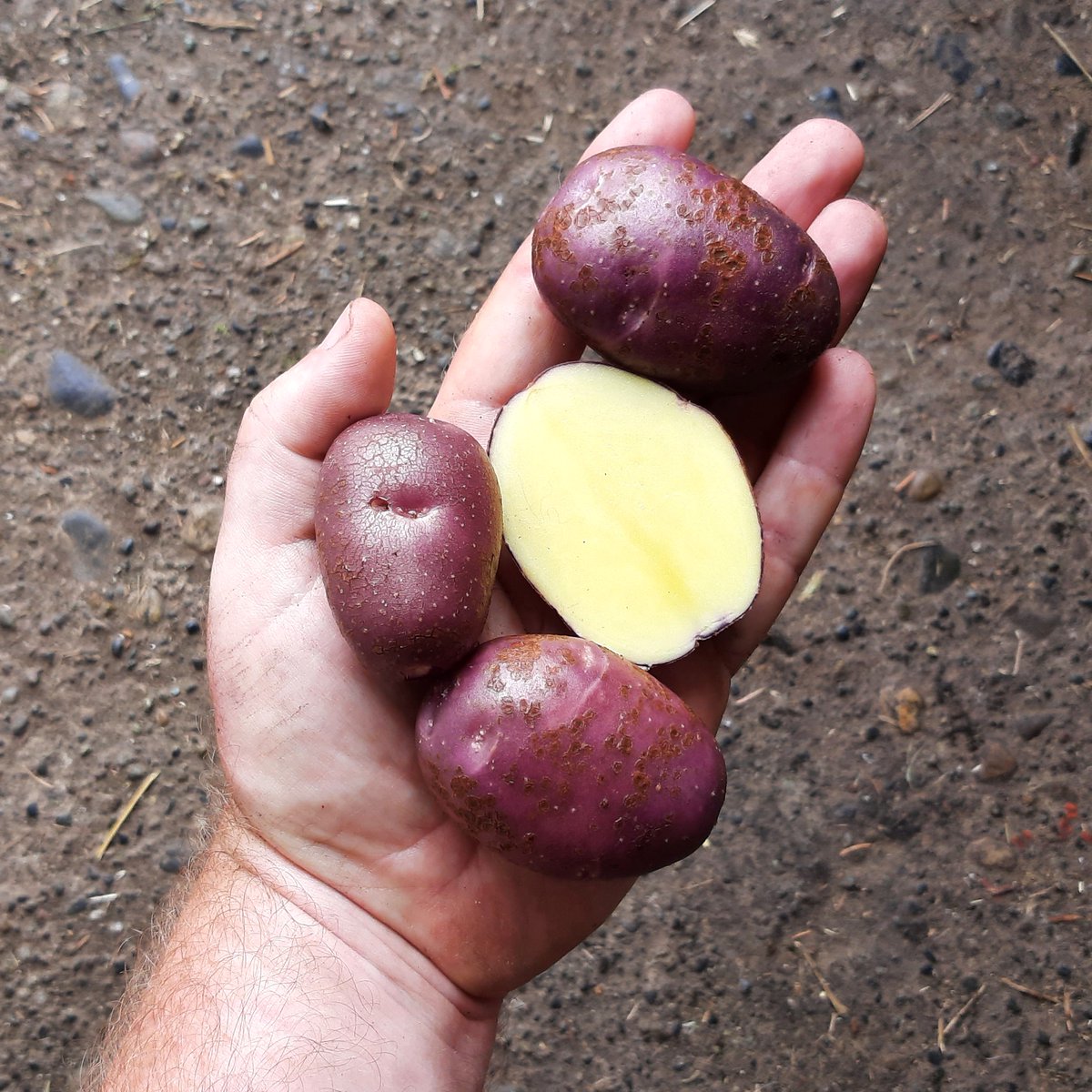
Gunter Blue x Loowit, a 2021 seedling getting a second look. Crossing a red flesh potato to a blue flesh potato in the hope of red flesh is a gamble, but it worked out. This indicates that Gunter Blue is not quadruplex/homozygous for blue since blue is epistatic to red.
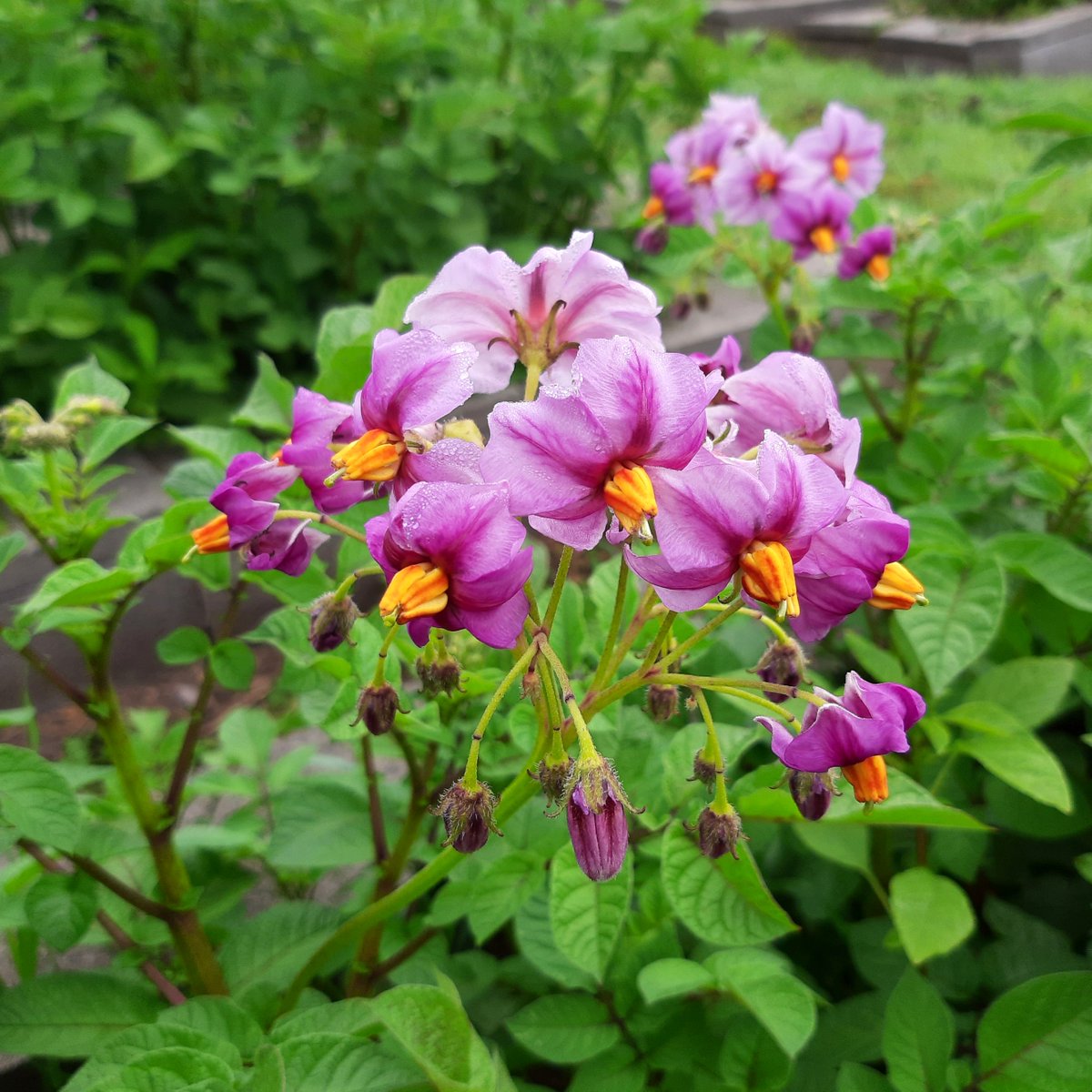
Some Monday morning potato flowers. A domesticated diploid in heavy flower; Myatt's Ashleaf, an 1804 English heirloom; a red flesh seeding out of Loowit; and Twanoh y Azul, a cross between a S. acroscopicum hybrid and a blue flesh variety from Tom Wagner.
This is what two hours of pollen collection from about 1000 potato plants looks like. It will take about the same amount of time to go back through and perform the pollinations.
Potato flowers can get surprisingly big. Maybe 1 in 1000 plants will have a flower of this size. This is a Yungay x Yana Condori seedling. Hoping for very yellow flesh with a little red in addition to that big flower.
First flower on this 2021 seedling out of my Valparaiso potato, a cross with the wild potato species Solanum maglia. The foliage on this one is more reminiscent of a wild potato than a domesticated and yet not that much like S. maglia. Surprising traits can show up in hybrids.
This potato seedling out of Tom Wagner's Azul Toro is getting a four plant trial this year. Not the bluest of the batch, but it was the bluest to yield over 3lb as a seedling, so I have high hopes for it.
@Monkeyatron@UrsulaV Yes, chuño is made primarily from two species related to the common domesticated potato: Solanum curtilobum and S. juzepczukii. https://t.co/keEMfwSRhm
https://t.co/ObmIGMh2RH
These are rarely grown outside the most marginal elevations in the Andes.
@UrsulaV Glad you're having fun with them! It is good to be a bit careful, but it takes a lot to poison yourself, unless it is mouth-puckeringly bitter. You would typically have to eat a hundred grams+ of unpleasantly bitter potato before you get sick. More info: https://t.co/HaoMAGdh80
@BuildSoil @sannewman Potatoes were always a very colorful and diverse crop until Europeans got their hands on them and selected them for white uniformity. It seems like it should be a joke, but it is true. Modern potatoes do have a big yield advantage, but charisma loss is harder to quantify.
@natabone@coueslana@Rabbit__Fighter@cvnteastwood@rogerthatbee@DertGroe@Chinchillazllla The odds that you will find even old heirlooms with dangerous levels of glycoalkaloid are really low. If you store them properly, don't eat diseased potatoes, and don't eat potatoes that taste bitter, your risk level is minimal. We've learned a lot in the last 100 years.