Dear @harari_yuval, so many thanks for engaging in this fascinating and transcendental debate. We are at a dawn of a new age, which places us, I believe, in a place not that that different from the one you yourself described so well in Homo Sapiens and your other books: that time when humans used fictions to organize our collective work and profit from technology. Now we need more than ever all our intelligence to build the framework that will allow us to benefit from the amazing opportunities we have ahead. Already preparing my reply to see if I we can appease your fears about the path I proposed last week!
Last week, Argentina’s President Milei announced a new legal category for non-human corporations – companies run by #AI agents or robots. Like traditional corporations, they would be granted legal personhood. This could generate enormous new wealth, but very worryingly, it would also hand AIs an all-purpose key that grants access to our financial, economic and political systems. Full op-ed in today's @FT: https://t.co/w6DzOwByiq
El control de alquileres, en Massachusetts 🇺🇸 como en cualquier otro lado del mundo, perjudicaría a las personas a las que pretende ayudar.
@jeffreyamiron y Jonah Karafiol ✍️ https://t.co/MCYQtOlVyJ
🚨 🏦 SEÑORES BCRA acaba de aprobar nuestra adquisición de Banco Voii y la transacción ingresó en su etapa final!!!!!!!!
Una aprobación clave para seguir construyendo un sistema financiero más competitivo e innovador.
Empezamos como los chicos de Instagram. Hoy somos un grupo financiero que administra más de USD 2.000 millones, tiene 2 millones de usuarios y más de 2.300 empresas e instituciones.
Este paso nos permitirá seguir ampliando nuestra propuesta de valor y sumar nuevas soluciones para nuestros usuarios, todo construido con capital propio. Sin inversión externa.
SE RECONTRA VIENE!
A Brazilian coffee farmer earns about 7 dollars for one kilogram of green coffee beans.
After roasting, blending, and branding, that same coffee retails in the United States for around 20 to 25 dollars per kilogram in a Lavazza tin.
Italy does not produce a single coffee bean.
Not one coffee tree grows on Italian soil.
Italy imports about 240,000 tonnes of Brazilian coffee every year, more than from any other country.
Brazil is the largest single origin in nearly every famous Italian espresso blend.
Lavazza Crema e Gusto is Brazilian Arabica with African and Indonesian Robusta.
Their Qualità Rossa blend uses Brazilian Arabica with African Robusta.
Illy's classic blend of 9 Arabicas is anchored by Brazilian beans.
Segafredo even operates a coffee plantation and processing plant inside Brazil to handle its own green beans.
Italy is now the second-largest roasted coffee exporter on Earth, with nearly 2.9 billion dollars in coffee exports in 2024.
That entire export industry runs on beans that were never Italian.
The Brazilian farmer captures roughly 10 percent of the final retail price of a bag of Italian-branded coffee.
The Italian roaster, distributor, and brand capture the other 90 percent.
The Italian coffee identity is one of the most successful branding operations in the history of global commerce.
It was built on a supply chain that runs through Minas Gerais, Espírito Santo, and the Cerrado.
The next time you pay a premium for Italian coffee, remember that no country supplies more of those beans than Brazil.
Plans released for a $16 billion mile-long ship capable of carrying 80,000 people.
The 'Freedom Ship' would be home to about 50,000 people, with space for 10,000 tourists and 20,000 crew members.
"The Freedom Ship is envisioned as a permanently mobile city at sea designed for long-term residence rather than short-term travel," the company says.
The ship would be about 8 times the size of the current largest ship in the world, the Royal Caribbean’s Icon of the Seas.
The plans include a 15,000-seat stadium, schools, colleges, shops, clubs, a water park, a music hall, museums, parks, and more.
The ship, which would run on nuclear, would be too large to dock and would remain in international waters.
Freedom Cruise International says it would go around the world every two to three years.
Insane.
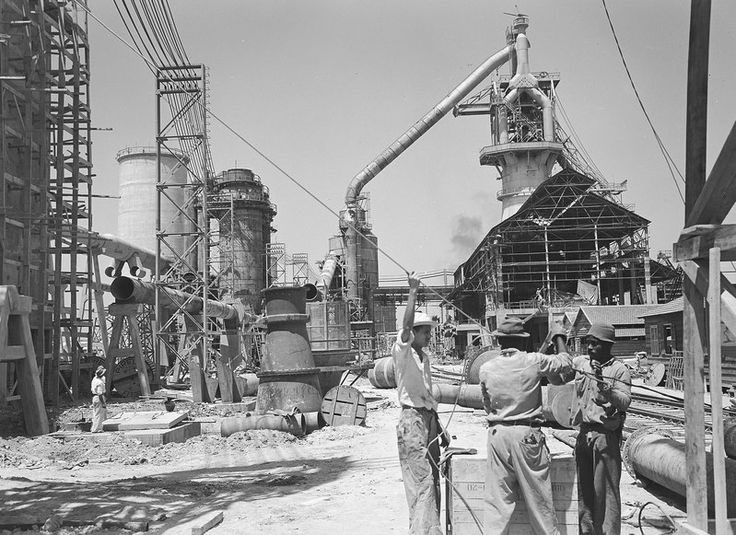
The United States once paid Brazil to build a steel mill.
In 1940, the U.S. Export-Import Bank authorized a $25 million dollar credit to build Brazil's first integrated steel mill.
In 1943, Eximbank added another $20 million dollars for equipment and construction.
The total Eximbank financing reached $45 million dollars, making it the bank's first industrial development project anywhere in the world.
The loan was part of a deal called the Washington Accords.
In exchange, Brazil gave the U.S. air base access in the Northeast to hunt German submarines in the South Atlantic.
The largest of those bases, Parnamirim Field in Natal, became known as the Trampoline to Victory.
The plant was called Companhia Siderúrgica Nacional, or CSN.
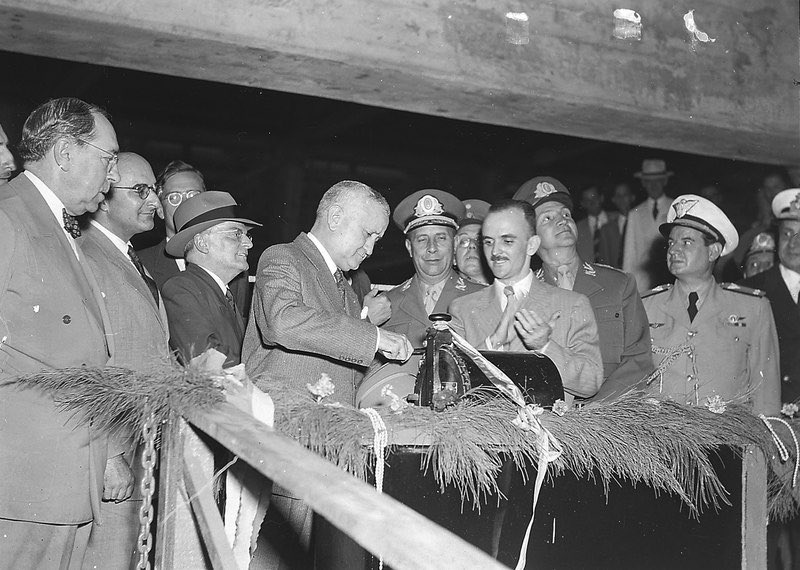
It was founded by presidential decree on April 9, 1941, signed by President Getúlio Vargas.
Construction started in Volta Redonda, about 75 miles west of Rio de Janeiro.
Roughly 10,000 workers were mobilized to build it.
The first steel rolled off the line in 1946, under President Eurico Dutra.
CSN became Brazil's largest steel producer, and Volta Redonda became Brazil's first industrial city.
The mill that built modern Brazil was paid for by an American wartime decision.
After many conversations over past year with friends, business associates & policymakers about the future of AI job disruption, I’ve tried to get my thoughts in order. With the caveat that I have no specific AI expertise, here they are. Comments and corrections encouraged.🧵
1/n
Dos buenas noticias 👇
1) Gobierno reglamentó la exención del Impuesto a las Ganancias para alquileres destinados a vivienda y ventas de inmuebles: la medida rige desde el 1 de enero de 2026
Beneficia a personas humanas y sucesiones indivisas, tanto residentes como no residentes.
2) el gobierno reglamentó el FAL. Fondo de asistencia Laboral
Proposed law for Argentine Corporate entities. @JMilei@PanteraCapital@fedesturze
Moves Argentina from a rigid and anachronistic regime, built on distrust of the private sector, to a modern framework based on autonomy, freedom and deregulation.
Key changes:
The State's guardianship of how the partners organize their businesses is over. The rules of the law create context: the company statute reigns. State restrictions shall be exceptional and of restrictive interpretation. Public registries may not issue resolutions that limit what the law permits.
Bureaucratic obstacles of the registries are eliminated. The corporate purpose may be broad, plural and without the obligation of connection between activities. And if it is not stated in the statute, it is understood that the company can carry out any lawful activity. This is essential in a world as changing as the one we live in. It also implies fewer bureaucratic obstacles and more freedom to work.
Companies may choose to subject their disputes to foreign jurisdictions or to international commercial courts for resolution, bypassing local legal system.
And they may also agree on arbitration clauses in the company statutes to resolve disputes without depending on the speed or trustworthiness of local legal system. This type of freedom of contract has been the pillar of other global business centers such as Dubai. In Dubai, corporate relations are settled according to the corporate law that the partners choose.
The same will happen now in Argentina.
Everything that was expected of digitization is achieved here. We allow the full digitization of the company: electronic address, digital books and records, remote assemblies, constitution of the company by digital or electronic signature, public digital file for each company. With this project, the paper file goes down in history.
In one of the most revolutionary innovations, the law would permit companies that operate under automation and decentralization schemes. The "Automated Company", which operates using algorithms or AI without requiring employees for its ordinary operation, and the "DAO", which are totally or partially autonomous, with participations in tokens and records in blockchain, are permitted.
Both now have full legal identity and limited liability.
To understand the relevance of this innovation, the example of Ireland is worth review. A few years ago Ireland built an appropriate legal and fiscal regime for foreign direct investment and became a mecca of intellectual property companies and those seeking to establish themselves in Europe. (For example, the company that owns the software of all iPhones in the world is an Irish subsidiary of Apple, so every iPhone sold in the world pays a royalty to that Irish company, which, in turn, pays taxes in Ireland). We intend that same global attraction for Argentina related to AI companies.
The bill has a number of other modernizations. Incorporates convertible investment instruments. The investor contributes capital without being a partner or taking liability for the company's debts until they decide to exercise his right of participation. The automatic renewal of the term of the company is also enabled and it is established that the mandates of directors and trustees are for an indefinite period by default, unless otherwise agreed. Simplifies business reorganization. If a company owns 100% of another, the administrative body can absorb it directly, without the need for duplicate assembly resolutions. Zero bureaucracy for corporate groups.
All this brings the scope of freedom to corporate law. Less arbitrary controls by bureaucrats, fewer transaction costs and more freedom to compete in the world.
With this reform, Argentina adapts its corporate law to the economy of the 21st century and tells the world: come and invest in Argentina.
"There's so much wisdom in books for investing."
Dan Loeb's (@DanielSLoeb1) book recommendations:
1) You Can Be a Stock Market Genius, Joel Greenblatt
"The best book about event-driven investing, and it's still relevant today. Most of the people I know in that world use it as their framework."
2) Quality Investing, Lawrence A. Cunningham
"The most influential and eye-opening book. It lays out the idea of super high-quality businesses with good moats and high return on capital that you might want to own for many, many years."
3) Reminiscences of a Stock Operator, Edwin Lefèvre
"One of my favorite books. It quotes Ecclesiastes as saying there's nothing new under the sun. And the question is, will AI take human nature and the flaws in human emotion out of the investment process? It will test the theory that there's nothing new under the sun."
4) Essentialism, Greg McKeown (h/t @altcap)
"With the pace of change brought about by AI, it's even more important to adopt this idea of essentialism because you can't do it all. You have to figure out the things that are most important to what you do."
5) The Outsiders, Will Thorndike
"To understand capital allocation along with great operations. So companies like Danaher, TransDigm, and others."
LEY DE SOCIEDADES. Como indica el Jefe de Gabinete @madorni, el presidente @JMilei está enviando al Congreso un proyecto de reforma de la Ley General de Sociedades del presidente Lanusse, que nos debíamos hace tiempo. Se suma al conjunto de reformas muy profundas que estamos implementando y que van a consolidar la trayectoria de crecimiento que ya venimos transitando.
El proyecto nos mueve de un régimen rígido y anacrónico, construido sobre la desconfianza al sector privado, a un marco moderno basado en la autonomía, la libertad y la desregulación. Estos son los cambios clave:
Se termina la tutela del Estado sobre cómo los socios organizan sus negocios. Las normas de la ley pasan a ser supletorias: el estatuto manda. Las restricciones estatales serán excepcionales y de interpretación restrictiva. Los registros públicos no podrán dictar resoluciones que limiten lo que la ley permite.
Se eliminan las trabas burocráticas de los registros. El objeto social podrá ser amplio, plural y sin obligación de conexidad entre actividades. Y si no se consigna objeto en el estatuto, se entiende que la sociedad puede realizar cualquier actividad lícita. Esto es esencial en un mundo tan cambiante como el que vivimos. También implica menos trabas burocráticas y más libertad para trabajar.
Las sociedades podrán someter sus conflictos internos al derecho extranjero o mercantil internacional. Y también podrán pactar cláusulas arbitrales en el estatuto para resolver controversias sin depender de la lentitud de la justicia. Este tipo de libertad de contrato ha sido el pilar de otros centros mundiales de negocios como Dubai. En Dubai las relaciones societarias se dirimen según la ley societaria que los socios eligen. Lo mismo ocurrirá ahora en Argentina.
Todo lo que se esperaba de digitalización se logra acá. Permitimos la digitalización plena de la sociedad: domicilio electrónico, libros y registros digitales, asambleas a distancia, constitución de la sociedad por firma digital o electrónica, legajo digital público para cada empresa. Con este proyecto, el expediente en papel queda en la historia.
En una de las innovaciones más revolucionarias, distinguimos a las empresas que funcionan bajo esquemas de automatización y descentralización. Se regulan la “Sociedad Automatizada”, que opera mediante algoritmos o IA sin requerir empleados para su operación ordinaria, y las “DAO”, que son total o parcialmente autónomas, con participaciones en tokens y registros en blockchain. Ambas tienen personalidad jurídica plena y responsabilidad limitada.
Para entender la relevancia de esta innovación vale el ejemplo de Irlanda. Hace unos años Irlanda construyó un régimen legal y fiscal apropiado para la inversión extranjera directa y se convirtió en una meca de empresas de propiedad intelectual y de aquellas que buscaban radicarse en Europa. (Por ejemplo, la empresa dueña del software de todos los iPhones en el mundo es una subsidiaria irlandesa de Apple, por lo que todo iPhone que se vende en el mundo le paga una regalía a esa compañía irlandesa, que, a su vez, tributa en Irlanda). Pretendemos esa misma atracción global para Argentina en lo que hace a las empresas de IA. Esta ley, pensamos, lo lograría.
Por supuesto que la ley tiene un sin número de otras modernizaciones. Mencionamos aquí un par. Incorporamos los instrumentos de inversión convertibles. El inversor aporta capital sin ser socio ni responder por deudas de la sociedad hasta que decide ejercer su derecho de participación. También se habilita la renovación automática del plazo de duración de la sociedad y se establece que los mandatos de directores y síndicos sean por tiempo indeterminado por defecto, salvo pacto en contrario. También simplificamos la reorganización empresaria. Si una sociedad es titular del 100% de otra, el órgano de administración puede absorberla directamente, sin necesidad de resoluciones asamblearias duplicadas. Burocracia cero para los grupos societarios. Etc, etc…
En definitiva, llevamos el ámbito de libertad al derecho societario. Menos controles arbitrarios de los burócratas, menos costos de transacción y más libertad para competir en el mundo. Con esta reforma, Argentina adapta su derecho societario a la economía del siglo XXI y le dice al mundo: vengan a invertir acá.
Impresionante el trabajo que hizo la Secretaría Legal y Técnica a cargo de María Ibarzabal para preparar este proyecto de ley que es, a mi entender, revolucionario. Sobre la versión inicial pudimos luego contribuir desde el resto del gobierno, en particular desde @MinDesreg_Ar y @MinJusticia_Ar. En esa interacción tuvimos la suerte de interactuar con profesionales de esos que te vuelan la cabeza, te cambian los esquemas y te permiten ver las cosas con una nueva óptica como Sebastián Balbín y @chuleramirez. De mi equipo quiero agradecer a @MaxiFarina, Secretario de Transformación, a @alejandrocacace, Secretario de Desregulación y a @Maximomartin que hizo la parada en las reuniones para discutir la propuesta de la SLyT. También a Marcelo Hernández. Que gran equipo! Ahora al debate parlamentario! VLLC!
CHRIS HOHN’S INVESTMENT FRAMEWORK: A PRACTICAL GUIDE
Chris Hohn’s framework is best understood as a concentrated, long-duration, quality-value methodology focused on durable economic rents. It is not conventional growth investing, not classic deep value, not factor investing, and not catalyst-driven activism as a primary strategy. The core objective is to identify a small number of businesses whose future economics are unusually predictable because their profit pools are protected by high barriers to entry, essential customer demand, pricing power, switching costs, irreplaceable assets, or structural market positions.
TCI’s own public description is highly consistent with the podcast: the firm says it invests globally in strong businesses with sustainable competitive advantages, uses a private-equity approach, conducts deep fundamental research, constructively engages with management, adopts a long-term horizon, and uses activism when appropriate. TCI also states that its master fund is highly concentrated to maximize alpha.
The framework below is a reconstruction from Hohn’s public comments, the NBIM interview, TCI’s public materials, and observable portfolio/engagement behavior. It should be treated as an analytical operating system rather than a literal proprietary TCI checklist.
THE CORE IDEA
Hohn’s investment methodology can be reduced to 1 governing question:
Can this business protect and grow its economic surplus for a very long time without being competed, substituted, regulated, levered, or mismanaged into mediocrity?
That question dominates everything else. Growth, valuation, management, capital intensity, accounting metrics, and catalysts are secondary until the durability of the business has been established.
The hierarchy is:
* 1st: barriers to entry
* 2nd: essentiality of the product or service
* 3rd: pricing power
* 4th: confidence that the business will still matter in 10, 20, or 30 years
* 5th: free cash flow conversion and return on incremental capital
* 6th: governance and capital allocation
* 7th: valuation
* 8th: position size
* 9th: activism or engagement only if it can improve or protect intrinsic value
This hierarchy is important because many investors invert it. They start with valuation, growth, earnings revisions, factor exposure, or near-term catalysts. Hohn starts with business permanence.
1. THE FIRST FILTER: IS THIS A GOOD BUSINESS OR A BAD BUSINESS?
Hohn’s process begins with exclusion. The first analytical act is not to find upside; it is to eliminate businesses where the odds of durable compounding are structurally poor.
A. The investable company must pass the “business quality before valuation” test
A company is not investable merely because it is cheap. It must first be capable of sustaining economic profits.
The key questions are:
* Why does this company earn attractive returns?
* Why have competitors not competed those returns away?
* Why will customers still need this product or service in 10 years?
* Why will the product not be substituted?
* Why will regulators not confiscate the economics?
* Why will management not destroy value through leverage, acquisitions, or poor governance?
* Why is the current valuation attractive relative to long-term intrinsic value, not just near-term earnings?
A company can trade at a low multiple and still be uninvestable if the business is structurally bad. Hohn’s approach rejects the idea that “cheap” is enough.
B. The investable universe is deliberately small
The framework assumes that most industries are not worth owning for the long term. That is a major source of discipline. Hohn’s implicit view is that the public equity universe contains a small subset of exceptional businesses and a very large number of average, cyclical, commoditized, levered, or easily disrupted businesses.
This is visible in TCI’s disclosed U.S. holdings. TCI’s Q1 2026 13F disclosed only 10 U.S.-listed positions: Alphabet, Canadian National Railway, Canadian Pacific Kansas City, GE Aerospace, Microsoft, Moody’s, S&P Global, Visa, and Ferrovial. This disclosed book is not the full global portfolio, but it shows the pattern: aerospace, payments, ratings, rail infrastructure, software, digital platforms, and infrastructure-linked assets.
The implication is that idea generation should not begin with “what is cheap?” It should begin with “which industries have structural conditions that allow owners to capture economic rents?”
2. INDUSTRY ANALYSIS: START WITH THE PROFIT POOL
A Hohn-style industry analysis starts by mapping the profit pool and asking why it exists.
Key industry questions
* Where does the industry’s profit pool sit?
* Who captures the surplus: suppliers, customers, labor, distributors, regulators, platforms, or shareholders?
* Are profits protected by structure or temporarily elevated by cycle?
* Is the industry consolidated or fragmented?
* Does scale improve economics or merely increase exposure?
* Does demand growth translate into shareholder value, or is it competed away?
* Is pricing rational or promotional?
* Are there structural reasons why new entrants cannot enter?
* Are there structural reasons why customers cannot leave?
* Is the industry vulnerable to substitution from technology, regulation, or changing customer behavior?
* Are returns above cost of capital durable, or do they attract destructive capital?
The Hohn industry lens
Industries fall into 4 broad buckets:
1. Structural compounders
These are the preferred hunting ground.
Typical features:
* High barriers to entry
* Essential demand
* Pricing power
* Low substitution risk
* Strong free cash flow
* Long reinvestment runway
* Rational competition or natural monopoly dynamics
* Ability to hold for many years
Examples from Hohn’s comments and TCI’s observable behavior include:
* Aircraft engines
* Airports
* Railroads
* Payment networks
* Rating agencies
* Exchanges and clearinghouses
* Mission-critical software
* Certain digital platforms
* Toll roads and infrastructure assets
* Transmission and tower-like assets, where economics are protected
2. Good assets with governance or capital-allocation problems
These are high-quality businesses where the market discounts value because management, the board, regulation, or capital allocation creates avoidable risk.
This is the classic TCI engagement setup:
* The underlying asset is good.
* The problem is fixable.
* Shareholder rights can be used.
* The market over-discounts governance risk.
* The investor can influence the outcome.
TCI’s own website says it seeks strong businesses with cheap valuations because they are complicated by corporate governance risk that is misunderstood and over-discounted by the market.
3. Cheap but average or low-quality assets
These can work tactically but are not the core Hohn compounder strategy.
Examples:
* Distressed real estate below replacement cost
* Cyclical assets at liquidation-level valuations
* Bad businesses with credible catalysts
* Deep-value special situations
The problem is that earnings power is hard to forecast. The investment may require a different underwriting style: liquidation value, replacement cost, asset coverage, catalyst probability, or event timing. Hohn acknowledges that this can make money, but it lacks the confidence of owning a truly great business.
4. Structurally bad industries
These are usually rejected outright unless there is an exceptional special situation.
Common reasons for rejection:
* Low barriers to entry
* Commoditized product
* No pricing power
* High leverage
* Opaque accounting
* High capital intensity with poor returns
* Technological substitution
* Poor industry incentives
* Management paid for growth rather than returns
* Profit pools captured by customers, employees, regulators, or suppliers
Hohn specifically criticizes banks, autos, airlines, retail, commodity manufacturing, traditional asset managers, media, advertising agencies, wireless telecom, fossil fuel utilities, tobacco, commodities, and insurance-type businesses. The common theme is not moral judgment; it is poor expected durability of shareholder economics.
3. THE MOAT AUDIT
For Hohn, “moat” is not a branding label. It is the central underwriting variable.
A moat is only real if it prevents competition, substitution, or bargaining-power leakage over a very long period.
The moat must answer 2 questions
* Why is the business difficult to compete with?
* Why is the business difficult to replace?
Competition risk and substitution risk are distinct.
A company can be protected from direct competition but still be substituted. Yellow Pages had local advertising dominance before the internet changed the medium. Traditional TV networks had reach before streaming and digital ads fragmented attention. Search engines can have share dominance but still face AI-driven changes in user behavior and monetization.
The highest-quality moats are usually multi-layered
A business with 1 moat can be fragile. A business with 3 or 4 mutually reinforcing moats is much more attractive.
The preferred profile is:
* Irreplaceable asset
* Essential use case
* Pricing power
* High switching costs
* Scale advantages
* Network effects
* Regulatory or physical barriers
* Strong free cash flow
* Long asset life
* Rational industry structure
The checklist should penalize single-moat stories. A company with only brand, only scale, or only first-mover advantage is usually less attractive than a company with overlapping defenses.
4. MOAT TYPE 1: IRREPLACEABLE PHYSICAL ASSETS
This is one of Hohn’s most distinctive categories. Many public-market investors focus on earnings and ignore physical asset scarcity. Hohn places significant value on assets that are practically impossible to replicate.
Examples
* Airports
* Toll roads
* Railroads
* Transmission networks
* Telecom towers
* Certain ports
* Certain pipeline-like or grid assets
* Critical infrastructure concessions
Why these assets can be exceptional
* They are physically scarce.
* Land, permits, environmental approvals, and local politics prevent replication.
* Building a duplicate asset is often economically irrational.
* Demand may grow while supply is fixed.
* Capacity expansion can be monetized.
* Local monopoly or network economics can persist for decades.
* Replacement cost may be far above book value.
* Cash flows can be predictable if regulation is stable.
Physical asset checklist
* Is the asset physically irreplaceable?
* Could a competitor realistically build a duplicate?
* Would the duplicate have economic rationale?
* Are planning permissions, land rights, environmental approvals, or local opposition barriers?
* Is the asset mission-critical to the economy?
* Is demand structurally growing?
* Does the asset have excess capacity or expansion potential?
* Who regulates pricing?
* Are returns based on a regulatory asset base, concession model, or commercial pricing?
* What portion of economics is regulated versus unregulated?
* Are there non-regulated ancillary revenue streams?
* Is maintenance capex predictable?
* Is growth capex value-accretive or politically mandated?
* Does the asset have social license to earn attractive returns?
* Could political actors fragment, localize, cap, or nationalize economics?
The Aena lesson
Aena illustrates Hohn’s infrastructure methodology. The investment case is not simply “airports are monopolies.” The real analysis is more granular:
* Spain’s airport network is difficult to replicate.
* Commercial revenues may be materially more attractive than regulated landing charges.
* The tariff framework matters.
* Political risk matters.
* Governance structure matters.
* Regulatory stability is required to support capex and financing.
TCI’s 2025 Aena letter shows this exact logic. TCI identified itself as a 6% long-term shareholder, discussed Aena’s €13 billion 2027-2031 investment plan, warned that political or regional interference could damage governance and competitiveness, and called for defense of Aena’s ownership model, regulatory framework, and WACC determination.
The broader lesson: in infrastructure investing, the moat is only as valuable as the legal and regulatory framework that protects it.
5. MOAT TYPE 2: ADVANCED IP AND ENGINEERING COMPLEXITY
Aircraft engines are the canonical example.
Why aircraft engines fit the Hohn framework
* Extreme engineering complexity
* Long certification cycles
* Safety-critical use case
* Very high reliability requirements
* Massive R&D budgets
* Materials science complexity
* Long product lives
* Installed base economics
* Aftermarket parts and service revenues
* Oligopolistic industry structure
* Customers value reliability over lowest price
* Failure risk is reputationally and financially catastrophic
The key insight is that technical complexity creates entry barriers, but the installed base converts those barriers into long-duration economics.
Aircraft engine checklist
* How many credible competitors exist?
* When was the last successful new entrant?
* What certification barriers exist?
* How long are development cycles?
* What is the R&D requirement?
* What is the installed base?
* How much revenue comes from aftermarket parts and services?
* Are spare parts proprietary?
* Are maintenance procedures regulated or OEM-controlled?
* Does the customer prioritize reliability over price?
* What is the competitor reliability record?
* Is there a duopoly, oligopoly, or rational competitive structure?
* Can the OEM price aftermarket services above inflation?
* Are there contractual constraints on aftermarket pricing?
* What is the lifetime engine economics versus original equipment sale economics?
* Are current margins below normalized long-term potential?
* What are the failure modes: technical defect, grounding, warranty claims, fleet disruption, or customer loss?
The key underwriting concept
The engine sale is not the whole economics. The engine is an installed platform. The real profit pool often comes from decades of aftermarket monetization. That is exactly the type of long-duration, hard-to-model economics that short-horizon investors may underappreciate.
6. MOAT TYPE 3: NETWORK EFFECTS
Network effects matter when the value of the product rises with the number, quality, or density of participants.
Examples
* Payment networks
* Exchanges
* Clearinghouses
* Social networks
* Marketplaces
* Certain data platforms
* Certain enterprise ecosystems
Strong network effect characteristics
* More users improve utility for all users.
* Liquidity attracts liquidity.
* Merchants want consumers; consumers want merchant acceptance.
* Buyers attract sellers; sellers attract buyers.
* More data improves product quality.
* More participants reduce friction or improve pricing.
* Switching away creates loss of reach, liquidity, identity, or workflow.
Network effect checklist
* Is the network truly self-reinforcing?
* What metric proves network strength: users, transactions, liquidity, acceptance, nodes, data, merchants, counterparties?
* Does scale improve unit economics?
* Does scale improve customer outcomes?
* Can a new entrant compete by subsidizing one side?
* Are switching costs high?
* Is interoperability mandated or likely to be mandated?
* Are take rates politically or commercially sustainable?
* Does the network control pricing?
* Is the network exposed to bypass risk?
* Could regulation force access, data portability, lower fees, or disintermediation?
* Is the network global, regional, or niche?
* Are there local competitors with superior customer relationships?
* Are there technological alternatives that could reduce the network’s role?
The exchange/clearing lesson
Hohn’s Deutsche Börse, Eurex, LCH, and CME examples are about liquidity as a natural monopoly. In derivatives and clearing, the deepest pool often wins because participants need best execution, lower spreads, margin efficiency, and counterparty confidence. Once liquidity centralizes, it is difficult to move.
The analytical test is not “is this exchange growing?” The test is “is liquidity self-reinforcing and economically captive?”
7. MOAT TYPE 4: SWITCHING COSTS AND INSTALLED BASE
Switching costs are one of the most reliable moats when the product is embedded in mission-critical workflows.
Examples
* Enterprise software
* ERP systems
* Databases
* Payments infrastructure
* Aircraft engines
* Ratings workflows
* Clearing systems
* Industrial control systems
* Security and identity platforms
Switching cost checklist
* What would break if the customer switched?
* How long would migration take?
* What is the implementation cost?
* What is the operational risk of failure?
* How much data is embedded in the system?
* How many workflows depend on it?
* How many employees use it daily?
* Is the product integrated with other systems?
* Does switching require retraining?
* Does switching create compliance, security, or audit risk?
* Is the vendor relationship strategic or transactional?
* Is churn low because customers love the product or because switching is too painful?
* Can the company raise price without causing churn?
* Are customer complaints high despite low churn?
* Could AI or new middleware reduce migration friction?
The Microsoft lesson
Microsoft illustrates the power of installed base plus bundle plus “good enough” product quality. Teams did not need to be clearly superior to Zoom in every dimension if Microsoft could distribute it through the Office/Microsoft 365 ecosystem and make adoption frictionless.
The underwriting insight is that distribution can be a moat. A superior product does not always beat an incumbent if the incumbent controls workflow, procurement, security, identity, and bundling.
8. MOAT TYPE 5: BRAND
Hohn treats brand cautiously. Brand is not automatically a moat.
When brand is valuable
A brand matters when it creates:
* Pricing premium
* Purchase frequency
* Trust
* Habit
* Lower customer acquisition cost
* Channel power
* Global consistency
* Franchisee demand
* Customer willingness to accept price increases
* Defensive resilience in downturns
Brand checklist
* Does the brand support higher prices than peers?
* Does the company retain volume after price increases?
* Does brand strength show up in gross margin?
* Does the brand reduce customer acquisition cost?
* Is the brand global or local?
* Is the brand durable across generations?
* Is the brand linked to habit, trust, or identity?
* Can the brand be damaged by health, regulatory, social, or quality issues?
* Are private-label or lower-cost competitors gaining share?
* Is the brand still relevant to younger customers?
* Does management overestimate brand power?
A weak brand is marketing spend. A strong brand is an economic asset.
9. MOAT TYPE 6: SCALE
Scale matters, but scale alone is not enough.
Good scale
Scale is valuable when it creates:
* Lower unit costs
* Better procurement
* Larger R&D budget
* Stronger distribution
* Better data
* Higher customer trust
* Greater reliability
* Broader product suite
* Better compliance capabilities
* More attractive ecosystem
* Higher switching costs
Bad scale
Scale is not valuable when:
* The product is commoditized.
* Customers can easily multi-source.
* Technology changes the cost curve.
* Scale creates bureaucracy.
* Growth requires low-return capital.
* Large incumbents are disrupted by smaller innovators.
* Regulation caps returns.
* Labor, suppliers, or customers capture the benefit.
Scale checklist
* Does scale improve customer value or only company size?
* Does scale create lower cost or higher price?
* Does scale reinforce another moat?
* Does scale improve data or distribution?
* Does scale increase bargaining power?
* Does scale reduce risk?
* Does scale create regulatory scrutiny?
* Is scale local, regional, or global?
* Could a smaller competitor attack a profitable niche?
* Does AI reduce the historical scale advantage?
Scale is most attractive when combined with switching costs, network effects, regulation, or irreplaceable assets.
10. ESSENTIALITY OVER RECURRING REVENUE
A major Hohn insight is that recurring revenue is useful, but essential revenue is better.
A subscription is not high quality if customers do not need it. A transactional business can be high quality if the transaction is essential and ultimately unavoidable.
Essentiality checklist
* Is the product mission-critical?
* What happens if the customer stops buying?
* Can the customer defer demand indefinitely, or only temporarily?
* Is the product required by regulation, financing, safety, workflow, or customer expectations?
* Does the product protect the customer from a larger risk?
* Is the cost small relative to the value delivered?
* Is the product embedded in customer operations?
* Are alternatives credible?
* Is demand cyclical but inevitable?
* Does the product have a “must-have” rather than “nice-to-have” character?
Ratings agencies as the model
Rating agencies are not perfectly recurring in a quarterly sense because debt issuance and refinancing volumes fluctuate. However, the service is essential to many issuers and investors. Debt maturities eventually need refinancing, many investors require ratings, and capital markets rely on rating opinions as part of the financing ecosystem.
The Hohn-style insight: a temporarily deferrable but ultimately essential service may be better than a recurring but discretionary service.
11. PRICING POWER: THE TRUE MOAT TEST
Pricing power is the highest-quality form of growth because it often carries near-100% incremental margin.
Hohn’s example is mathematically powerful:
* Revenue = 100
* Profit margin = 20%
* Profit = 20
* Price increases by 1% with no volume loss
* Revenue becomes 101
* Profit becomes 21
* Revenue grows 1%
* Profit grows 5%
That is the economic magic of pricing power. A modest price increase can create disproportionate profit growth when incremental cost is minimal.
Pricing power checklist
* Has the company priced above inflation historically?
* Did volumes remain stable after price increases?
* Did customer churn rise?
* Did gross margins expand?
* Did competitors follow pricing?
* Is the product a small cost for the customer but high value?
* Is price regulated?
* Are contracts indexed to inflation?
* Can the company price above contractual indexation?
* Does pricing vary by customer cohort?
* Is price increase visible or hidden through mix, fees, surcharges, or bundling?
* Is price growth coming from true value or from temporary supply shortage?
* Are customers pushing back?
* Are regulators pushing back?
* Could pricing power trigger political backlash?
* Does AI or competition reduce willingness to pay?
Price growth versus volume growth
Hohn’s framework prefers price growth over volume growth when price growth is protected.
Volume growth can be bad if it requires:
* Heavy capex
* Lower pricing
* Customer subsidies
* Working capital absorption
* Higher leverage
* Price competition
* Capacity expansion in a commodity industry
Price growth is superior when:
* Customers cannot easily leave
* The product is essential
* Competitors are rational
* Regulation allows it
* Incremental cost is limited
* Margin expansion follows
The analytical requirement is to split revenue growth into:
* Price
* Volume
* Mix
* M&A
* FX
* Contract indexation
* Regulatory reset
* One-time recovery
A Hohn-style analyst should never accept “revenue growth” as a single variable.
12. CAPITAL INTENSITY: NOT AUTOMATICALLY BAD
Hohn does not reject capital intensity categorically. Some great businesses require substantial capital. The question is whether incremental capital earns attractive, protected returns.
Capital intensity checklist
* What is maintenance capex versus growth capex?
* Is growth capex discretionary or mandatory?
* Is capex regulated into an allowed return?
* Does the company earn above WACC on incremental capital?
* Does capex expand a protected asset base?
* Does capex increase capacity in a rational market?
* Does capex merely maintain competitive parity?
* Is capex vulnerable to cost inflation?
* Are returns delayed by construction risk?
* Are there stranded-asset risks?
* Does the company require leverage to fund growth?
* Does capital intensity reduce free cash flow flexibility?
* Does the capital base create a replacement barrier for entrants?
Infrastructure nuance
An airport may require large capex, but if the asset is irreplaceable and regulation allows fair recovery, capital intensity may strengthen the moat. However, if regulators cap returns, force uneconomic investments, or politicize tariffs, capital intensity becomes a risk.
The Hohn-style question is not “is this capital intensive?” It is “does each incremental dollar of capital deepen the moat and earn an attractive return?”