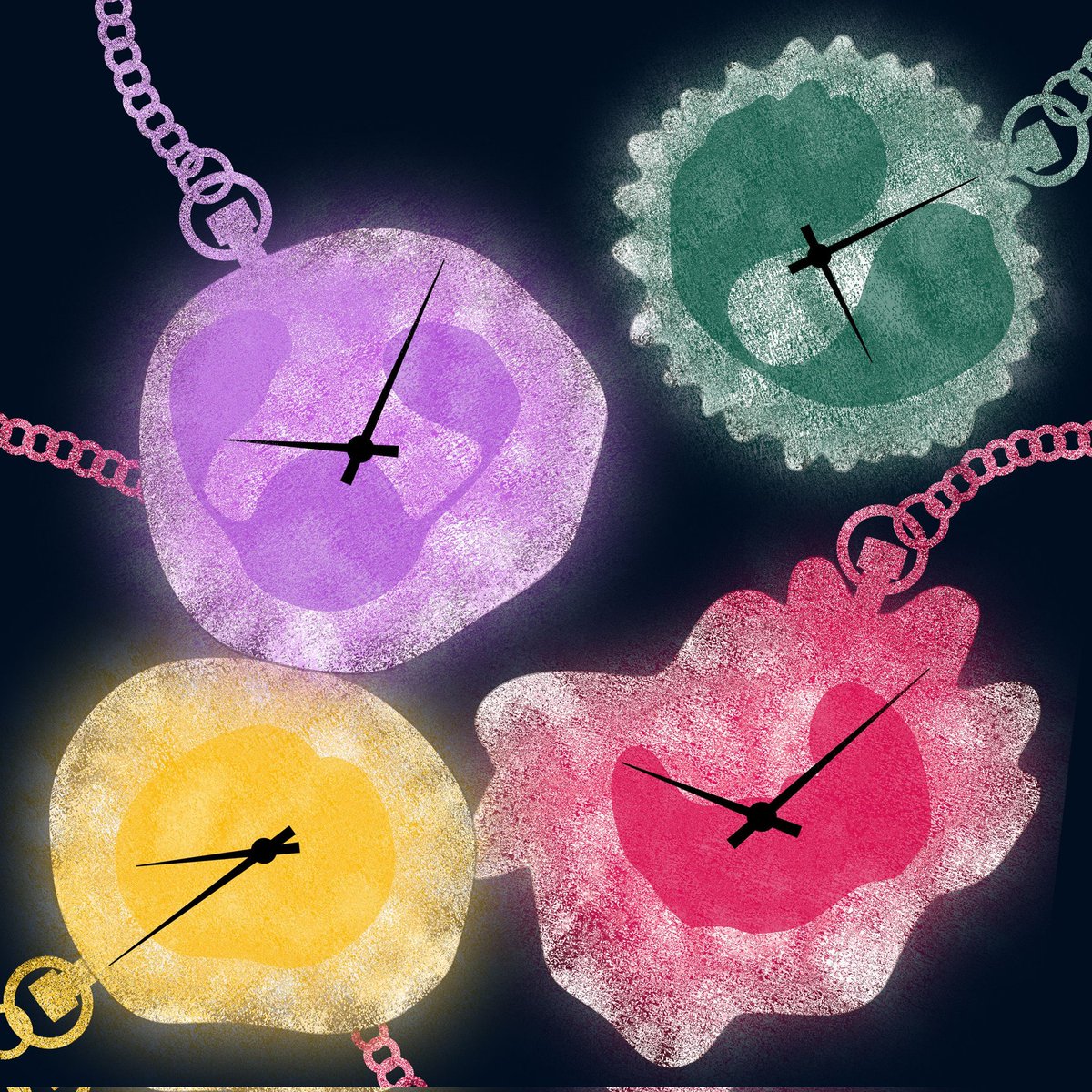
We are very excited to present the development of Zman-seq (“Zman”, Hebrew for “time”), the 1st technology that measures single-cell transcriptomes and physical time in vivo, led by @D_Birschenkaum, @CuriousKX, @FlorianIngelfi1, @AssafWeiner
https://t.co/pDk6ackAtV. (1/19)
https://t.co/QQS4yRjlJ5 On the cover: In this issue of Neuron, Du et al. @DuSiling show that repeated microglial depletion enables peripheral monocytes from both the blood and skull bone marrow to infiltrate the brain and engraft as monocyte-derived macrophages with distinct identities. Inspired by a passage from the Zuo Zhuan (“The first beat of the drum rouses the soldiers’ spirits; the second weakens their resolve; by the third, they are exhausted”), the artwork depicts three rounds of microglial depletion gradually exhausting the endogenous microglial niche. The two advancing armies represent distinct peripheral sources of invading cells: one arriving from the blood, illustrated by the army bearing the red flag, and the other emerging from the skull bone marrow, portrayed as descending from the mountains. Artist credit: Ying Xu.
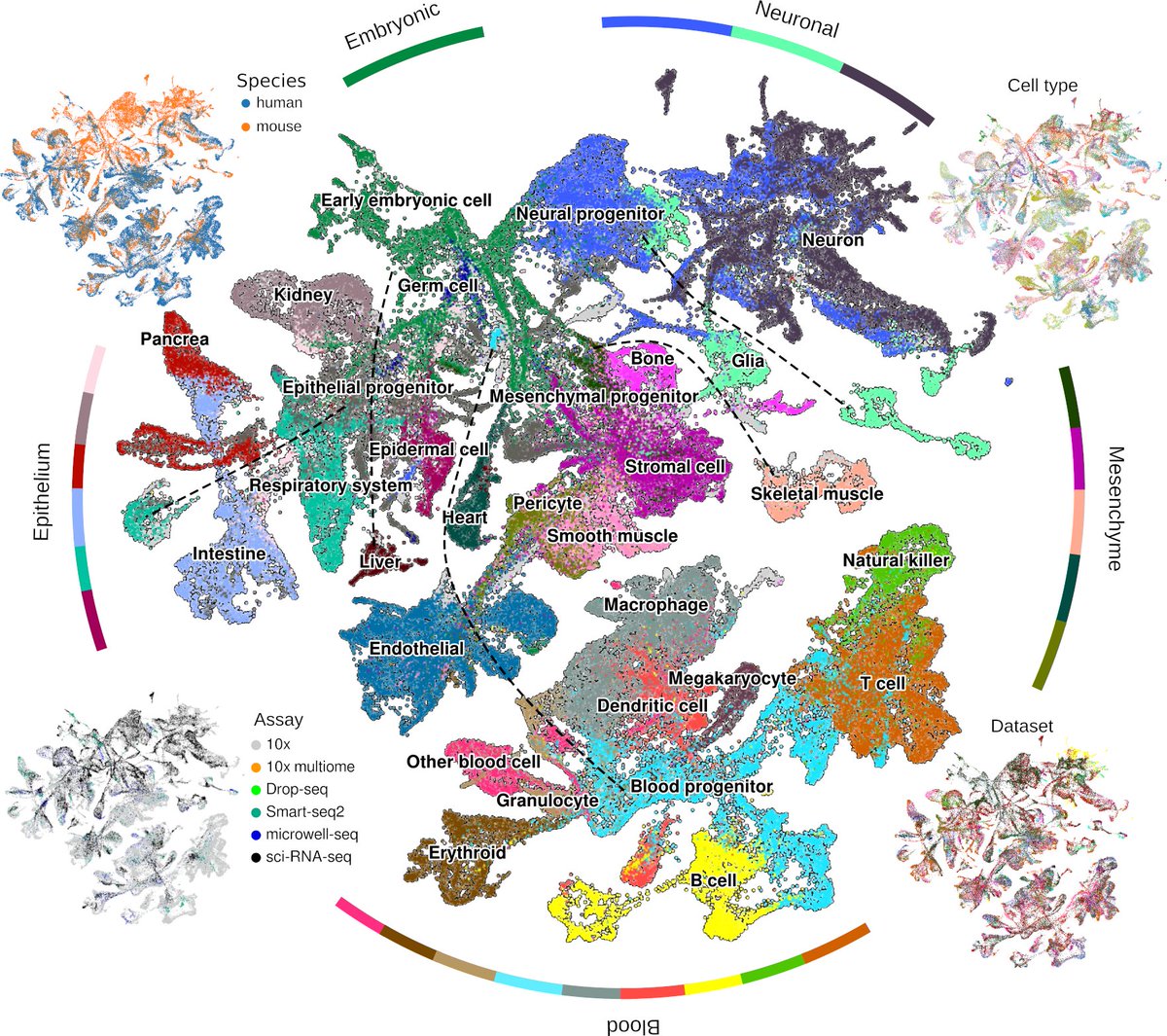
📣 new preprint multimodal atlas. Imaging + scRNA, 57M cells. 🧬🔬
Cells are complex dynamical systems — but most ways we measure them destroy them. We asked: how does live imaging compare to scRNA-seq, the field’s gold std?
The answer surprised us 🧵
https://t.co/RG0PZ1KTHW
🚀 We are introducing PerturbPair (with @TakaKud0) — a platform that combines parallel Perturb-seq and optical pooled screening (OPS/PerturbView) in primary cells to systematically map at massive scale how genetic perturbations reshape cellular states across modalities.
With wonderful collaborators @TakaKud0, @AnaMeireles, @AntRios, @jchuetter, @MinOta, @ORozenblattRosen, @LeviAGarraway, @KGeiger, @avtarsingh, @jkpritch, and Aviv Regev.
Paper link: https://t.co/fnSUymW95s
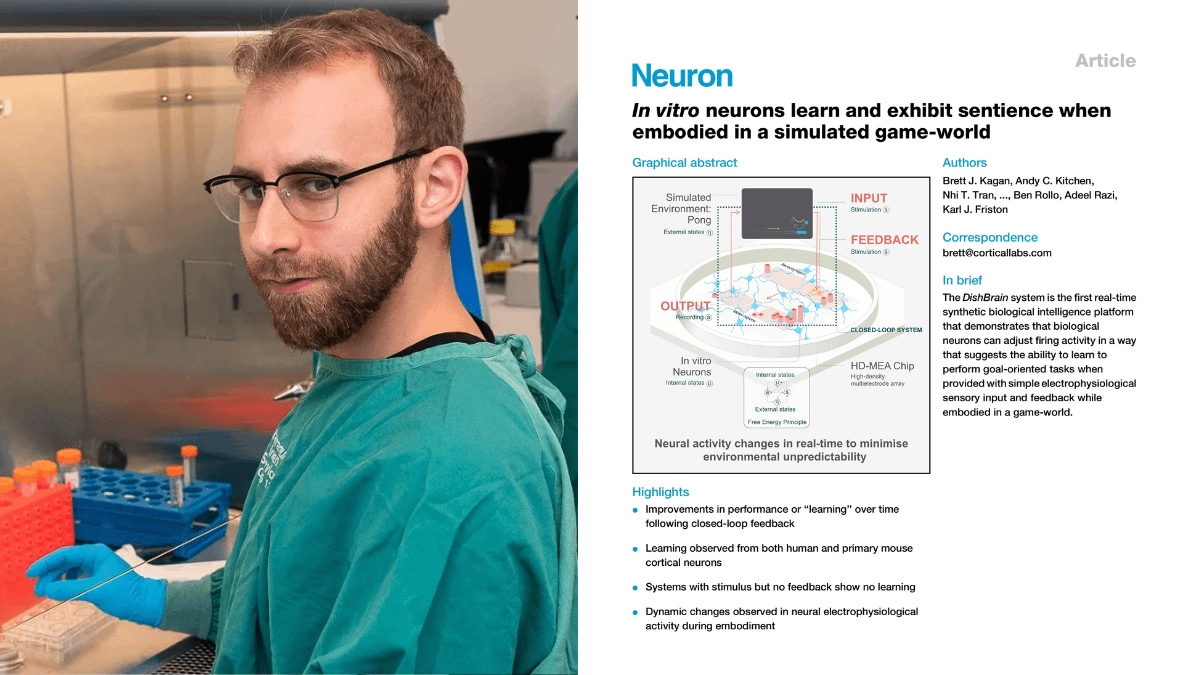
An Australian scientist took 800,000 human brain cells, kept them alive in a dish, wired them to a computer, and taught the cells to play the video game Pong in five minutes, which is faster than any AI on Earth had ever learned the same game.
His name is Brett Kagan.
He runs the science team at a Melbourne company called Cortical Labs, and the paper that broke the story was published in the journal Neuron in October 2022. The title sounds like a science fiction novel. In vitro neurons learn and exhibit sentience when embodied in a simulated game-world.
The setup was simple, and that is what made it so strange.
Kagan and his team took some brain cells from mouse embryos. They took some human brain cells grown from stem cells. They placed them on a chip covered in tiny electrodes, the size of a small coin, and they hooked the chip up to a computer running Pong.
The electrodes could do two things. They could read what the cells were doing. They could also send small bursts of electricity back into the cells.
The team used those two channels to talk to the dish.
When the ball was on the left, they fired the electrodes on the left side of the dish. When the ball was on the right, they fired the electrodes on the right. The closer the ball got to the paddle, the faster they fired. The cells could move the paddle by sending their own signals back.
That was the whole game.
Then the team added one more rule, and this is the part that changed everything.
When the cells missed the ball, they got a random, chaotic burst of electricity for four seconds. Noise. Static. Pure unpredictability. When the cells hit the ball, they got a clean, steady, predictable signal.
That was the only feedback the dish ever received.
Within five minutes, the cells started getting better at the game.
The rallies got longer. The hits got more frequent. The dish was not winning, but it was clearly playing, and it was improving, and nobody had told it the rules.
It had figured them out by itself.
The reason this worked is the part that should stop you for a second.
Brains hate surprise. That is the thing they are built to avoid. Karl Friston, who is one of the most cited neuroscientists alive and a co-author on the paper, has spent his whole career proving this. The brain is not really a thinking machine. It is a prediction machine. It runs on a single quiet rule. Make the world less surprising.
The cells in the dish were doing the same thing.
The chaotic stimulus felt like surprise. The clean stimulus felt like calm. The only way to get more calm and less chaos was to stop missing the ball. So the cells learned to stop missing the ball, not because anyone trained them, and not because they wanted a reward, but because the only way to quiet the noise was to play the game well.
They were not learning Pong. They were learning to make their own world more predictable, and Pong just happened to be the world they were stuck inside.
The same thing your brain is doing right now.
Every choice you make today, every word you reach for, every plan you build for tomorrow, is your brain trying to make the next moment less surprising than the last one. The feeling you call thinking is mostly your head doing the same thing those cells did. Trying to quiet the static.
The dish learned Pong faster than any AI had at the time, using around 800,000 cells and almost no power, while the AI systems running the same game needed thousands of times more energy and far longer training runs.
Kagan said it plainly in his interviews after the paper came out.
He said the cells were not trying to win. They were trying to feel less lost. And the moment he said that, half the room realized he was no longer just describing the dish.
He was describing them.
One of the most important lessons emerging from large-scale CRISPR perturbation studies is that the effect of a perturbation is often highly conditional on cellular state.
The same genetic perturbation can produce markedly different molecular phenotypes even within the same cell type; T cells in the figure.
◻️ Depending on factors such as signaling activity, cell-cycle stage, metabolic state, differentiation status, and environmental context. A perturbation does not act on a static system, it acts on a dynamic cell.
This has important implications for how we interpret perturbation data. A CRISPR screen performed under one condition should not be viewed as revealing a context-independent function of a gene product. Instead, it reveals how that perturbation manifests within a particular cellular state.
We built a joint experimental and computational platform for scalable multi-modal single-cell chemical screens — profiling RNA, protein (including phospho-signaling), and chromatin accessibility responses to thousands of small molecule perturbations in parallel. https://t.co/M5x4CNLCTA
What is the global structure of cell-state space—and how do perturbations drive transitions within it?
Excited to share our new preprint (https://t.co/ZTlAY4eaJf), a work in collaboration with @JswLab.
✨ Thrilled to share our new publication in Nature.
We define an “inflammatory memory” HSC state (HSC‑iM), linking lifelong inflammatory exposure to aging and disease.
📄 Article: https://t.co/7OSZ7uNZHi
Grateful to an incredible team and global collaborators 💚💙
Going from the discovery of epigenetic silencing of CTCF insulators https://t.co/Qyhnk32yKq to aberrant E-P looping https://t.co/RCzXjfZDPB to a successful clinical trial https://t.co/lcO3fZHRj9 all from Brad Bernstein's lab
Today in @Nature, we report MouseMapper: foundation-model AI to map disease perturbations across the entire mouse body cell-by-cell.
In obesity, it revealed body-wide inflammation & unexpected facial nerve damage. 🧵👇🔉
https://t.co/BERf5GQ10Z led by @Dorie00 & @yingchen733
🚨Excited to share our single-cell multi-omic atlas of #stemcell islet differentiation that predicts cell fate decisions and identifies causal regulators of lineage specification. You can start browsing the data now 👉 https://t.co/zIQXlqjlbc Preprint 👉 https://t.co/7gLx7kr6bu
🧬Can chemotherapy response in aggressive breast cancer be predicted from the tumor “ecosystem”?
New @Nature study shows that single-cell RNAseq and spatial transcriptomics can predict response to chemotherapy in triple-negative breast cancer (model reaching AUC = 0.84).
Triple-negative breast cancer is an aggressive breast cancer subtype lacking estrogen, progesterone, and HER2 receptors, which limits targeted treatment options and keeps chemotherapy central.
Tumors that responded better to chemotherapy more often showed:
- Interferon signaling in cancer cells — a sign of immune alert.
- Higher HLA class II expression — potentially making tumor cells more visible to the immune system.
- More actively dividing cells, especially in S phase, which chemotherapy can hit more effectively.
Triple-negative breast cancer is not one disease, but a set of distinct cellular ecosystems. And the structure of that ecosystem may help predict whether chemotherapy will work.
https://t.co/O6eKE1BUrl
#Cancet #SpatialTranscriptomics #RNAseq #SingleCell
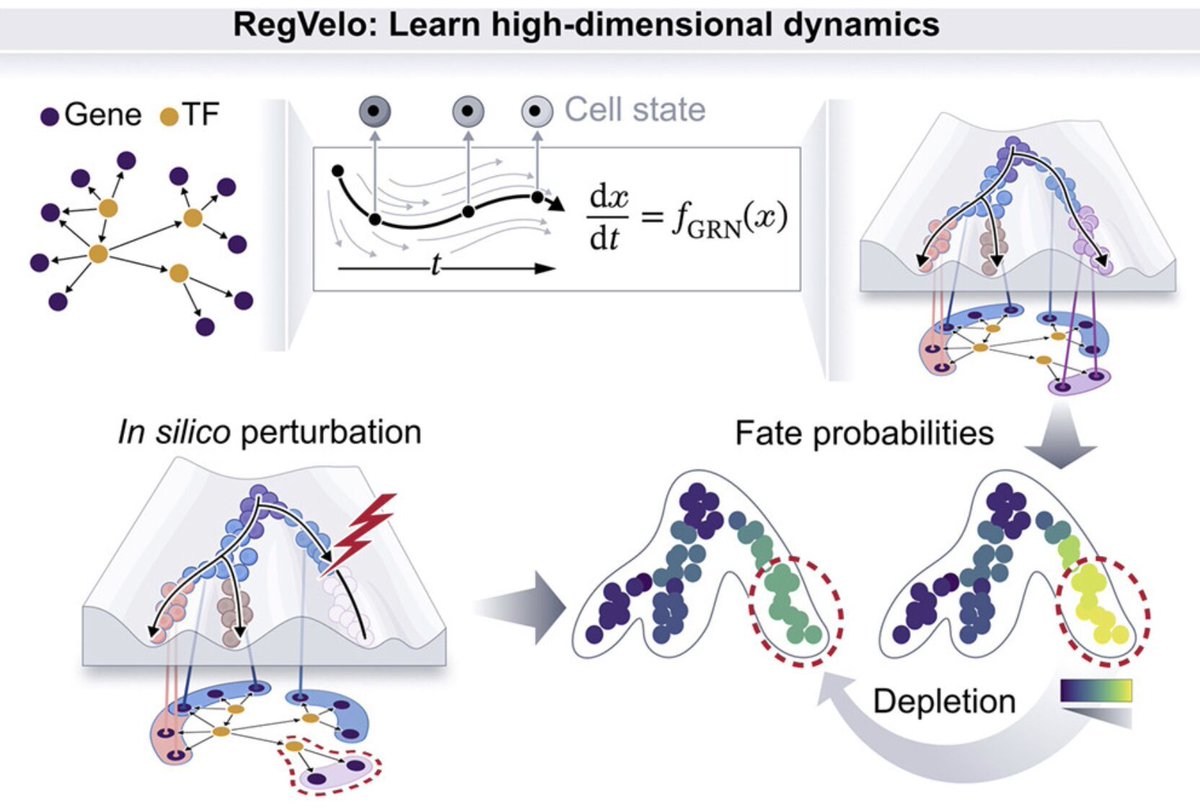
Excited to share our RegVelo paper in Cell
https://t.co/ZAnQphaXsg
We unify RNA velocity + GRNs into one model → better OOD prediction of perturbations (e.g. gene KOs), with examples incl. neural crest KO predictions 🔬
Big thanks to W Wang, Z Hu & T Sauka-Spengler 🙏
Excited to share our new study out in
@SciImmunology
We show that Monocyte-derived Macrophages drive oxidative damage during neuroinflammation
https://t.co/eGKEMppR9y
🧬 #ScienceSaturday
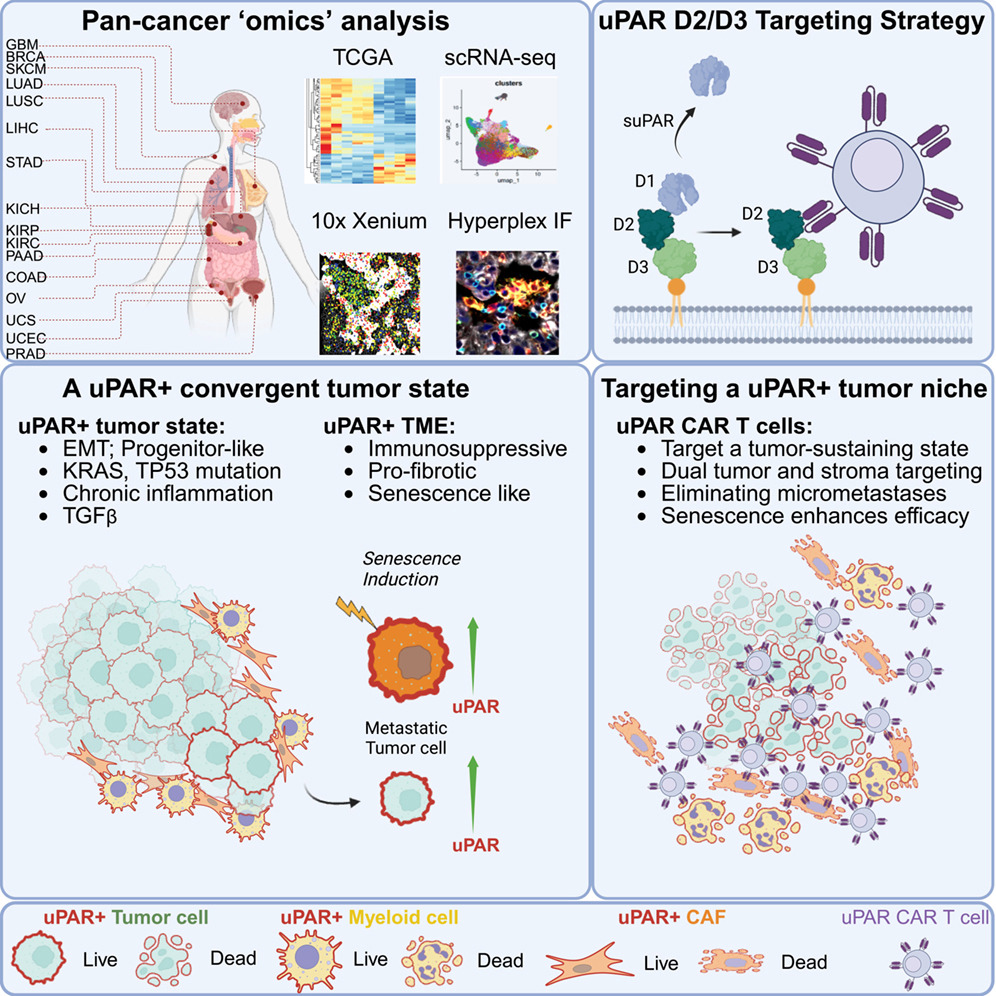
❓ What if cancer treatment could target not only tumor cells, but also the tumor’s stromal support: non-malignant, non-cancerous cells within the tumor microenvironment, that actively help cancer grow, spread, and resist treatment?
➡️ In a new study published in @CellCellPress, researchers identified uPAR, a cell-surface protein linked to aggressive tumor behavior, as a marker found on both solid tumor cells and the fibrotic, immune-suppressive environment that helps sustain them.
➡️ The team developed uPAR-targeted CAR T cells that attacked both tumor cells and their supportive stroma, leading to durable tumor regression across multiple cancer models, including metastatic disease.
➡️ They also found that senescence-inducing therapies, like chemotherapy, increased uPAR expression and made tumors even more vulnerable to CAR T cell treatment.
🌟 This dual-targeting strategy could help overcome some of the biggest barriers to CAR T therapy in solid tumors, including immune suppression and treatment resistance.
🔗 Read the study: https://t.co/dvHrEzUZ7F
@ZedaZhang@Aveline_Filliol@LoweLabMSKCC
🚨 Out today in Cell! @CellCellPress
Path2Space: #AI that predicts spatial transcriptomics (ST) from H&E pathology, enabling spatial biomarker discovery in #BreastCancer at scale.
📄 https://t.co/GtrmH9zIDs
🧵1/8