You know what's entirely unacceptable about modern society.
It's the sheer panic of bagging your own groceries while the cashier stares into your soul.
I'm just trying to organize my produce so my tomatoes aren't crushed by a rogue can of beans.
They're standing there judging my lack of spatial awareness.
I've never felt more inadequate than when I'm fumbling with a flimsy plastic bag that won't open.
You'd think I'd learn to bring reusable totes by now.
I always forget them in the trunk.
It's a vicious cycle of shame and environmentally unfriendly choices.
The guy behind me's tapping his foot like he's got somewhere to be.
We're all trapped in this linoleum purgatory together.
Let's just collectively agree to slow down.
Maybe then I won't accidentally buy five jars of pickles in a panic.
Meta gave an AI the ability to reset your Instagram password.
Gave it zero way to verify who it was talking to.
Deployed it silently to millions of users.
It got exploited for months.
Multiple accounts were hijacked, even the Obama White House account got hijacked and filled with Iranian propaganda.
Meta's official response: "No breach of our systems."
YOUR account. THEIR systems. See how that works?
Anyways, if you can't ditch Instagram, make sure to enable 2FA.
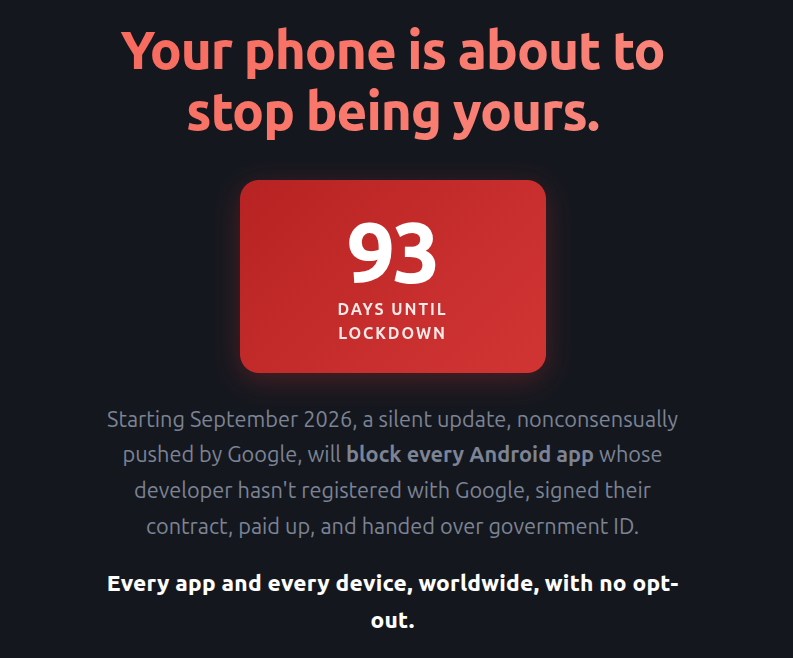
Your phone is about to stop being yours.
Android was sold to us as an open platform.
Now Google wants every developer to register and submit ID just to let you install their apps.
Every app and every device, worldwide, with no opt-out.
Let's talk about the fat.
Not the lean bit. The fat. The white seam running through a ribeye that you've been told to cut off, trim away, render out, discard. The fat removed before the nutrition label is calculated so the numbers look better on the front of the pack. The fat that every chef from Escoffier to your nan knew was the point of the cut.
That fat is roughly half oleic acid, the same monounsaturated fat in olive oil. The fat with a Mediterranean diet named after it, a documentary made about it, and a PR campaign running since 1990.
That fat is largely stearic acid, which is neutral on LDL, raises HDL, and is so well-behaved that even the most nervous cardiologist can't pin anything on it.
That fat is the carrier for vitamins A, D, E, and K. The fat-soluble vitamins. Called fat-soluble because they require fat to be absorbed. Which makes choosing the lean cut and wondering why nothing's improving one of the great metabolic ironies of modern dietary advice.
The fat was never the problem.
The fat is the nutrition. The fat is the satiety. The fat is the flavour. The fat is the reason your great-grandfather worked all day on two meals while you need three and a snack drawer.
Stop cutting it off.
Most business books are a blog post stretched to 200 pages.
I read hundreds of them in my 20s. 3 made a huge impact in my life.
Here they are:
1. Problem Solving 101 by Ken Watanabe
A McKinsey consultant wrote this to teach Japanese kids the basics of problem solving.
Sounds simple, but it's the most useful book on thinking I've ever read.
He walks you through real scenarios, gets you to work out the solutions, then shows you the frameworks pros actually use.
It taught me that problem solving is a skill, and something worth the effort to improve.
2. Smart Cuts by Shane Snow
The word "hack" gets thrown around so much it's basically meaningless now, but real leverage points do exist.
Two lessons I still use:
• Catch waves early. Everything's easier when you ride the wave instead of fighting it. Making money in crypto in 2020 was on easy mode compared to now.
The obvious wave right now is AI.
Reminds me of Marc Andreessen's point that picking the right market matters more than the product or the team.
• Hack the ladder. We're taught to grind our way up one ladder for decades. But once you're at the top of one ladder, you can jump to a completely different one.
And can be way better than just climbing a ladder from scratch.
Logan Paul used his YouTube following to become a top-paid boxer and WWE star. Trump skipped politics entirely and went straight to president.
3. The Goal by Eliyahu Goldratt
One of the 3 books Bezos makes his top managers read.
The big idea is every system has one bottleneck holding it back. Most people try to fix everything at once and get nowhere. You're better off finding the constraint, fixing that, then going to look for the next one.
Last year I got into powerlifting and wanted to bring up my squat numbers.
Naturally I just kept squatting and adding weight. I hit a plateau and was stuck.
Did a form check with a friend and he told me my ankle mobility was shit. I spent 10 minutes a day working on dorsiflexion. Two months later my squat was flying.
Anytime you're trying to level up, there's ONE bottleneck holding you back.
Figure out what it is and attack it relentlessly. Way more efficient than just "grinding" it out.
Lemme know if you have any recommendations
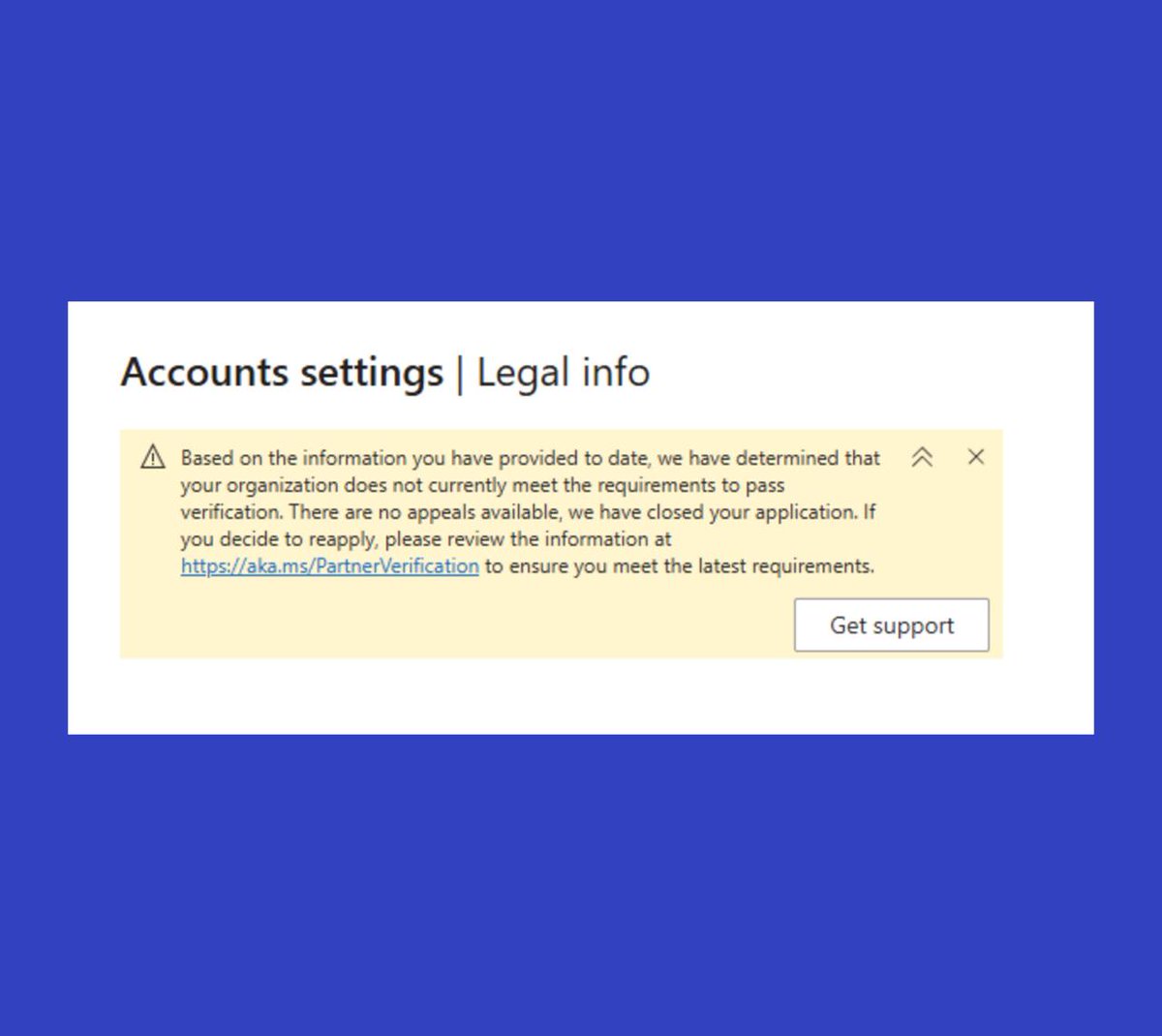
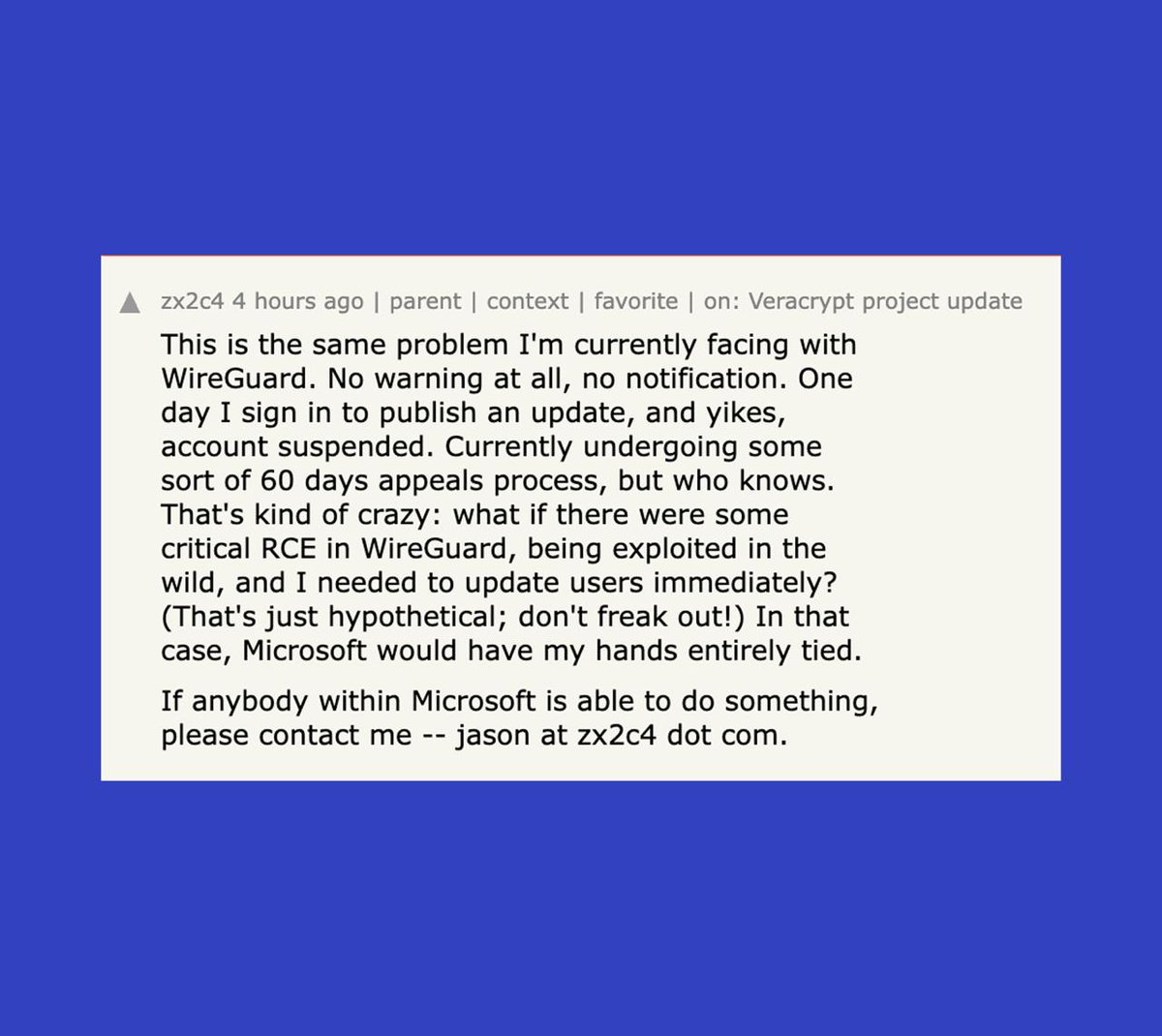
Microsoft suspended the developer account for WireGuard (and also VeraCrypt).
Why? Literally nobody knows. Presumably it's because Microsoft hates everyone and wants us all to suffer.
Downloaded an app this morning
It asked me to accept the terms and conditions
197 pages
I read them
Because that's what I do
By page 12 I'd granted them an irrevocable, perpetual, royalty-free license to my data
That's the same language I see in contracts worth more than my house
For a free app
By page 41 I'd agreed to resolve all disputes through binding arbitration in the state of Delaware
I've never been to Delaware
No jury trial
No class action
No discovery process
They gave themselves more legal protection than most Fortune 500 vendor agreements I've reviewed
By page 87 they'd reserved the right to modify the agreement at any time without notice
So I agreed to terms that can change after I agreed to them
I've reviewed contracts with better reps and warranties than this
By page 134 they could terminate my account at their sole discretion with no obligation to refund anything
Unilateral termination with no cure period
My board doesn't even have that
No one reads this
They designed it that way
197 pages for an app that tracks my water intake
I've signed deals with shorter contracts
My wife asked why I've been staring at my phone for two hours
I said "a contract disguised as a checkbox"
She looked at the ceiling
Make common sense common again
Sent from my iPhone
There is a project on GitHub called Axios.
Axios is extremely popular. It is used by millions upon millions of applications.
Axios is a programming library that helps your JavaScript code make HTTP/S requests (communicate with websites).
In simple terms, if you're a programmer doing something with JavaScript, and want to do stuff that communicates with a website in literally any capacity, people heavily recommend using Axios due to its simplicity. Using Axios you don't have to reinvent the wheel and do a bunch of work. All you need to do is import Axios into your code and you're off to the races.
Someone (currently unknown) compromised Axios (currently unknown how) to deliver malware to people. When someone updates or installs Axios, Axios itself contains malware.
What the malware does is (currently) unknown, but it is being reversed engineered by probably every malware analyst on the planet at this moment. In a few hours more details will emerge. Information is being exchanged in real time on social media and private communication platforms as I write this.
Due to the size and popularity of Axios, it is unknown how many are impacted, it could be millions, it could be thousands, or if we're lucky, only hundreds of people or organizations will be impacted.
If this is absolute worst case scenario, millions of organizations across the planet have been infected with malware which (currently) we do not understand. However, the likelihood of this is low. It appears Axios being compromised was detected quickly, potentially within minutes (or hours) of it being compromised to deliver malware. Additionally, the likelihood of every single Axios user updating Axios as soon as it was compromised to deliver malware is astronomically low. It is basically zero.
The impact from Axios being compromised is devastating, the fallout from this will be a massive headache. This is unironically a malware nuclear missile and will likely be studied in the future.
GrapheneOS will remain usable by anyone around the world without requiring personal information, identification or an account. GrapheneOS and our services will remain available internationally. If GrapheneOS devices can't be sold in a region due to their regulations, so be it.
If your company still forces password rotations, your security team is incompetent.
NIST, Microsoft, and the FTC all said to stop. Years ago.
https://t.co/QOw1nv1d67
If you use a personal phone/laptop for your work, pay very close attention to this little detail.
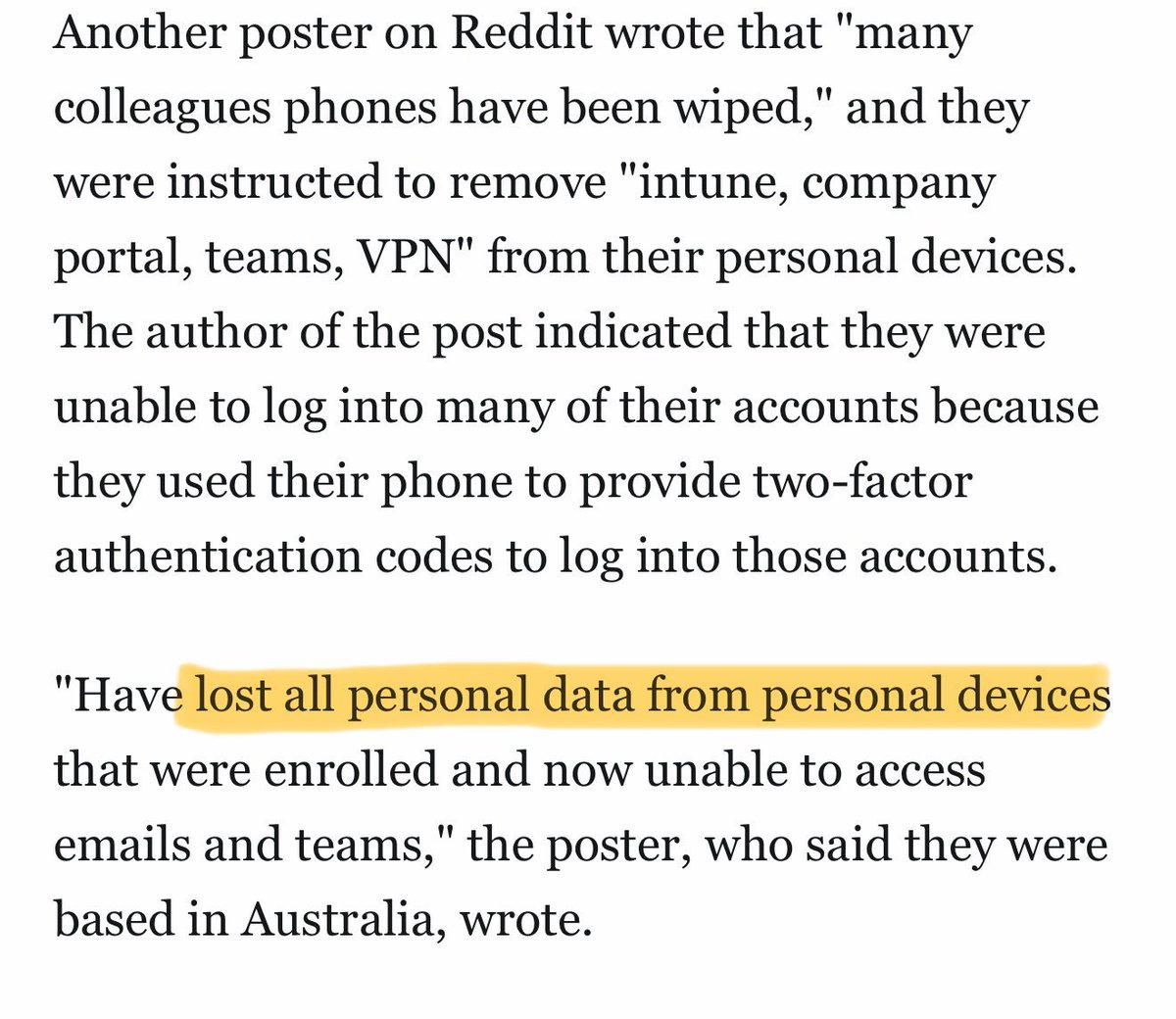
Iran attackers wipe 200k devices at a company called Stryker. Within those devices appears to be employees PERSONAL devices.
The attackers used the company’s MDM software, which is basically IT management software running on everything. It’s an incredibly attractive backdoor to an attacker. I successfully targeted MDM software for several Red Team engagements. It’s… lots of fun :)
Anyway, a lot of companies require you to install their MDM software on your personal devices before you can access resources like Corp email. It’s used to keep devices updated, lock things down if they get stolen, etc. The company often promises that they won’t access personal data, erase any personal data, etc. But this is often ONLY POLICY. If a bad actor gains access to the MDM tool, as was the case here, then anything can happen.
People should be aware of these risks. I refused to run MDM software on any of my personal devices. The company needs to provide me with hardware if they want that. I personally isolate all corp devices to their own network too. If an adversary can get into the corp laptop, then can then get inside my network… there have been cases of it happening in the past.
⏳ Only 24 Hours Left! The clock is ticking!
We're giving away all of these hacking devices for absolutely FREE to celebrate hitting 600,000 subscribers on YouTube. If you haven't jumped in yet, this is your final warning before the window slams shut. 🎉
Thank you so much for your love and support 🙏
✅ How to Enter
Follow us on X
Comment on this or the original post what you want us to teach next.
Repost this or the original to complete your entry!
🗓️ Ends: Tomorrow
🎁 Each winner will receive a powerhouse kit including:
🔥 ZS Cactus PRO: Combine keystroke injection capabilities, hardware keylogging and Wi-Fi phishing with wireless control.
🔥 ZS Venom PRO: Keystroke injection capabilities and Wi-Fi phishing with wireless control all inside a normal charging cable!
🔥 Atheros AR9271 WiFi Adapter: The gold standard for wireless hacking. It supports monitor mode and packet injection out of the box with rock-solid Linux compatibility.
🔥 Realtek RTL8812AU WiFi Adapter: Need 5Ghz? This dual-band adapter gives you high-gain performance and modern 802.11ac support for auditing high-speed networks.
🔥 Data Blocker: Stay secure on the go. This "USB condom" prevents accidental data exchange and juice jacking when charging your devices in public spaces.
THE FIRST CLOUD INFRASTRUCTURE CASUALTY OF WAR
An Amazon Web Services data center in the UAE just got hit.
AWS confirmed that at approximately 4:30 AM PST on March 1, “objects struck” the facility in availability zone mec1-az2, creating sparks and igniting a fire. The UAE fire department cut power to the building. The zone went dark. AWS says other zones remain operational and restoration will take several hours.
Read that sentence again. “Objects struck.”
The most valuable corporate infrastructure on earth is now absorbing kinetic damage from a state-level military conflict, and the world’s largest cloud provider is describing missile or drone debris as “objects” because no corporate communications playbook exists for this scenario.
This is the first time in history that a major hyperscaler data center has been physically struck during a war.
Every cloud architecture slide deck in every boardroom on earth assumes physical security means perimeter fences and biometric locks. Not ballistic missile defense. Not drone intercept capability. Not wartime fire suppression while the building next door absorbs ordnance.
The Jerusalem Post reported the facility was used by Israel’s military. If confirmed, Iranian targeting of dual-use cloud infrastructure transforms every data center in a conflict-adjacent geography from civilian asset to military target. The distinction between cloud infrastructure and defense infrastructure just collapsed.
And the geography matters enormously. AWS chose the UAE for its Middle East region precisely because Dubai and Abu Dhabi offered stability, connectivity, and proximity to enterprise clients across the Gulf. That thesis died on a Saturday morning when Iranian drones struck the Burj Al Arab, hit Jebel Ali port, and set fire to a data center running workloads for governments, banks, and military operations simultaneously.
The concentration risk is staggering. AWS, Microsoft Azure, and Google Cloud all operate Middle East regions clustered in the same geographic corridor that just became an active theater of war. Oracle has infrastructure in Dubai. Every enterprise running production workloads in these regions is now calculating disaster recovery scenarios that were categorized as “theoretical” 72 hours ago.
The insurance implications alone will restructure cloud pricing for a decade. Lloyd’s of London was already reassessing war-risk exclusions after Ukraine. Now a drone has physically damaged a data center belonging to a $2 trillion company in a country that markets itself as the safest business hub in the region.
AWS built multi-availability-zone redundancy for earthquakes, power failures, and network partitions. Not for Iranian retaliation against a joint US-Israeli military campaign. The architecture held because one zone went down while others stayed up. But the premise broke: that geography selection for cloud regions is a business decision, not a wartime calculation.
Cybersecurity expert Lukasz Olejnik flagged the euphemistic language immediately. AWS did not say “bombed.” AWS said “objects struck.” That linguistic gap is the entire story. The world’s cloud infrastructure just entered the theater of war and the industry has no vocabulary for it yet.
The vocabulary will be priced in by Monday.
https://t.co/BrzGRrU3VW
🚨Official Solo Satoshi Bitaxe Turbo Touch giveaway!
We're giving away the first Bitaxe Turbo Touch off our USA assembly line; shipped anywhere in the world for FREE!
Want to enter the giveaway?
Like✅ Repost ✅Follow✅
Winner announced in 3 days! 🚀
We're happy to announce a long-term partnership with Motorola. We're collaborating on future devices meeting our privacy and security standards with official GrapheneOS support.
https://t.co/8flkjD52Eg
Unrealized gains tax for Gen-Z:
You buy a Pokémon card for $50.
Someone offers you $500 for it. You say no. You love that card. You're keeping it.
The government says: "Cool, but that card is worth $500 now. You owe us $100 in taxes."
You: "…I didn't sell it."
Government: "Don't care. Pay up."
You don't have $100 lying around. So you're forced to sell the card you love just to pay a tax on money you never received.
Next month? That card drops back to $50.
Your card is gone. Your money is gone. And the government shrugs.
That's a wealth tax on unrealized gains. They don't pay you back the tax...
Now picture this.
Your mom calls you crying. She has to sell the house she raised you in. Not because she can't afford it. She's lived there 30 years. It's paid off.
But some website says it's worth more now and the government says she owes $15,000 she doesn't have.
So she sells your childhood home. The kitchen where she made you breakfast. The doorframe where she marked your height every birthday.
Gone.
To pay a tax on money that was never real.
Now picture the opposite.
Your dad put everything into his small business. For 20 years he built it from nothing. One year the business is "valued" at $2 million on paper. He owes a massive tax bill. He empties his savings. Sells his truck. Borrows money. Pays it.
Next year the market crashes. His business is worth $200,000.
He lost everything to pay a tax on a number that doesn't exist anymore.
Does the government give him his money back?
No.
Does the government give him his truck back?
No.
Does the government care?
No.
They sold this idea as "taxing billionaires." But billionaires have armies of lawyers, offshore accounts, and trusts. They'll be fine.
You know who won't be fine? Your mom. Your dad. Your neighbor with a small business. The farmer down the road who's had the same land for four generations and now has to sell it because dirt got expensive.
You're not taxing wealth. You're taxing people for owning things.
It's like getting a parking ticket for a car you might drive somewhere someday.
They want you to own nothing and be happy. To fund the fraud, waste and abuse of the welfare state they created.
There is enough money. More tax isn't needed. It's all a lie. But you've been gaslit into believing this is a rich vs poor debate.
I hope you understand what's at stake.
Microsoft is auto-enabling passkeys in March 2026.
No opt-in required.
If you don’t configure it first… your tenant gets the defaults.
I sat down with Microsofty Security MVPs @DanielatOCN and @WelkasWorld.
We break down:
1️⃣ Passkey Profiles Are Becoming the Default
→ Starting March 2026:
→ Passkey profiles will be auto-enabled
→ Tenants that haven’t configured profiles will be migrated
→ Registration campaigns will shift from Authenticator-first to passkey-first
2️⃣ Source of Authority Conversion Is Finally GA
For years, admins used messy delete-and-restore hacks to convert synced users to cloud-only.
→ Now it’s officially supported.
→ You can convert individual users from on-premises authority to cloud-managed — without breaking hybrid entirely.
Why this matters:
→ Easier M&A transitions
→ Full access to Entra ID Governance features
→ Cleaner lifecycle management
→ Reduced dependency on legacy infrastructure
---------------------
Sponsored by: Action1 https://t.co/YlnSF6zPmi
Action1 is a cloud-native patch management platform for Windows, macOS, Linux, and third-party apps — all from one place, no VPN needed. Curious how easy it is to start? You can use it on your first 200 endpoints, for free, forever, with no functional limits. It’s not a disguised free trial. No credit card required, no hidden limits, no tricks.
Visit https://t.co/YlnSF6zPmi and get started today.
---------------------
3️⃣ App Registration Deactivation (A Quietly Powerful Feature)
→ Microsoft added the ability to deactivate app registrations.
→ Instead of deleting an app (and losing configuration), you can now:
→ Immediately stop token issuance
→ Preserve metadata and permissions
→ Investigate safely
→ For incident response scenarios — especially in multi-tenant or MSP environments — this is a big step forward.
4️⃣ Conditional Access Behavior Changes
→ There’s also a change impacting tenants with Conditional Access policies targeting “All resources” but excluding certain apps.
→ Previously, certain minimal-scope apps could bypass enforcement under specific conditions.
→ That loophole is closing.
5️⃣ Sync Security Hardening (Hard Match Protection)
→ Microsoft is adding additional validation to protect against malicious hard matching scenarios in hybrid environments.
→ This reduces the risk of identity takeover via manipulated on-prem objects.
→ It’s automatic — but important to understand if you manage hybrid identity or MSP transitions.
Watch the full episode for the deep technical breakdown and real-world implications.
https://t.co/9c92xNqKF8
🥳Official Solo Satoshi Giveaway! 🥳
💠NerdQaxe++ Rev 6.1 Bitcoin Solo miner.
💠Shipped FREE anywhere!
Want a chance to win?
✅Like! ✅Share!✅Follow us!✅
Winner announced in 3 days!