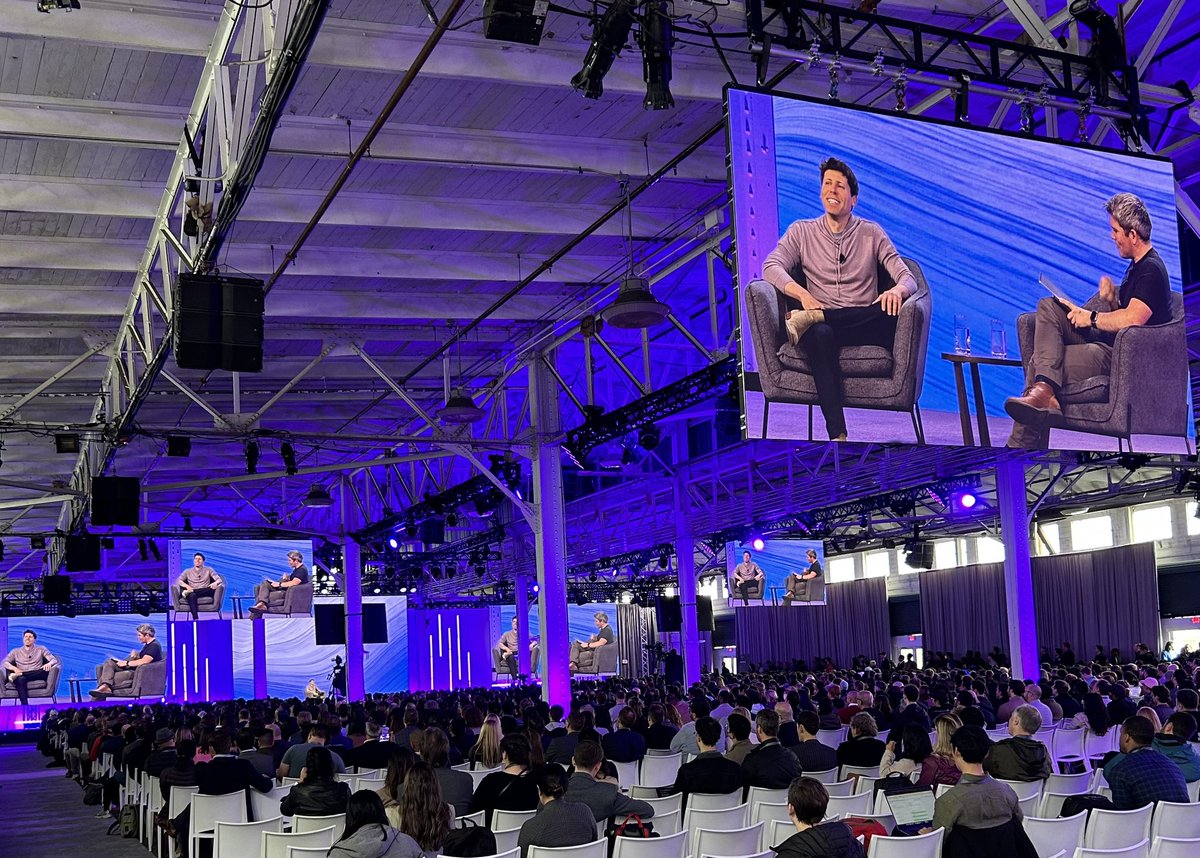
Today, we launched our new homepage to better reflect the full scale of what @Stripe does today.
From the GDP ticker to gradients, easter eggs, customer stories, and book recommendations—it's chockfull of love and we're so excited to get it live.
“To be, in a word, unborable.... It is the key to modern life. If you are immune to boredom, there is literally nothing you cannot accomplish.” - The Pale King
As someone who has never needed help finding interest in things most people find boring, I would highlight the word “important” here for my younger self.
There are many games offered in the world that you shouldn’t play even with commanding advantages.
A lot of stuff people pine for is still available today if you're willing to pay what people paid back then. Air travel in the 1970s was a luxury, and a cross-country roundtrip flight would have cost over $1k. Now it's a few hundred bucks.
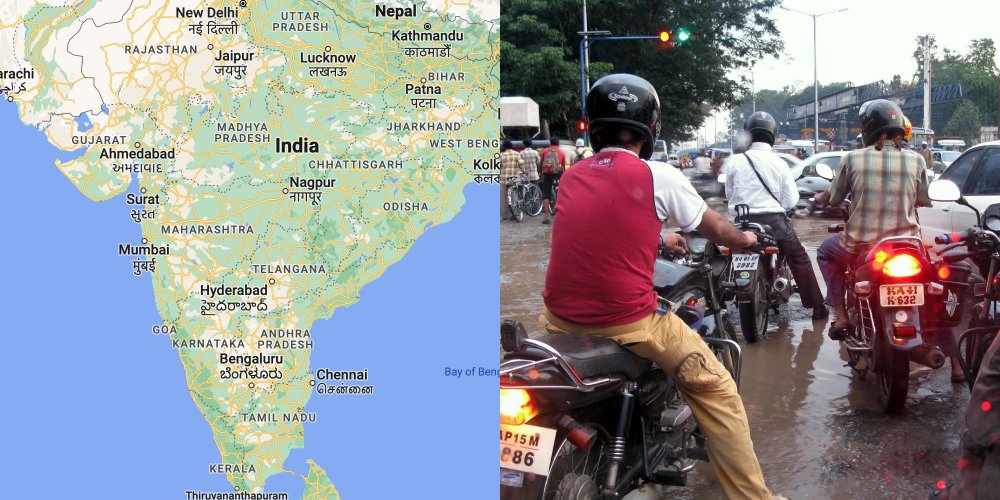
In 2008, Google Maps launched in India.
But we quickly ran into a problem:
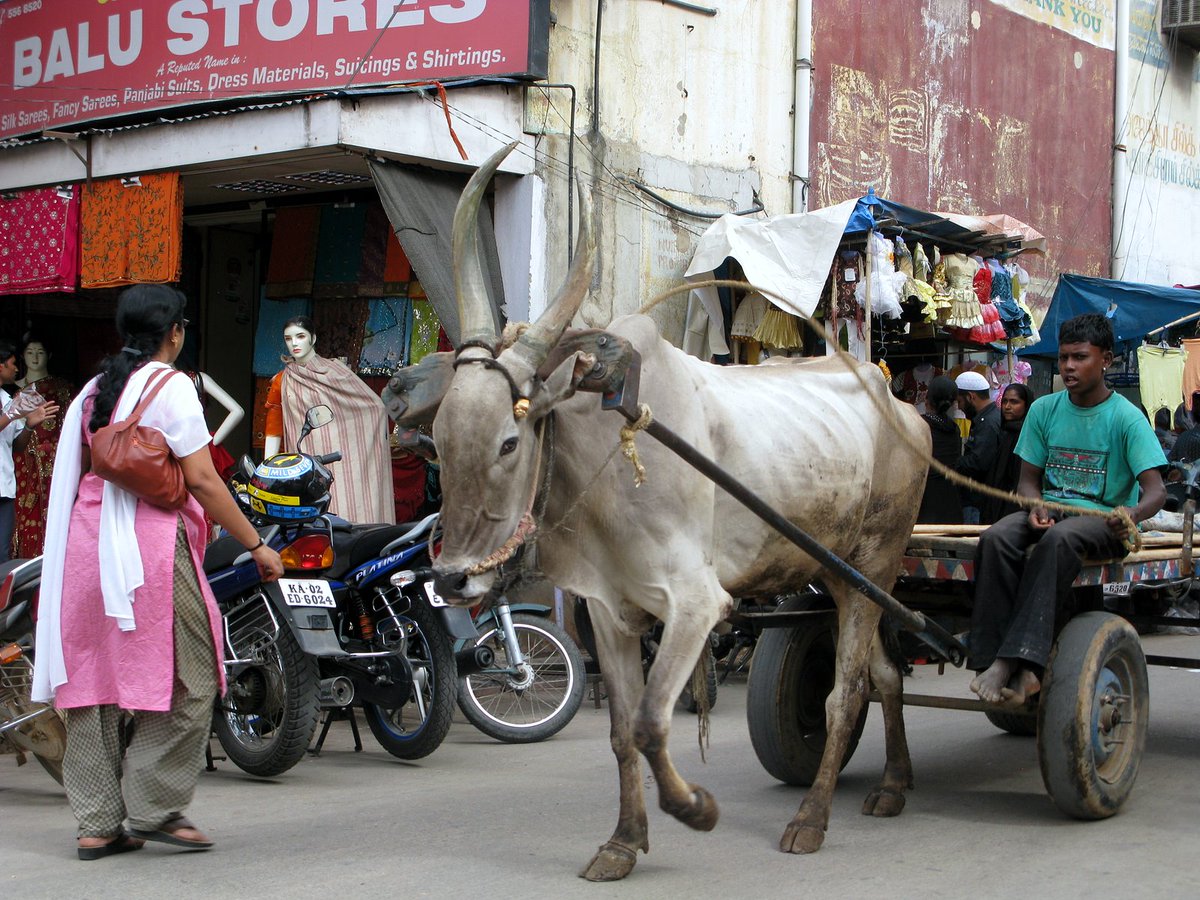
Nobody used street names.
And street names were the foundation of Google Maps.
The team had to make some big adaptations.
15 years later, the changes have stood the test of time.
Here's how the team came up with creative solutions to adapt Google Maps to work in India:
–––
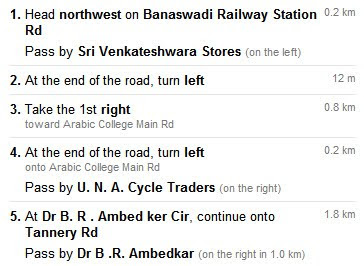
When Google Maps launched in India, turn by turn directions were unusable.
Because there were no road names, directions looked like this:
This was before real time, accurate GPS in phones had become mainstream.
In short, directions were pretty much useless in India.
–––
We could have left the product as it was.
We could have assumed it was good enough, would get better over time, or that eventually people would adapt.
But India was a massive potential market and we wanted the product to thrive.
The solution wasn’t just a case of acquiring and cataloging street names.
Many streets either didn’t have names, had multiple names, or weren’t known by their official names.
So we had to find an alternative.
We already knew that many communities around the world relied on landmarks (rather than street names) for navigating.
e.g. “Turn left at the park, head towards the water”
We knew this was also true in India.
But we had to confirm landmark based navigation would work.
And if it did, how we could make it work.
–––
So we dove in.
We started to explore how Google Maps could work if it oriented around landmarks.
But we needed to understand 2 key questions:
1. How did people use landmarks to navigate in India?
2. What types of landmarks were good for navigating?
This is where user research came in.
At the time, Google had robust support for user research.
There were research labs on campus with eye tracking technology and one-way mirrors.
There was a team dedicated to recruiting research participants.
But in this case, my friend and researcher extraordinaire, Olga (@okhroust) simply focused on how she could best answer these key questions.
She put together a creative and scrappy research plan.
And then she and Janet, the designer, hopped on a plane to India.
–––
What followed was nimble, on the ground field research to understand, first-hand, the answers to these questions.
They creatively explored various approaches including:
• Calling businesses and asking them for directions to their stores
• Asking people to draw diagrams of routes to familiar places
• Following people around as they navigated unfamiliar places
• Recruiting people to keep track of directions they gave or received + later interviewing them on their experiences
• Sharing early designs of landmark based directions and asking for feedback
Rather than relying on sophisticated technologies or being bounded by formal research methods, they creatively tried several different tactics to understand how locals navigated their way through India.
Olga and Janet found that people used landmarks to navigate in a few key ways:
• Orientation: “Head towards the water”
• Description of a turn: “Turn just past the Big Bazaar”
• Confirmation of the right path: “You'll see a petrol station on the right”
• Error correction: “If you get to the roundabout, you've gone too far”
Landmarks that were used for navigating included parks, monuments, shopping centers, notable buildings, stores, petrol stations, roundabouts, etc — basically anything that anyone would notice while on the road.
And so the team reworked turn-by-turn street directions to include navigational landmarks to help orient people, signal turns, confirm direction, and error correct.
The team worked through several iterations before landing on a final solution that emphasized landmarks, but also subtly included road names (when available):
–––
The research drove the product changes that helped transform Google Maps into the dominant navigational product for India.
A lot has changed in the last 15 years with the pervasiveness of location-enabled mobile phones, cheap mobile data, and generally how locals navigate in India.
But the use of landmarks to help people navigate through India has stood the test of time.
–––
What I love about this story and my 2 biggest takeaways are:
1. Research is a critical tool for ensuring you’re building a good product
2. Research can be as simple as just talking to people to answer your questions
tl;dr: If you are looking for answers, go talk to people.
For more on design + tips for early stage founders, follow @elizlaraki
🔊 New @stripe animation just dropped!
A sticky scroll collab for the homepage with @CaddickYo @williamrhoffman@emmaleighbryson and @Clonk801
https://t.co/MODGe0scCf
A+ example of data-dulling, or the dark side of the Moneyballing of culture.
The problem isn’t that Hollywood’s getting dumb. The problem is it’s getting too smart about the narrowest questions of consumer behavior, and it’s a threat to making actually-good-movies.
Almost 100 years ago, in 1925, Aldous Huxley ~ who would later write the classic Brave New World ~ made this prediction of how (Western) society might evolve as the hours of work diminished and left more time for leisure. Do you think he got it right?
If you’d like to hire any of the wonderful former Stripe employees who are leaving, email [email protected]. We’ll let you know as soon as the directory is ready.
“For him, morality was neither conformism nor the sum of acquired knowledge: it was the infinite fullness of life’s potentialities…He believed in morality without believing in any particular code of morals.” TMWQ
“Morality, like every other form of human order, is a result of pressure and compulsion. One lot of people get to the top and simply impose on the others the principles and prescriptions that will ensure that they remain on top.” TMWQ
“The endeavors of all those who feel themselves called upon to restore the meaning to life have one thing in common nowadays, namely that wherever not merely personal views, but verities, might be arrived at they despise the operation of thinking.” TMWQ
In an unstable world, big data isn’t always best. Reducing the amount of complexity can lead to more accurate predictions.
Gerd Gigerenzer on how "one data point can beat big data." https://t.co/IaAJrDWBzA