PhD student @Cambridge_Uni @TrinCollCam @EarlyCancerCam with Alex Frankell | MPhil @CUHKMedicine with Dennis Lo | Somatic evolution; Liquid biopsy; Compbio.
Urinary cfDNA (ucfDNA) offers a truly non-invasive liquid biopsy source. It includes transrenal cfDNA (from blood via glomeruli) and DNA shed locally from the urinary tract. How do these DNA types differ? We explore this in our Med paper: https://t.co/fblJWLhKVc
Online here: https://t.co/nzzWChWPkD
Open access here: https://t.co/MEUA5HUeGx
Key supporters of this work are @CR_UK , @CRUKLungCentre , @UCLHresearch alongside many others
Can we predict high myopia risk at birth? 👁️🧬 Our new @NatureGenetics paper leverages >1.7M people to decode the genetic basis of myopia. We trained a powerful risk prediction model—an early "warning radar" to protect vision. Proud of the team! https://t.co/U7qhvgllx0
Delighted to share our latest collab with @CharlesSwanton and MariamJamalHanjani - we delve into the world of normal tissue evolution and explore the impact of cancer treatment in tissues across the body.... https://t.co/E4jKjtxzlw
For all the details, see @oriol_pich thread 👇
📢 We're hiring! Two posts available in SEM lab @CRUKCamCentre to drive a @wellcometrust funded £2.6M tech dev programme in evolutionary tracking and diagnostics with world-class clinical studies and based in a newly revamped @EarlyCancerCam institute. Deadline Nov 10th! (1/3)
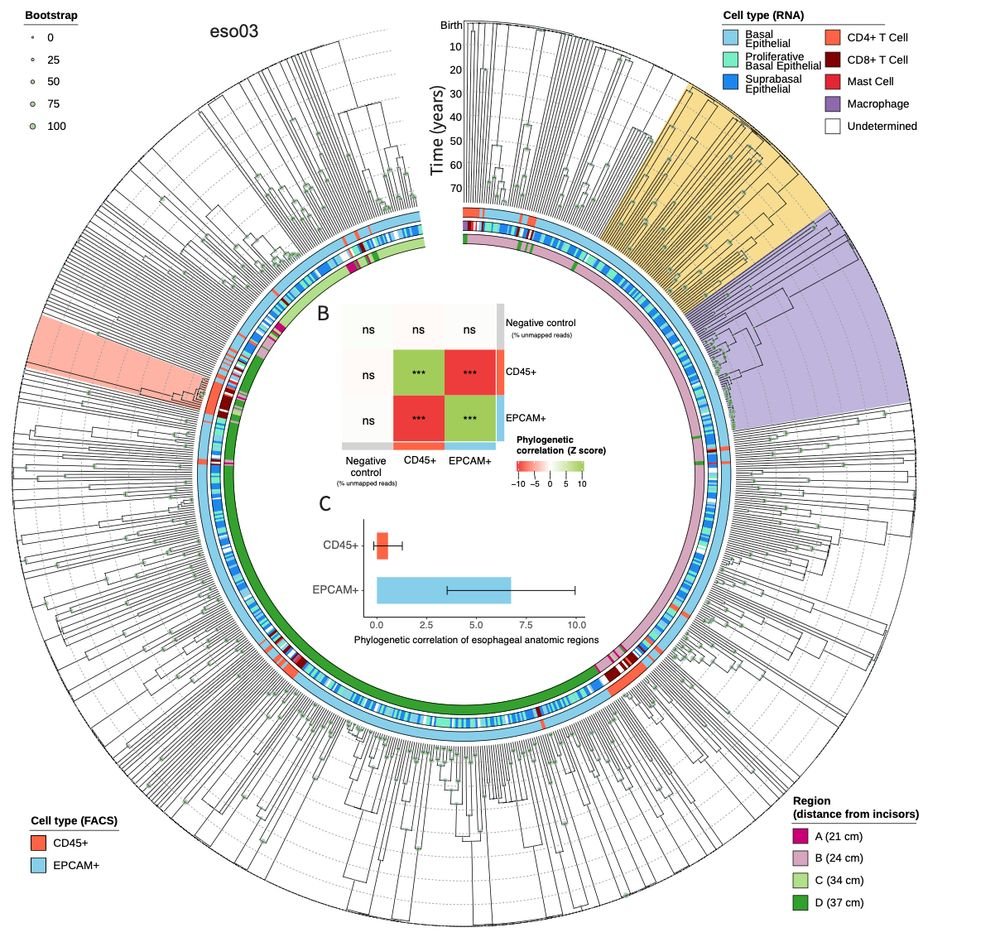
Big, beautiful trees!!
SMART-PTA for whole-genome+transcriptome on thousand of single cells from the normal human esophagus 🤯 Massively scaling up the power of scWGS to build deep phylogenies and chart somatic evolution from birth throughout life.
https://t.co/pciw5yME0x
New perspective in @NatureRevCancer
Defining precancer: a grand challenge for the cancer community
https://t.co/ApQjyCiElC
From @theNCI Precancer Think Tank Team, we hope the article provides researchers with a framework to start addressing key topics in preneoplasia research.
PAPER OUT!! 🥳🥳🥳
Clinical potential of WGS data linked to mortality statistics in patients with breast cancer in England
#shout out to #DaniellaBlack @GenomicsEngland
And all the patients that shared samples across @NHS
1/n https://t.co/nbdSogINJH
🚨 New preprint out!
We reconstructed parental haplotypes in >440k individuals (UK & Estonian biobanks) to estimate assortative mating directly in the parental generation.
This reveals intensified assortment in recent generations.
🔗https://t.co/wnag6TiWWo
#ScienceSaturday
❓ Why do some cancers resist immunotherapy?
➡️ A recent study in Nature found that certain cancers can “trick” the body’s immune system. They do this by changing how cells in the bone marrow develop. These changes cause more immune cells called macrophages to form — but these macrophages actually block the immune system from attacking the tumor.
➡️ Lung cancers cause this change by stressing cells in a way that activates a protein called NRF2. This reprogramming creates macrophages that protect the tumor instead of fighting it.
➡️ The researchers found that blocking NRF2, through drugs or genetic changes, lowered these protective macrophages, boosted immune cell activity and made immunotherapy work better. This suggests a new way to improve treatments for cancers that usually resist immunotherapy.
🌟 Congratulations to senior author Miriam Merad of the Icahn School of Medicine at Mount Sinai, and collaborators at Institut Gustave Roussy, Harvard Medical School and others for advancing this critical work. @MiriamMerad@SinaiImmunol@IcahnMountSinai
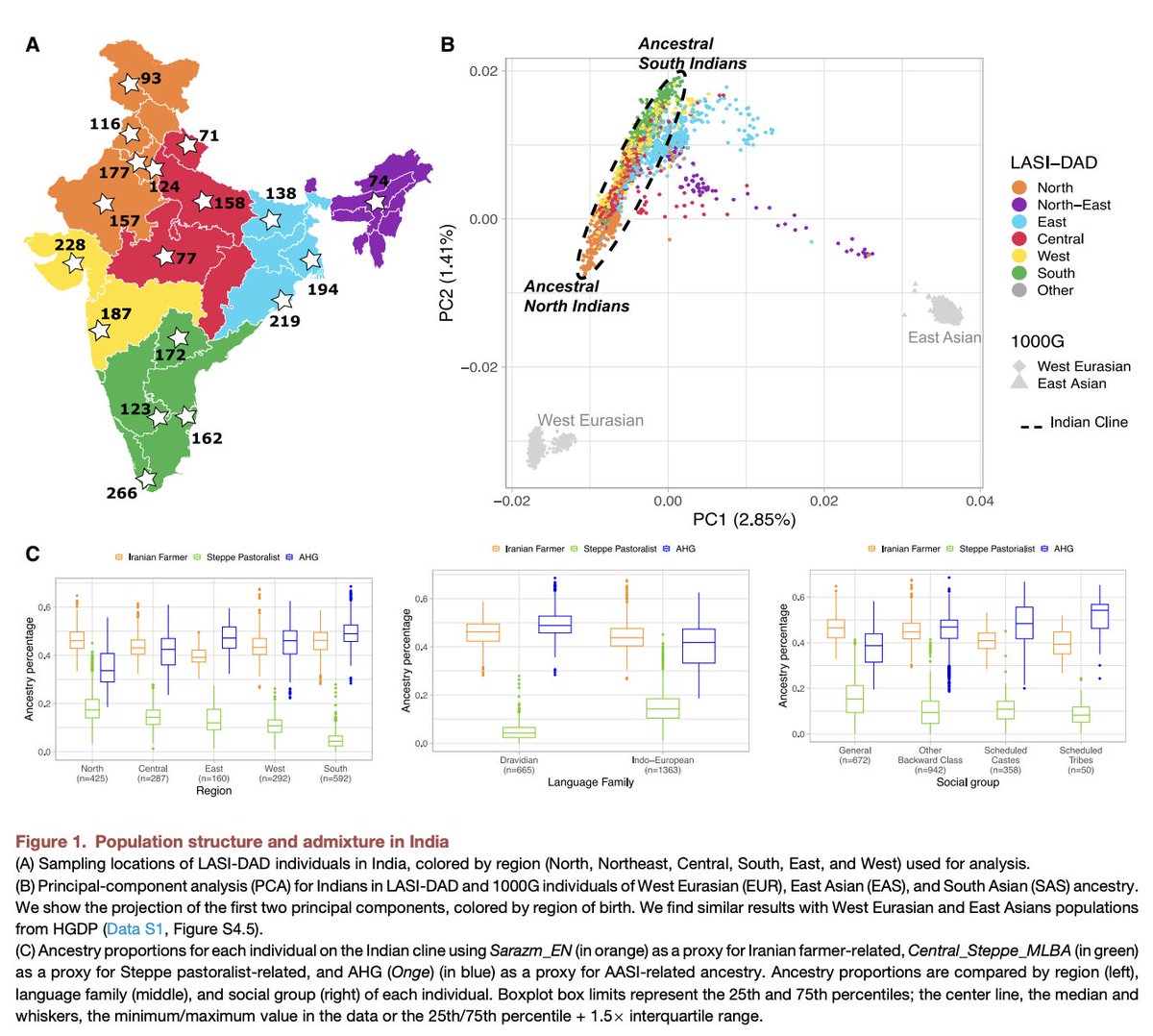
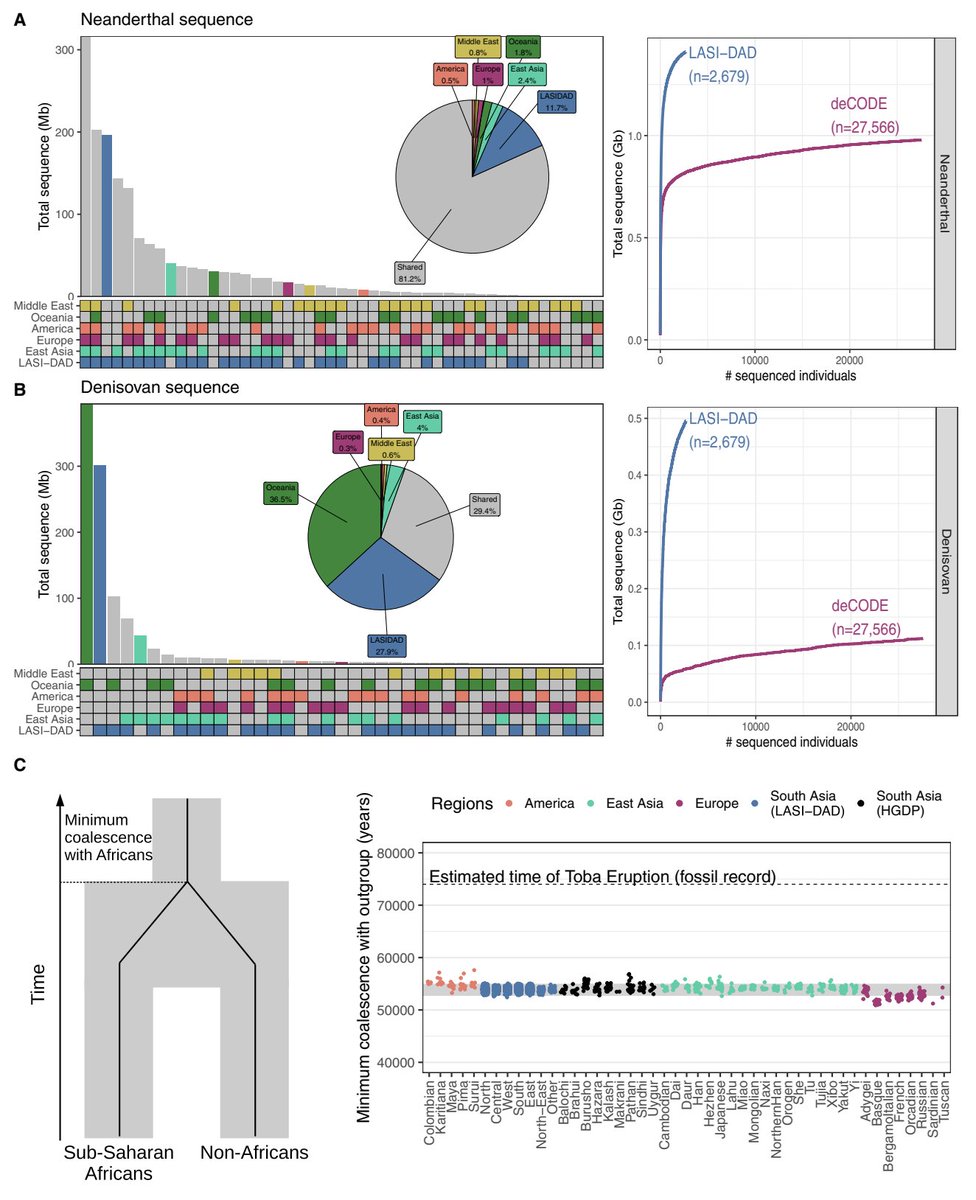
WGS analysis of ~2,700 Indians (largest to date) https://t.co/8TTdZ10yIE @CellCellPress
- Most variation traced back to a single out-of-Africa event 50,000 years ago, with subsequent gene flow from Neanderthals & Denosivans.
- All had a 4th degree relative or closer within the dataset (!)
- Most Indians today are enriched for genetic variation from sources similar to: Andamanese hunter-gatherers, ancient Iranian farmers, and Steppe pastoralist groups
- Lots of founder events / endogamy increase homozygosity, contributing to enrichment for autosomal recessive disease
- Indians have a larger burden of population-specific Neanderthal ancestry vs others, contributing to adaptation & disease (largely related to immunity)
Congrats to Prof Rebecca Fitzgerald - new Head of the Department of Oncology @Cambridge_Uni from 1 Oct. Currently Professor of Cancer Prevention and Director @EarlyCancerCam Prof Fitzgerald is Hon Consultant in Gastroenterology at Addenbrooke’s & Director of Medical Studies at Trinity. @CambCancer@RFitzgerald_lab #ExTRINordinary 📷Royal Society
Excited to share our new paper in @Nature, led by @PiotrekPaw_@KristianaGrigo4 ! 🧬 We developed a new method, ALPACA, to untangle the co-evolution of single nucleotide variants and copy number changes in tumours.
Check it out: https://t.co/Aee2xcJKrI
This blog highlights the recent publication of DeepPolisher, but it was also a nice opportunity to write about research work to a more general audience and frame against the backdrop of how sequencing works, why we make genome assemblies, and how we improve and use them.
🚨 Our parent-of-origin study is out in @Nature ! 🧬
Maternal and paternal alleles can have distinct — even opposite — effects on human traits, revealing a hidden layer of genetic architecture that standard GWAS miss.
🔗https://t.co/OWW6vGxGYI
Highlights below!
An analysis shows that, despite their complexity, current deep learning models do not beat linear baselines in predicting gene perturbation effects, thus emphasizing the importance of further method development and thorough evaluation.
https://t.co/vOzaxMSQzN
We're hiring a sequencing technician for #TRACERx! Interested in cutting-edge genomic tech to understand cancer? 👉 https://t.co/IDBrhpAR1p #Genomics#CancerResearch Join our world-leading teams at @TheCrick & @uclcancer
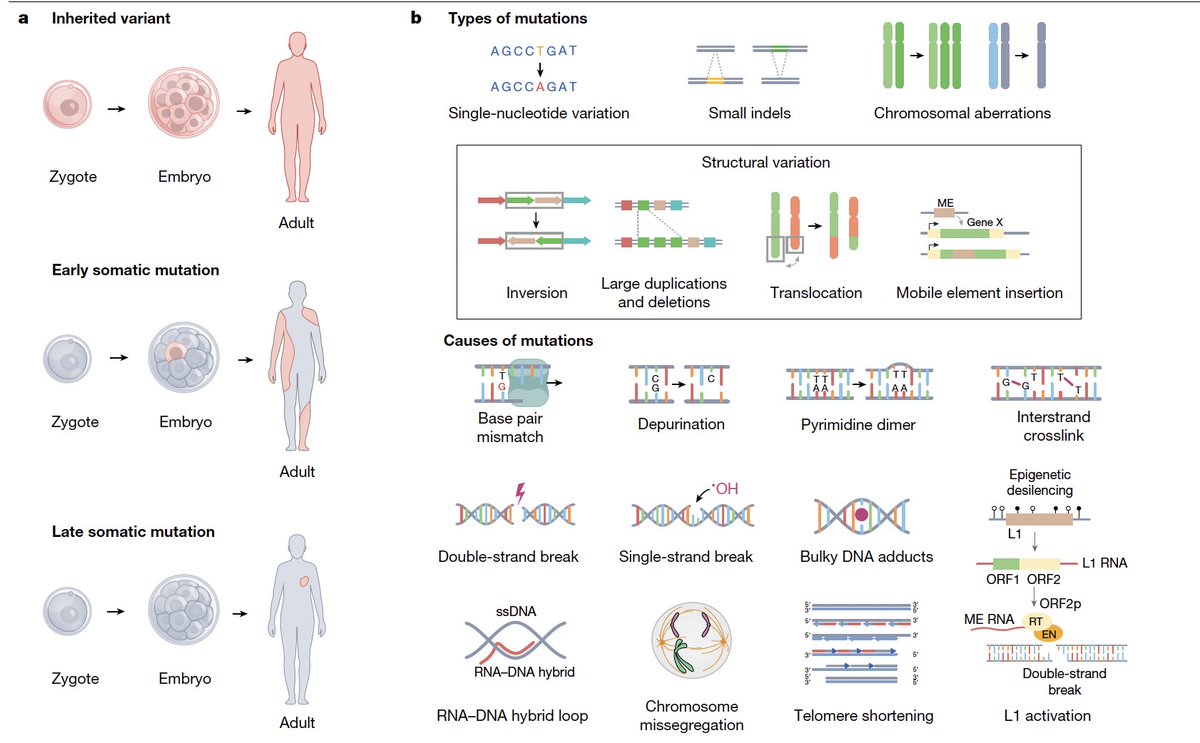
The cells in our bodies constantly acquire mutations. But what are the patterns of mutations across tissues? How do mutations in normal cells lead to disease? These and other questions we will tackle within the SMaHT Network, now described in @Nature
https://t.co/5c1mfZOrOR
We are all somatic mutation mosaics.
"There are trillions of cells in a human body and so the total number of somatic mutations acquired in a single individual may well exceed quadrillions, millions of times the size of the human genome." @Nature https://t.co/y6Y9MggS0o