Excited to share a part of my PhD thesis! We developed a novel method to predict the risk of progression from pre-clinical to clinical disease for SLE and RA. So thankful to my co-first author @ChenWang_PSU and mentors @dajiangliu81 and Dr. Bibo Jiang
I am happy to share our new work that predicts the progression of autoimmune diseases, integrating EHR and GWAS datasets @NatureComms . https://t.co/81WRL7oalS
Don't throw away FNA supernatants... they can be used for rapid molecular testing!
Would your lab consider testing supernatants?
@Biocartis_@CancerCytopath@bfaquin
In a new Science study, researchers present the Virtual Biotech, a multi-agent AI system to inform drug-development decisions.
By combining diverse biomedical and clinical evidence in a unified platform, the system may help identify therapeutic opportunities that would otherwise be missed.
Learn more: https://t.co/qxh0exucNT
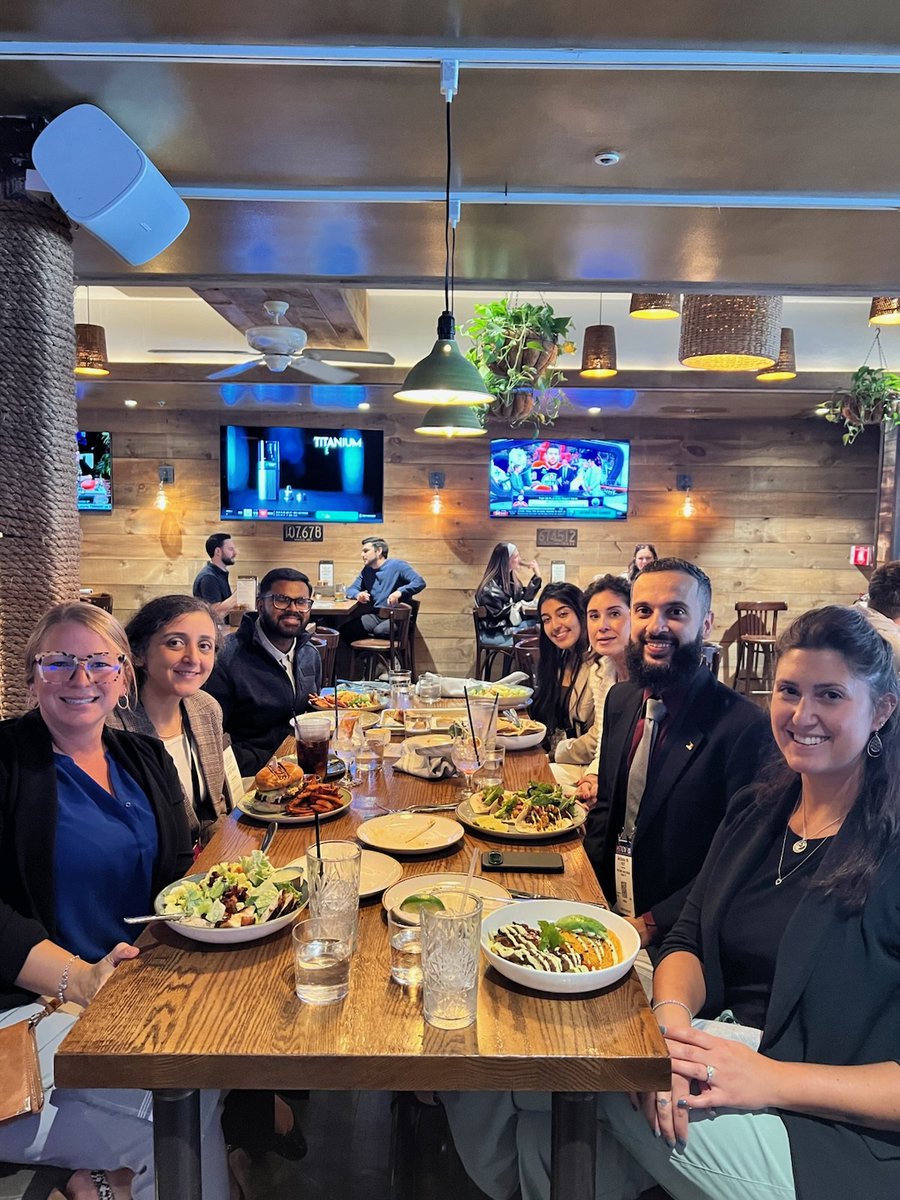
Good food, great company and fresh ideas! Radiation Oncology faculty and staff gathered for lunch at ASTRO 2026 to connect and share what they’ve learned about opportunities to advance patient care.
Excited to introduce uRARE-Seq for detection and monitoring of bladder cancers and beyond.
Eager to see how this new liquid biopsy tool can change the course of these diseases and overcome the unmet needs of patients with these challenging genitourinary cancers.
@Kevinjliu_@max_diehn@StanfordMed@StanfordCancer@stanfordcbio
https://t.co/4VYKDFg1bQ
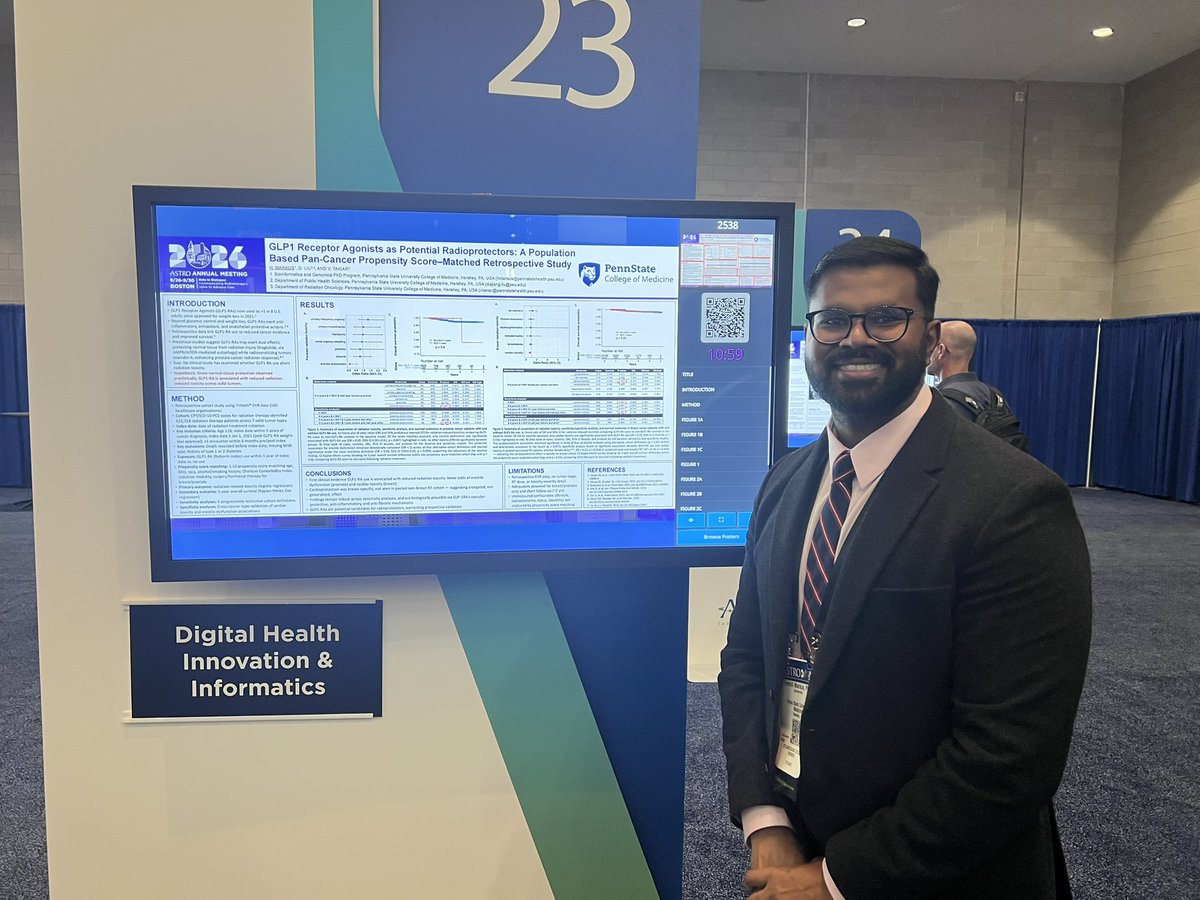
Thank you so much, Dr. Tchelebi! This means a lot coming from you. My first #ASTRO2026 was an incredible experience, and I am so grateful to my research mentor @VinitaTakiar and the @PennStHershey#RadOnc family for their support. 🙏
What did ASCO 2026 change?
Some standards of care have now moved by years.
That almost never happens.
BRAF colorectal, pancreatic KRAS, and DDLPS sarcoma
are three of oncology's hardest diseases
SOC moved by > 1yr:
▫️BRAF mCRC: 15.1 → 30.3 months OS
▪️Pancreatic KRAS: 6.7 → 13.2 months OS 🏆
▪️DDLPS sarcoma: 1.5 → 9.7 months PFS ⭐️
(sarcoma went from "nothing" to a win).
Myeloma, GIST, HR+/HER2- breast, uveal melanoma, bladder, prostate, and RET+ lung cancer moved too.
This is what decades of funded science look like when it compounds.
- - - - -
Source: Jori (@jori_health)
𝘗𝘭𝘰𝘵 𝘱𝘦𝘦𝘳-𝘳𝘦𝘷𝘪𝘦𝘸𝘦𝘥 𝘣𝘺 𝘦𝘪𝘨𝘩𝘵 𝘰𝘯𝘤𝘰𝘭𝘰𝘨𝘺 𝘦𝘹𝘱𝘦𝘳𝘵𝘴. 𝘛𝘩𝘢𝘯𝘬 𝘺𝘰𝘶 <3
- - - - -
A massive @ScienceAdvances study involving weekly data from more than 300,000 pregnancies offers a new look at dynamic physiological changes and complications. https://t.co/FYuKOwv2bd
I'm excited to share a wonderful collaboration with @LD_matrix: JOBS integrates bulk and single-cell eQTLs to boost eQTL discovery. Integrated with GWAS, it identified more disease-linked loci for 14 immune disorders & fueled drug-repurposing. #immunology#drugdiscovery#genomics
I am excited to share our new work that generates a single cell eQTL atlas for immune cell types. The work integrates bulk eQTLs with sc-eQTLs, which boosts the power for identifying sc-eQTLs for up to 4 folds. As such, we have the power equivalent to sc-RNASeq of 4K individuals.
I am excited to share our new work that generates a single cell eQTL atlas for immune cell types. The work integrates bulk eQTLs with sc-eQTLs, which boosts the power for identifying sc-eQTLs for up to 4 folds. As such, we have the power equivalent to sc-RNASeq of 4K individuals.
Thrilled to share new work led by @JieYang437 in the lab published today in @Nature. We find that Aspirin prevents metastasis by releasing T cells from immune suppression by platelet TXA2. @Cambridge_Uni@CRUKCamCentre https://t.co/dO2v0GWKAn
Super excited to share our most recent work! Heart transplant rejection was a new area for me, but it's a disease I care deeply about. As some of you know my dad passed unexpectedly from heart failure in Oct. 2020 only a few days after he was informed he needed a transplant.
So exciting to see that PathChat published in @Nature last summer (https://t.co/OAIG31ofWJ) has now received FDA Breakthrough Device Designation. Likely one of the first generative AI tools for pathology to receive the designation. We are well on our quest to having a single MLLM answer any question about human pathology! Congratulations to our superstars who worked on this project @richardjchen@MYLu97@DFKW_
Polygenic risk scores (PRS) are mostly trained on clinical endpoints. Remains unknown if they associate with subclinical pathologies🧬
This paper on Alzheimer's disease shows associations of a PRS with longitudinal imaging and memory changes🧠📉
📜: https://t.co/HH3A1RpJJr