Tissue organization is fundamental to how tissues function - yet in cancer such spatial patterns can progressively break down. Ever wondered how?!
Check out our new study, where we investigate how lymphoma reshapes lymph node architecture 👀
100 companies started from an accelerator.
96% raise success rate.
How much equity do they take?
None.
That’s 5050.
No equity. No fees. No weird clauses.
Applications open.
Announcing our 2026 Fellows!
One is a neuroscientist exploring how the brain computes at a molecular level, another is a bioengineer 3D-printing human tissue. There’s a PhD student working on computational protein design, and an engineer developing robots to build large structures in space – just to name a few of the badasses in our new Fellowship cohort!
With this one-year program, we want to support early-career talents advancing important science and tech. We connect them with senior scientists, invite them to our technical workshops, seminars, and Vision Weekends alongside leaders in their fields, and offer platforms for sharing their work.
We are incredibly excited to introduce our 2026 Fellows!
Longevity Biotechnology
• Alex Plesa, Scientist, Harvard University @amplesa
• Donnacha Fitzgerald, Founder, Origenity @DN_Fitzgerald
• Gianluca Cidonio, Assistant Professor, Sapienza University @gianlucacidonio
• Jakub Lála, PhD Student, Imperial College London @jakublala
• Léo Lopez, Staff Scientist, Tufts University
• Nick Schaum, Postdoc & Co-Founder, University of Cambridge & https://t.co/I0Uj4HSz5u
Neurotechnology
• Avery Krieger, Founder & CEO, Constellation Systems @Biofall
• Constanze Albrecht, Graduate Student, MIT Media Lab
• Elisa Kallioniemi, Assistant Professor, New Jersey Institute of Technology
• Max Kanwal, PhD Student, Stanford University
• Sven Truckenbrodt, Group Leader, MRC Laboratory of Molecular Biology
Secure AI
• Huixin Zhan, Assistant Professor, New Mexico Tech
• Keith Patarroyo, Research Fellow, University of Glasgow @KeithPatarroyo
• Mateo Petel, Research Scientist, Stanford University
• Tianyi Alex Qiu, Research Fellow, Oxford Human-Centered AI Lab @Tianyi_Alex_Qiu
• Vivek Nair, CEO, Multifactor
Nanotechnology
• Alberto Privitera, Assistant Professor, University of Florence
• Kathryn Shelley, Postdoctoral Researcher, University of Washington
• Konlin Shen, Research and Development Engineer, University of California San Francisco
• Qiancheng Xiong, Senior Scientist, A*STAR Bioprocessing Technology Institute
Space
• Philip Linden, Space Systems Engineer, Planet Labs PBC
• Sidh Sikka, Co-Founder, Manifold Research @SikkaSidh
Existential Hope
• Abigail Olvera, Research Director, Golden Gate Institute for AI @Abi0lvera
• Fin Moorhouse, Researcher, Forethought @finmoorhouse
• Mahlaqua Mila Noor, Viral Immunologist, University of Cambridge
• Ninon Lizé Masclef, Research Affiliate, MIT Media Lab @ninon_lize
• Peggy Yin, PhD Student, Stanford University
• Ruairidh Battleday, AI Researchers & Founder, Thinking About Thinking @RMBattleday
Learn more about our Fellowship: https://t.co/2G3Q0Gx3pR
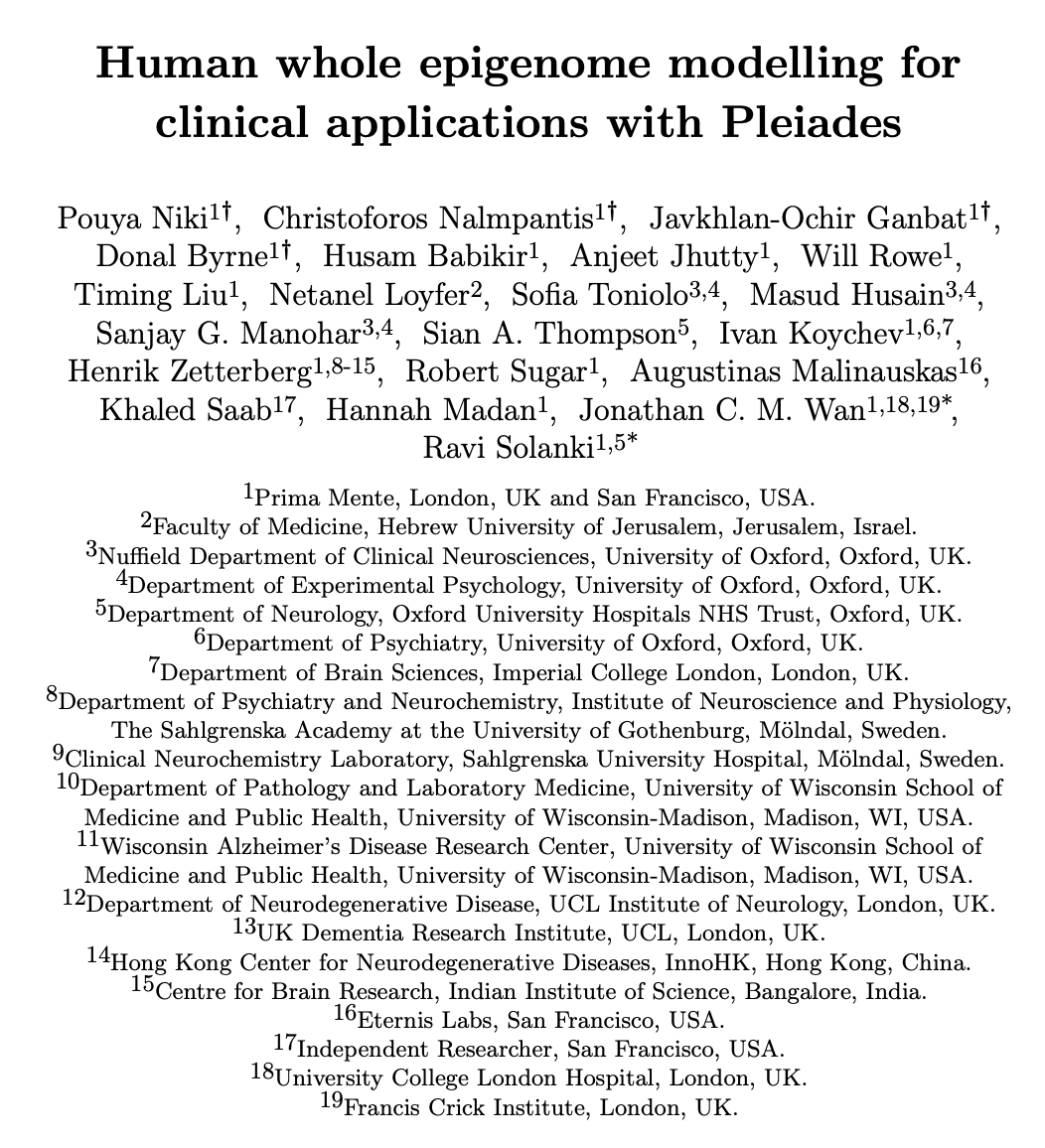
1/ Today we announce Pleiades, a series of epigenetic foundation models (90M→7B params) trained on 1.9T tokens of human methylation & genomic data. Pleiades accurately models epigenetics for genomic track prediction, generation & neurodegenerative disease detection from cfDNA, outperforming previous pure DNA baselines.
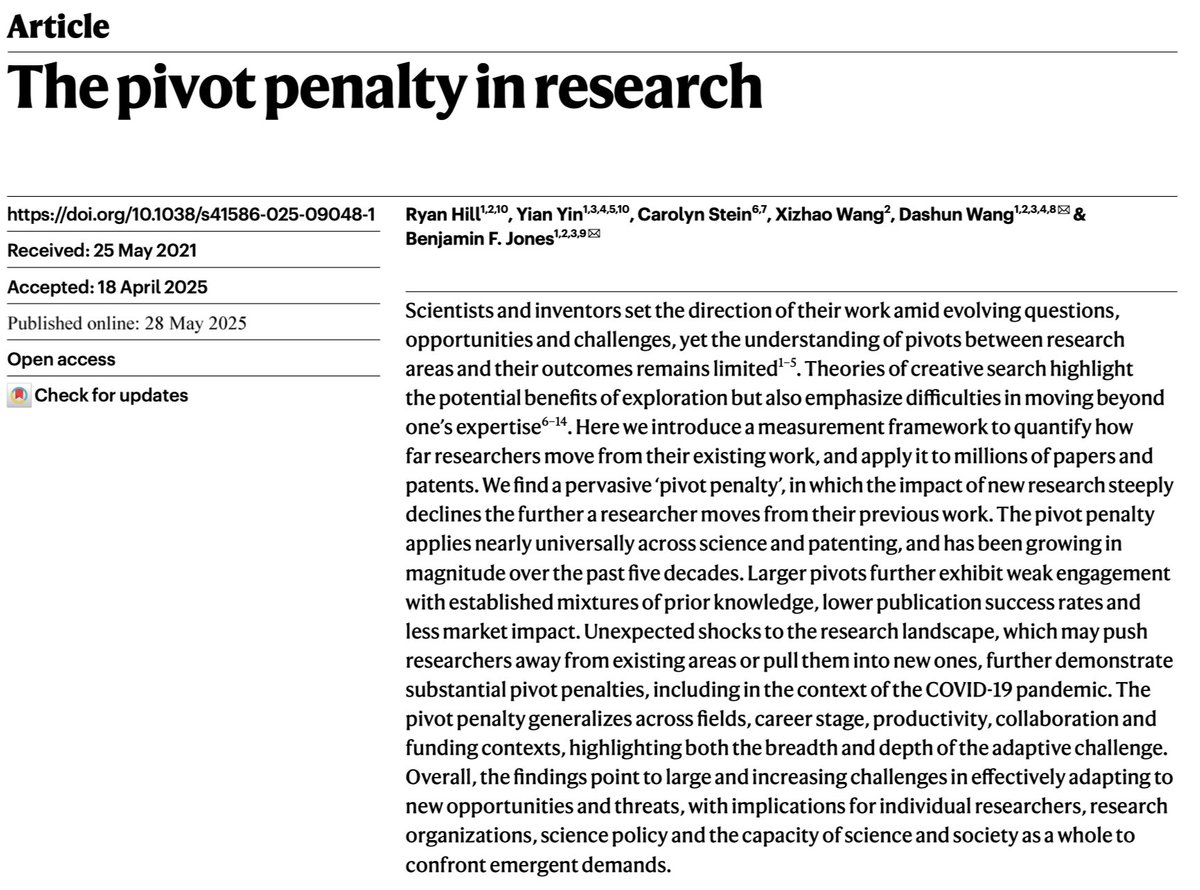
🚨New paper🚨 Excited to share our latest on @Nature today: The PIVOT PENALTY in research. https://t.co/V4ENiGCssY
More than five years in the making. Key finding: The impact of new research steeply declines the further a researcher moves from their previous work.
A special thanks to Giorgia Renne and Lucia Schmitz who were central to getting PROMETHEUS off the ground, Edith Heard, @JanKorbel5 and Alexander Aulehla for their early encouragement, Shreya Ghosh for initiating this article, and @EMBL for supporting this vision from the start.
I spoke with @EMBL about PROMETHEUS (Promotion of Ethics in Science), a new initiative to promote and optimize impact-driven science.
Learn more about our mission and how you can be part of it at https://t.co/bPoN3mCOh5
PROMETHEUS is an EMBL-born grassroots initiative to promote and optimise impact-driven science.
We had a chat with Donnacha Fitzgerald, the intiative's founder and bridging postdoc at EMBL Heidelberg, to learn more about its aims and activities.
https://t.co/aWnplADzCS
We are seeking to bring bright minds together across key expertise to research and publish on several topics: https://t.co/cagEO5T6Xr
Interested in any of these topics or have additional ideas? Reach out! https://t.co/KCu4KyBIYw
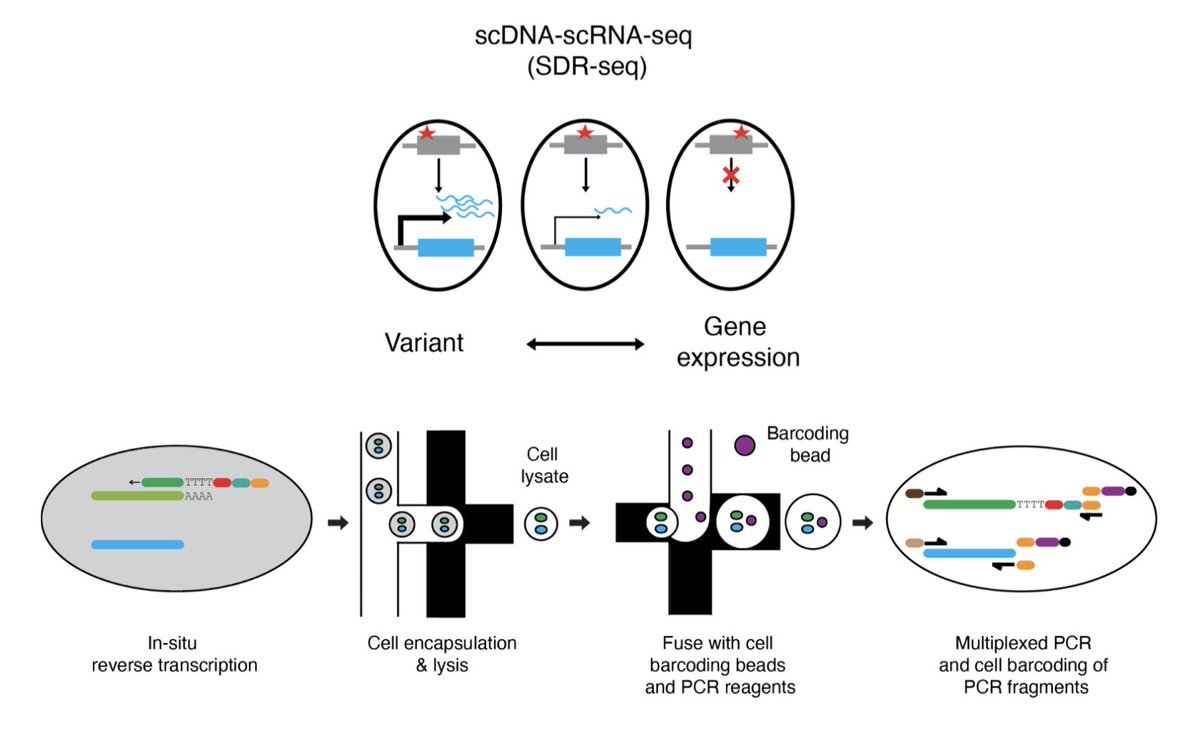
We are very happy to share our preprint (D. Lindenhofer et al.) of a high-throughput targeted scDNA-scRNA-seq (SDR-seq) method. Impactful for any application with a need to associate coding and non-coding variants to gene expression in tissue samples and cell culture systems.
Excited to be part of this project! It's a refreshing change from my usual routine, and I'm eager to see how the study results can empower young researchers in making informed career decisions. 🚀
1/12 We are excited to present #DEWSeq, a new analysis approach for identifying #protein–#RNA interactions from individual-nucleotide resolution sequencing that scales to large numbers of replicates to ensure reproducibility. #eCLIP#iCLIP#RBPs#NGS
https://t.co/KAB1B1fyqk
@K_Imkeller We also see varying patterns of co-localization between T-cell subtypes and different B-cell maturation states across B-NHL entities (Fig. 5b), suggesting a relationship between tumor maturation states and T-cell response.
[1/12] Thrilled to unveil our preprint on #bioRxiv in which a single-cell multi-omic and spatial atlas of nodal B-cell lymphomas (#BNHL) reveals the central role of differentiation in driving tumor variation and evolution: https://t.co/ytWhGm0GFZ
@K_Imkeller Great question! In normal lymph nodes, germinal center B-cells must interact with follicular helper T-cells or dendritic cells to differentiate into memory or plasma states - our data support that these interactions are maintained in malignancy (Fig. 5 and Extended Data Fig. 11).


![DN_Fitzgerald's tweet photo. [1/12] Thrilled to unveil our preprint on #bioRxiv in which a single-cell multi-omic and spatial atlas of nodal B-cell lymphomas (#BNHL) reveals the central role of differentiation in driving tumor variation and evolution: https://t.co/ytWhGm0GFZ https://t.co/cR5IKG5oLe](https://pbs.twimg.com/media/F-bWRXEW4AAFT85.jpg)