The world’s best AI systems can pass exams, write convincingly human essays, and chat so fluently that many find their output indistinguishable from a person's
What can’t they do? Solve simple visual logic puzzles https://t.co/1oMBzA5JKj
Researchers have developed and tested in rats a neuromorphic electronic skin system that simultaneously emulates closed-loop sensory encoding and the mechanical softness of natural skin.
Learn more in a recent #SciencePerspective: https://t.co/LVDkHsffl8
A successful coup would remove one of the west's last remaining allies fighting a jihadist insurgency in the troubled Sahel region. https://t.co/YGABTBAxBA
Good luck trying to dismantle entrenched structures and processes, says @AtheneDonald — but don’t give up, support is out there https://t.co/vJVSEVh7kw
How does the bacterium H. pylori cause stomach #cancer?
Researchers have deciphered how a bacterial protein may raise cancer risk by disrupting signaling mechanisms that restrain the excessive spread of pyloric gland stem cells. @scisignal https://t.co/XsosLMqj8L
We've discovered 5,235 planets beyond our solar system. They are strange new worlds and we love them! Meet some of our favorites: https://t.co/c6mqwyx2jc
WATCH: With Twitter in disarray since the world's richest person took control of it last week, Mastodon, a decentralized, open alternative from privacy-obsessed Germany, has seen a flood of new users. But what is it? https://t.co/p42XZqgqUN
If an earthquake strikes in the not-too distant future and survivors are trapped under tones of rubble, the first responders to locate them could be swarms of cyborg cockroaches
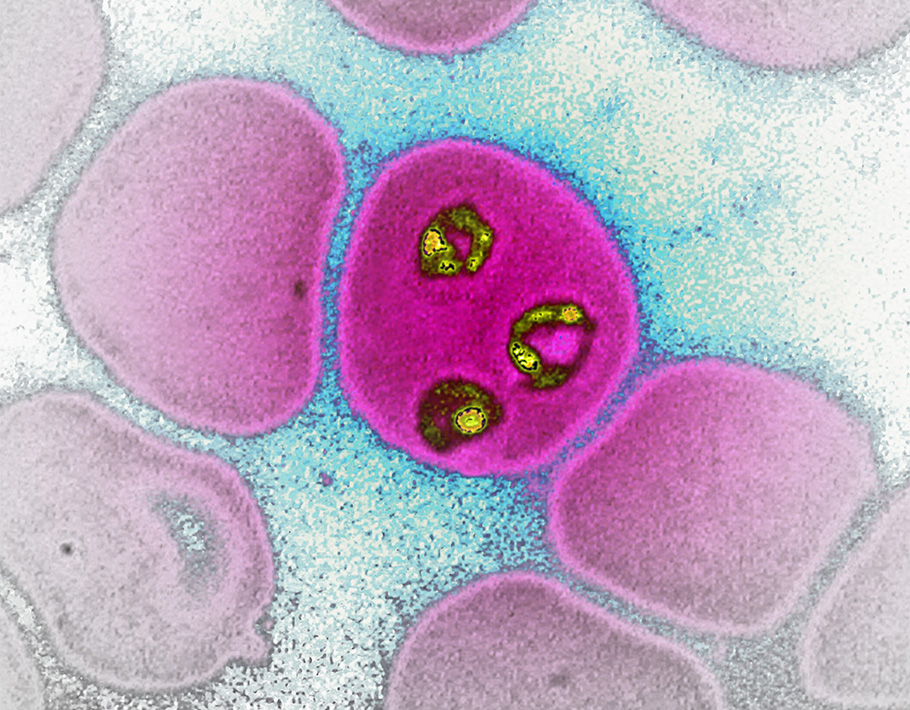
A vaccination strategy for #malaria based on genetically attenuated #Pfalciparum can protect healthy volunteers from controlled malaria infections, shows a phase 2 trial reported in @ScienceTM. https://t.co/FDPAZNSutu
Scientists say an experiment to make oxygen on Mars is now operating routinely in a variety of atmospheric conditions, including during the day and night, and through different Martian seasons
#ICYMI Deep fields from @NASAWebb, like this one, will help us peer farther back in time than any other telescope has before, to find out how the very first stars and galaxies formed, billions of years before our own Sun was born. #UnfoldTheUniverse
https://t.co/kPp1Q1F71U
Although the handshake and other types of physical contact are gradually returning, they have been on hiatus due to #COVID19. Such changes have already altered the epidemiology of a range of infectious diseases.
Learn more in a new #SciencePerspective: https://t.co/j0RGjDaz9x