LATEST: 🏦 United Texas Bank has completed its conversion to a national OCC-chartered bank, giving it direct Fed access while it clears about $10B a month for crypto firms, its CEO told CoinDesk.
LATEST: 📊 TD Cowen raised its Strategy price target to $395, saying its pivot to STRC preferred issuance makes its Bitcoin buying strategy more efficient than the market thinks.
CMC Market Pulse: The $80,000 Tug-of-War for Bitcoin
BTC +3.40%, ETH -0.18%. $2.66T market cap climbs as equities surge. Hyperliquid expands its TradFi footprint with fresh primitives.
Let's break down this week's top crypto narratives
1/6
LATEST: ⚡ Michael Saylor says Strategy may sell some Bitcoin to fund a dividend, marking the first time the company has floated the idea of selling its BTC holdings.
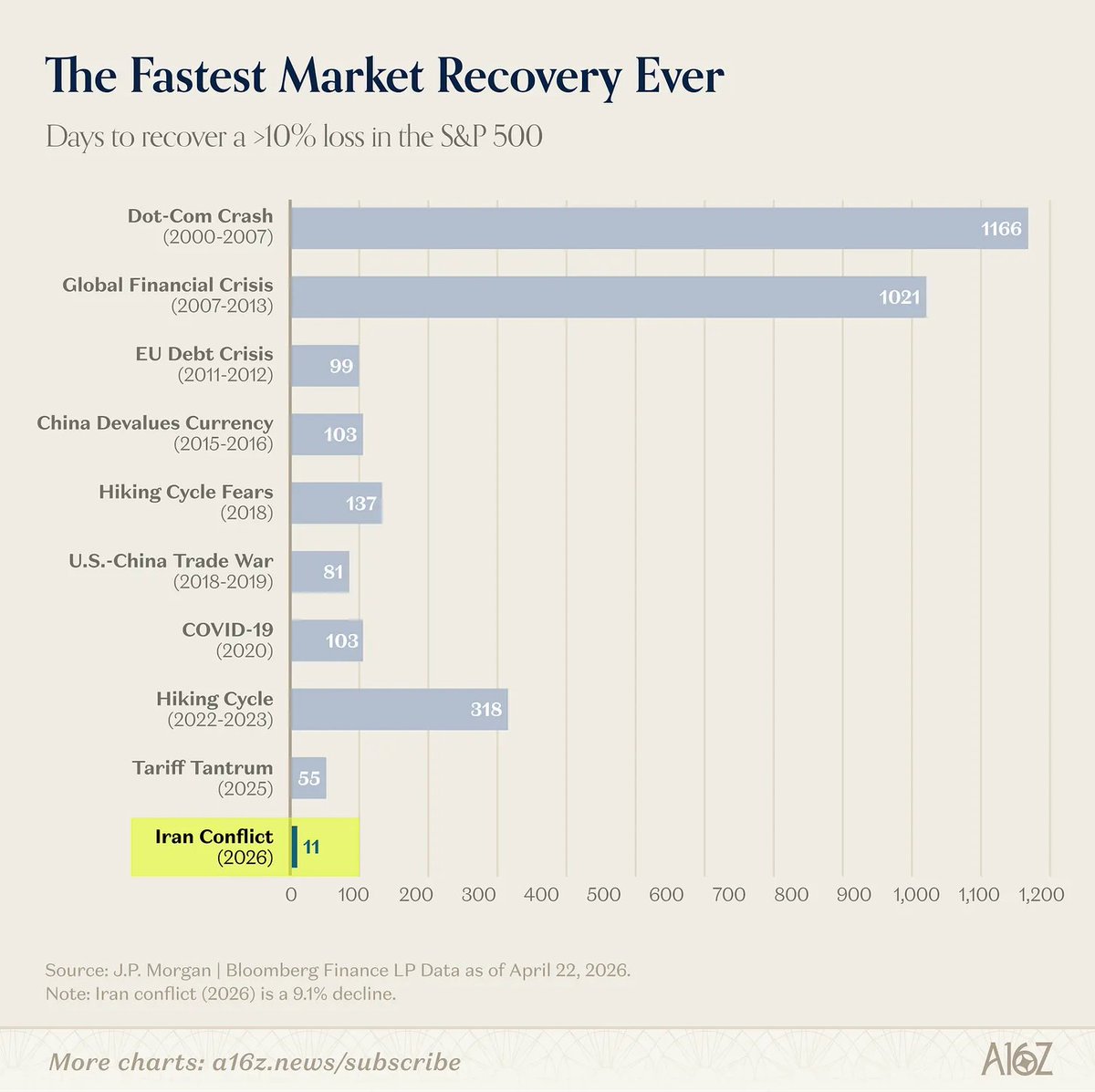
S&P 500 sold off by ~10% during the Iran conflict and made a full recovery just 11 trading sessions later. It constituted the fastest V-shaped recovery on record.
More charts: https://t.co/2IoX6EtHav
Billion dollar crypto clash.
World Liberty vs Justin Sun.
Today, Justin Sun, the largest investor in Trump's crypto project World Liberty Financial, went public and accused the project of building a hidden backdoor in the token contract that lets the team freeze any wallet without notice.
WLFI fired back within hours, called his claims baseless, and ended with "SEE YOU IN COURT PAL."
Here is how it actually started. 👇
In late 2024, Justin Sun put $30 million into WLFI. By January 2025, he scaled it to $75 million and was named an advisor. He also committed $100 million to the TRUMP memecoin.
Total Trump linked exposure: around $175 million. He publicly backed Trump and the project's "DeFi for everyone" pitch.
The WLFI token launched on September 1, 2025 at around $0.25 and hit an all-time high near $0.33. Only 20% of presale tokens were unlocked at launch.
Three days later, the situation on Sun's side started to develop.
On September 4, Sun moved around 50 million WLFI to HTX, the exchange where he sits on the advisory board. He called them test transactions.
Around the same time, HTX started offering WLFI presale investors high yields if they deposited their newly unlocked tokens on the exchange and locked them up.
Here is what WLFI alleges was happening:
- Retail investors locked their WLFI on HTX to earn yield.
- Sun was allegedly selling tokens on the back end of his own exchange, including tokens backing those user balances.
- The plan, according to WLFI, was to cash out his unlocked tokens early and even sell against the locked up user supply.
- Then, when more of his own tokens vested in the future, he would use those unlocks to refill the user balances on HTX.
- In short, using other people's locked tokens as early exit liquidity for himself.
WLFI says it had logs of this and froze Sun's wallet on the grounds that he had breached his agreement. Around 595 million unlocked tokens worth $107 million were frozen, plus billions more in vesting tokens.
Sun has not publicly addressed the back end selling claim in detail.
He has stuck to the position that the transfers were tests. On chain data from Nansen confirmed his wallet transfer happened after the price crash that day, not before.
So his direct transfer did not cause the crash. The question of what was happening inside HTX's internal books has not been answered by him.
For months he tried to resolve it privately. The token kept falling. By December 2025, his frozen stake was down around $60 million.
Now look at the other side of the story.
Starting in February 2026, the WLFI treasury began running a borrowing operation on Dolomite, a DeFi lending platform. It deposited its own stablecoin and its own governance token as collateral, borrowed real stablecoins against them, and sent the proceeds to Coinbase Prime, a venue typically used for institutional fiat conversion.
By April 9, 2026:
- 5 billion WLFI tokens deposited as collateral on Dolomite
- Around $75 million borrowed in stablecoins
- Over $40 million sent to Coinbase Prime
- WLFI's own token making up around 55% of Dolomite's total liquidity
- The USD1 stablecoin pool pushed to 93 to 100% utilization, which made it difficult for normal depositors to withdraw
Dolomite was co founded by Corey Caplan, who is also a WLFI advisor and has been described as acting in a CTO role for the project.
So the situation on chain shows WLFI borrowing real stablecoins against its own thinly traded token, on a platform connected to one of its own advisors, using a pool that also held retail users' stablecoins.
The $40 million transfer to Coinbase Prime happened just hours before Trump's US-Iran ceasefire announcement, which moved oil and risk markets sharply.
When this came out, WLFI called it FUD.
They said the position is nowhere near liquidation, they would add more collateral if needed, and they are acting as an "anchor borrower" generating yield for other lenders.
This is the setup Justin Sun walked into today.
In his X post, Sun said WLFI built a backdoor blacklisting function into the token contract that was never disclosed to investors, giving the team full power to freeze or effectively confiscate any holder's tokens.
He called himself the first and single largest victim. He said the governance votes WLFI uses to justify its actions had key information hidden from voters and predetermined outcomes.
He demanded his tokens be unlocked and that the team identify themselves by name.
WLFI's official account replied within hours.
They called Sun's claims baseless, said he is playing the victim to cover up his own misconduct, called it "same playbook, different target," and ended with "See you in court pal."
Sun replied by demanding WLFI's team step forward publicly instead of hiding behind an anonymous account.
So in short:
- WLFI trading near $0.079, down 76% from its high
- Sun's frozen stake worth around $43 to $45 million, a paper loss of $60 to $70 million
- WLFI signaling a lawsuit
- The Dolomite loan is still open
- The $40 million on Coinbase Prime has not been publicly broken down
The on chain data is public.
The freeze, the loan, and the Coinbase Prime transfers are all visible to anyone.
JUST IN: 🇺🇸 SEC Chair Paul Atkins calls for Congress to pass crypto market structure legislation.
"It's time for Congress to future-proof against rogue regulators & advance comprehensive market structure legislation to President Trump's desk."
RECAP: ⚡ Prediction market competition picked up this week as major crypto players pushed deeper into the space.
Can incumbents hold their lead?
Here’s the full picture. 👇🧵
1/7
Alex Karp on why America's decisive advantage is technology:
"One advantage that often gets overlooked for reasons that make no sense is — war fighting is technology."
"The reasons America was able to win World War II were technological advantages."
"If you look what happened in Operation Midnight Hammer, what happened in Venezuela, what's so far happening in Iran — you see one society just totally dominating. That's our society."
"Now... I'm always in fights with my intellectual friends... they're like: but wouldn't it be better to have a law based system where everyone is equal?
"Yeah, sure, in theory, but in this world it's us, or China or Russia. And I don't know how you guys feel about those decisions, but... I literally believe we are doing the work of higher, a higher purpose... and not just for America, but for the whole world, that we are the power that actually has the decisive vote."
"There is only one way to do that. And that is with military superiority."
@PalantirTech@KTMBoyle
Yesterday at the 2026 American Dynamism Summit, @NASAAdmin Jared Isaacman announced NASA Force — a term-based talent exchange with industry aimed at rebuilding the agency’s core engineering competencies:
In crypto everyone loves banging on about the long term
But every cycle the market properly tests who can actually play the long game
Building in Web3 means living in constant turbulence
regulation keeps shifting liquidity dries up narratives flip every six months
And thats exactly when you see who actually knows what theyre doing
A strong team doesnt vanish from the radar in a bear market or suddenly chase the latest trend to raise a round
They cut costs double-check unit economics talk to users rewrite the product if they have to
All without making a big song and dance about it
Investing in them is trickier
Theyre not always the loudest
But theyve got this annoying yet crucial quality discipline
And in Web3 discipline often ends up mattering more than creativity
Creativity gives you a spike
Discipline gives you survival
And if youre being honest its survival that eventually delivers real returns
Not at the top
But over the long haul