ISS astronauts briefly sheltered aboard an attached SpaceX Dragon capsule today (June 5) while cosmonauts tried to fix a persistent air leak on the Russian side. https://t.co/MMvSsdt9c7
Roscosmos has paused Friday’s structural repair efforts inside the Zvezda service module transfer tunnel, known as PrK, as more measurements and data is assessed. Given this development, NASA has instructed the crew members inside the Dragon spacecraft to end the safe haven procedures and return to planned operations aboard the International Space Station. We look forward to working with Roscosmos on a collaborative approach to address the leaks.
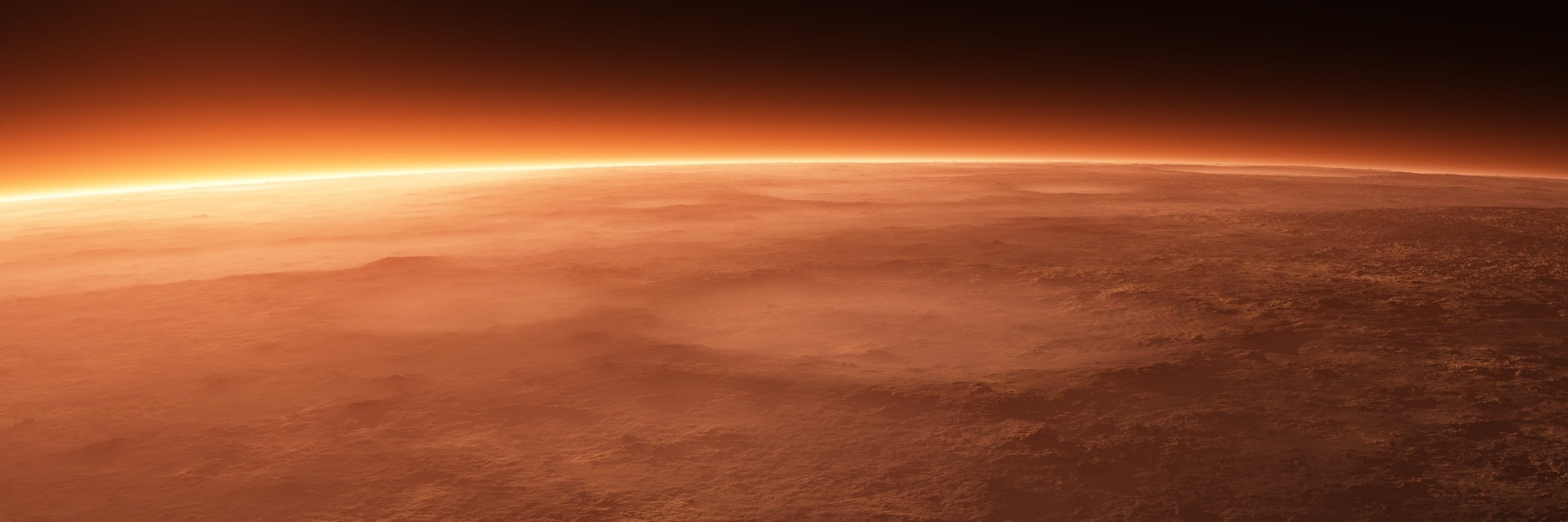
ICYMI! From thin atmosphere to supersonic descent, Mars makes landing spacecraft incredibly complex. A new Red Planet Bound article examines the physics & technology behind one of space exploration’s toughest tasks. Read the blog at: https://t.co/h42xljwsdR.
The Zvezda service module transfer tunnel, known as PrK, has suffered from cracks and leaks for some time, and has been mitigated by Roscosmos as much as possible to date. The cracks have always been a concern that NASA watches very closely. NASA and Roscosmos have been working to determine the root cause of the cracks, and Roscosmos manages the issue through operational mitigation measures and periodic partial-repair efforts. Following new leaks, Roscosmos has elected to proceed with a more extensive repair operation on Friday, June 5. Out of an abundance of caution, NASA has directed all four of the agency's SpaceX Crew-12 members and NASA astronaut Chris Williams to assume an elevated safety posture in the Dragon spacecraft while the repair is underway. We continue to work with our Russian counterparts, along with the rest of the international community that supports the space station, to arrive at a more permanent resolution.
HiRISE 3D: A Wonderously Weird Dune Field
This stunning image is part of a campaign to aid in classification and volume estimates of dunes not mapped in the USGS global dune database of Mars.
https://t.co/nScjH380U2
NASA/JPL-Caltech/University of Arizona
#Mars#NASA#science
Since arriving at its destination five years ago, our Perseverance Mars rover has collected data that hints at a history of past life on the Red Planet.
Catch up on Percy’s biggest discoveries in this week’s episode of our Curious Universe podcast: https://t.co/J5dh8FhHjw
We built the spacecraft.
Last month, the major flight hardware of DeepSpace-2 came together on our integration floor for the first time.
This vehicle is headed millions of miles into deep space later this year to rendezvous with and image a near-Earth asteroid.
One week later, incredible progress. It’s a 24/7 operation with a solid path forward to launch this year, helped by a lot of luck. @NASA and @USSpaceForce have both been extremely helpful.
This team. Never tell them the odds.
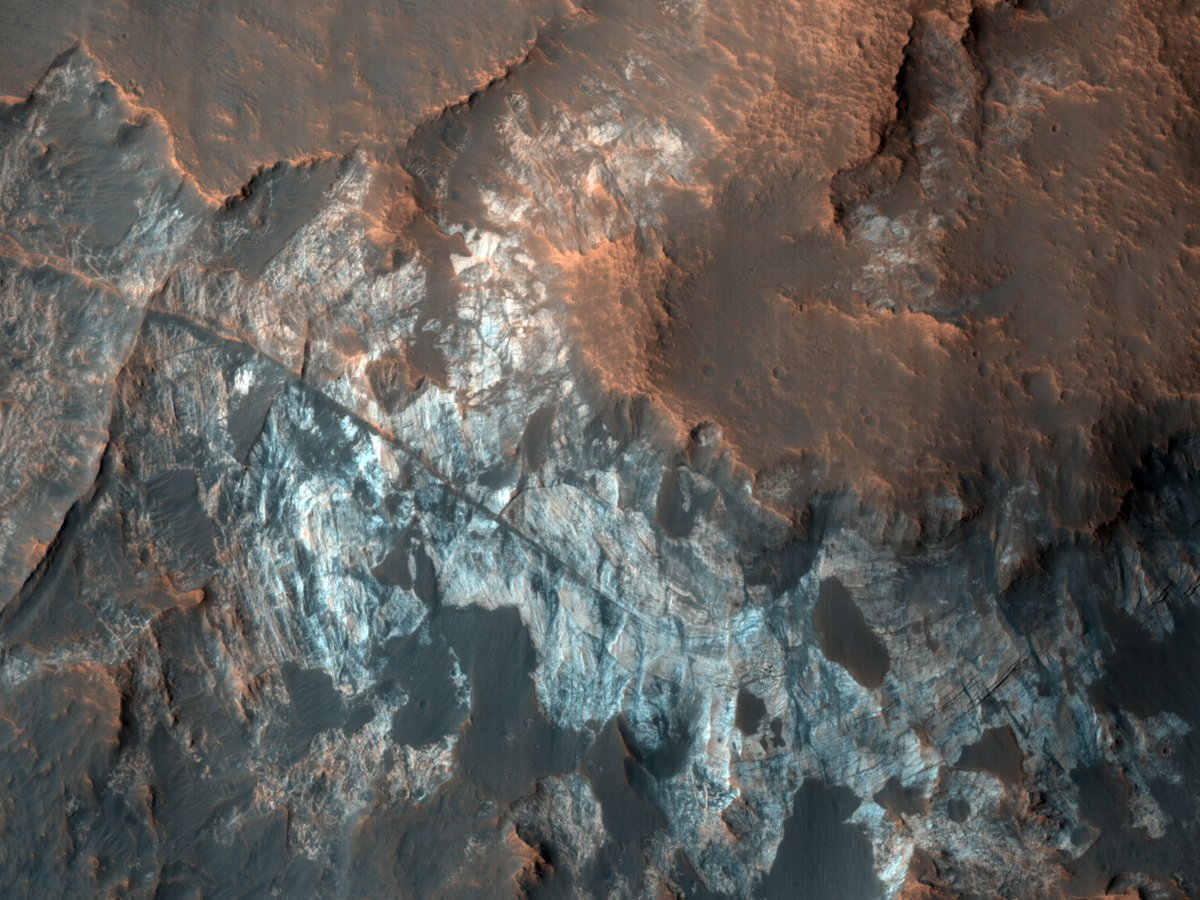
HiPOD: Fluvial Erosion in Phlegra Montes
This public target via HiWish suggests to observe possible fluvial erosion that could help understand the climate history of Mars. Context Camera data and previous HiRISE images show faint, but possible channels.
https://t.co/1LDIbgSBvW
Woke up thinking about the late John Glenn. This is me with him just after he landed at Kennedy Space Center onboard the Space Shuttle Discovery (STS-95) to become, at age 77, the oldest person to orbit the Earth.
One day, during my 6th year as NASA Administrator, John Glenn paid me a visit at my office in Washington, D.C.
He sat down and explained that he had been studying the effects of space on aging bodies, and he wanted me to send him to space so he could run experiments on his body.
At the time, John Glenn was a revered Senator of Ohio for 24 years.
But, he had been a hero to me and to America ever since he successfully became the first American astronaut to orbit the earth in 1962.
Up until then, the Soviets had been leaping ahead of us in space. They launched the first man, Yuri Gagarin, on April 12, 1961. And then they once again beat us by keeping a cosmonaut in space for a full day.
On Feb. 20, 1962, at 40 years old, astronaut John Glenn became the first American to orbit the Earth during the three-orbit Mercury-Atlas 6 mission, aboard the spacecraft he named Friendship 7.
At the time, I was about to turn 22 and I had just started as an ion plasma engineer at NASA Lewis in Cleveland, Ohio. On that day, I remember the hope and confidence John Glenn instilled in all of us to take space on as a country and beat the Soviets to the moon.
In fact, John Glenn became so much a hero to our nation that President Kennedy felt that we couldn’t risk losing him and declared that he would never go to space again.
So now decades later, here I was as NASA Administrator being asked by this American hero to reverse President Kennedy’s decree and risk sending him back to space again… this time at age 77!
I told Senator Glenn that he would need to pass the same physical exam standards the younger astronauts took – 20/20 vision, whether naturally or with corrective lenses, and a sitting blood pressure not to exceed 140/90.
He passed. But what most don’t know is that this is also me grabbing him by his flight suit from behind to prop him up, because he had lost his sense of balance from disrupting the equilibrium in his ears while in space 😛.
I couldn’t have our American hero stumbling around with all the press and crowd watching him!
I thank John Glenn for energizing America and our confidence to reach the heavens. He also always championed space and technology, in public and private spheres – especially during my brutal battles as a newbie Administrator on The Hill.
The Exploration Company has completed an initial drop test to validate the recovery system of its Nyx spacecraft ahead of a planned 2028 demonstration mission to the International Space Station.
https://t.co/dWCuNcy2r4
That was a close one! A Grid Fin appears to have locked up. You can see the Merlin engine gimbal at the last second to avoid landing on the wrong part of the droneship.
NASA just declared its MAVEN Mars orbiter dead after a dozen productive years circling the Red Planet. Here's the fate that awaits the probe. https://t.co/QrlxL5XD3m
HiRISE 3D: A Small Fresh Crater in Syrtis Major Planum
The ejecta from the impact is still dark and highly visible, so the crater is likely geologically recent, although we have no previous image to help us constrain when it might have formed.
https://t.co/qydDlyh5UU
#Mars
HiPOD: A Pit near Arsia Mons
Previously visible in Context Camera data, our image can determine if any underlying void and associated faults can be observed. Pits may reflect geologically-recent tectonic or volcanic activity.
https://t.co/p6zWOIxuWU
#Mars#NASA#science