A 🧵on radical possibility amid the climate apocalypse…
I moved here to go where the fight is, and I found beauty, hope, and resilience among frontline and fenceline communities.
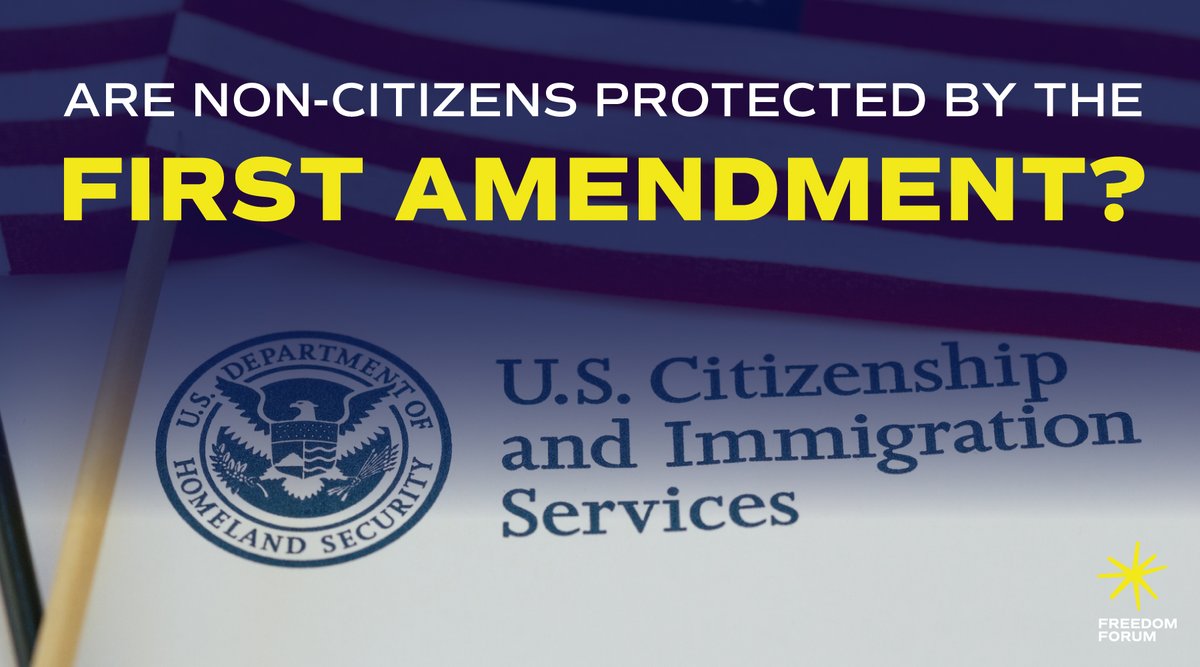
The First Amendment protects our right to protest and express our views without the government taking sides in those discussions. That means the government can't pick which speakers it supports and which speakers it doesn't. It also means the government can't punish some speakers for expressing a view the government disfavors.
This past Saturday, Mahmoud Khalil — a recent Columbia University student who was born in Syria and is a lawful permanent resident of the United States — was arrested by ICE and is currently being held at an immigration detention center in Louisiana. There have been no formal charges against Khalil, who was an active participant in pro-Palestinian demonstrations at the university. But in a post on Truth Social, President Donald Trump referenced students at Columbia and other universities "who have engaged in pro-terrorist, anti-Semitic, anti-American activity" — raising questions about whether Khalil was, and others might be, arrested and/or threatened with deportation based on political views expressed and whether that would violate the First Amendment.
Many are wondering whether Khalil, as a green card holder, is protected by the First Amendment and its five freedoms.
Here's everything you need to know about non-citizens and the First Amendment: https://t.co/C2FodD2pa7
I know many of you will roll your eyes at this, but that's OK; I wouldn't be in this field if I was afraid of being dunked on every now and then.
When I first came to The Washington Post in 2017, I was extremely wary it would be too establishment for me. Too corporate. Too deferential to power.
What I have instead found over the last seven years is that the paper has consistently given me a unique, awesome platform to fulfill the highest calling of journalism -- to comfort the afflicted, and to afflict the comfortable.
The Post has spared no resource in allowing me to pursue this mission. It flew me to Puerto Rico to interview hurricane victims cut off from federal food stamp aid. To Maine to cover the long-term care crisis facing the nation's elderly. To Kentucky to document the closure of a steel plant. To Las Vegas to cover the housing crisis. To Wisconsin for farmers caught in the crosshairs of a trade war. To Detroit for a story on the nation's unraveling safety net. To the Bronx to chronicle appalling public housing conditions. (OK, I took the train there.) To Ukraine to cover a war. To Indonesia for meetings of the world's most powerful financial leaders.
Since the beginning of the year, the Post has devoted thousands of manpower hours to a series -- six parts published thus far -- on the unintended consequences of U.S. sanctions. This effort included paying me and a team to travel to northeast Guatemala to chronicle an economic calamity almost 2,000 miles away from my desk, in one of the poorest parts of the world. At least 20 people have worked on this series alone. The Post did not greenlight this series because it thought there would be huge pageviews in U.S. sanctions policy; it did so because it's important for the public to understand how the surging use of the tool is affecting the world and the nation's foreign policy. It did so because the story matters.
I fully understand the misgivings people have expressed about billionaire control over our journalism. (I published a story today -- pitched by an editor, put by editors on today's front page -- about billionaires threatened by Trump who are now hedging their bets.) But these are stories that require more than just substantial resources; they require a devotion to journalism that seeks to document how machinations in Washington affect the lives outside it.
I could try a Substack where I spout off whatever happens to be in my head that day. I could work for a publication that only caters to lobbyists and elite insiders. But there are precious few publications still doing the coverage -- however incomplete; however still in need of improvement -- aimed at serving the broader public at large. I believe The Washington Post is one of them.
I am not here to tell anyone what to do. We are imperfect. My work can suffer from negativity bias, recency bias, imperfect data, faulty assumptions, motivated sources. I get things wrong. My journalism can be flawed and you should yell at me on twitter when it is. I want to be more transparent about the decisions I make and the stories I publish.
But I promise you: I and many, many other journalists throughout this newsroom would quit The Washington Post if we ever felt our work was not in service of the public at large. That is the point of the job. That is why I hope we get to do it for as long as possible.
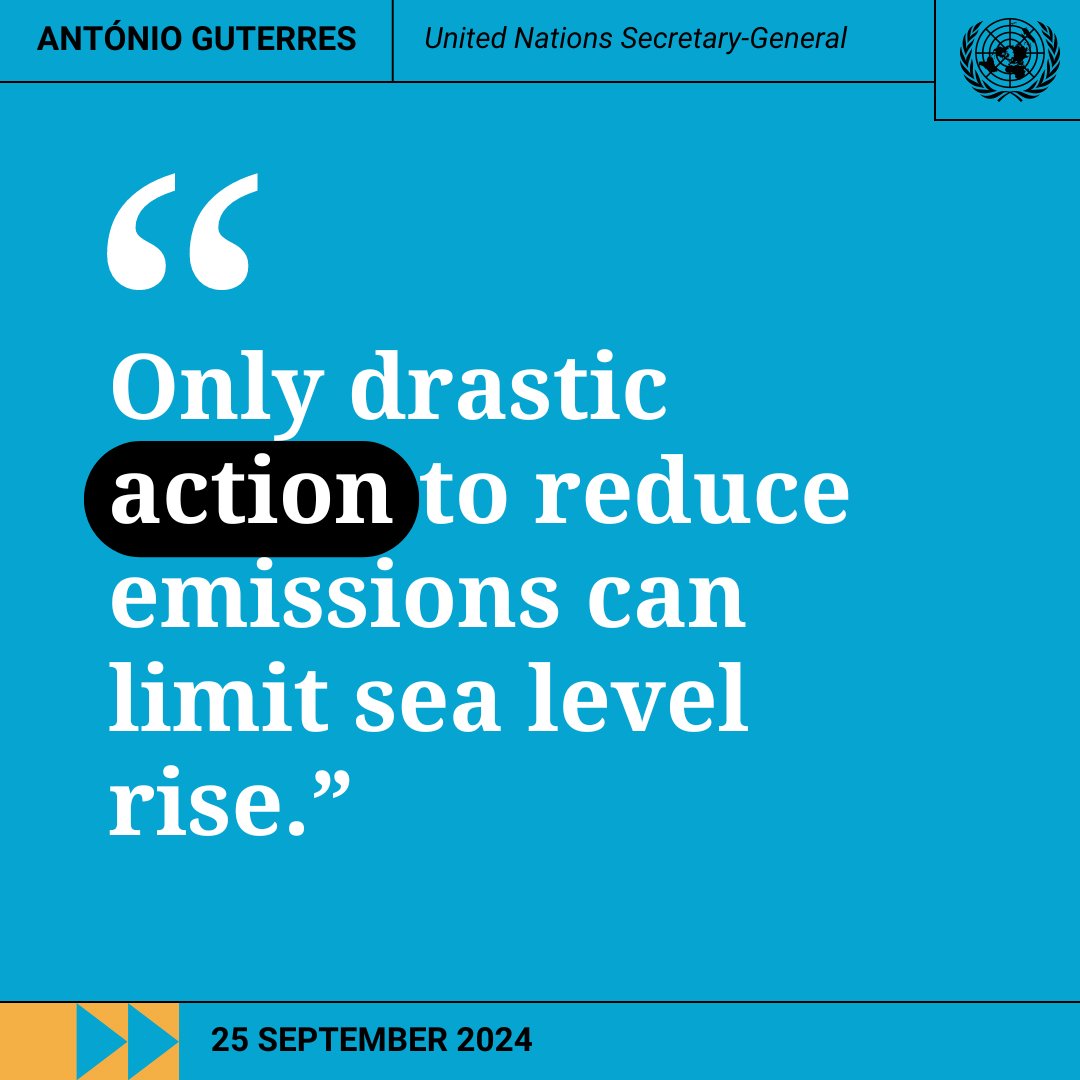
“Rising seas will reshape not only coastlines, but economies, politics and security too.”
At #UNGA, @antonioguterres calls for #ClimateAction to address the urgent threat posed by sea-level rise.
https://t.co/M2Z4XU1Ws2
The most extraordinary few months in politics in my lifetime, maybe. Three weeks ago the Democratic Party was on the verge of mass suicide and now they're in better fighting shape than they've been in 16 years.
What I’ve learned and fought to hold space for in my work is that in times of crisis, as much as in times of joy, we thrive in community. If we can nurture those instincts, if we can transform the way we relate to one another, we can start to transform society.
When I look at this jet stream the word insane comes to mind. It's even more astonishing when you consider it's mid June! This configuration, likely enhanced by climate heating, is fueling a record heat dome so extreme that even experts are astonished!
We have 7 years to turn it around. In roughly the time that has passed since the 2016 election, we will be living in a radically transformed world. Whether for better or worse is up to us.
If we do our jobs well, it could be so much better.
Brandon Johnson’s performance tonight is a stunning rebuke of recent media claims that voters have abandoned criminal justice reform.
Criminal justice reform is not antithetical to public safety—it promotes safety.
Communities deserve—& are demanding—both safety AND justice.
"Why? Because she’s brought a ludicrously capacious bag. What’s even in there, huh? Flat shoes for the subway? Her lunch pail? I mean, Greg, it’s monstrous. It’s gargantuan. You could take it camping. You could slide it across the floor after a bank job."
EXCLUSIVE: The Texas Observer, the crusading liberal magazine founded in 1954, which Molly Ivins edited in the ’70s, is closing down and laying off its staff. The board voted on Wednesday, and again today, to proceed with the shutdown.
https://t.co/q5d5QBxKyQ