Introducing Generative UI for Claude Code, Codex and Pi
Charts, forms, 3D, anything
Your agent renders real UI for users while it works in a sandbox
Powered by AI SDK's experimental HarnessAgent + json-render
@sama How about prioritizing getting the CLI to support the 1M context window? That'd be pretty sweet, compaction is great, but some tasks that need to research really large codebases end up compacting before that research is even done, which makes it less than ideal
𝚗𝚙𝚡 𝚍𝚎𝚎𝚙𝚜𝚎𝚌
We're introducing an open-source agent orchestrator for deep security reviews.
We built it for internal use, and after running it against some major OSS projects, we gained conviction to share it with the world.
Coding agents can now find critical vulnerabilities in minutes that would take teams of people months (if they can spot them at all). Since 𝚍𝚎𝚎𝚙𝚜𝚎𝚌 is optimized to work with Vercel Sandbox, you can effectively harness the power of thousands of agents scrutinizing your codebase in parallel.
I encourage you to try this on your repositories. BTW: If you run an OSS project and want us to sponsor a run, my DMs are open.
So, exactly how big will the intelligence explosion be?
…Ten years of AI progress in a year? In a month?
Our new paper tackles this question head-on.
I've researched AI takeoff speeds for many years. This is my best stab at an answer.🧵
We got a call from @xai 24 hours ago
“We want to test Grok 4 on ARC-AGI”
We heard the rumors. We knew it would be good. We didn’t know it would become the #1 public model on ARC-AGI
Here’s the testing story and what the results mean:
Yesterday, we chatted with Jimmy from the xAI team, who wanted us to validate their Grok 4 score. They did their own testing on the ARC-AGI-1 & 2 public evaluation set
To validate their score (and measure possible overfitting), we self-tested the new model on our semi-private evaluation set
We walked them through our testing policy:
* No data retention
* Model checkpoint must be intended for public use
* Temporary increase in rate limits for burst testing
They were on board, so we got started
Initially, we ran into timeout errors with normal requests, so we switched to streaming. That resolved the issue
So, what do these results mean?
First, the facts: Grok 4 is now the top-performing publicly available model on ARC-AGI. This even outperforms purpose-built solutions submitted on Kaggle.
Second, ARC-AGI-2 is hard for current AI models. To score well, models have to learn a mini-skill from a series of training examples, then demonstrate that skill at test time.
The previous top score was ~8% (by Opus 4). Below 10% is noisy
Getting 15.9% breaks through that noise barrier, Grok 4 is showing non-zero levels of fluid intelligence
But the mission isn’t over. We need new ideas to solve ARC-AGI-2. Scale alone won’t get us there
Come work on ARC-AGI with us
The first version of Coinbase launched with just a hot wallet - a risky proposition. We were in beta and the app prominently told people not to store any money there they couldn't afford to lose. But the amounts of deposits kept steadily rising.
I realized we needed to build build a cold storage system to improve security (otherwise a single hot wallet breach would mean we were insolvent and the company would die), and called the two cryptography/security experts I knew (@zooko and @octal if memory serves) and asked them what the best architecture would be. They were super helpful and gave me a crash course, since I had never built such a system before. I asked them how long it would take to build and I remember one of them said it might take a team of ~10 people 18 months to get it all up and running and tested.
The problem was we had about 8 weeks until the total deposits on the platform would exceed the total assets of the company, and only 2 engineers (including myself) to build it. We were seeing signs that hackers were already trying to break in, a true do or die moment.
@satoshilite and I buckled down and set about coding the new cold storage system from scratch, and integrating it into the app. We made some reasonable trade offs but what we came up with was fundamentally secure, and a massive improvement. We even unboxed some new laptops for key generation, stored backup material across several safe deposit boxes and locations. With about a week remaining, we started the process of transferring funds over to the new system. We were both extremely sleep deprived (how mistakes happen!), and paired up to double check each others work as we sent over the first test transaction, then a bigger one, and so on until it was fully transferred. We breathed a sigh of relief and went home to sleep for about 12 hours.
This was one of my proudest technical accomplishments from the early days of Coinbase: coding our v2 key storage system with 2 people in about 8 weeks, which should have taken 10 people 18 months. And it worked and served us well for years.
We're now on ~v5 of key storage, and have advanced way beyond what we came up with that day. But if we hadn't gotten it out in time, Coinbase very well may not exist today. It's a great testament to how constraints breed creativity, top talent matters in startups, and teams are often capable of more than they think when there is no other option.
Most products which succeed have early moments like this, where someone has to step up and make a play on the field that defies all the odds. As we face new challenges and deadlines across our many products, I always look out for who on the team is ready to step up and make the game winning play on the field.
on future of AI interfaces:
future interfaces flow like water — meeting people how they actually think, not how we assume they should
some of us think in bullet points, some in conversations, others need to see everything mapped out visually. the magic happens when the interface adapts to match your specific cognitive style instead of forcing everyone through the same chat box
imagine AI that knows you process complex info better as a timeline, or that you prefer quick back-and-forth over long explanations. it shifts between chat, canvas, tables, whatever actually works for how you think, but acting on the same ground truth
we're moving from “here's one single-purposefully built interface, deal with it” to interfaces that genuinely fit how minds and teams operate. not just understanding what you want, but how you want to receive and work with it
the breakthrough isn't more features — it's interfaces that feel invisible because they match your natural thought patterns perfectly — the ideal form of “it just works.” it grows from something simple and universal, into forms that capture the beautiful complexities of individual minds
rigid UIs assume everyone thinks the same way. adaptive interfaces recognize that great tools should bend to the user, not the other way around
Sandboxes allow you to safely run arbitrary code on Cloudflare Containers.
You can build a PR review bot that can safely checkout a git repo, install all the dependencies, and run tests. Thirteen lines of code.
Introducing two new ways to create with Claude:
A dedicated space for building, hosting, and sharing artifacts, and the ability to embed AI capabilities directly into your creations.
60 req/min & 1000/day is pretty awesome. Now get Gemini to not rewrite my entire codebase when I ask it to change a background color and we’ll be set.
Google accidentally published the Gemini CLI blog post, but now returns 404.
What’s inside:
🔓 Open-source CLI for Gemini 2.5 Pro
🧠 1M token context
💸 Free: 60 req/min & 1,000/day
🔍 Google Search grounding
🧩 Plugin/script support
🧑💻 VS Code integration (Gemini Code Assist)
I'm so excited about the AI SDK 5 beta:
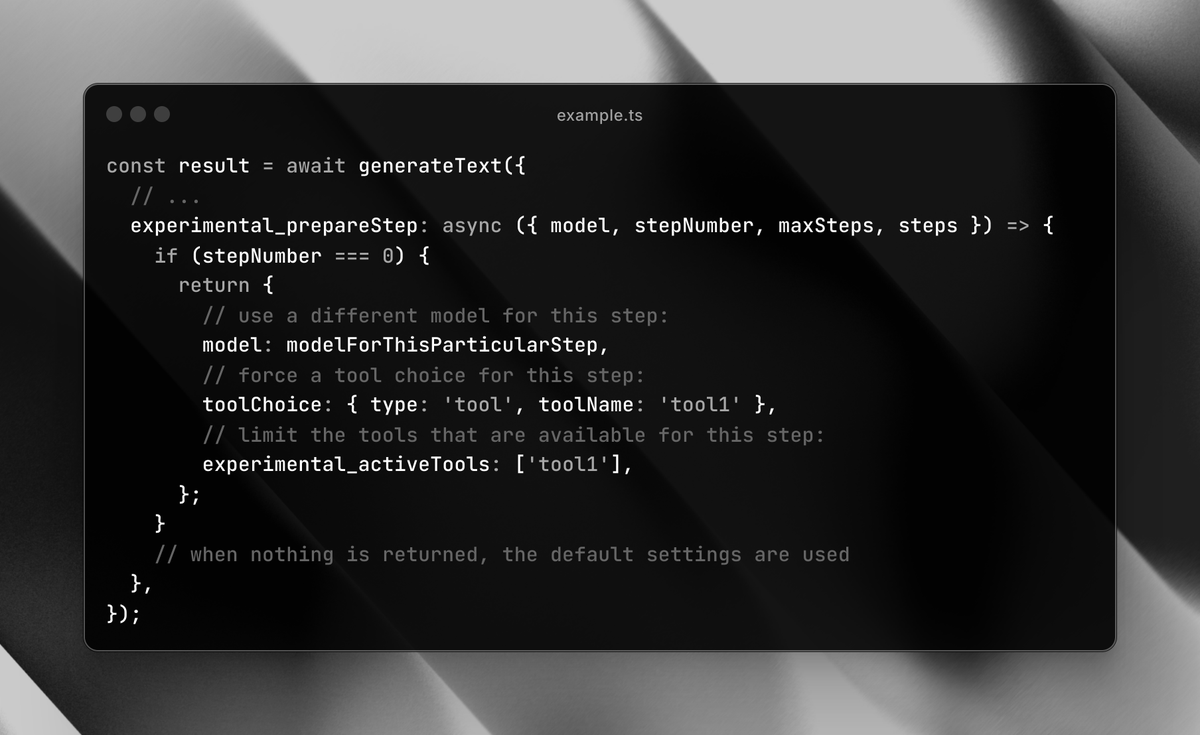
- prepareStep - fine-grained control over each step in a multi-step agent
- stopWhen - define stopping conditions for your agent
- Tool Output Schema
Researchers have created a single-material electronic skin using a gelatin-based conductive hydrogel that senses pressure, heat, and damage.
32 electrodes in the hand collected over 1.7M data points to enable a ML model to interpret various touches.
✨ I'm unbelievably excited to introduce Ultracite v5: the AI-ready formatter that helps you write and generate code faster.
🙅 Zero-config
⚡ Lightning fast
🤖 Designed for humans and AI
💪 Maximum type safety
🔗 Plays nice with others
Here's the TL;DR 👇🧵
We needed instant VM snapshots for Devin but EC2 took 30+ minutes. So, @silasalberti built blockdiff—a new file format that makes snapshots 200x faster.
Today, we’re open-sourcing blockdiff & sharing how it works 🔗👇
How do you improve MCP integrations?
According to @AnthropicAI, you let your model rewrite your tool description to avoid failures.
(Sound familiar @lateinteraction?)
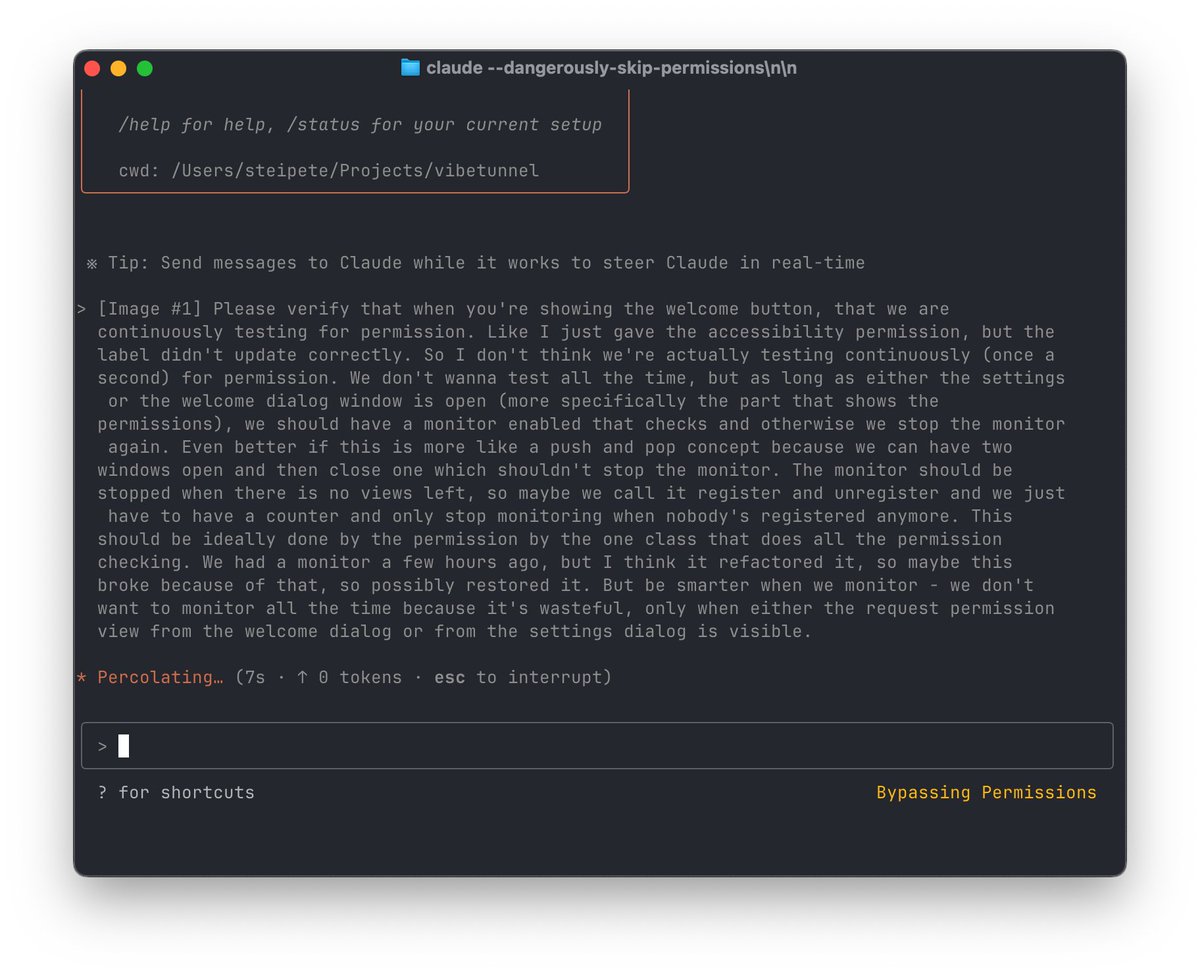
The more details I give Claude Code in a promot, the higher the chances of it doing the right thing. At this stage you don't wanna type, better use @WisprFlow and talk.
Those kind of prompts usually get me the one-shot outcomes I want.