Positive psychotic symptoms are associated with divergent developmental trajectories of hippocampal volume during late adolescence in patients with 22q11DS.
https://t.co/zPSyksZns3
La odontología es una de las profesiones médicas más antiguas, con más de 9,000 años de historia documentada.
Los primeros registros de tratamientos dentales se remontan al 7000 a.C., en lo que ahora es Pakistán.
En el 5000 a.C., textos sumerios mencionaron la caries dental, atribuyéndola a "gusanos dentales", una creencia persistente.
Esta idea no fue desmentida hasta el siglo XVIII, cuando se descubrió la verdadera causa del deterioro dental.
En 1840, se inauguró en EE. UU. el primer colegio de odontología, lo que marcó un hito importante.
Poco después, la Asociación Dental Americana se formó para estandarizar la práctica y mejorar la formación dental.
Harvard fundó la primera facultad de odontología universitaria en 1867, impulsando la investigación y la enseñanza dental avanzada.
Innovaciones clave, como la pasta dental Colgate en 1873, revolucionaron el cuidado dental en la población general.
DOI: 10.1186/s40494-023-01046-8
A systematic review and meta-analysis of transdiagnostic impairments in white matter integrity across the psychosis continuum | Nature Mental Health https://t.co/av2QHvdOWY
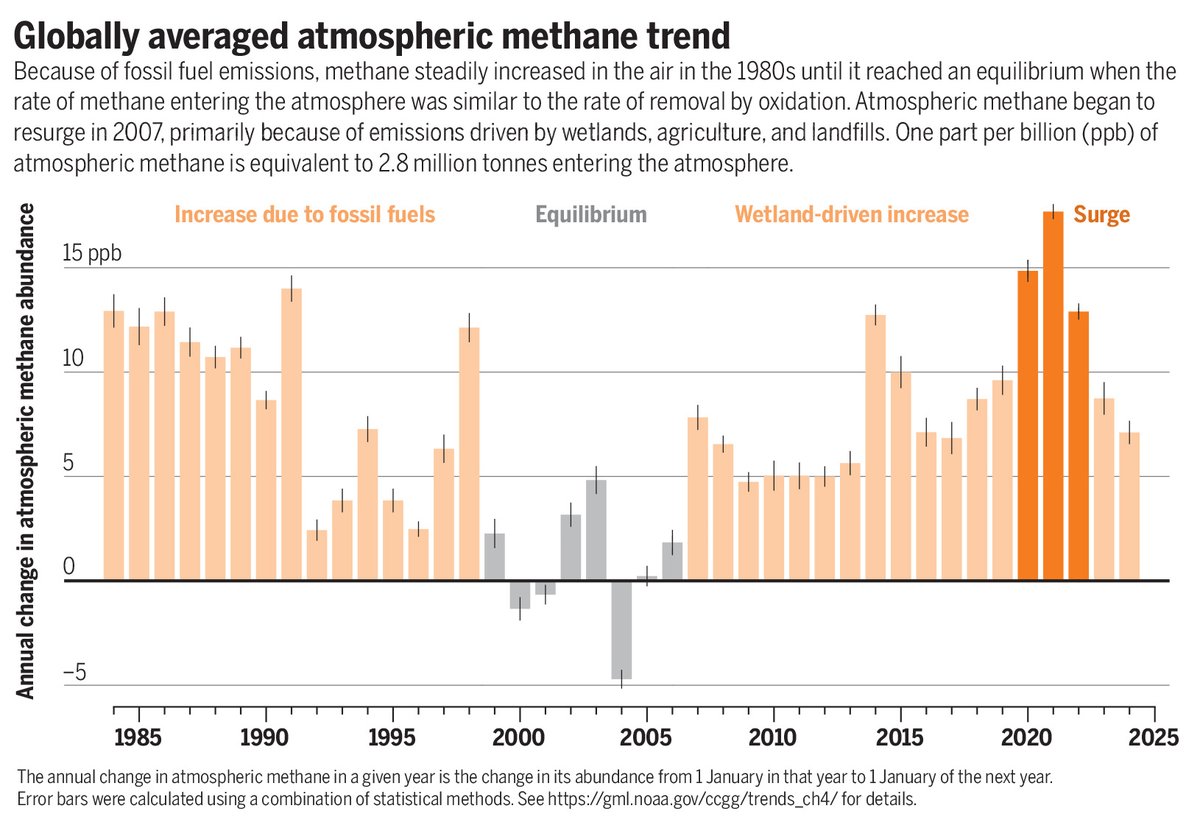
A temporary weakening of the atmosphere’s chemical capacity to break down methane, combined with elevated emissions from tropical wetlands, drove the sharp increase in atmospheric methane observed in 2020 to 2021, according to a new study in Science.
📄: https://t.co/OzdTrkPRA3
#SciencePerspective: https://t.co/TEGLNbSQDj
#Wild Yellow-naped Amazon parrots use warbling duets with complex syntax and structured call patterns, demonstrating language-like properties in their vocal communication in the wild. https://t.co/yvSfkwleKO https://t.co/adOjmhvESW
#A new tissue-adhesive oral patch enables early detection of gum inflammation by sensing TNF-α biomarkers with femtogram-level sensitivity, potentially transforming oral health monitoring. @tamu@ScienceAdvances https://t.co/Lp8V5FuPaa https://t.co/okVL5gG0xZ
#A new high-resolution global map details cropland greenhouse gas emissions by crop and source, identifying key hotspots and enabling targeted, efficient mitigation strategies at the local level. @cornell@NatureClimate https://t.co/1q3xo8wrTA https://t.co/jG91vKm2mx
Around the world, the total toxicity and ecological harm from agricultural pesticides are rising, despite recent United Nations commitments to halve pesticide use and risks by 2030, according to a new study in Science.
The findings establish a global, toxicity-weighted baseline for pesticide use and identify a subset of pesticides, crops, and countries driving the most biodiversity impacts.
Learn more: https://t.co/5EcRYBNlIV