Healthcare is shifting from a place you go to a system that surrounds you.
As we turn the page from 2025 into 2026 and beyond, we’re moving past simply digitizing yesterday’s workflows and into an era of real reinvention- where data, AI, and new care models converge and start to change the operating system of health itself.
Here is the arc of the possible as we move from NOW → NEAR → NEXT
•Sick Care → Health Care → Self-Health/Health Creation
Moving from reacting to disease to actively building capability, literacy, and tools so people can manage more of their health day-to-day.
•Episodic → Continuous → Predictive / Preemptive
From snapshots to signals: where we catch trajectory shifts early and intervene before “diagnosis day.”
•Physical → Virtual → Phygital + Ambient Care
Care won’t be confined to the clinic. Hybrid becomes default, and “ambient” care fades into the background—always-on, low-friction, context aware.
•One Size Fits All → Personalized → Adaptive (Real-Time) Precision
Personalization is step one. The leap is dynamic care plans that adjust in real time—dose, behavior, coaching, follow-up—based on data + context.
•Provider → Crowdsourced → Collective Intelligence (Networked Care)
Expertise becomes distributed: clinicians + communities + protocols + data networks learning together, not in silos.
•Human Cognition → AI-Enhanced → AI + Agentic Orchestrated (Copilot Teams)
We’re moving beyond “AI that writes notes” to copilots that coordinate care loops—triage, follow-up, prior auth, scheduling, escalation—freeing humans for judgment, empathy, and trust.
•Fee for Service → Fee for Outcome → Fee for Healthspan
The long game is aligning incentives around sustained function, prevention, and longevity—shared value for keeping people well.
My take: in 2026, the bottleneck won’t be model capability. It’ll be workflow integration, trust, governance, and getting incentives aligned (not to mention biomedicine funding challenges and improving trust in science).
More @NextMedHealth
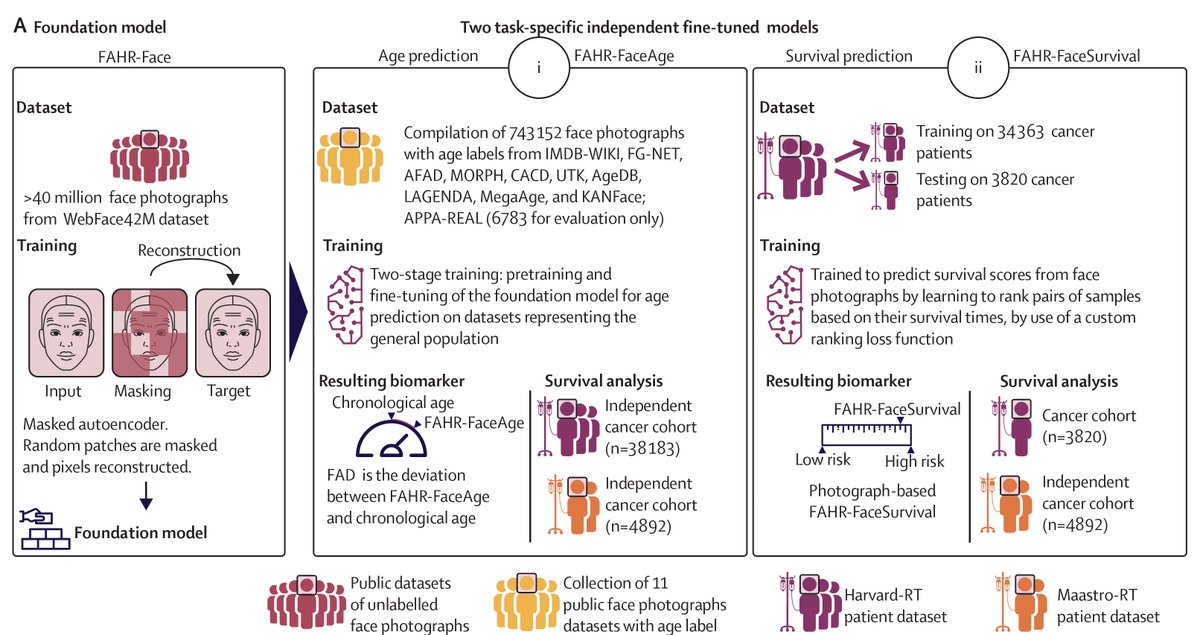
There's a lot in a face photograph about health that AI can detect, as seen in this foundation model of >40 million face images, including outcomes from cancer, biological age, influence of lifestyle factors, and survival @LancetDigitalH
https://t.co/l4AqDfl0s3
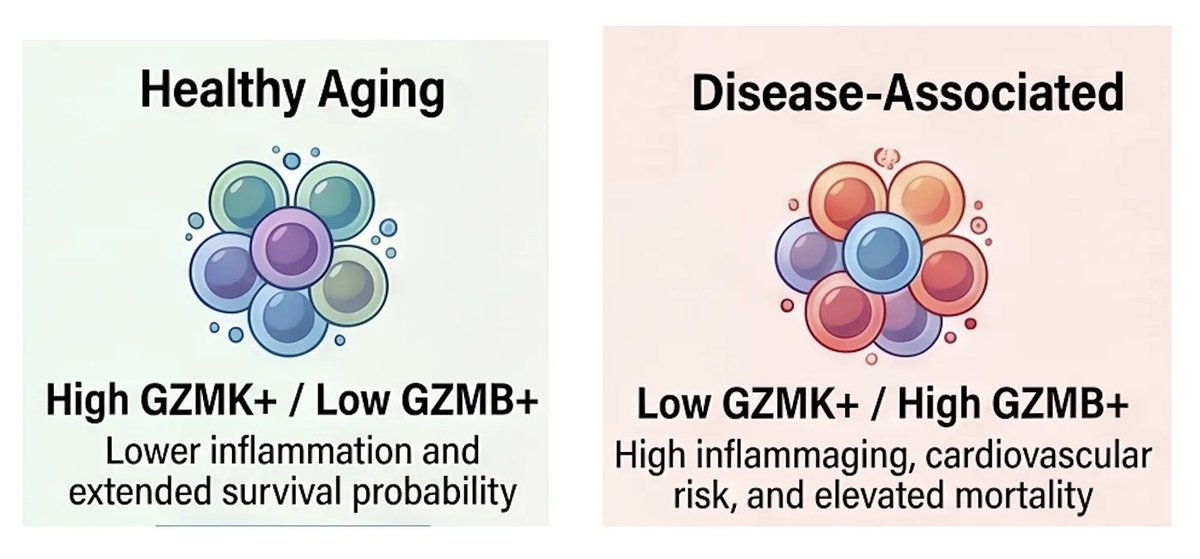
It's late 2026 and we still don't have a way to assess a person's immune system status in the clinic, the underpinning of healthy aging. But soon there may be at least 3 ways!
https://t.co/f4A7LaN4Wf
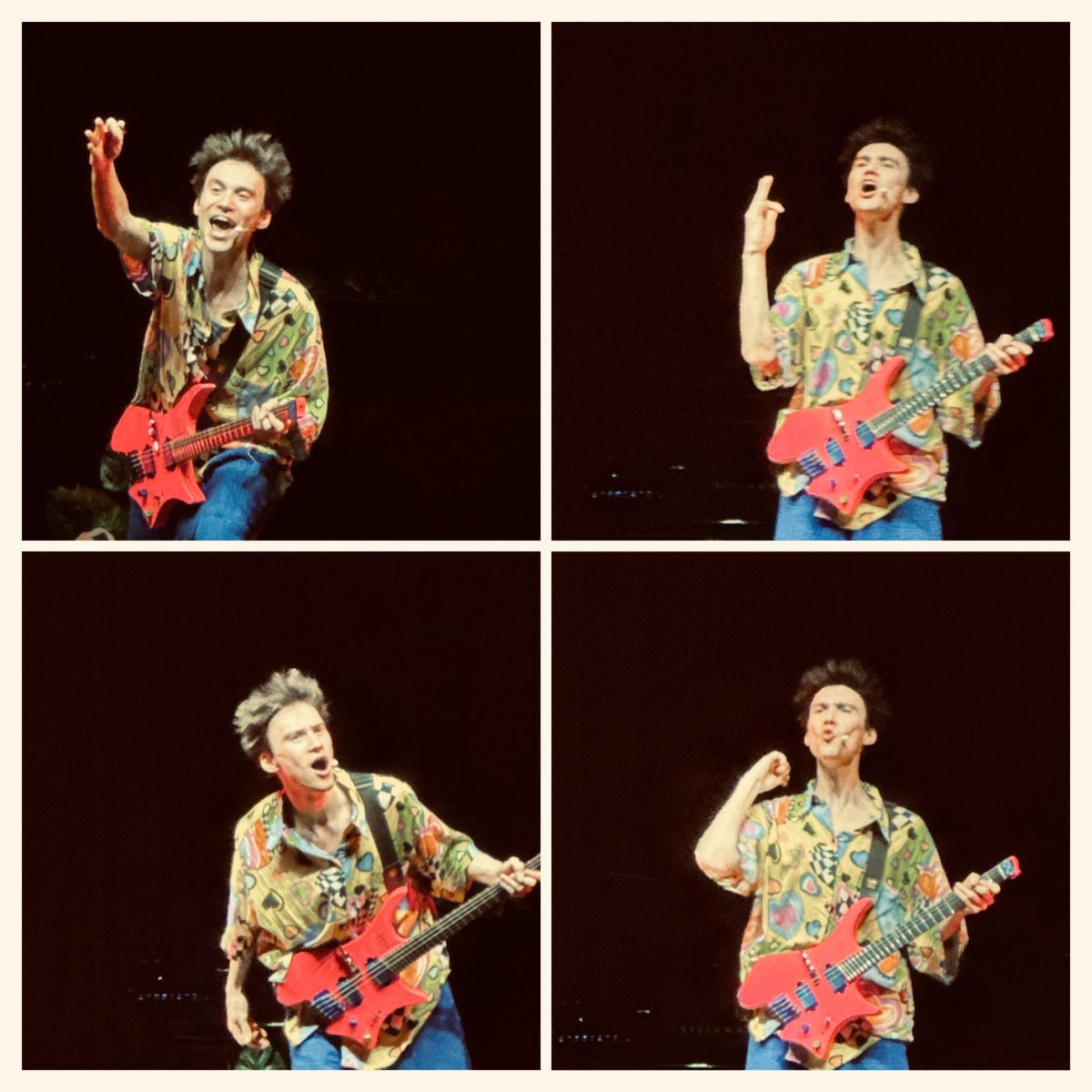
A truly amazing night with @JacobCollier at the @Castro_Theatre in SF.
Being part of his “Audience Choir,” a packed house harmonizing in real time under his direction, was pure joy.
A once-in-a-generation musical genius. If you haven’t discovered him yet, you’re in for a treat.
Is it over for human doctors?
No. Airliners can largely take off, fly, and land themselves. We still put two pilots up front, for judgment, edge cases, and trust. Same in the exam room.
My take on Washington's AI-in-medicine bet, on @NewsNation with @jessecordweber
Great to see the surgical AI collaboration Dr. Amin Madani and I began at UHN two years ago, during my time as Chief AI Scientist, featured in the New York Times (@nytimes ).
For me, this connects to a bigger research question behind our work on MedSAM: how do we turn medical images into useful clinical information?
With MedSAM, our group tackled a foundational piece: outlining organs, lesions, and other structures across medical images.
Surgical AI takes that ambition into a different setting: helping surgeons interpret what they see as an operation unfolds.
The NYT story features GoNoGoNet, which highlights predicted “go” and “no-go” regions during surgery.
Green and red.
Then surgeon Timothy Jackson suggested a third color:
Yellow.
That captures the next research challenge beautifully.
Delineating a structure, recommending an action, and recognizing when there isn’t enough evidence to recommend one are distinct capabilities.
We’re making progress on teaching AI to see. The deeper challenge is making its guidance worthy of trust.
Read the NYT story: https://t.co/HVL3ETJGZU
MedSAM: https://t.co/3LJIZcxyk1
MedSAM2: https://t.co/UwZGDeOqBh
Real world results: AMIE - Conversational diagnostic AI in ambulatory primary care.
Study at @BethisraelD published in the The Lancet:
The hospital’s primary care physicians said that the bot developed by @GoogleResearch@GoogleDeepMind was helpful in about 75% of patient cases...
https://t.co/WwX0trm18u
More on MedGemma and its myriad applications for global health and beyond....
An exciting time to build the next generation of health tools.
https://t.co/yZgWhleKHD
MedGemma: Medical AI that can run locally- and adapt to local health needs.
MedGemma demonstrates advanced medical understanding and reasoning across images and text and multiple medical imaging domains
Really impressive & impactful work from @GoogleResearch & @GoogleDeepMind
In @NatureMedicine https://t.co/MZuj1MtqFg
FDA cleared Biolinq Shine, an over-the-counter glucose monitor with no needles (not even micro ones).
It sits on the forearm, uses tiny semiconductor sensors just under the skin's surface, and shows your glucose range with a colored light, no phone required. It also tracks activity and sleep. It's cleared for adults 22 and older who don't use insulin, for general awareness, not dosing.
$1.8 billion package to accelerate the data layer for AI Biology…. combines Biohub’s $500 million, more than $500 million from the Department of Energy over five years, over $500 million in existing @NIH-funded data, and $300 million from @GoogleDeepMind , @IsomorphicLabs & @Meta
https://t.co/ZHq7QlFtfE
Big congrats to Karl Deisseroth (my @StanfordMed school classmate and former neighbor) on winning the #NobelPrize along with Peter Hegemann & Georg Nagel for pioneering the field of optogenomics!
Karl Deisseroth awarded 2026 Nobel Prize in physiology or medicine 🔬
The professor of bioengineering and of psychiatry and behavioral sciences shares the prize with two other researchers for their work in optogenetics.
https://t.co/XFv5OWasPi
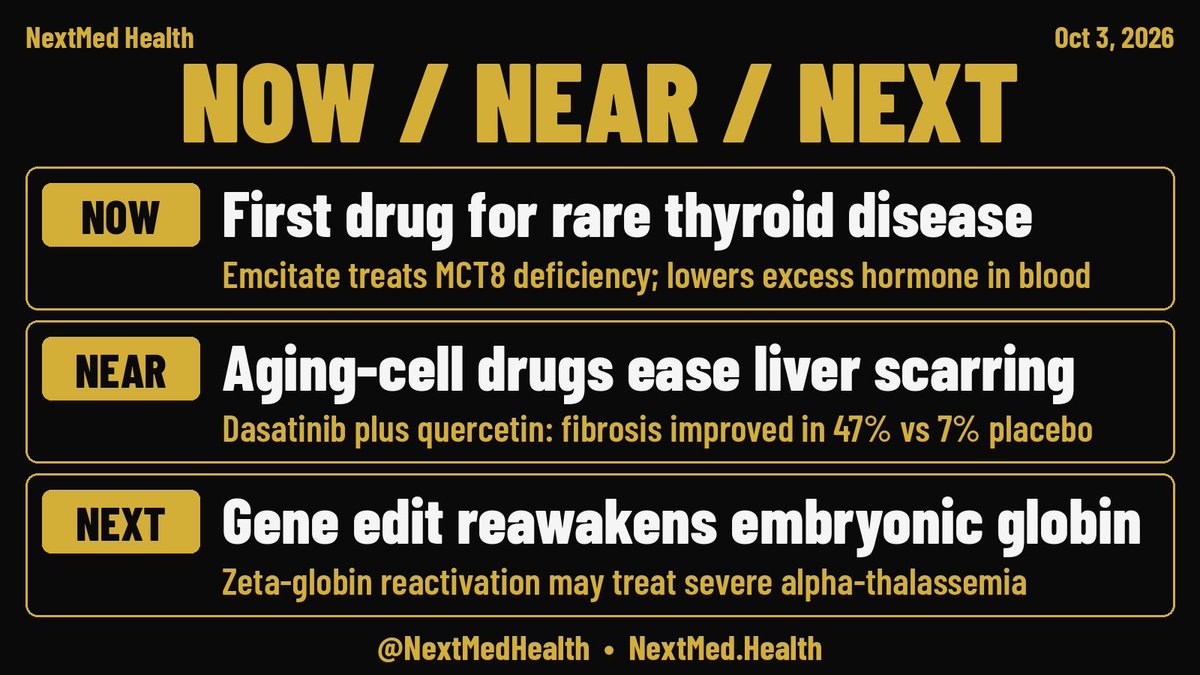
NOW / NEAR / NEXT — Oct 3
NOW: First FDA-approved treatment for MCT8 deficiency (Allan-Herndon-Dudley). Emcitate (tiratricol) lowers excess thyroid hormone when the brain’s hormone transporter is broken.
https://t.co/Me7x9PIarq
NEAR: Aging-cell “senolytic” drugs ease fatty-liver scarring. In fibrotic MASH, dasatinib + quercetin improved fibrosis in 47% vs 7% on placebo (phase 2, Nature Metabolism).
https://t.co/94zdSconPL
NEXT: Gene editing reawakens embryonic ζ-globin — a path to treat severe α-thalassemia without lifelong transfusion (Nature Genetics).
https://t.co/bivOmRvo9V
@NextMedHealth | https://t.co/tFoCDLL8p2
.@everly_well announced it would now offer patients nationwide access to Clairity Breast, an A.I. tool approved by the FDA last year to predict a woman’s 5-year risk of breast cancer based on imaging.
https://t.co/PJKgnlxHQ4