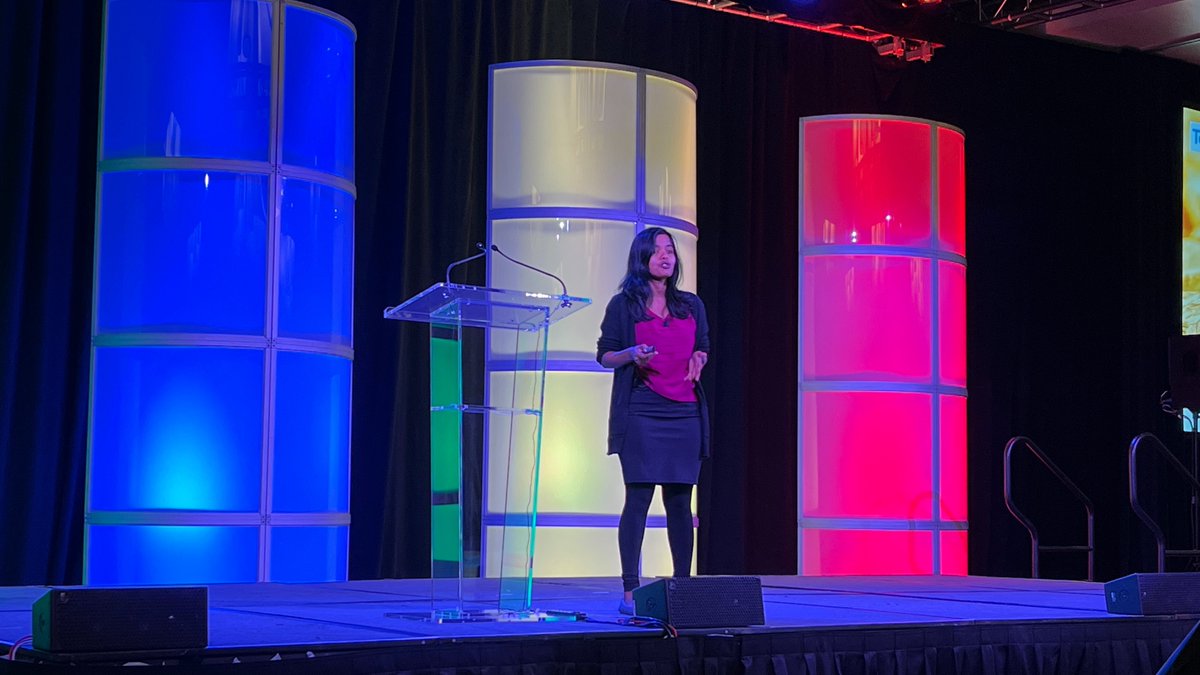
Abstract Select: @DassRupashree from @computomics discusses machine learning-based phenotype prediction to help in detecting significantly associated genetic markers at @AGBT Agriculture 2023 #AGBTAg#AGBTAg23
New Research: A comparison of classical and machine learning-based phenotype prediction methods on simulated data and three plant species: Genomic selection is an integral tool for breeders to accurately select plants directly… https://t.co/PFZKgCUGKB #PlantScience#PlantSci
Having troubles identifying your metabolites in the biological material by NMR? Use the temperature coefficients! Check our new work at RSC Advances:
https://t.co/UuqE93a1Sb
#NMRchat#NMR@RSCAdvances@ICHF_PAN@UniWarszawski
And they don't give tracking barcodes so there is no way to tell which sample belongs to whom. They assume that the registration queue is exactly in same order as the testing queue.
📢 The next @ICMRBS-ECR webinar will be this Wednesday (May 5⃣th) with talks by @Borja_ml, @DassRupashree, and @angusjrobertson
We will start at 9am EDT / 2pm BST / 3pm CEST / 4pm IDT / 6:30pm IST / 9pm CST / 11pm AEDT
See you there! 🧲 #nmrchat
Our newly developed #NMR method proves that impeded hydrogen exchange rates in alpha-synuclein is a manifestation of the electrochemical potential #protein@iNANO_AarhusUni
If you are want to determine secondary structure propensities of proteins by #NMR you should check out this pre-print and accompanying webserver from Frans Mulder (@iNANO_AarhusUni):
https://t.co/DW7o35Q5Xj
PhD Student in the Laboratory of NMR Spectroscopy – Centre of New Technologies, the University of Warsaw
“New dimensions in NMR for better chemical analysis – from small molecules to proteins" Dr. Krzysztof Kazimierczuk https://t.co/AkJSfwVqZy #NMRjobs#NMRchat#NMR
In the hunt for the dark matter of the protein world, we are now able to comprehensively predict disorder in #proteins from sequence using #AI and #NMR data implemented in #ODiNPred.
https://t.co/fDdkWrvOE8
https://t.co/tRry5tdwbH
#aarhusuniversity#data#inano
Can protein disorder predictors be improved by training them on better data? This is the question my @iNANO_AarhusUni colleagues ask in their new paper in @SciReports, which describe their new predictor ODiNPred.
https://t.co/Dqe0Qy32R6
ODINPred is beaten narrowly by SPOT disorder as the best predictor that considers evolutionary info, but for the much faster prediction without evolutionary info it outperforms the current best predictor:
Dass et al. train a neural network on a data set of chemical shift assignments of 1325 proteins, and the resulting predictor is publicly available as a web server at:
https://t.co/CIpAt1lwz9