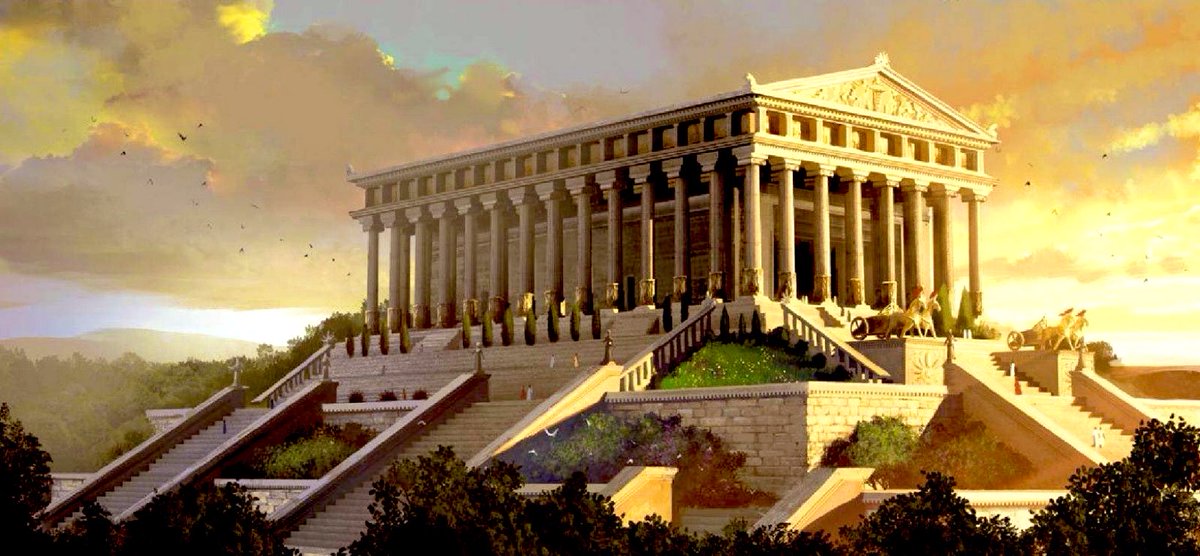
Built almost entirely of marble, the ancient Temple of Artemis at Ephesus was one of the Seven Wonders of the Ancient World. Nearly three times the footprint of the Parthenon, it was supported by 127 carved marble columns, each rising about 60 feet (18 metres) into the sky.🏛️
1/3) When Octavian returned to Rome in triumph after defeating Antony and Cleopatra at Actium, a man in the crowd showed him his raven which he had taught to say: 'Hail Caesar, victorious commander!' Octavian was delighted and bought the bird for twenty-thousand sestertii..
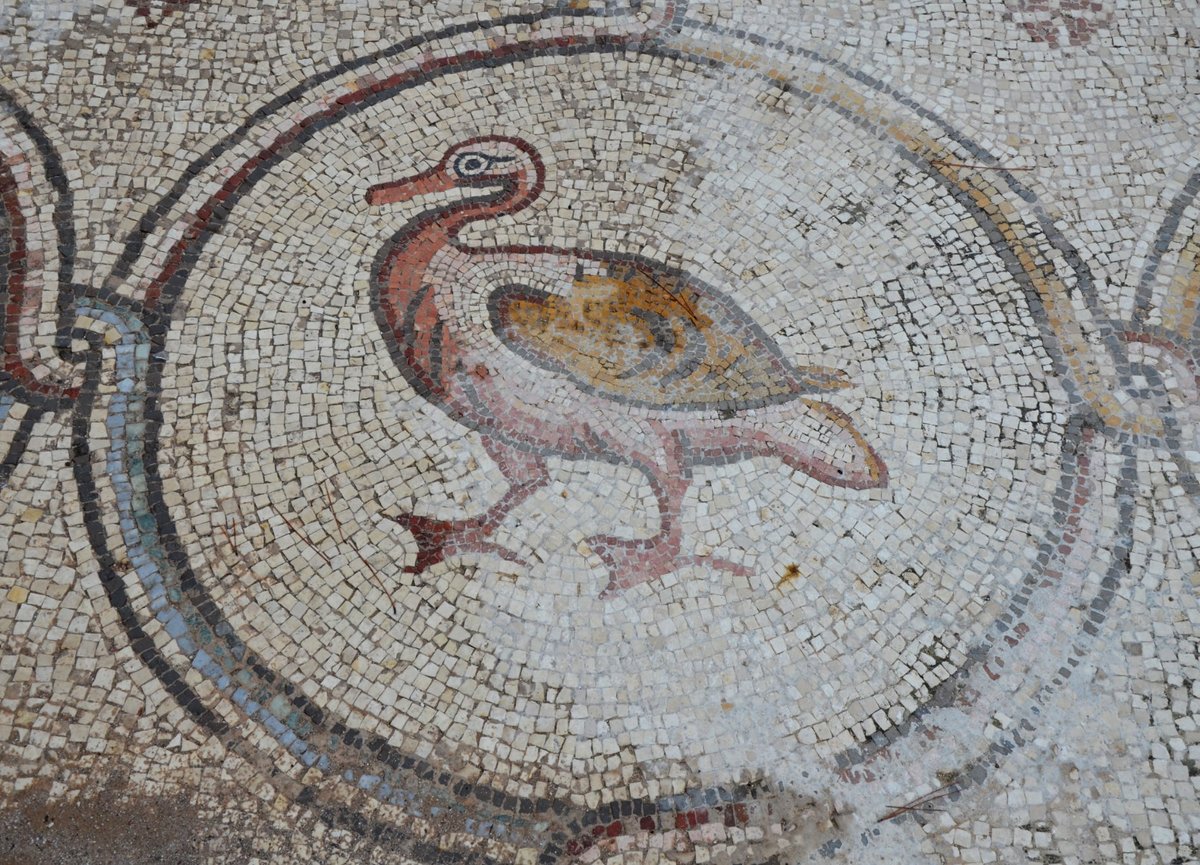
#NationalBirdDay - The “Bird Mosaic” from Caesarea, Israel. Each of its 120 medallions contains a bird. 🦜🦚🦢🪿🦆🐦⬛Eleven different species are shown, including flamingoes, ducks, peacocks, partridges, guineafowls, ibises, geese, pheasants and pelicans. Some other birds appear to be fanciful.
https://t.co/ZVpM2Exxsq
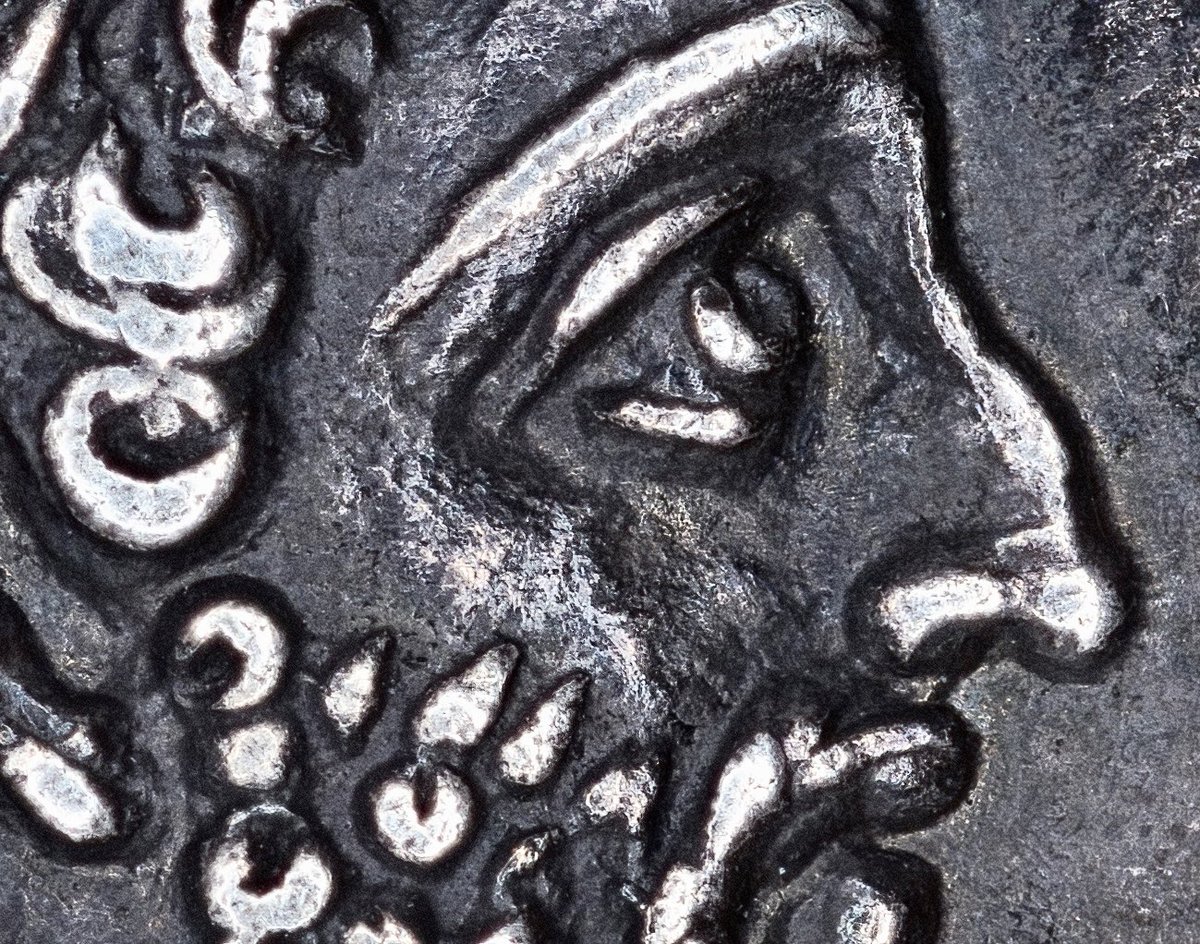
Today we say farewell (and good riddance) to Commodus – assassinated on New Year's Eve, 192 AD. He met a suitably risible end, sadly not killed in the arena by @russellcrowe's Maximus, but strangled in the bath by his personal trainer Narcissus. (Denarius from my collection)
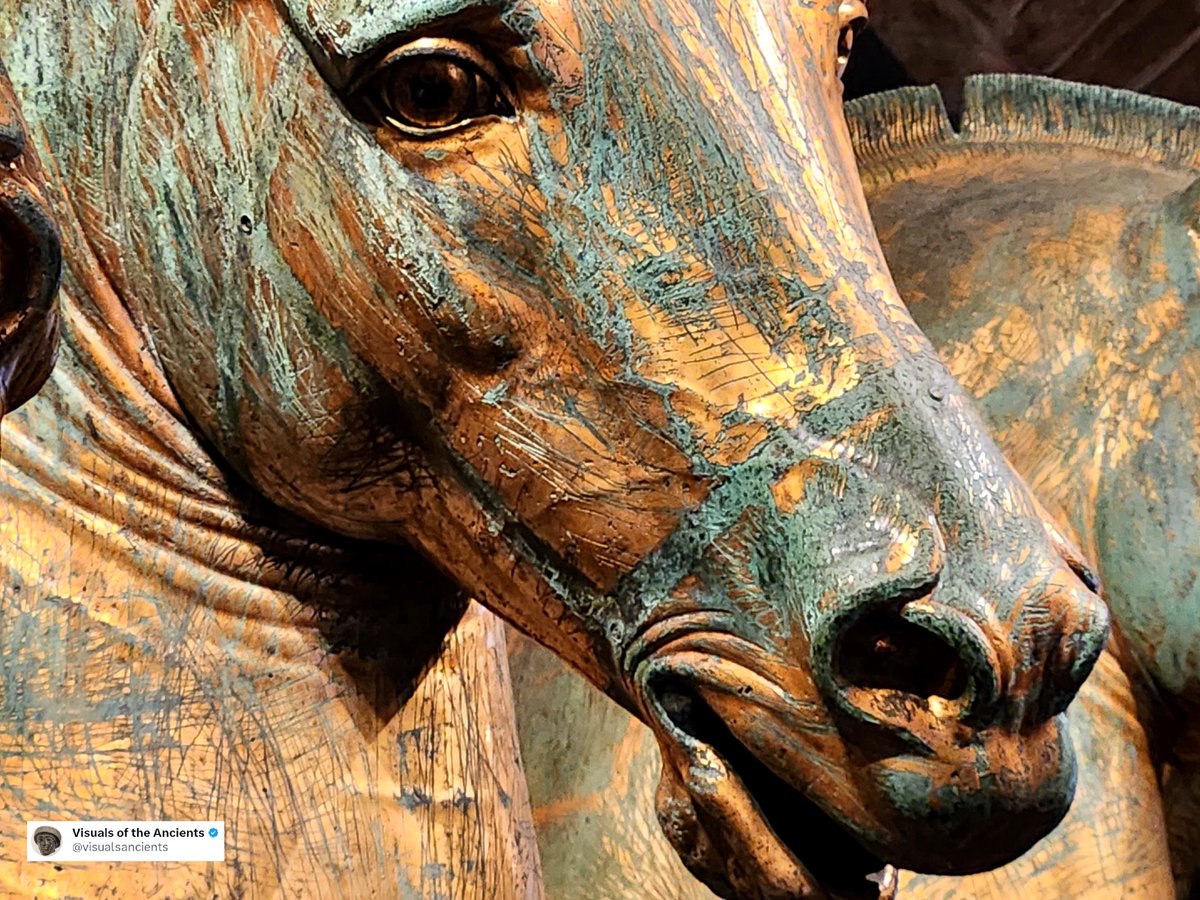
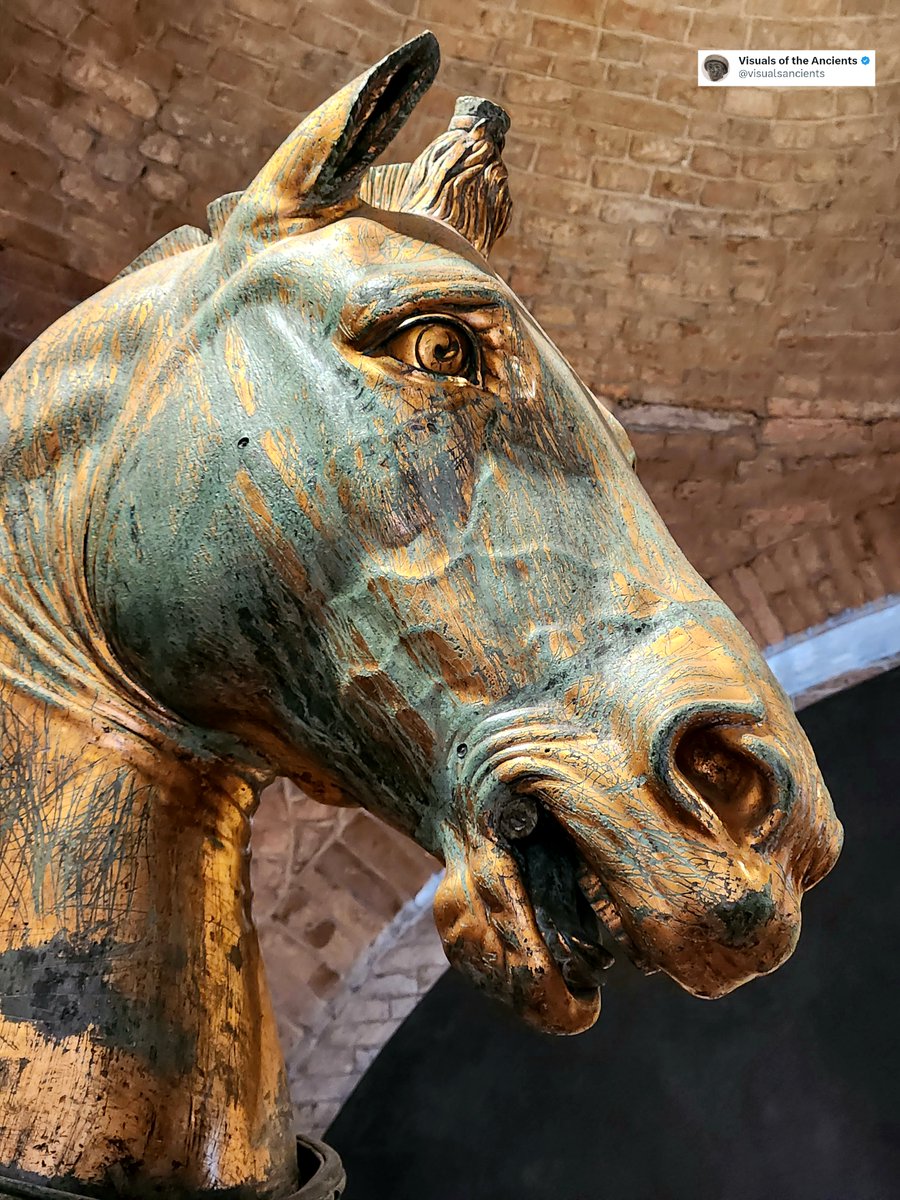
Nine close-up 📸 shots of St. Mark’s horses and their history.
These magnificent four horses probably stood as part of a decorative quadriga in the Hippodrome of Constantinople. Modern scholars believe they were made between the late 100s and early 200s AD. However, carbon dating indicates they were made much earlier, during the 2nd century BC.
Constantine I “the Great” and his successors famously relocated ancient artworks and architecture to Constantinople after the city rose to prominence in the early AD 300s. These reused these pieces to aggrandize their own monuments in Rome (e.g., Constantine’s Arch of Triumph and his Marble Colossus today in the Capitoline Museums) and Constantinople (e.g., the relocation of the Athena Promachos, which originally stood on the Acropolis of Athens, the Palladium, Egyptian obelisks, etc.) are known as “spolia.”
Some believe that our four horses were relocated as spolia from the Greek island of Chios to the Hippodrome of Constantinople by Theodosius II (AD 408-450). However, Charles Freeman in this 2010 book “The Horses of St Mark’s: A Story of Triumph in Byzantium, Paris and Venice,” suggests they were made in Constantinople itself (then known as Byzantium) under the direct instructions of Septimius Severus (AD 193 - 211). Byzantium had sided with Pescennius Niger during his civil war with Septimius Severus. A decision that proved fatal. Even after Pescennius Niger was defeated in AD 194, and his head was shown to the defenders of Byzantium, the proud city resisted a prolonged siege until AD 195 or AD 196. Chaos ensued when the victorious forces of Severus entered Byzantium. Freeman suggests that Septimius Severus ordered the construction of a triumphal arch with a quadriga to commemorate his victory over the city. Perhaps from this triumphal arch, they were relocated to the Hippodrome within the city itself.
But the horses didn’t stop here. I will share their full-body photos and the rest of their history in 2026 (wink wink).
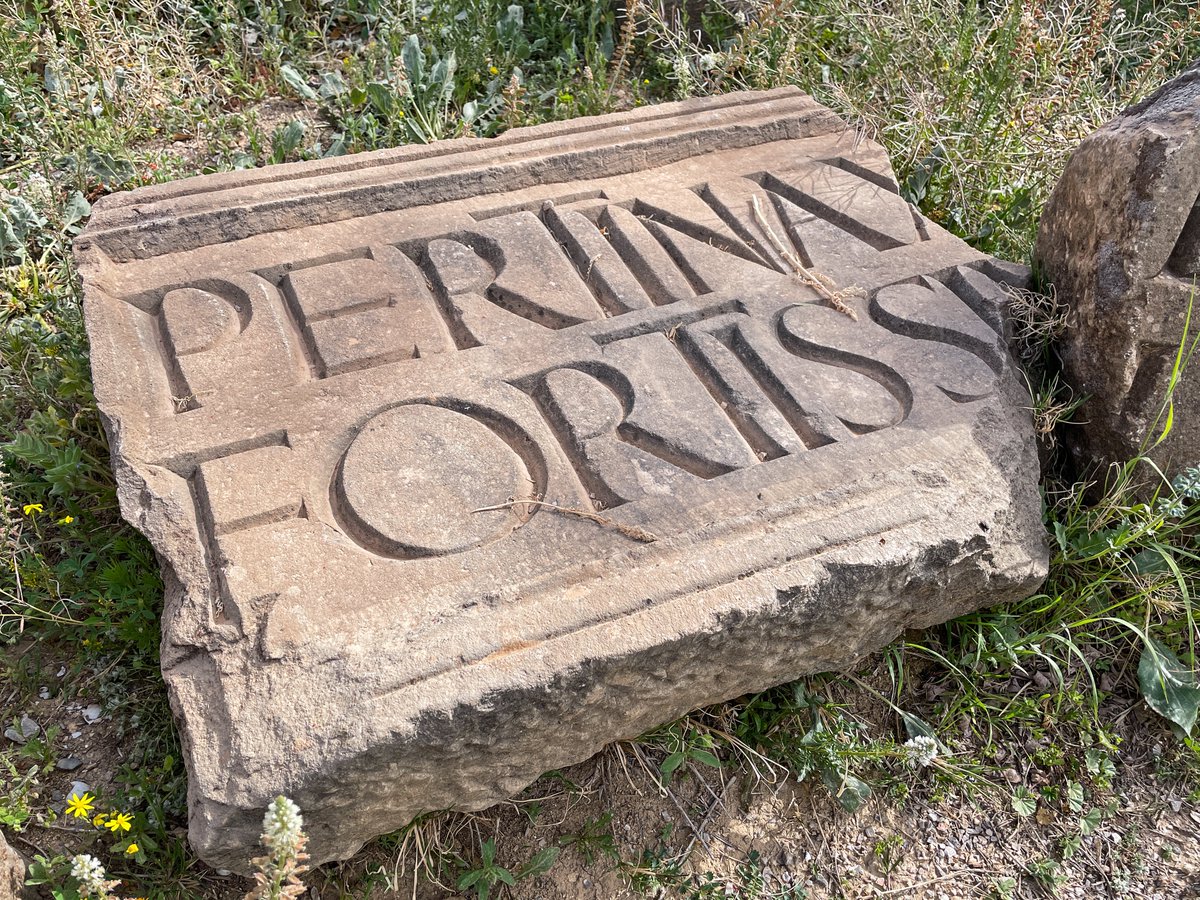
An exceedingly rare Roman monumental inscription honouring the brief-ruling emperor Pertinax. Taking the throne on 1 January 193 after the assassination of Commodus, Publius Helvius Pertinax would reign for just three month before he too was brutally assassinated. In a depressing showcase of the era's moral decline, the Praetorian Guard would then simply auction off the imperial throne to the highest bidder. Lambaesis Archaeological Museum, Algeria.
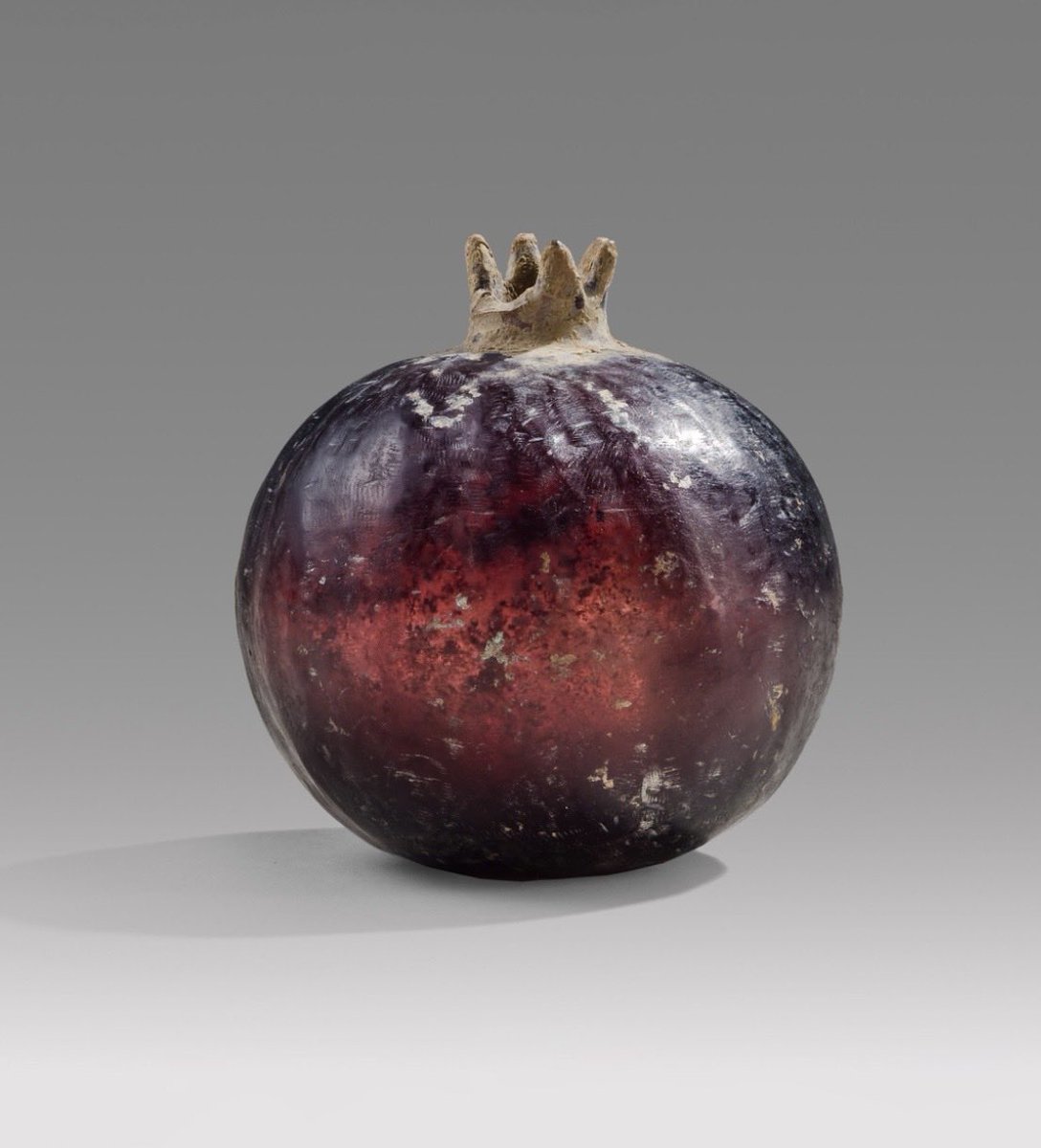
For New Year’s Day 2026, a hellenistic glass vase shaped like a pomegranate. 2nd century BC - 1st century AD.
A symbol of abundance and good luck for the year ahead!
‘The Pomegranate: Greek Symbol of Good Fortune for the New Year’ https://t.co/79a50VuInA
📷 Phoenix Art https://t.co/KAgLvKaIlb
#Archaeology
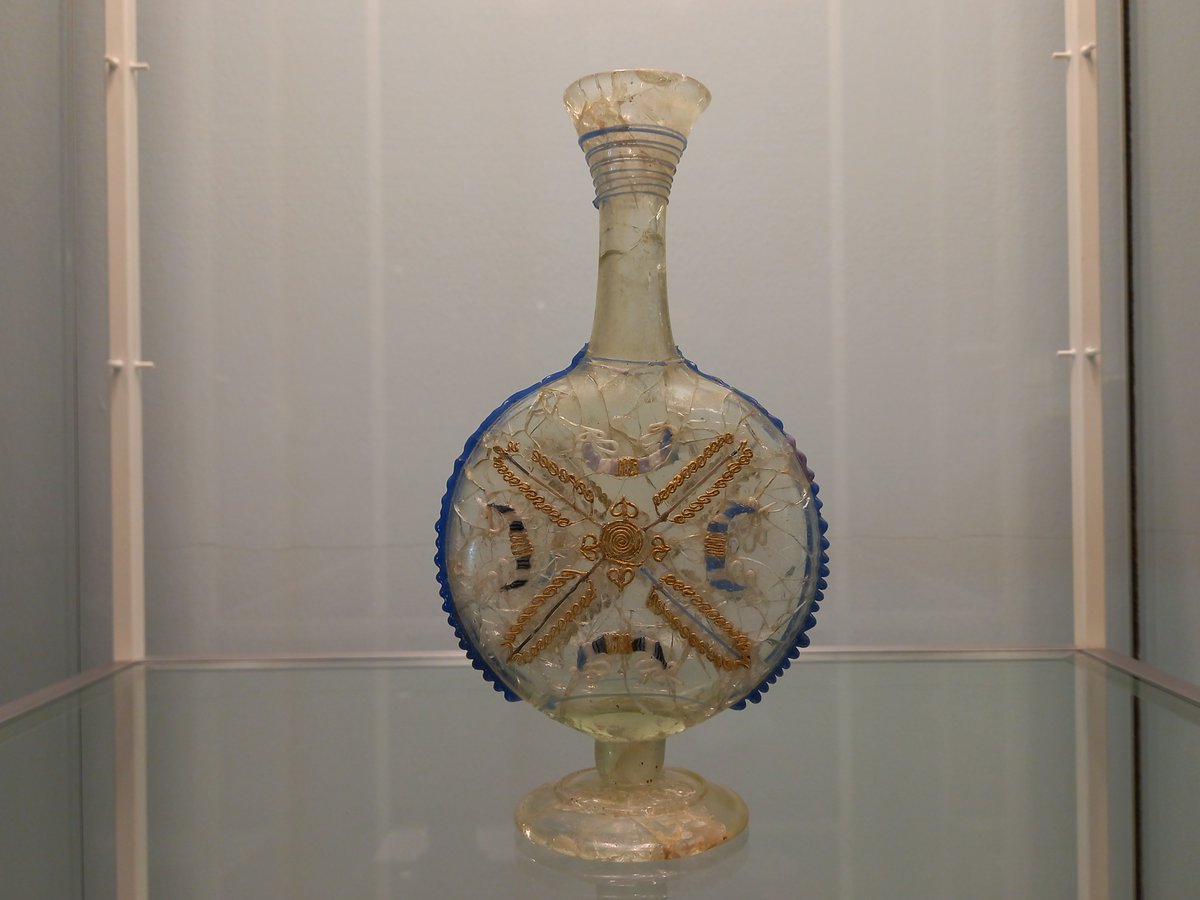
A beautiful #Roman glass bottle, decorated with wiggly 'snake-thread' lines in blue & gold. It is a lovely example of the glass being produced towards the later Imperial period on the Rhine.
The remarkable York Helmet, dated AD 770-775, is one of only six surviving helmets from Anglo-Saxon Britain. A Latin inscription bears the name ���Oshere’. Discovered by a digger operator in Coppergate, York in 1982. Iron and copper-alloy. Yorkshire Museum 📷 by me https://t.co/RvQyUEdoac
#Archaeology
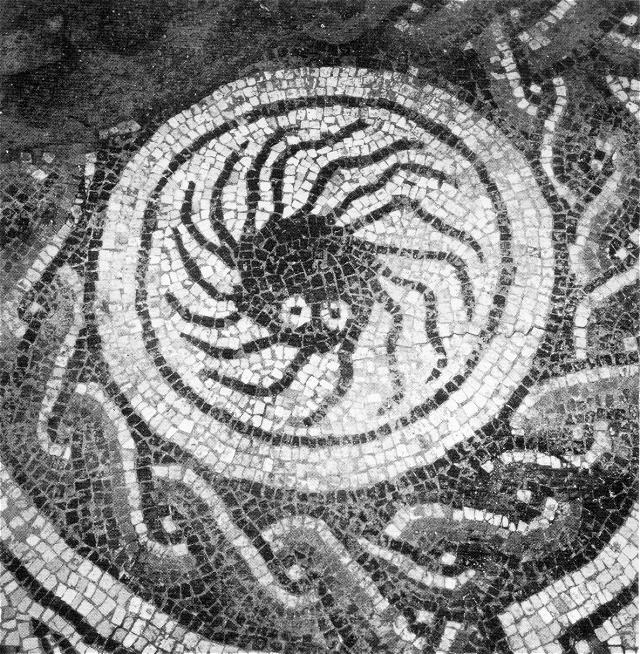
Octopus (or octopus-like marine animal) - Detail of a Marine Floor Mosaic, Archaeological Park of Ostia Antica, Rome, Italy. Date: c. 3rd–4th century AD.
75 years ago today, the Chuck Jones masterpiece Rabbit of Seville was released.
If you are of a certain age, chances are Bugs Bunny introduced you to opera.
Exquisite Roman glass cup signed by master glassmaker ‘Ennion’. AD 30-70.
Ennion was the first glassmaker to ‘brand’ his work by incorporating his name into the mould’s design, some 2000 years ago!
Museo Archeologico Nazionale di Adria 📷 Leonardo.disimone
#Archaeology
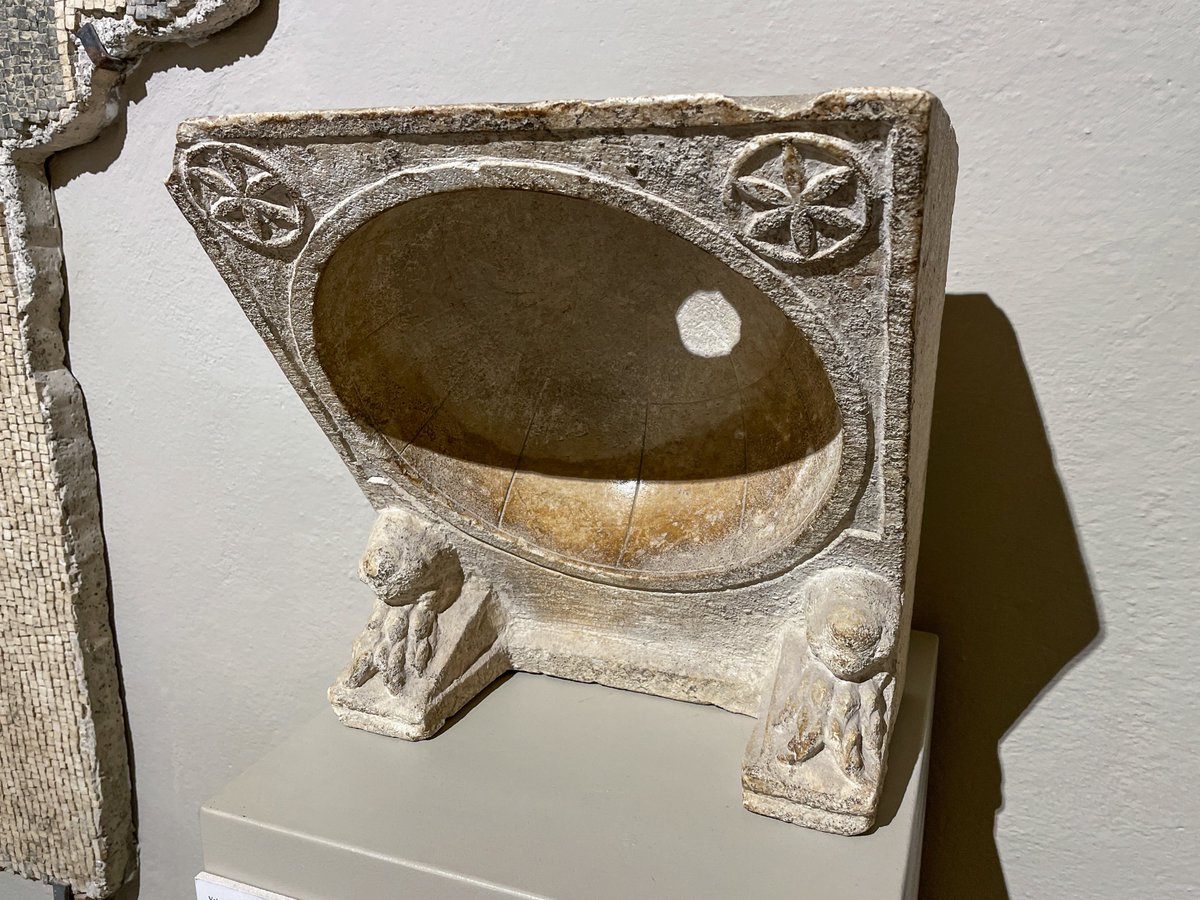
An extraordinary public sundial from ancient Roman Volterra. This rare roofed hemispherical sundial was erected in the city by the local aedile magistrate Quintus Poena Aper, who commissioned the device 'at his own expense'. The concave hemisphere would have been orientated south, with sunlight entering through the hole at the top and illuminating the appropriate sectors. Ancients measured time in twelve daylight hours that shifted in length with the changing seasons, c.1st century AD, Volterra Museum.
An amazing Roman secret: a 60-metre stretch of the Aqua Virgo – one of the ancient city's greatest aqueducts, famed for the purity of its waters – built by Marcus Agrippa on behalf of Augustus in 19 BC, now preserved in the basement of Rome's La Rinascente department store.