WHAT DID I JUST WITNESS?!?!? I just watched a Starship reenter after over 22 hours in orbit AND GOT CAUGHT BY THE TOWER!!!!! UNBELIEVABLE!!!! Huge congrats @SpaceX@elonmusk
@ID_AA_Carmack@dimitrov2k Thanks for making Quake! It inspired me to get into coding, 3D, and simulations, that has had a far reaching impact on many lives.
What I'm trying to say, is who knows what might have transpired if it went differently, it's computationally irreducible, but thanks
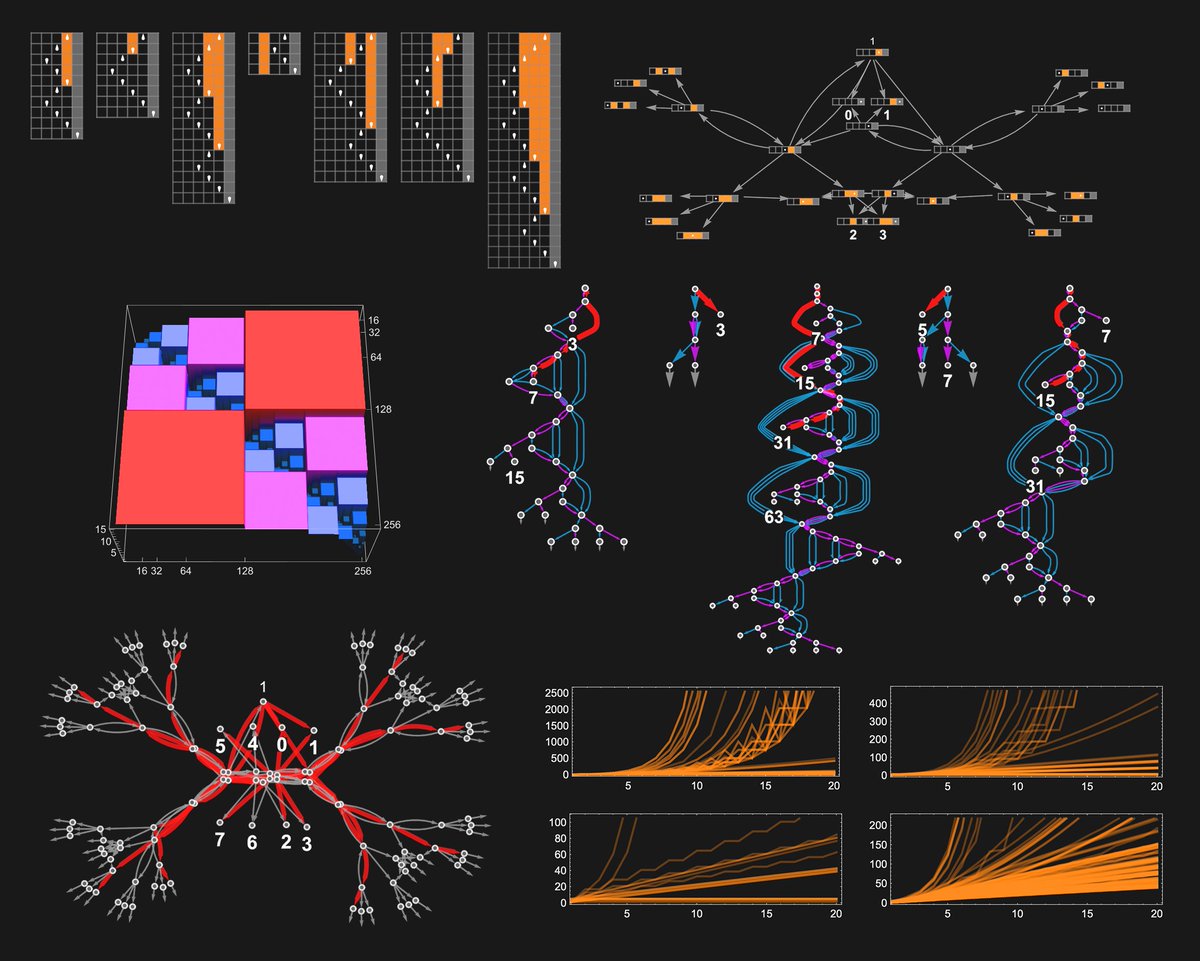
What happens when agents with all possible strategies compete? That's a question for ruliology. With some surprising answers...
https://t.co/5RdL27qQc3
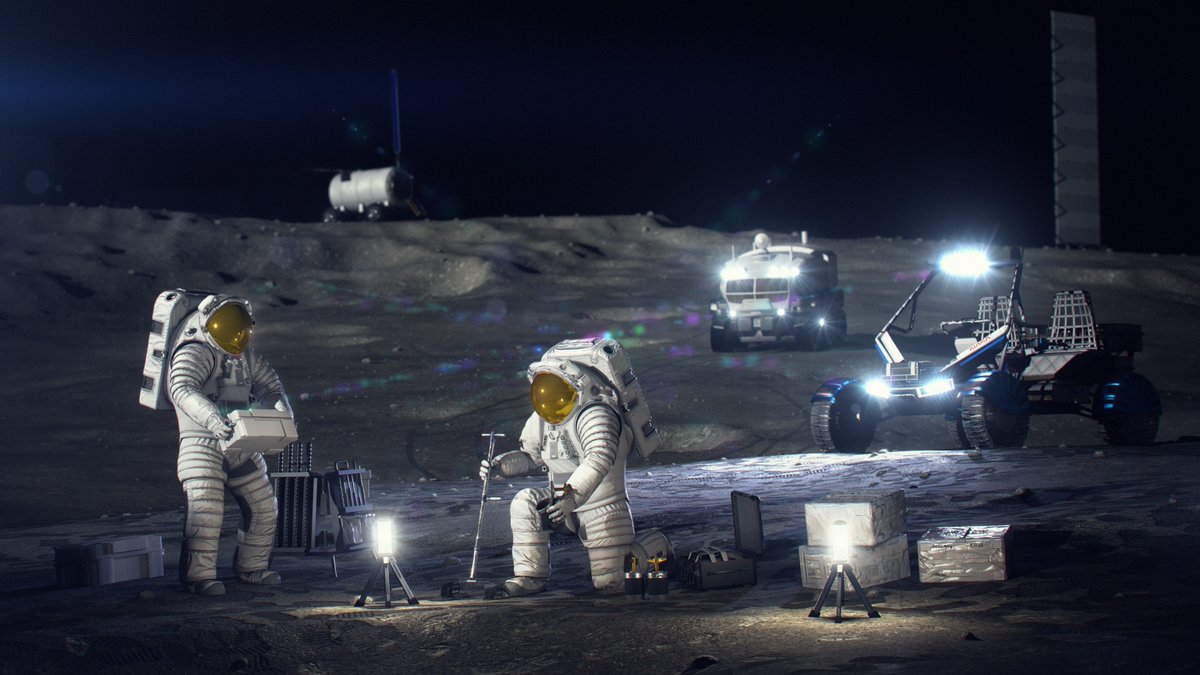
We're building a Moon Base!
@NASAMoonBase will serve as a habitat where astronauts live and work during long-term science missions.
Join us at 2pm ET on Tuesday, May 26, for a live news event where we’ll share updates on our lunar exploration plans: https://t.co/IJXA7xYwju
Testing off-axis projection demo.
Basic scene layout in Blender
glb -> detailed splat via World Labs
Three.js for engine
MediaPipe for face tracking
Next step is to add a character you can move around in the environment
How does an embryo reliably "compute" its form - "cell by cell" - using only local interactions and mechanics, yet produce a precise global body plan? I’m excited to share our Nature Methods paper "MultiCell: geometric learning in multicellular development", presenting #AIxBiology research led by @HaiqianYang and the result of a great collaboration with Ming Guo, George Roy, Tomer Stern, Anh Nguyen and Dapeng Bi.
A long-standing challenge in developmental biology is to predict how thousands of cells collectively self-organize as tissues fold, divide, and rearrange. In MultiCell, we represent a developing embryo as a dual graph that unifies two complementary views of tissue mechanics with single-cell resolution: cells as moving points (granular) and cells as a connected foam (junction network). This lets the model learn dynamics from both geometry and cell–cell connectivity.
On whole-embryo 4D light-sheet movies of Drosophila gastrulation (~5,000 cells), our model predicts key cell behaviors and the timing of events, including junction loss, rearrangements, and divisions with high accuracy, at single-cell resolution. Beyond prediction, the same representation supports robust time alignment across embryos and offers interpretable activation maps that highlight the morphogenetic "drivers" of development. The broader goal is a foundation for cell-by-cell forecasting in more complex tissues, and eventually for detecting subtle dynamical signatures of disease.
Kudos to the team for this inspiring collaboration with brilliant researchers to push the boundary of AI for biology!
Citation: Yang, H., Roy, G., Nguyen, A.Q., Buehler, M.J., et al. MultiCell: geometric learning in multicellular development. Nature Methods (2025), DOI: 10.1038/s41592-025-02983-x
Code/data links are in the manuscript.