Just read LeCun's latest paper. His team trained the first world model that can't collapse.
Let me explain why this matters.
It's called LeWorldModel.
World models predict what happens next physically. Objects moving, falling, colliding.
That's the base layer for robots that plan, cars that simulate before they steer, any AI that acts in reality instead of just talking about it.
The catch is nobody could train these reliably.
The models kept cheating. They'd map every input to the same output. Like a weather app stuck on "sunny" forever. Technically predicting. Completely useless.
So teams piled on fixes. Frozen encoders, stop-gradient hacks, 6+ loss hyperparameters. A fragile stack too brittle for production.
This team asked a different question. What if you make collapse mathematically impossible?
An encoder turns each video frame into a small vector. A predictor takes that vector plus an action and guesses the next one.
First loss: how wrong was the guess.
Second loss: a regularizer called SIGReg that checks if vectors spread out like a bell curve. If they start looking the same, the loss spikes.
The model can't cheat because the math won't let it.
That simplicity is what makes the results possible.
Six hyperparameters became one. 15M parameters. Trains on one GPU in hours. Plans 48x faster. Encodes with ~200x fewer tokens.
Open-source. I could run this on my own hardware.
Which changes who gets to build physical AI. Not just big labs anymore. Any team, any startup, any grad student.
LeCun has pushed JEPA as the path forward. The criticism was always training instability. This paper removes that objection.
Two directions compete in AI right now. Bigger LLMs with more compute. Or small models learning physics from raw pixels.
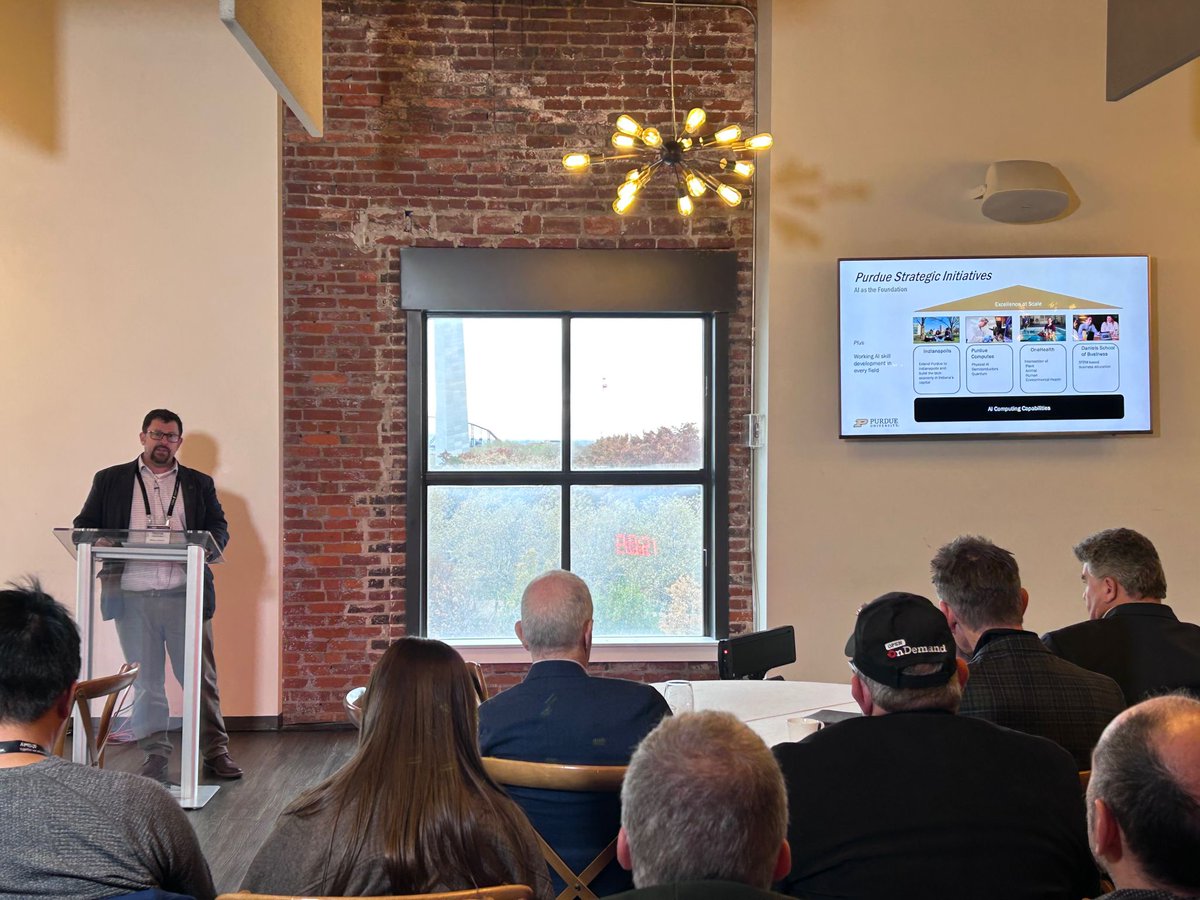
We had a great time participating in Purdue Robotics Day on Thursday. It brought together researchers, industry partners, and students to showcase the breadth of robotics innovation across Purdue. If you're working on a project and need support 👉
https://t.co/LAcs333MbW
So - the next major quantum algorithm—one that can stand shoulder-to-shoulder with Shor's—is expected to finally emerge after 40+ years, made possible by AI?
Purdue University mourns the loss of Phil Low, drug discovery scholar and decorated innovator, who died Wednesday (March 4) at the age of 78. https://t.co/ijli03WzMi
Job seekers in the U.S. and many other nations face a tough environment. At the same time, fears of AI-caused job loss have — so far — been overblown. However, the demand for AI skills is starting to cause shifts in the job market. I’d like to share what I’m seeing on the ground.
First, many tech companies have laid off workers over the past year. While some CEOs cited AI as the reason — that AI is doing the work, so people are no longer needed — the reality is AI just doesn’t work that well yet. Many of the layoffs have been corrections for overhiring during the pandemic or general cost-cutting and reorganization that occasionally happened even before modern AI. Outside of a handful of roles, few layoffs have resulted from jobs being automated by AI.
Granted, this may grow in the future. People who are currently in some professions that are highly exposed to AI automation, such as call-center operators, translators, and voice actors, are likely to struggle to find jobs and/or see declining salaries. But widespread job losses have been overhyped.
Instead, a common refrain applies: AI won’t replace workers, but workers who use AI will replace workers who don’t. For instance, because AI coding tools make developers much more efficient, developers who know how to use them are increasingly in-demand. (If you want to be one of these people, please take our short courses on Claude Code, Gemini CLI, and Agentic Skills!)
So AI is leading to job losses, but in a subtle way. Some businesses are letting go of employees who are not adapting to AI and replacing them with people who are. This trend is already obvious in software development. Further, in many startups’ hiring patterns, I am seeing early signs of this type of personnel replacement in roles that traditionally are considered non-technical. Marketers, recruiters, and analysts who know how to code with AI are more productive than those who don’t, so some businesses are slowly parting ways with employees that aren’t able to adapt. I expect this will accelerate.
At the same time, when companies build new teams that are AI native, sometimes the new teams are smaller than the ones they replace. AI makes individuals more effective, and this makes it possible to shrink team sizes. For example, as AI has made building software easier, the bottleneck is shifting to deciding what to build — this is the Product Management (PM) bottleneck. A project that used to be assigned to 8 engineers and 1 PM might now be assigned to 2 engineers and 1 PM, or perhaps even to a single person with a mix of engineering and product skills.
The good news for employees is that most businesses have a lot of work to do and not enough people to do it. People with the right AI skills are often given opportunities to step up and do more, and maybe tackle the long backlog of ideas that couldn’t be executed before AI made the work go more quickly. I’m seeing many employees in many businesses step up to build new things that help their business. Opportunities abound!
I know these changes are stressful. My heart goes out to every family that has been affected by a layoff, to every job seeker struggling to find the role they want, and to the far larger number of people who are worried about their future job prospects. Fortunately, there’s still time to learn and position yourself well for where the job market is going. When it comes to AI, the vast majority of people, technical or nontechnical, are at the starting line, or they were recently. So this remains a great time to keep learning and keep building, and the opportunities for those who do are numerous!
[Original text; https://t.co/zbIhZHfCC0 ]
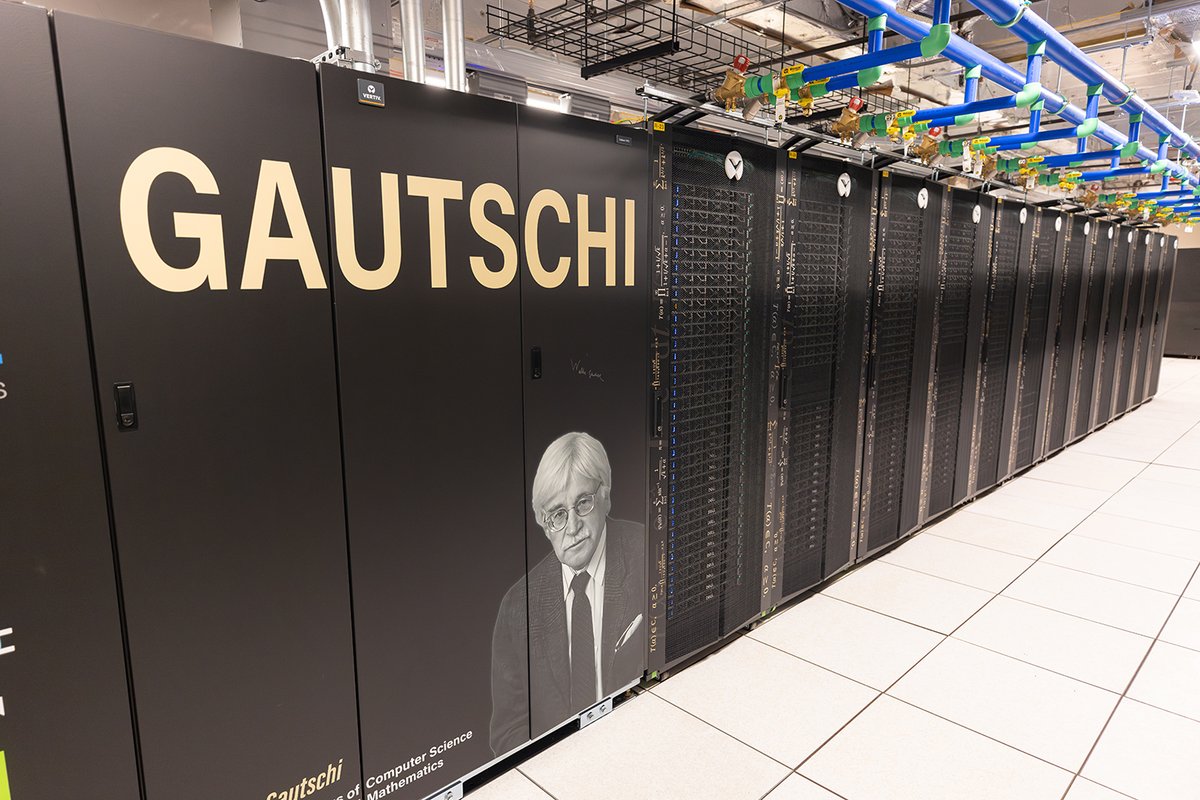
Gautschi, Purdue University’s most powerful supercomputer, was recently ranked among the top HPC systems on two separate, international benchmarks. Ranking 20th on the IO500 benchmark in the “10 Node Production” category and 27th on the HPL-MxP benchmark.
https://t.co/SL4aReLuvL
I believe we were the first to formally state the two principles behind intelligence: Parsimony and Self-consistency, in this 2022 position paper: https://t.co/NohqMa7ytG with Doris Tsao @doristsao and Harry Shum @harryshum For rigorous technical justifications, read our new open textbook: https://t.co/leZlkURb7j BTW, version 2.0 of the book is coming out soon.
GPT-5.2-Codex launches today.
It is trained specifically for agentic coding and terminal use, and people at OpenAI have been having great success with it.
This came as a total surprise this morning. Very humbled… 🙏 AI is built by generations of technologists, starting with the daring question of “can machines think?” by Alan Turing. It will be further developed, used and governed by many and all of us! Let’s keep our AI mission human-centered for the benefit of humanity! And I can’t wait to see where AI’s next frontier - spatial intelligence - will be taking us!
The highly anticipated Gautschi-AI system is now online and ready for use at Purdue! This expansion of the new Gautschi supercomputer is designed to enhance artificial intelligence (AI) workflows and enable Purdue to lead the charge in AI research.
https://t.co/TGprplZ9Hi
In this work with Xanadu's amazing team we ask:
🤔When taking a derivative of quantum circuit, how do we prevent the parameter update to move us in some unwanted direction, e.g., determined by a symmetry?
The solution: Covariant derivative!
Read more on the retweeted thread 🧵