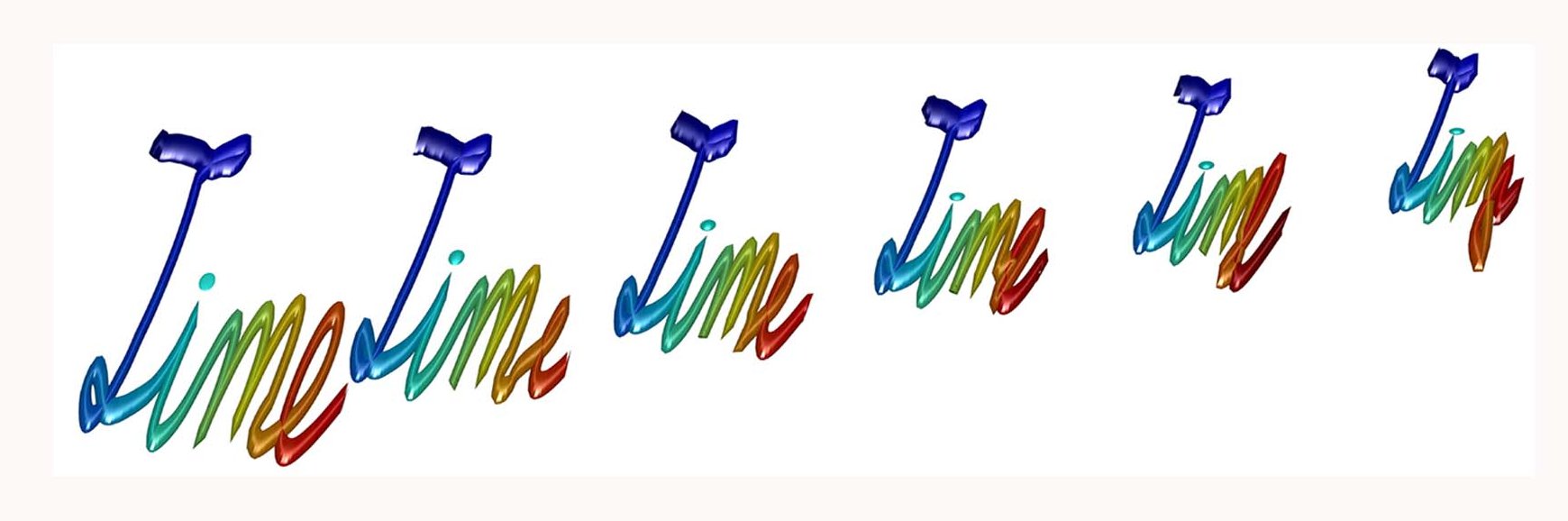
Example of a recurrent neural network (RNN) that exhibits chaos vs. a "dynamic attractor". The RNN drives two output units trained to write the word "Chaos". At 0.16s a perturbation (much larger for the lower RNN) is applied to the RNNs. Thanks @rodlaje
Closing AI week with a conversation I loved having. Dean Buonomano and I got into something that doesn't get said enough: brains & AI are both black boxes. We don't fully understand either one. But here's what makes this moment so strange and exciting: these two black boxes are now interacting with each other constantly, and they work very differently. LLMs have no recurrency and no working memory, outsourcing that to the context window. Brains are massively recurrent, and it is precisely that recurrency that gives us working memory. Figuring out how each works & how they shape each other, may be the defining scientific challenge of our time. 🧠
Olympic track races are filmed at 40,000 frames a second (a pic every 25 microseconds, which is more than 1000 times faster than an eyeblink). But the 5 ms lead #Noah_Lyles had over #KishaneThompson would have been a tie for gold in swimming.
https://t.co/vogr399L8X
Shanglin Zhou shows that modulation of short-term synaptic plasticity in RNNs can be used to control the speed or amplitude of neural trajectories-serving as a way to control the speed or size of outputs such as written digits.
https://t.co/OR6icuXx3j
Applications are now open for the summer school on 𝗠𝗮𝘁𝗵𝗲𝗺𝗮𝘁𝗶𝗰𝗮𝗹 𝗠𝗲𝘁𝗵𝗼𝗱𝘀 𝗶𝗻 𝗖𝗼𝗺𝗽𝘂𝘁𝗮𝘁𝗶𝗼𝗻𝗮𝗹 𝗡𝗲𝘂𝗿𝗼𝘀𝗰𝗶𝗲𝗻𝗰𝗲.
A great summer school in beautiful Eresfjord 🇳🇴
Not to be missed. Apply! 😃
https://t.co/i7X1FNWSzZ
@KISNeuro@KavliFoundation
Very excited to share the latest chapter in the saga of the singing mice!
Using silicon-probe recordings during freely-moving (singing) animals, we describe how motor cortical dynamics enables vocal flexibility.
with co-authors Feng Chen, Shaul Druckmann and @mlong11215
Thrilled that our paper is now out in Nature!
We discovered minute-scale periodic sequences of activity in the MEC.
Big thanks to all team members who made this paper possible, especially to @EdvardMoser and @MayBrittMoser for their guidance and support.
@KISNeuro@Nature
@soledad_gcogno@KISNeuro It was great to hear about your fascinating data on hyperlong (>30 s) neural sequences. I’m looking forward to the paper coming out.
✈️ #SfN23! The Dipoppa Lab @UCLA is looking for 1-2 postdocs in Computational Neuroscience https://t.co/bGoiQuw8rO
We develop theories and models of neural dynamics and computations. Exciting collaborations with experimental labs. DM me or visit poster FF3 on Nov 15 afternoon.
Because memory is about the past but for the future, memory and timing/temporal cognition are intimately intertwined. @KiaNobre@LilaDavachi Buzsaki and I address this in relationship in this article and in a Monday Symp @SfNtweets
https://t.co/xktXxlQAvl
RatInABox continues to grow! We have a website https://t.co/W09y1lRE9a and new features which might be of use:
1. Other-agent encodings (like BVCs...but for agents)
2. Neural network neurons (small embedded neural net makes trainable neurons)
3. Smooth, randomly tuned neurons
The Journal of Neuroscience is launching a new and improved version of its journal club format - now mentored and free. Check out: https://t.co/HgOXgfl4rk
@SfNJournals
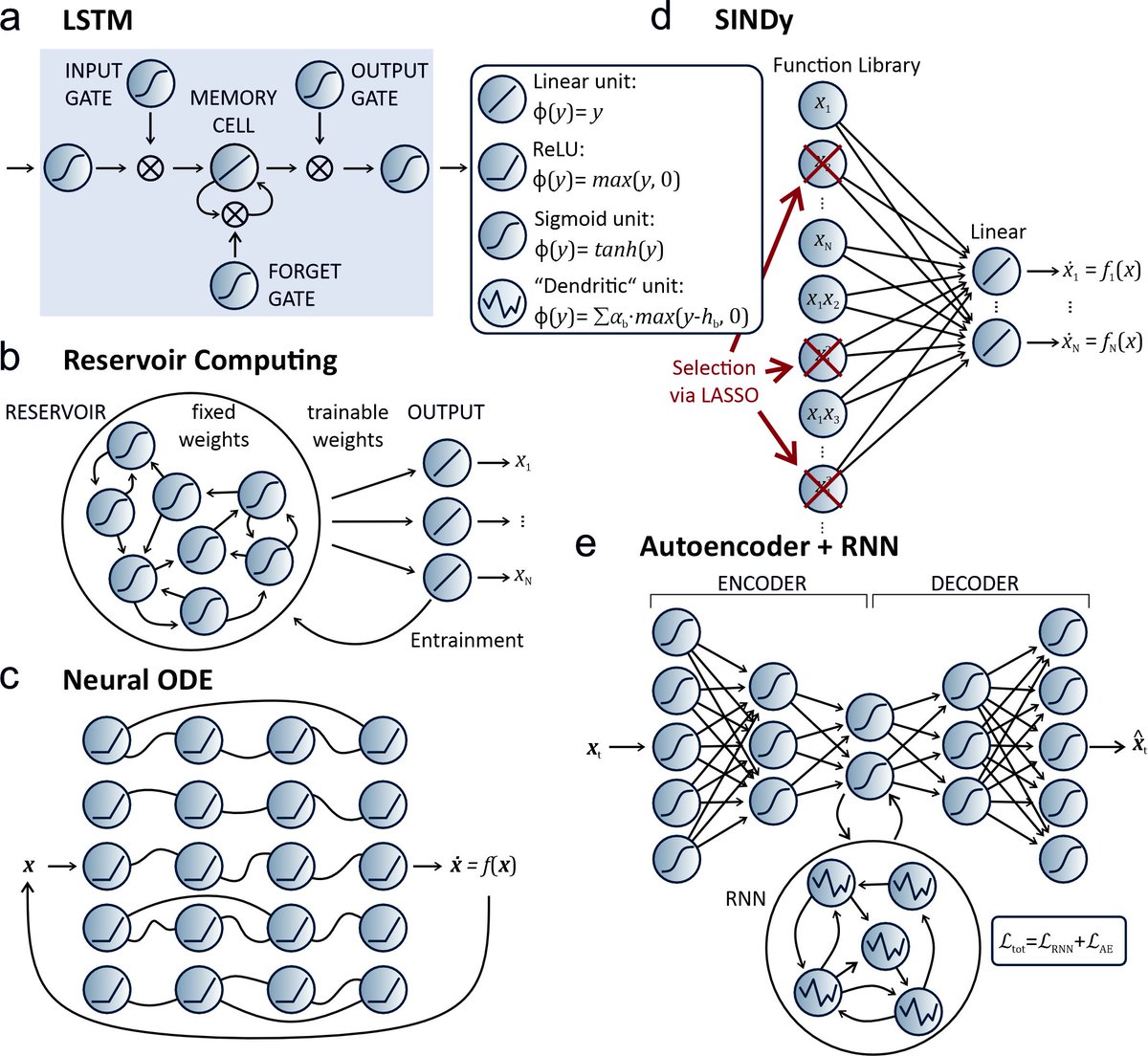
Our Perspective on reconstructing computat. system dynamics from neural data finally out in @NatRevNeurosci!
https://t.co/mje21ShyWC
We survey generative models that can be trained on time series to mimic the behavior of the neural substrate.
#AI#neuroscience#DynamicalSystems
Now that we @UChicago_Brains just hired 2 faculty in Computational Neuroscience we are addicted to it. We will be hiring 2 more faculty this round in Comp Neuro - one in the Department of Neurobiology and one in the Department of Physics. Please apply! https://t.co/Pp0jTbGZ2x
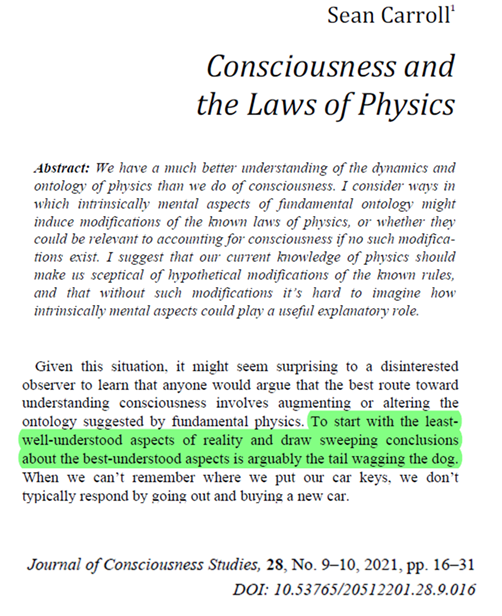
@Horganism Both IIT and string theory have falsifiability problems, but a difference is that StrT is grounded in the current laws of physics because it attempts to unify them. Whereas IIT is unmoored from physics as it conjures a new law without consideration of existing ones.
Mind-body researchers are bickering over whether a popular theory of consciousness is "pseudoscience." Here's my take on the controversy: https://t.co/XcxytSCgE0
@StanDehaene I don't see the term pseudoscience as name-calling but as a statement on a theory that is unanchored from the laws of physics, which albeit incomplete are not infinitely malleable. The power to propose new laws of physics comes with great responsibility to the existing laws.
While not a big fan of the recent "pseudoscience" name-calling, I have to confess that, like my 124 colleagues, I am quite disappointed by IIT's inability to make anything but banal predictions concerning the recent ARC-Cogitate adversarial collaboration.
(1/n)