Our research focuses on understanding how small mammals overcome challenges related to diet and disease using both ecological and molecular approaches.
Congratulations!🏅@DearingLab Distinguished Prof of #Biology@UUtah@uofu_science and Director of Division of Integrative Organismal Systems at the National Science Foundation since 2022 awarded #Utah Governor’s Medal—Science and Technology.
Story: https://t.co/fC6pQe26sg
Warm temps and woodrats have remarkable resistance to snake venom, but that changes when temps cool!
@DearingLab in collaboration with U of Michigan and U of Nevada Reno
@UUtah @uofu_science https://t.co/asOp6XpUTE
Desert woodrats survive on a toxic diet of creosote seeds. @UUtah researchers uncover clues how the rodent rapidly evolved tolerance as the poisonous bush proliferated across the Southwest after the last Ice Age. https://t.co/CJhdQbLVeB @UofUBiology
Cool new research reveals plant pathogens' viral warfare tactics! 🦠@UofUBiology assistant professor Talia Karasov and Prof. Burbano (UCL) lead study on potential antibiotic alternatives, recently published in @ScienceMagazine https://t.co/I7VG7WY7dU
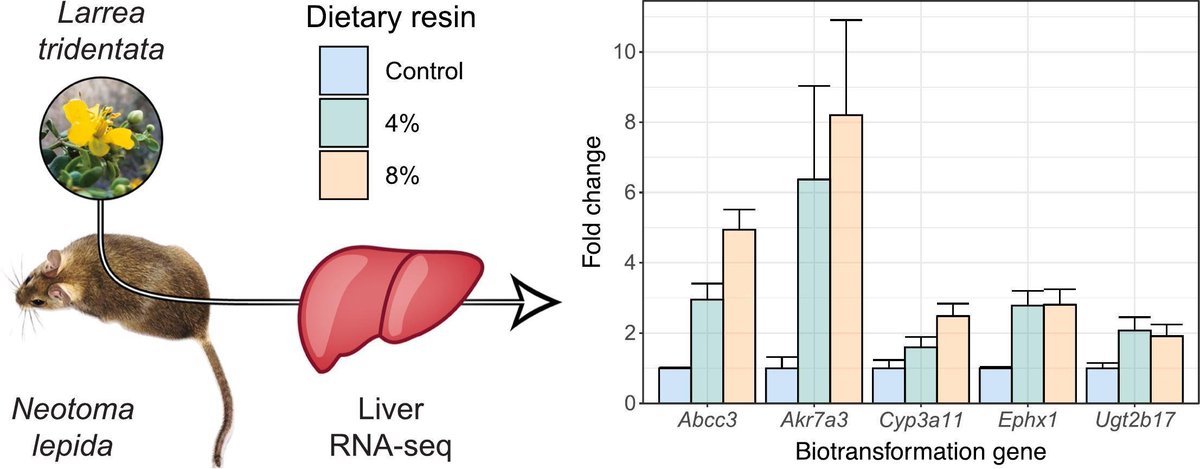
The desert woodrat has evolved the remarkable ability to feed on the highly toxic creosote bush. Curious how they do this? Check out our newest study in @CompBiochPhys, by lead author Dr. Robert Greenhalgh! (1)
https://t.co/o6G6FK644J
@UofUBiology@MDeniseDearing @MikeDShapiro
Many of these biotransformation genes are highly duplicated in the genome of the desert woodrat and this increase in gene dosage drives high overall expression! (3)
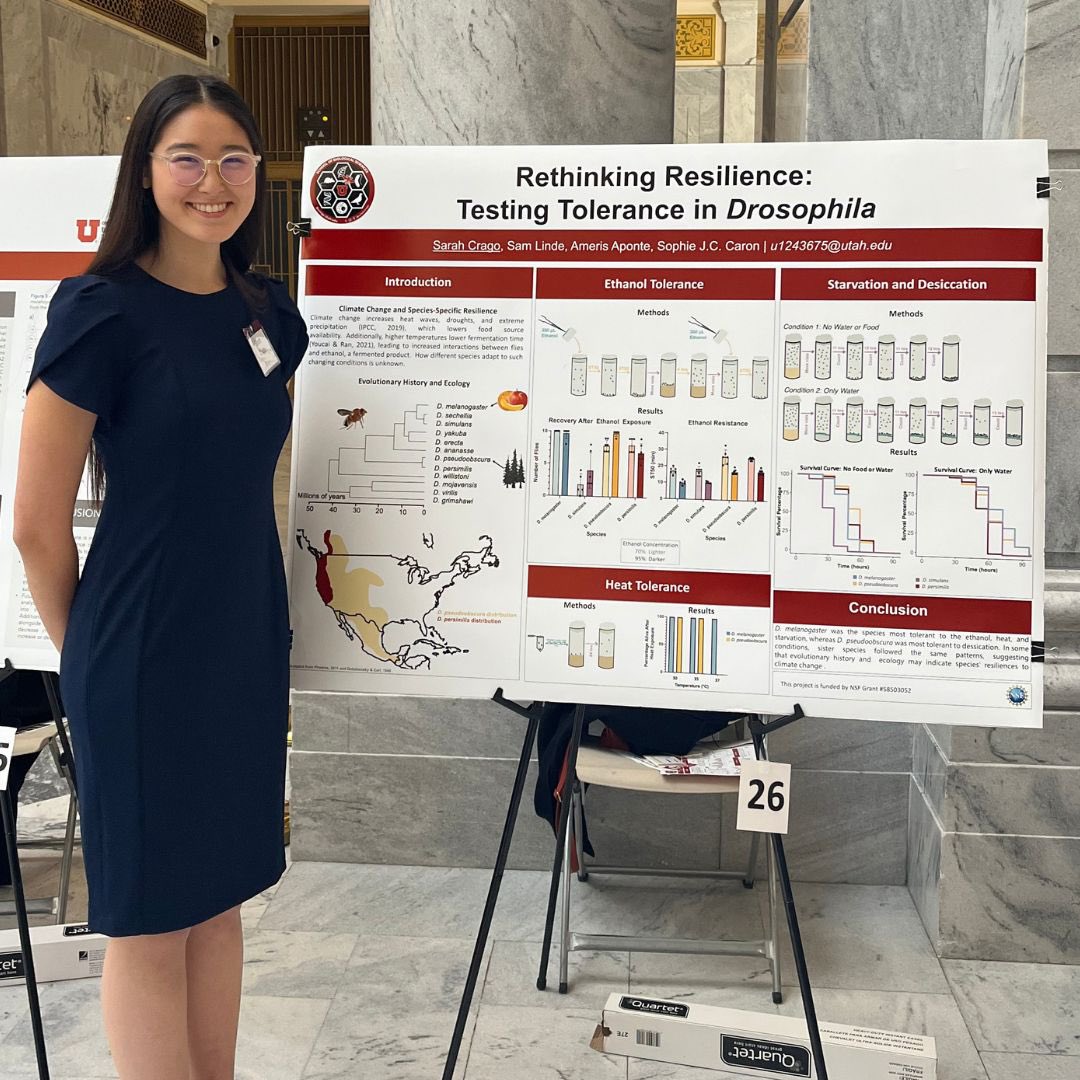
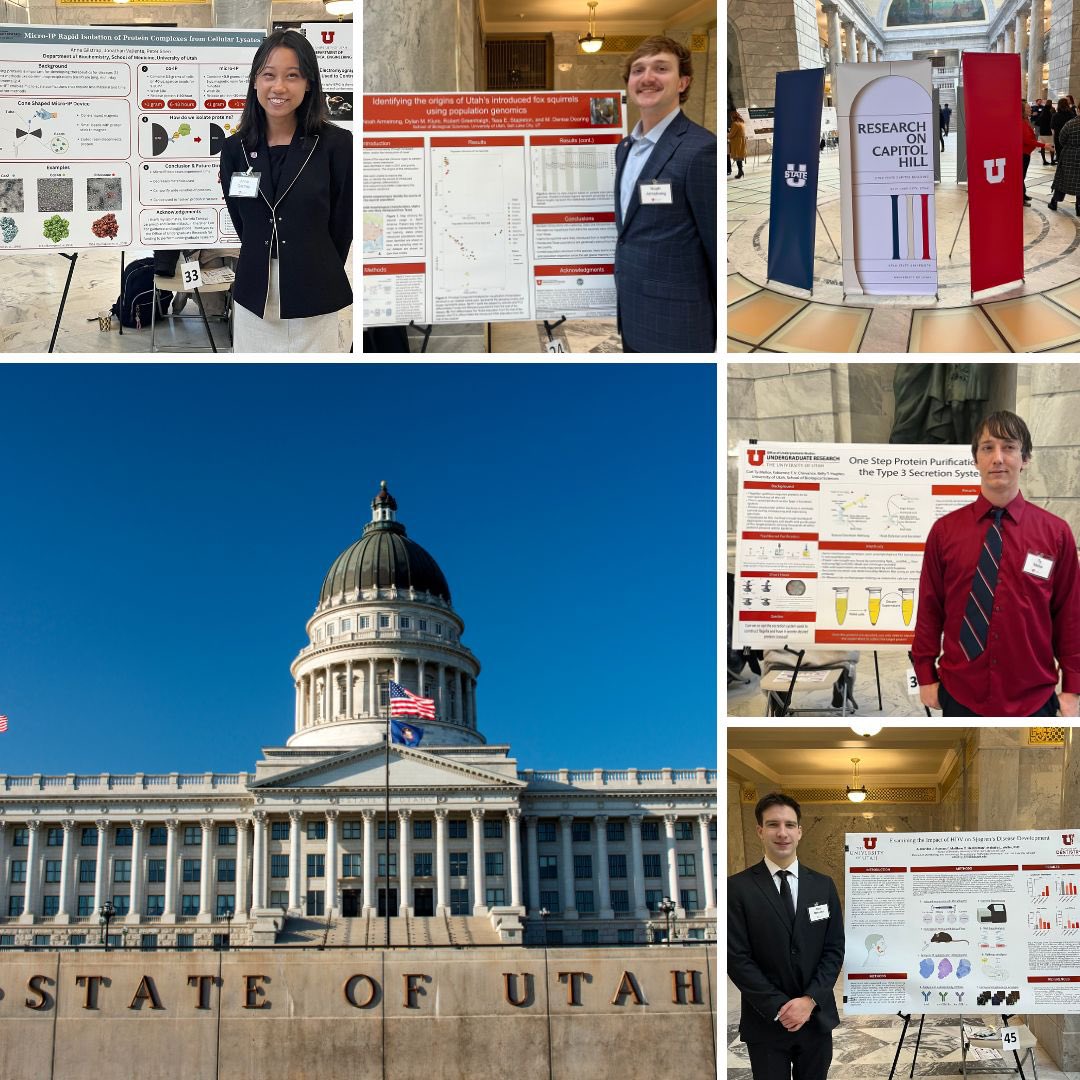
We're very proud of undergraduate researcher, Noah, for being selected to present to his research on invasive #squirrelgenomes to his representatives as part of the Research on Capitol Hill event!
A little delayed on posting this due to the holidays, but my 2nd dissertation chapter is officially published! We found that one of two common antiparasitics we tested changed the mouse gut microbiota. Check out the full paper: https://t.co/JO2Pa6Yfc8
You have #squirrel questions & we've got answers! Check out our latest blog post to find answers to the top squirrel questions asked of the Museum: https://t.co/UpkvmgAZQ1. And remember, Squirrel Fest runs Dec. 2–10 & we want your help in this statewide data collection effort!
Giving Tuesday @UUtah
Scholarships impact student success, so our goal is to provide some form of support to every undergrad. Also, today Grad Student Program donations will be matched dollar-for-dollar!
Support Biology students with a gift at https://t.co/ovvpik2Web
Are you interested in what factors influence the stability of the gut microbiome within free-ranging animals over their lifespan?
Then check out our latest paper in FEMS Microbiology Ecology authored by Drs. Dylan Klure & Denise Dearing.
Article:
https://t.co/qAadjs8BsN
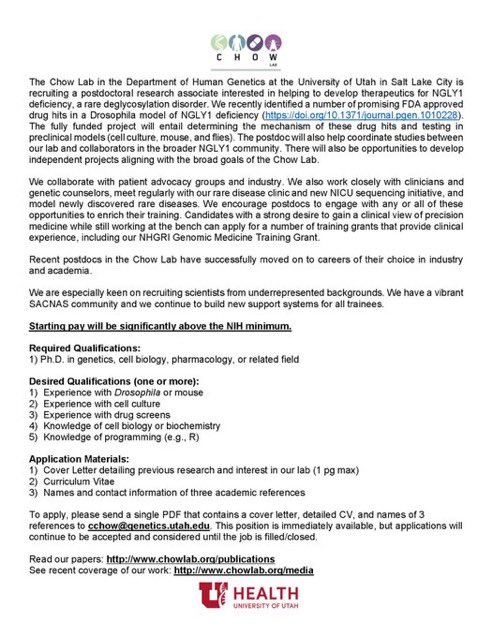
Postdocs and grad students #ASHG23, the @ChowLab is hiring postdocs to work on all aspects of our work. Pay is well above min postdoc pay. Below are examples of projects in the lab. Check out our talks and posters! DM me for more info! #ashgtrainee
New research by #UofU biologists demonstrates how female zebrafish produce a sunblocking compound called gadusol and apply it to their eggs, providing embryonic fish protection from ultraviolet radiation.
https://t.co/VpBdyXi7TK
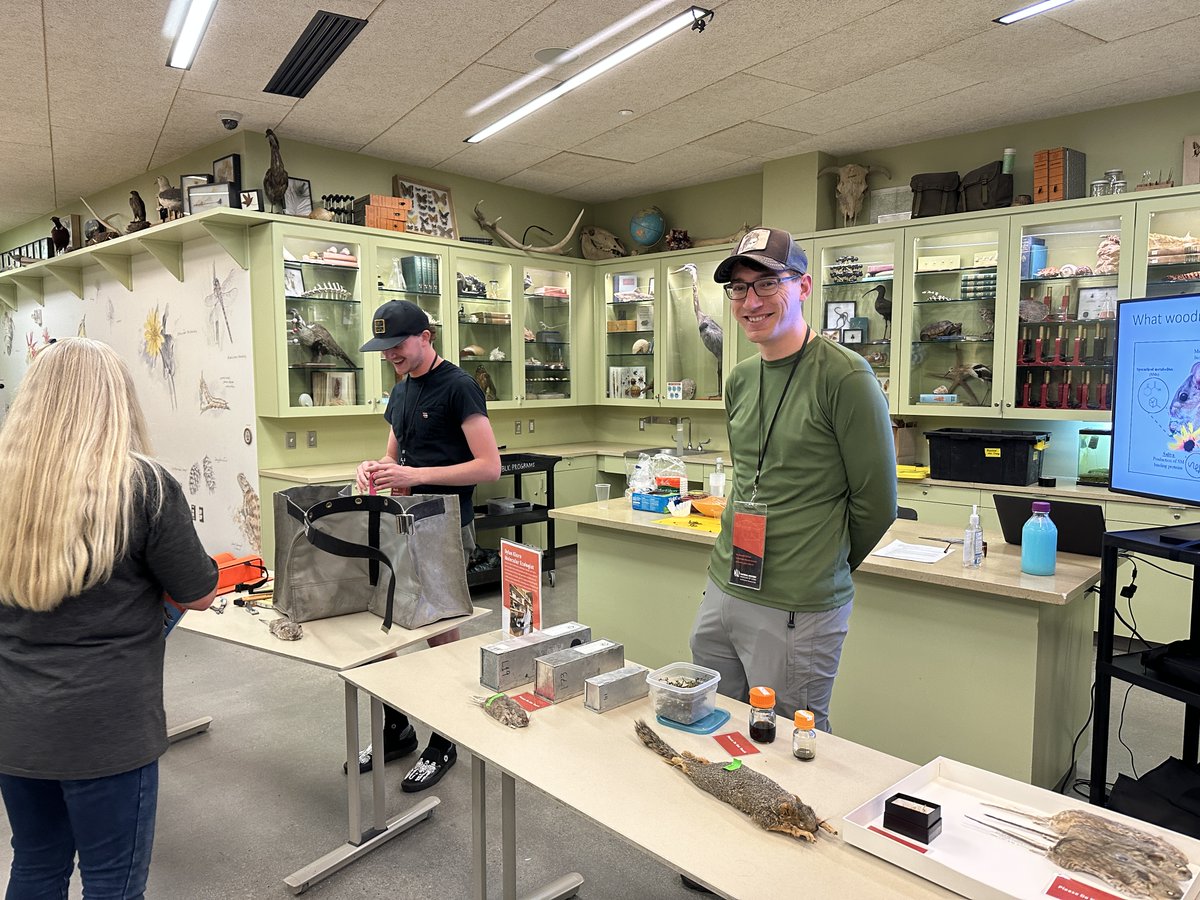
Lots of enthusiasm for learning about #DNAextraction and #mammals at Dylan Klure's Scientist in the Spotlight at @NHMU last week. Thanks to Noah and @mdoolin23 for helping out.
We are looking for a lab technician to help build and maintain a biorepository as well as perform basic laboratory experiments. If you're interested to learn more and to apply, please use the link below!
https://t.co/1NvSFjjLGH