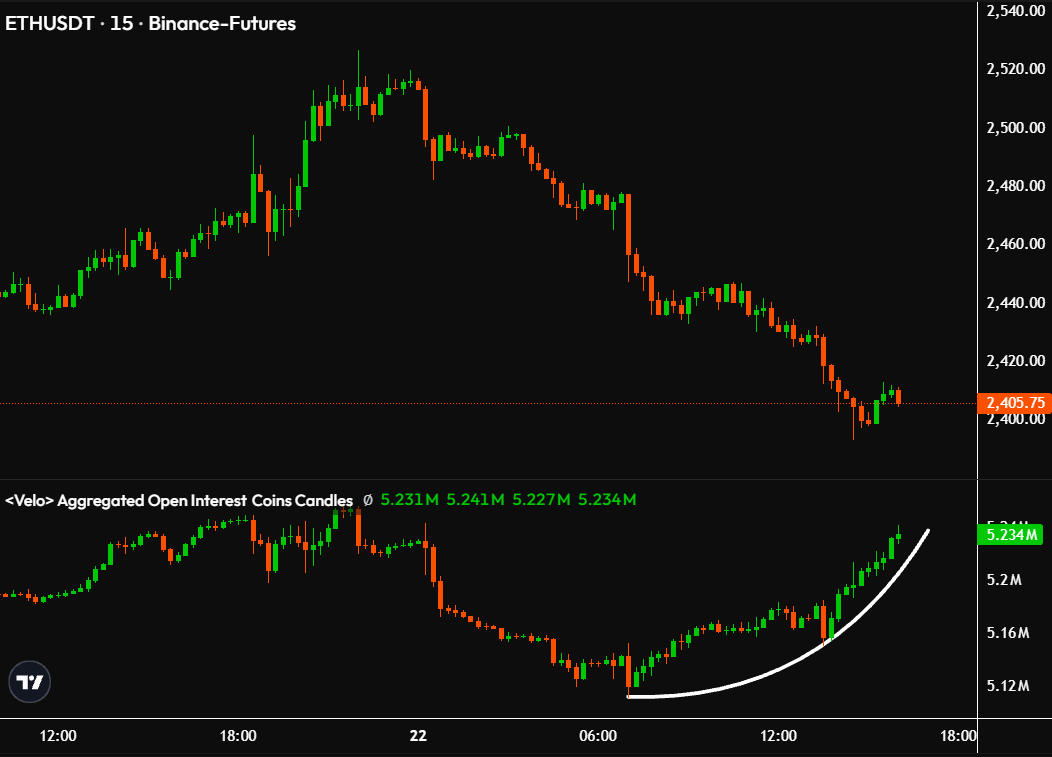
While the overall market just WIPED OUT close to 20 BILLION over the past 24 hours, f(x) Protocol worked flawlessly, without any human intervention.
The protocol just underwent the biggest stress test any leverage protocol has ever faced and has proven, once again, to be strong and resilient.
Zero hard liquidations happened on f(x). Z E R O.
Instead, there were 78 rebalance transactions for wstETH, 9 rebalance transactions for wBTC. Zero liquidation.
And remember, these are all smart contracts; no entity to trust, your funds are yours. Just algorithms that work.
Slept well?
Yes, if you were trading on f(x)!
Zero Stress Leverage. The ticker is $FXN.
https://t.co/heHDVbVeC2
🧪 24 hours later: the first results from my onchain Forex experiment on @aeroxyz !
Yesterday I deposited just $42.66 into the EURC/USDC concentrated liquidity pool on Base, chose a ±0.07% range, and staked the LP position to earn AERO emissions instead of trading fees.
Today I'm sharing the actual numbers, not the eye-catching APR from the deposit screen.
👀 Here's the 24-hour snapshot:
• AERO earned: 0.0693 AERO (about $0.05)
• Rewards APR: ~46% annualized, according to Revert Finance
• Total APR shown by Revert: ~16.8%, including the position's performance
• LP value: about $42.62, versus $42.66 initially
• Current status: OUT OF RANGE, now holding EURC only
The most important detail: my liquidity wasn't earning for the full 24 hours.
From what I observed, it was in range for roughly 4 hours after deposit, spent a long stretch outside the range, then briefly came back.
I'd estimate only 6–7 hours of active liquidity in total.
That's an observation, not a precise onchain time measurement.
As EURC weakened against USDC, my concentrated position shifted from a mix of EURC and USDC into EURC.
When the market price moved below my range, AERO emissions paused.
☝🏻 That's the trade-off:
concentration can increase capital efficiency, but even a relatively small currency move can put your position on the sidelines.
And this is why I love @revertfinance : it tracks the position's asset mix, PnL, range status, rewards and APR in one place, alongside the official Aero dashboard.
Is ~46% rewards APR a sustainable yield? Way too early to say! It's simply the annualized pace of what I actually earned over this first day.
My LP value also moved slightly, so reward APR isn't the same as total return.
One day tells us very little. A week or a month will be much more interesting. Personally, I tend to prefer wider ranges for longer experiments.
Still, think about how accessible this is: with a tiny amount of capital, you can participate in live EUR/USD liquidity markets and see the economics unfold onchain.
Next up, I'll test an ETH/stablecoin pool. Later: Bitcoin, tokenized stocks, gold and more RWAs.
No hype, no hypothetical spreadsheets. Just real capital, real transactions and lessons worth sharing. 🔥
42% APR on USDC. No, that’s not a typo.
→ Deposit USDC into fxSAVE (6.35%, autocompounding)
→ Borrow USDC against it on Morpho at 2.34%
→ 🔁 🔁 🔁 up to 10x
All in one transaction.
Links in the next tweet 👇
Here's my favorite analogy.
Imagine an exchange, a bank and an FX dealer operating around the clock. Millions of transactions. Traders pay fees, borrowers pay interest, capital moves through the system every second.
Now imagine looking inside that financial machine – and receiving a share of the economic activity it generates.
Not imaginary yield printed out of thin air. Real people paying real fees to use real financial infrastructure.
In traditional finance, you're outside that machine unless you own stock – and dividends are a corporate decision. Revenue passes through a company, its expenses and balance sheet, and eventually, perhaps, to shareholders.
In DeFi, you can hold a programmable right to participate in the economics of the machine itself.
Not legal equity. An onchain position with defined rules for capturing revenue.
Think about that. Lock or stake a token, sometimes direct liquidity through voting power, and the protocol routes revenue back to participants.
Depending on the system, that means swap fees, lending income, stablecoin distributions or token buybacks.
You're no longer just holding a ticker and hoping someone pays more tomorrow.
You're participating in the economics of a financial network people actually use.
And much of that machinery is visible. You can inspect transactions, follow fees, monitor volumes and see what was actually distributed.
The question changes from "What's the APY?" to "Where does this money come from, and who captures it?"
Now tokenized stocks, currencies, bonds, gold and other real-world assets are moving onto those same rails.
A trader swaps tokenized equity on a DEX. The pool generates fees. Those assets can become collateral in a lending market, unlocking liquidity for another strategy.
An exchange, a lender and an investment no longer need to be separate financial islands.
They can become components of one programmable capital architecture.
Capital circulates, generates revenue, backs loans and compounds – all within the onchain economy.
After nearly 20 years studying investments, I find this extraordinary. I've always loved productive businesses, dividends and assets that pay because the underlying economic engine keeps working.
DeFi takes that philosophy and rewires the infrastructure: global markets operating 24/7, economic rights embedded in code, revenue flowing through smart contracts, financial building blocks connecting like Lego.
Remember DeFi Summer?
Much of the game was farming freshly minted tokens at spectacular APYs, hoping someone would buy them.
Some lasting businesses emerged; many farms vanished when emissions stopped.
The old game was farm tokens and hope someone buys them.
The new game is understand the business, follow its fees, own productive rights, compound the cash flow.
Not every token is productive, and not every yield comes from actual revenue. Smart contracts, governance and leverage carry real risks.
But the direction is fascinating: from chasing emissions to capturing economic activity, from isolated positions to interconnected financial systems.
DeFi isn't just growing up. It's building a new way for capital to participate in the financial infrastructure it uses.
And as stocks, bonds, currencies and commodities move onchain, imagine the scale of the fees – and the economic rights – these networks could create.
Who will own the cash-flow engines of the next financial era?
È finita per l’automotive europeo.
Lo stop ai motori termici dal 2035 resta, di fatto, praticamente invariato, con buona pace per milioni di lavoratori che rischiano di perdere il proprio posto.
Una vergogna. Ma la mia battaglia per fermare questa follia non si ferma.
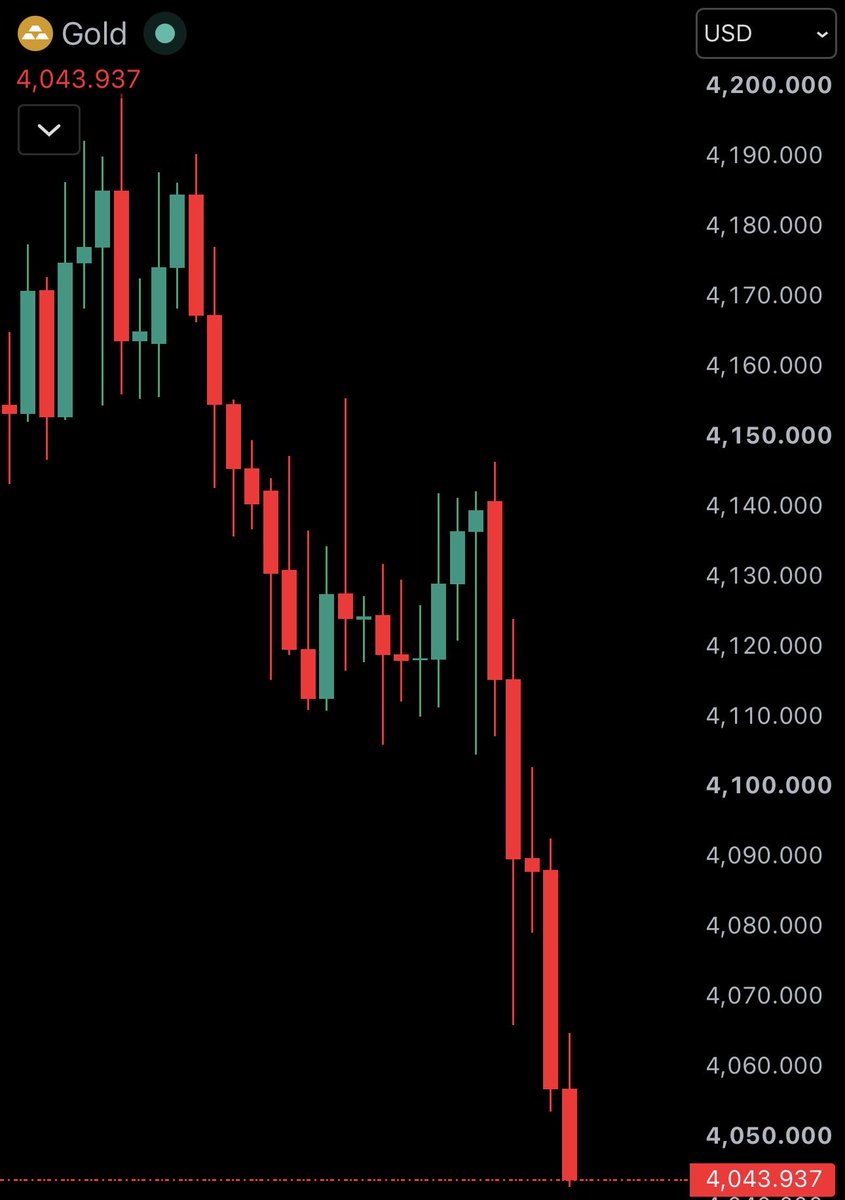
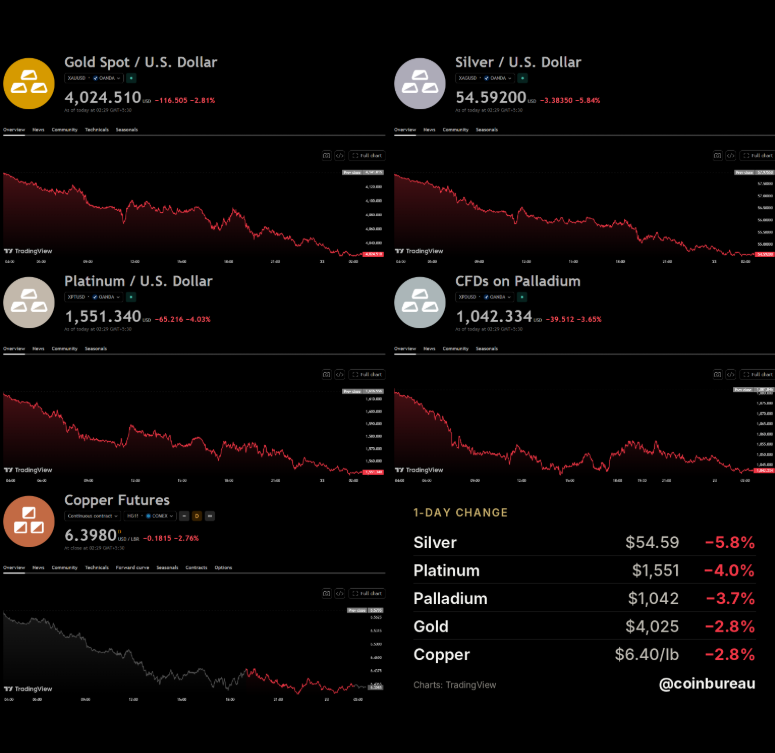
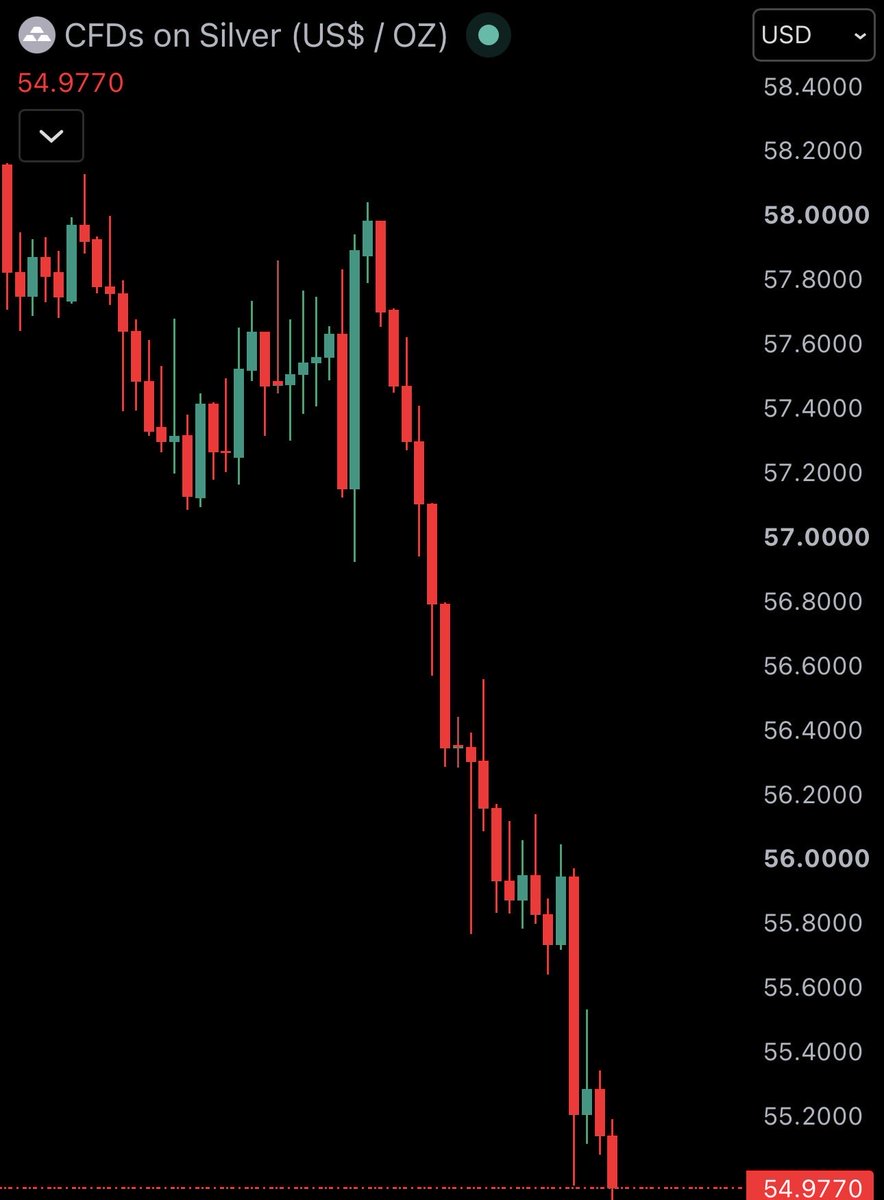
🩸BREAKING: Metals are MELTING, wiping an estimated $1,000,000,000,000 off gold and silver alone on Thursday.
Silver sank 5.8% and gold 2.8% with surging oil fueling inflation fears ahead of next week's Fed meeting.
Platinum fell 4% and palladium 3.7%, while copper slid 2.8% to a 5-week low as AI stocks sold off.
Gold lost about $810 BILLION in estimated market value and silver over $190 BILLION, per CompaniesMarketCap’s supply estimates.
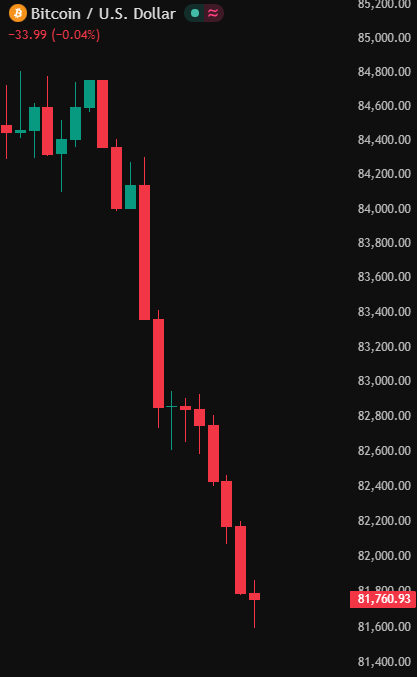
BREAKING: 🇺🇸 $8 TRILLION FIDELITY JUST SAID INVESTORS SHOULD "BE PREPARED" FOR #BITCOIN TO GO TO $200,000 SOON
"THE MOVE MAY HAPPEN MUCH FASTER THAN YOU THINK"
YOU HAVE BEEN WARNED 🔥
🧪 Another live DeFi experiment!
Friends, I'm continuing to share how I put capital to work across different DeFi protocols. Today I'm exploring something from traditional finance, now running entirely onchain: EUR/USD on the new @aeroxyz
💶 Yes, Forex is moving onchain. And I love it!
I deposited just $42.66 into the EURC/USDC concentrated liquidity pool on Base, choosing a ±0.07% price range.
And just look at those screenshots. Over 4,000% AERO APR at entry! 👀
I chose a slightly wider range to give EUR/USD more room to move. AERO emissions depend on operators allocating rewards to the pool, while my earnings also depend on my chosen range and competing liquidity.
My position is already staked, so I'm earning AERO emissions instead of trading fees.
Of course, 4,000% is just a snapshot. Rates change constantly, and my experience suggests returns tend to settle lower over time. But even 50%+ annualized in AERO rewards on an EUR/USD pair would be exciting!
That's why I'm testing it with real capital instead of chasing impressive APR numbers.
I love how Aero works:
• sAERO holders choose which pools to support and earn a share of their trading revenue
• Liquidity providers earn AERO rewards, attracting more liquidity and traders.
• More trading means more fees and more income.
A beautiful DeFi cycle! 🔥
Tomorrow, after 24 hours, I'll share the results: actual AERO earned, changes in my EURC/USDC balance and the real return on this small position.
This isn't about encouraging anyone to chase crazy yields. I'm simply sharing how these systems work in practice, how conditions change and what happens to real capital.
And there's much more coming: Aave lending and borrowing, tokenized stocks, onchain Forex, Bitcoin, gold, concentrated liquidity and cash-flow strategies across DeFi.
Nearly 20 years in investing, and this still gets me genuinely excited.
Less theory. More real onchain practice.
Happy to keep sharing these experiments with you! 🔥
https://t.co/VKhpsHgPsC
8.5% APR on ETH coming soon to @yieldbasis with new updates.
This assumes all LPs don’t stake and no organic flow. In reality, this will be MUCH HIGHER 🚀
YB will soon be making a lot of fees.
With the new settings It would have made at least 1.38M / yr in fees. Just on the ETH pool!!!
This can scale to at least 4x fees for this single asset. That would have made 5.5mil in fees for veYB.
Thats $0.055 a YB currently,
Now imagine what happens when you add the other 3 BTC pools and new assets???
📉 #BANCHE🏦
Le banche europee stanno scontando i tanti titoli di stato che hanno in pancia.
Nulla di grave, hanno un importanza sistemica.
Sono un po' in sofferenza sia gli #etf che i #certificati
IT0006778853 stacca il 30/10 1.167% mensile
Paga il 3/11
https://t.co/RgljkxhojR