"We've arranged a society based on science and technology, in which nobody understands anything about science and technology. And this combustible mixture of ignorance and power, sooner or later, is going to blow up in our faces."
If you're a coach who tells your team to, "Control the controllables", then you need to teach E+R=O and the mindset that drives it.
Event + Response = Outcome
It's hard to control the controllables when you're wasting attention, time, and energy trying to control the uncontrollables.
That's what happens when coaches don't clearly define what is controllable and what is not, and don't systematically teach how to deal with what can't be controlled by controlling ourselves.
The E+R=O Mindset solves that by internalizing 3 truths:
1. "I can influence events, but I can't control them."
- Opponents, refs, weather, injuries. They're all events. Some you can affect, some you can't, but none you control.
2. "I control my response and I'm the only one who controls my response."
- Your response is the only lever in your control and your only true power. What you think, feel, say, do, and how you do it is 100% yours to decide. No one else has the ability control your thoughts, decisions, or actions.
3. "I create outcomes, but I don't control them."
- This is the hardest mindset to fully believe and adopt. Your response is your best chance to create the outcome you want. But outcomes are never in your total control. Choices and actions have consequences and create outcomes, but that doesn't mean you dictate and control outcomes. If you had that power, your life would look much different.
When you do the work to strengthen your E+R=O mindset, three things happen for you:
1. You stop getting into a war with reality.
2. You feel more in control.
3. You see more opportunity.
You stop wasting energy on what will never work and naturally start focusing on what actually works.
Without this mindset first, E+R=O is just a concept, words with no real impact.
But with the E+R=O mindset, you gain the ability and power to create outcomes with consistency and excellence.
What do you tell someone who's never going to run an ultramarathon but wants to make a change?
@KenRideout_'s answer wasn't what I expected. He didn't talk about training plans. He reframed the whole thing around obligation — specifically, to whom you owe it.
His argument is direct: your health isn't competing with your family responsibilities. It is your family responsibility. If you're making avoidable choices that degrade your health, and those choices eventually put a burden on the people around you — that's not a private matter. A parent is never going to be happier than their saddest child. And a child is rarely going to be at peace knowing their parent is struggling with something that didn't have to happen.
That reframe carries more weight than the usual "you can't pour from an empty cup" language — which feels like permission. This feels like accountability.
The actual starting point he recommends is humble: a one-mile walk. Then an hour walk. Maybe add a ruck. That's it. The goal isn't suffering for suffering's sake — it's the feeling on the other side of doing something hard.
And that feeling, Ken argues, is available to anyone, every day. You just have to finish first.
9-year-old Kade Lovell was registered for the 5K but was misdirected by a volunteer and ended up on the 10K course instead.
He finished the full 10K (6.2 miles) in about 48 minutes and 17 seconds, crossing the line first overall and beating the second-place adult runner (a 40-year-old) by nearly a minute.
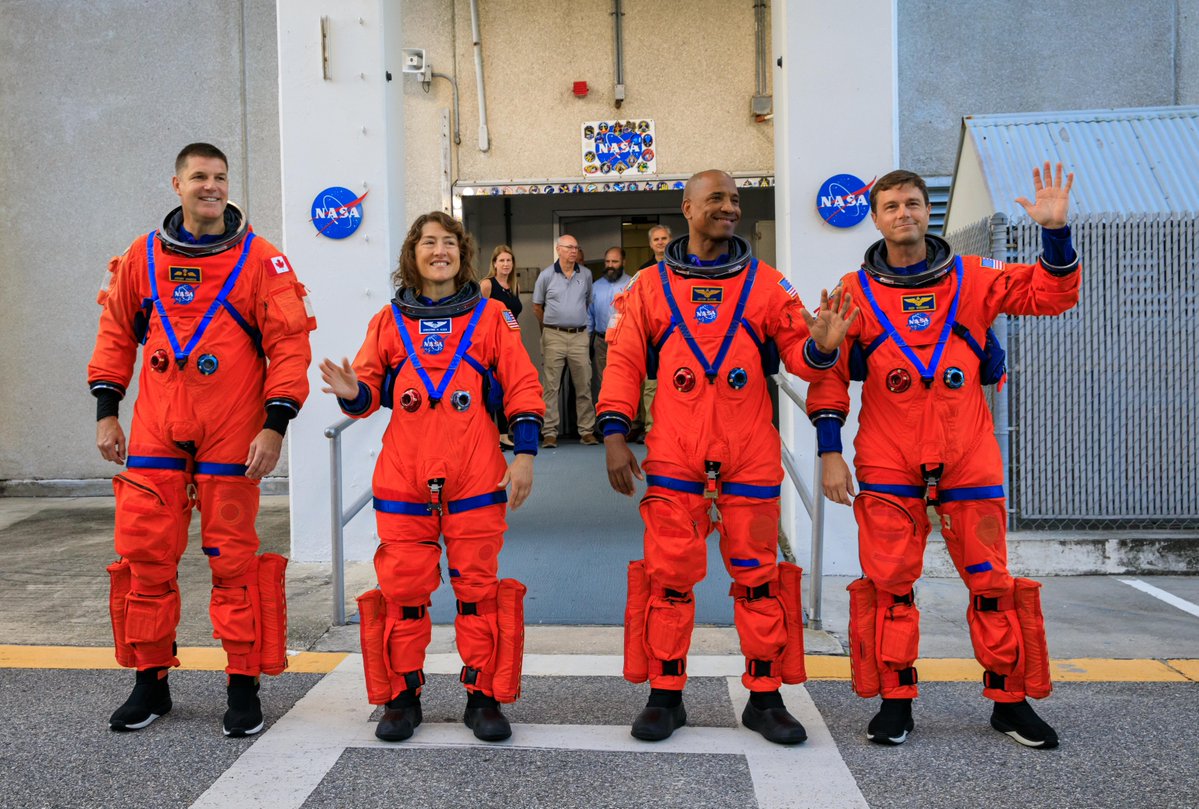
NASA is sending humans to fly around the Moon—and you can watch! 🚀
Live coverage of Artemis II begins today. Full schedule: https://t.co/7r0yJpgGcy
For the latest updates on Artemis II, follow @NASA and @NASAArtemis.
E+R=O helped me realize --> How I see the world shapes how I respond to it.
If I don't see with wisdom, it's hard to respond with wisdom.
How you see situations shapes how you respond to them. What you see as a threat, you treat as a threat. What you see as an opportunity, you treat as an opportunity.
What you see as in your control you treat as in your control. What you see as out of your control you treat as out of your control.
But what if you see wrong? What if your foundational assumptions are wrong?
What if you're trying to control things that can't be controlled? What if you're not controlling things only you can control?
That will get you in trouble.
How much of your trouble comes down to:
1. Trying to control too many things you can’t control?
2. Not enough control on the things you do control?
@BrianKight@AdamArchuleta my biggest frustrations in the years of coaching mid school players was the lower body drive at and thru the point of contact. Everything can be good and then the legs go dead. Tried to communicate that tackles and blocks are made with legs; they look at you a bit weird with that
@DrNeilStone This is a wonderful technological approach. I hope it pans out. Especially as one who has had to be treated 3 times. I’ve already had one tick bite this year and spring just started.